There is a particular kind of restaurant in Seoul that does not advertise, does not have an Instagram account, and has not changed its menu in thirty years. The sign out front is hand-painted. The tables are the same ones that were there when your server''s mother ran the kitchen. The soup has been simmering since before dawn. These are nopo (노포) — literally "old establishments" — and they are one of the most honest things Seoul has to offer a hungry visitor.
If you have watched My Mister (나의 아저씨) or Reply 1988 (응답하라 1988), you have already seen nopo culture on screen. That cramped neighbourhood restaurant where the characters eat after a long day, the owner who knows everyone''s order, the worn wooden counter, the smell of broth that seems to have been cooking forever — that is not a production designer''s invention. It is a real category of place, and Seoul is full of them. You just need to know where to look, and what to expect when you get there.
This guide explains what nopo means, why they matter, which Seoul districts have the highest density of genuine old establishments, the five dishes that define the nopo menu, and everything you need to walk in without speaking Korean and walk out with a meal you will remember.
What Is Nopo?
The word breaks down simply. No (老) is the Chinese character for "old" or "aged." Po (鋪) means "shop" or "establishment." Together: an old shop. In practice, Koreans use the word to describe a restaurant that has been operating in the same location, with the same menu, under the same family or owner, for at least thirty years — and often fifty or more.
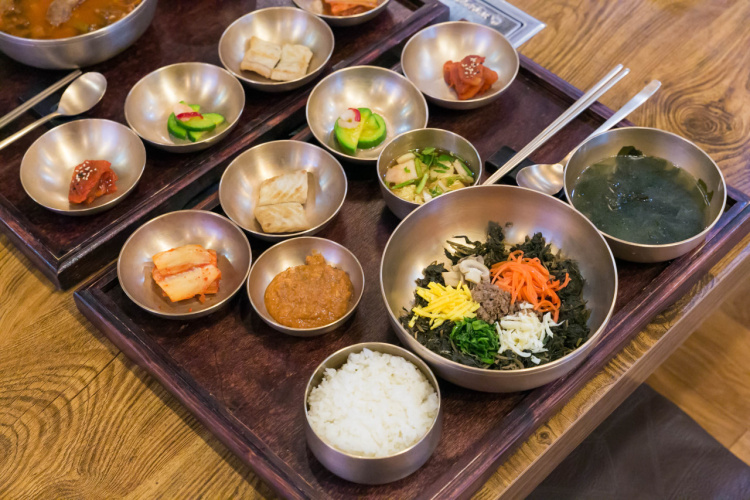
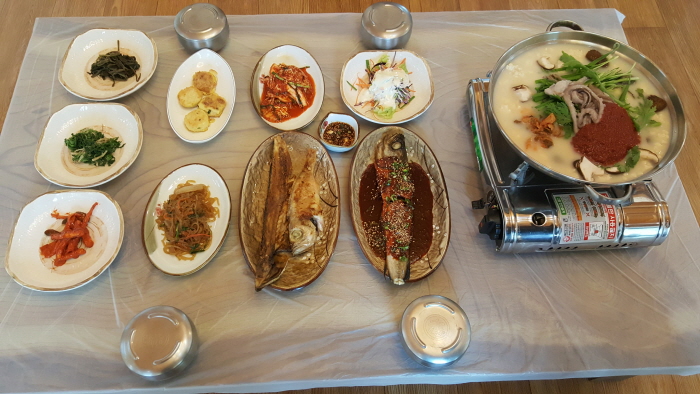
What distinguishes a nopo from simply an old restaurant is the consistency. The menu does not expand with trends. The interior does not get renovated. The banchan (반찬, side dishes) arrives in the same bowl it has always arrived in. In a city that has rebuilt itself faster than almost any other city on earth, a nopo is a place where time stopped moving and nobody complained.
The concept has no direct English equivalent. "Heritage restaurant" is close but sounds museum-like. "Old school" implies attitude. Nopo implies continuity — the same hands, the same broth, the same corner table for fifty years of regulars. It is worth learning the word before you go, because once you know it, you will start noticing them everywhere.
The Soul of Nopo
To understand why nopo restaurants matter to Koreans, you need one word: sonmat (손맛). Literally "hand taste" — the flavour that comes not from a written recipe but from decades of muscle memory. The way a cook adjusts the salt by feel, not by measurement. The timing of when to add the next ingredient that cannot be put into a formula. Sonmat is why a dish at a nopo tastes different from the same dish at a restaurant that opened last year, even if they are using identical ingredients.
Nopo culture is also inseparable from the concept of dangol (단골) — the regular customer. Many nopo restaurants have clientele who have been eating there for twenty, thirty, even forty years. The owner knows their usual order. In some cases, the owner knows their children''s usual order. This relationship between establishment and regular is part of what keeps a nopo financially viable without advertising: the revenue is not from footfall but from loyalty.
Then there is the demographic twist. Through the 1990s and 2000s, young Koreans mostly looked past nopo restaurants in favour of newer concepts. But starting in the mid-2010s, something shifted. A generation that grew up watching Reply 1988 — set in the warm, neighbourhood-centred 1980s that many had never actually experienced — began actively seeking out the old places. The area around Euljiro became known as Hip-jiro (힙지로), a portmanteau of "hip" and "Euljiro," as young artists, baristas, and creatives moved into the district and began existing side by side with the metal workshops and fifty-year-old soup restaurants. The nopo was suddenly cool not despite its age but because of it.
This rediscovery has been a lifeline for many establishments that were fading. It has also created a tension that Seoul is still navigating — but more on that later.
Nopo Districts in Seoul
Nopo restaurants are spread across Seoul, but they cluster in areas that escaped the most aggressive waves of redevelopment. These five districts are the best starting points.
Euljiro (을지로) — The Nopo Heartland
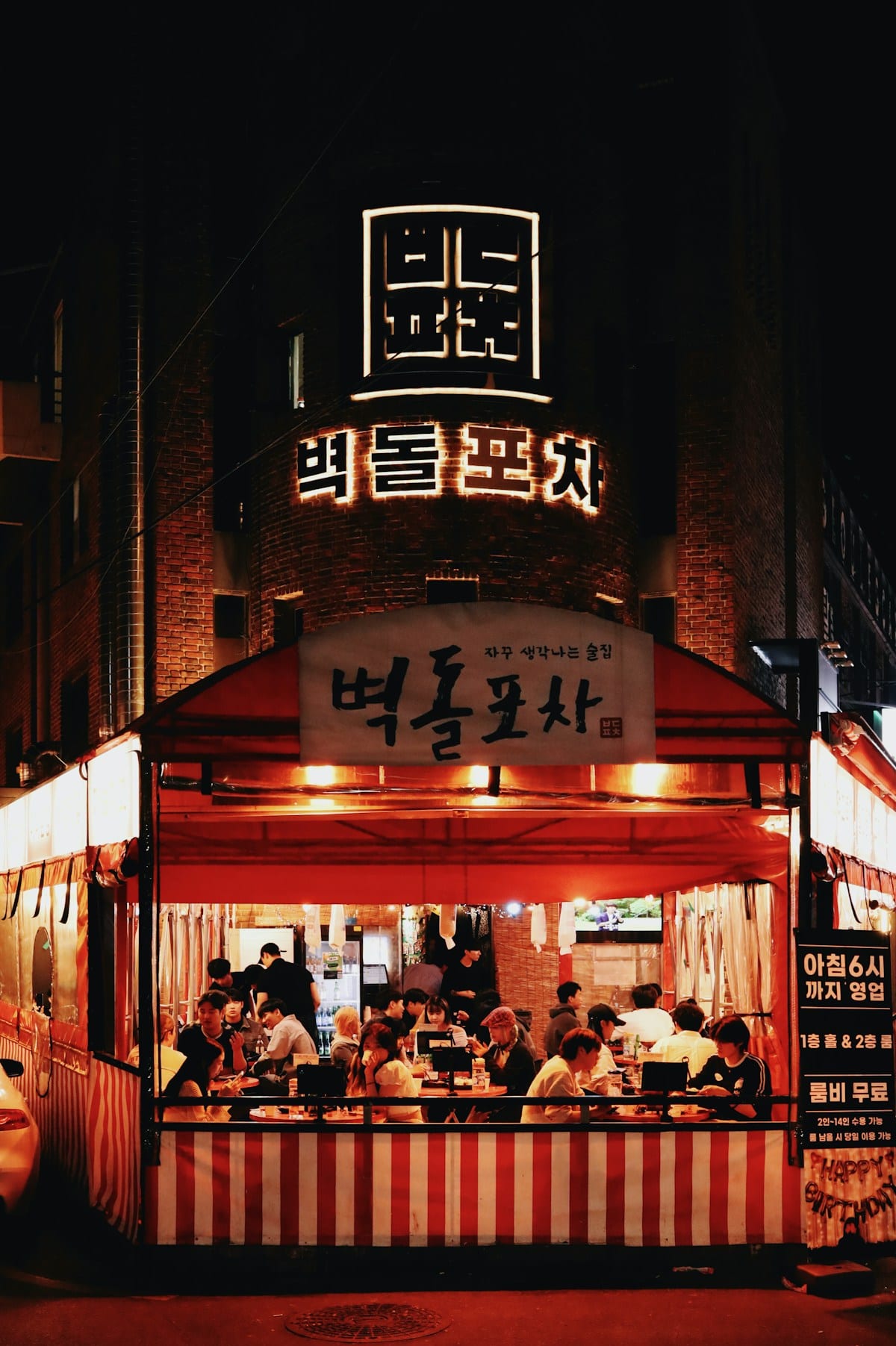
Euljiro runs east from City Hall through Jung-gu and into Seongdong-gu, and for decades it was primarily an industrial district — printing shops, metal fabricators, electrical suppliers — surrounded by the restaurants that fed their workers. That industrial core is still partly there, and so are the restaurants. Walk the back alleys between Euljiro 3-ga and Euljiro 4-ga stations and you will find soup kitchens that open at dawn, makgeolli houses with handwritten menus, and pojangmacha-style spots that have been on the same corner since the 1970s. The area got its "Hip-jiro" nickname because the contrast between the old and the new is so stark: a craft cocktail bar next to a sixty-year-old seolleongtang house, each drawing its own crowd and somehow coexisting.
Euljiro is the single best district for a nopo-focused evening in Seoul. Go on a weeknight to experience it closer to how regulars use it.
Jongno (종로) — The Oldest Eating Streets
Jongno-gu is the historic centre of Seoul, and the alleyways around Jongno 3-ga contain some of the highest concentrations of old restaurants in the city. The area known as Pimatgol (피맛골) — a narrow lane that ran parallel to the main Jongno road, historically used by commoners to avoid the road traffic of nobles on horseback — was a centre of street food and simple restaurants for centuries. Modern redevelopment absorbed much of the original lane, but the eating culture it created persisted in the surrounding blocks.
The streets around Jongno 3-ga station are particularly dense with nopo-style establishments: haejang-guk (해장국, hangover soup) restaurants that open before sunrise, yukgaejang houses, cold noodle spots. This is also the area of Seoul where older male regulars dominate the lunch hour — the kind of local scene that has no interest in catering to tourists, which is precisely what makes it feel real.
Gwangjang Market (광장시장) — The Living Nopo
Gwangjang Market is one of Seoul''s oldest continuously operating traditional markets, and the food stalls inside it qualify as nopo in their own right. Many of the vendors have been working the same stall for decades, and in some cases the stall has passed from mother to daughter to granddaughter. The market gained significant international attention after appearing on Netflix''s Street Food: Asia, but the crowds that attention brought have not fundamentally changed what the market is: a working market where people come to buy fabric, clothing, and food, and where the food is made by people who have been making it the same way for a very long time.
The standout nopo items at Gwangjang: bindaetteok (빈대떡, mung bean pancake) griddled to order at the same stations that have been running since the vendors'' mothers were young, and yukhoe (육회, raw beef seasoned with sesame and pear). The market''s central corridor can be overwhelming; the food stalls run along the inner lanes. See our Gwangjang Market guide for navigation and what to order.
Namdaemun Market (남대문시장) — Six Centuries of Commerce
Namdaemun Market has been a commercial centre in Seoul since the Joseon dynasty. The modern market building dates from the 20th century, but the trading tradition on this site is significantly older. Today, alongside the wholesale clothing stalls and imported goods vendors, you will find galchi-jorim (갈치조림, spicy braised cutlassfish) restaurants and kalguksu (칼국수, knife-cut noodle soup) alleys where some establishments have been serving the same recipes for fifty-plus years. The kalguksu alley in particular is worth seeking out: dense, inexpensive, and entirely indifferent to tourism.
Majang-dong (마장동) — The Offal Specialist Quarter
Majang-dong is not on most tourist maps, and that is precisely its appeal for the more adventurous visitor. Located near Majang Station on Line 5, the area developed around Seoul''s largest wholesale meat market, and the restaurants that grew up around it specialised in the cuts that the market generated in quantity: gopchang (곱창, small intestine), daechang (대창, large intestine), and various offal preparations that have their own dedicated following. The nopo restaurants here are as old and unassuming as any in Seoul. This is an adventure-level destination — cash preferred, no English menus, but extraordinarily good value for what you get.
Top 5 Nopo Dishes
Nopo menus tend to converge on a relatively small set of dishes — the ones that reward slow cooking, simple ingredients, and decades of repetition. These are the five you are most likely to encounter, and the ones worth ordering.
Seolleongtang (설렁탕) — The Bone Broth Standard
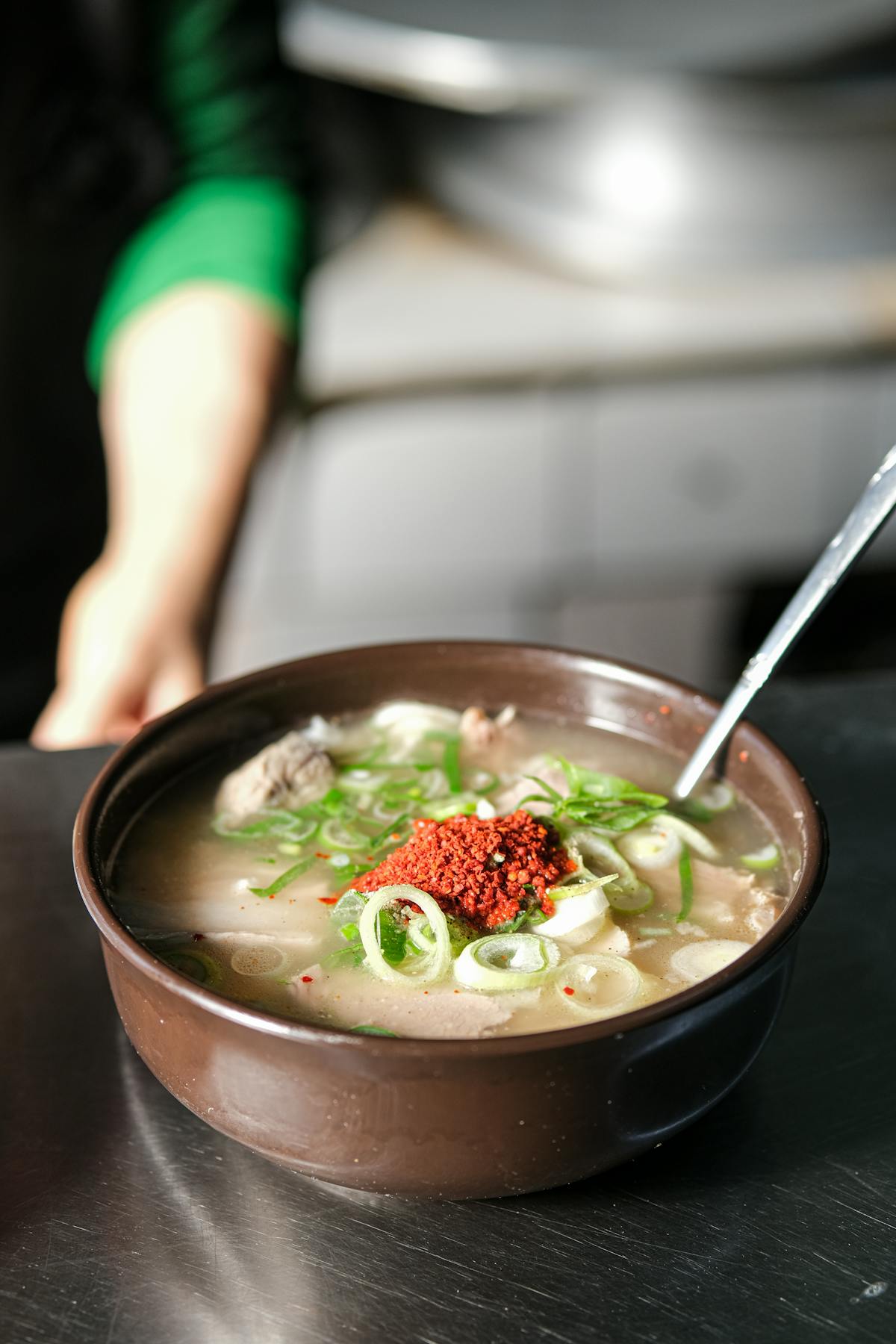
Seolleongtang is made by simmering ox bones and brisket for a minimum of several hours — traditionally overnight or longer — until the collagen dissolves into the broth and turns it milky white. The flavour is mild and clean. It arrives unseasoned: a white bowl of pale broth with thin slices of beef, a tangle of rice noodles, and a side of sliced green onion and kkakdugi (깍두기, cubed radish kimchi). You season it yourself, at the table, with salt and black pepper until it tastes right to you.
This element of personal seasoning is central to the seolleongtang experience. No two bowls taste exactly the same, because no two people season the same way. At a nopo seolleongtang house, the broth has been simmering since long before you arrived, and the bowls go out continuously from first light until the pot is empty. The Jongno area has several long-standing seolleongtang establishments that open early and close when the broth runs out. Go before noon.
Haejang-guk (해장국) — The Dawn Bowl
The name means "hangover soup" but haejang-guk is eaten at all hours, by all people, in all states of sobriety. What it means is a bold, restorative broth — usually beef bone-based — served with congealed ox blood (선지, seonji), bean sprouts, cabbage, and enough red pepper to wake up everything that needs waking up. At nopo haejang-guk houses, the kitchen opens before the city does. Four in the morning is not unusual. Six is standard. The clientele at that hour is a cross-section of Seoul that you rarely see otherwise: night-shift workers finishing their shift, market vendors on a break, early commuters, and yes, people who need a bowl of soup for the reasons the name implies.
For the full breakdown of haejang-guk varieties and what to order, see our Korea Hangover Food guide.
Bindaetteok (빈대떡) — The Mung Bean Pancake
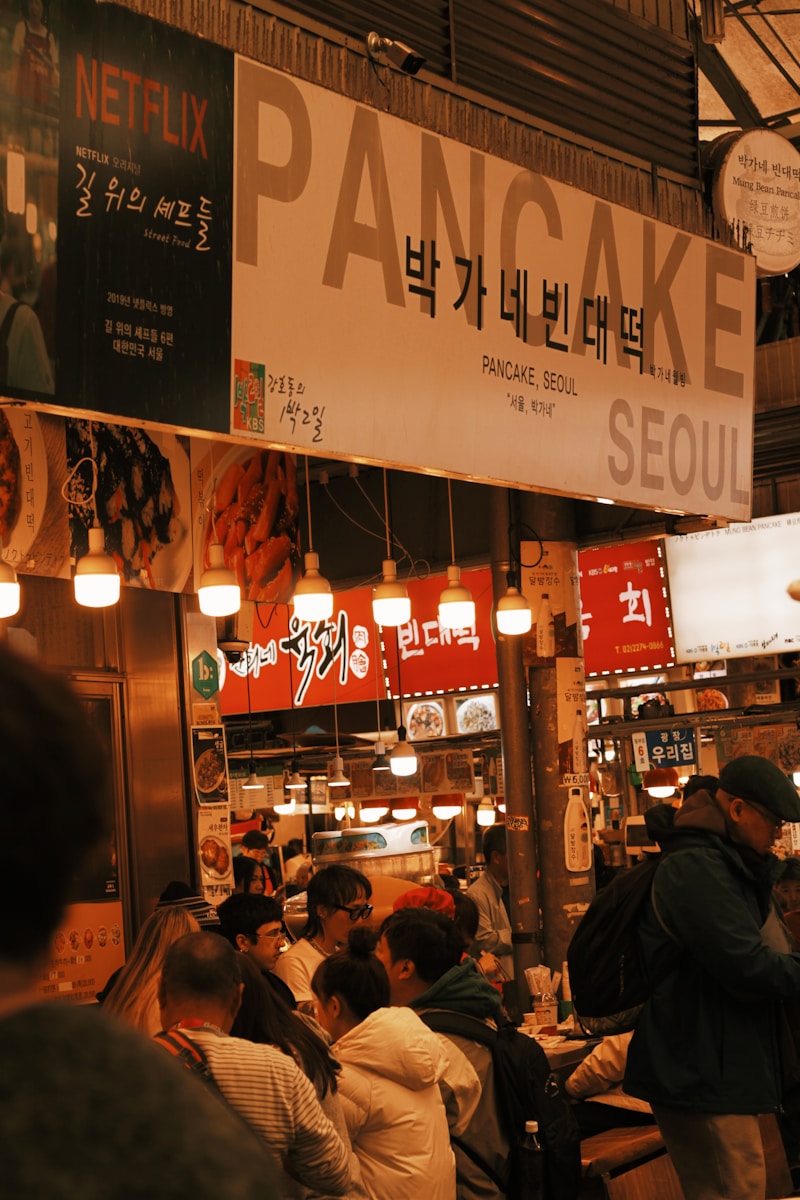
Bindaetteok is a savory pancake made from ground mung beans, mixed with kimchi, pork, and mung bean sprouts, then fried on a flat griddle in enough oil to make it crisp on the outside and dense inside. It is substantial food — street food that eats like a meal. At Gwangjang Market, the bindaetteok stalls fry them to order on large cast-iron griddles, the sound and smell carrying across the market hall. The combination of bindaetteok and makgeolli (막걸리, milky rice wine) is one of the classic nopo pairings — the richness of the pancake against the slight sweetness and fizz of the wine. For the makgeolli side of this pairing, see our Makgeolli guide.
Naengmyeon (냉면) — The Cold Noodle That Requires Patience
Naengmyeon (냉면) — cold buckwheat noodles in an iced beef broth — is the kind of dish that takes years to fully appreciate and that nopo restaurants make better than anyone. The broth is delicate and slightly sweet, the noodles chewy and resistant, the garnishes minimal: half a boiled egg, thin slices of Korean radish, a few strips of cucumber. It is deliberately restrained food, and the quality of the broth is everything.
The Euljiro area has several naengmyeon establishments with histories stretching back decades. The long-standing ones are identifiable by the queues at lunch — Koreans who have been eating there since childhood and will not go anywhere else. The dish divides first-time international visitors: some fall immediately, some take two or three attempts. Either way, eating naengmyeon at a genuine nopo is different from eating it anywhere else.
Yukgaejang (육개장) — The Red Broth
Yukgaejang is a deeply flavoured beef soup built on a base of shredded brisket, fernbrake (고사리, gosari), green onions, bean sprouts, and enough gochugaru (red pepper flakes) to colour the broth a vivid red-orange. It is one of the older dishes in the Korean repertoire, with roots in royal court cuisine that filtered down over centuries into the everyday restaurant menu. At a nopo, the brisket has usually been simmered for several hours and shredded by hand — the texture is distinct from a restaurant that takes shortcuts. The visual impact of the bowl — bright red, generous portions, a surface gloss from the rendered beef fat — makes it one of the most memorable of the classic nopo dishes.
For more of these deeply flavoured Korean stew and soup dishes, see our Jjigae guide.
How to Visit a Nopo
The practical anxiety most visitors feel about nopo restaurants is legitimate. These places are not set up for international visitors. There are no English menus. The owners are focused on the kitchen, not on making newcomers comfortable. But the barriers are lower than they appear, and a small amount of preparation removes most of them.
Bring cash. A significant portion of nopo restaurants — particularly the oldest ones — either do not accept cards or strongly prefer cash. Carrying two or three ₩10,000 notes is enough for most meals. Most main dishes at a nopo range from ₩6,000 to ₩12,000. You will rarely spend more than ₩15,000 per person.
Use Naver Map, not Google Maps. For nopo restaurants, Naver Map is substantially more accurate and more useful. The photo reviews section is particularly valuable: other diners upload photos of the food, the menu boards, and the interior, which means you can look up exactly what a restaurant serves before you walk in. Download the Naver Map app and search in English — it handles romanized Korean restaurant names reasonably well.
Arrive before the rush. Nopo restaurants rarely take reservations and do not manage waitlists through apps. The local rush hours are 12:00–13:30 for lunch and 18:30–19:30 for dinner. Arrive at 11:30 or 17:30 and you will almost always find a seat without waiting.
Expect hapsek (합석). Shared seating — sitting at the same table as strangers — is completely normal at nopo restaurants. If a staff member gestures you to a table that already has other diners, they are not making a mistake. Sit down, do not introduce yourself, and everyone will eat in comfortable parallel. This is standard.
Order with your hands. If you cannot read the menu, the most useful strategy is to look at what other people are eating and point. Alternatively, look up the restaurant on Naver Map in advance, identify one or two dishes from the photo reviews, and write down the Korean characters to show the owner. Korean numbers for ordering quantities: 하나 (hana) is one, 둘 (dul) is two.
The phrase you need: 이거 주세요 (i-geo ju-se-yo) — "I''ll have this one." Point at the menu item or at the dish someone else is eating and say this. It works everywhere.
Call ahead if possible. Nopo restaurants close suddenly — for illness, for family reasons, for a day when the owner simply did not feel like opening. If a restaurant is important to your plans, a phone call the day before is worth the awkwardness of a language barrier. Most Naver Map listings include a phone number. Google Translate''s voice translation handles basic Korean well enough for this purpose.
The Nopo Paradox
The renewed interest in nopo restaurants is genuinely good news for the establishments that have survived. But it sits alongside a more complicated story.
Euljiro''s industrial character — the workshops, the printing houses, the small fabricators — began disappearing in the late 2010s as redevelopment pressure accelerated. The same quality that made the area interesting to young creatives, the dense urban texture of old buildings and small businesses, made it attractive to developers. Some long-standing nopo restaurants in the area have closed not because they lacked customers but because the buildings they occupied were scheduled for demolition.
The Hip-jiro phenomenon created an irony: the influx of cafes, wine bars, and creative businesses that came specifically because they loved the old neighbourhood also drove up rents in a way that made it harder for the old neighbourhood to survive. The nopo restaurants that attracted the young visitors found themselves sharing a block with businesses that were, indirectly, part of the economic pressure threatening them.
This tension is not unique to Seoul — it is the story of gentrification in most cities. But in Seoul it moves faster, and the stakes for cultural continuity are higher. When a nopo closes, the sonmat — the accumulated skill of decades — closes with it. No amount of renovation can reconstitute that.
Visiting a nopo is, in this light, something slightly more than a meal. It is a form of participation in a place while the place still exists. That sounds weighted, and it is. But it does not require you to think about it while you are eating. Just go, order, and let the broth be what it is.
Nopo Vocabulary Table
Knowing these words before you visit will help you read Naver Map reviews, understand what you are ordering, and understand what the experience is telling you.
| Korean | Romanization | Meaning |
|---|---|---|
| 노포 | nopo | Old establishment (30–50+ years operating) |
| 손맛 | sonmat | The taste of the owner''s hands — skill built over decades, not from a recipe |
| 단골 | dangol | Regular customer — the backbone of a nopo''s business |
| 사장님 | sajangnim | Owner / boss — how you address the person running the restaurant |
| 합석 | hapsek | Shared seating at a table with strangers — standard practice |
| 웨이팅 | weiting | Queue / waitlist — from the English "waiting" |
| 원조 | wonju | The original — often appears in nopo names to signal authenticity |
| 할매 | halme | Grandma (informal) — used in nostalgic nopo branding and signage |
| 오래된 | oraedoen | Old / longstanding — what you are looking for on Naver Map reviews |
Nopo Checklist
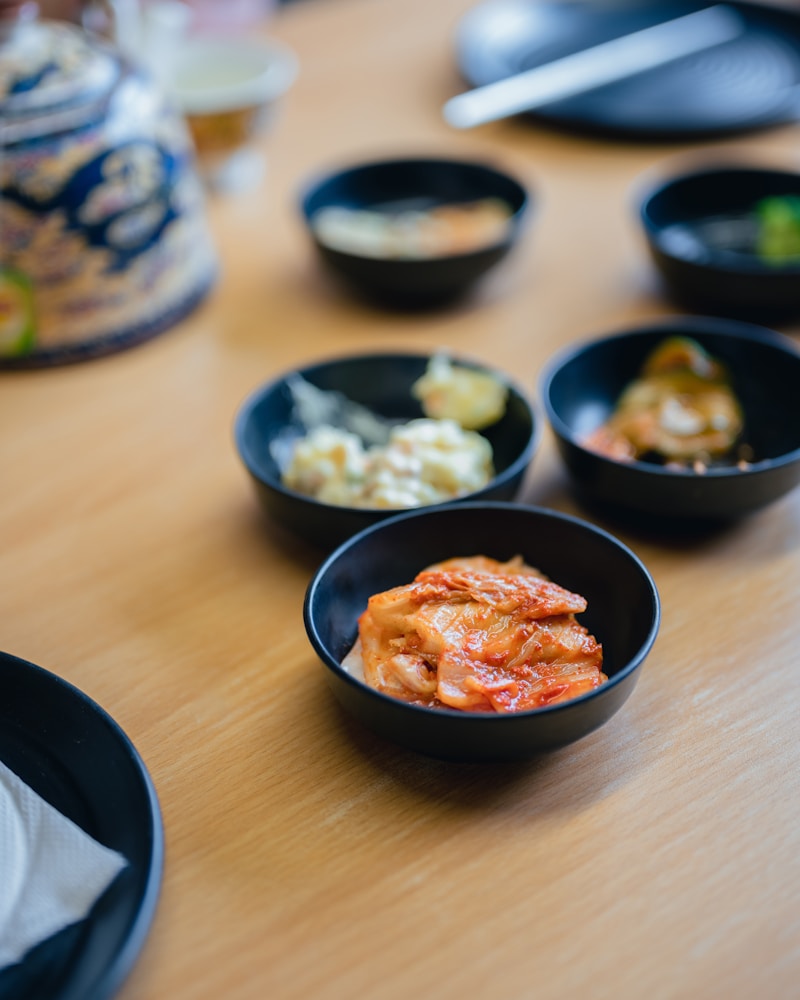
Everything you need before you go. Screenshot this and reference it at the door.
One final thought. The best nopo meals happen when you stop trying to optimise the experience and just sit with it. The broth will be right. The room will be loud or quiet depending on who is in it that day. The owner will not perform hospitality for you — they will simply do what they have always done. That is the point. If you let it, a nopo meal in Seoul is one of those rare travel experiences that feels genuinely unscripted, because it is.