Most first-time visitors come to Gyeongju for the tombs. The whole downtown has long been called a "museum without walls" — grass-covered burial mounds the size of small hills rise straight out of the flowerbeds, Cheomseongdae's stone observatory tower catches the evening light two blocks from a bus stop, and Bulguksa's temple bells still carry over the same pine ridgelines they have for a thousand years. What almost nobody mentions before you arrive is that you eat right next to all of it. The city's best-known ssambap alley runs along the outer wall of Daereungwon, the royal tomb park in the middle of downtown — order a table of wrapped rice and grilled pork here and a Silla king's burial mound is your view. Two hours by KTX from Seoul, about half an hour from Busan, Gyeongju was the capital of a kingdom for close to a thousand years, and its food geography still traces that old map: a ssambap alley by the tombs, a hanjeongsik table in the hanok village where Gyeongju's wealthiest clan once lived, a cattle-country stretch to the north, a tofu belt on the road to a mountain temple, and — the part that surprises people most — an actual coastline to the east. Here's how to eat your way through it.
Ssambap: Lunch Beside the Royal Tombs

Ssambap (쌈밥) is one of Korea's simplest ideas done well: a table crowded with fresh lettuce and perilla leaves, a bowl of thick soybean paste stew, grilled or braised meat, and rice, all of it built for wrapping into hand-sized bundles. Plenty of Korean towns serve a version of it. What makes Gyeongju's different is the address — the strip of ssambap restaurants along Cheomseong-ro runs directly beside the earthen walls of Daereungwon, the royal tomb park where more than twenty Silla-era burial mounds sit fenced inside downtown like a very old, very green city park. You can walk the tomb path first and eat second, or the other way around; either way, you're never more than a few minutes from a table.
Gyodong Ssambap, right on Cheomseong-ro, runs a full set-course version of the meal — a Gyodong ssambap hanjeongsik that stacks the usual wraps and stew with a wider spread of banchan, ordered by the table rather than the plate. A few doors down, Lee Poong-nyeo Guro Ssambap keeps things closer to the original idea: a straightforward, generous ssambap spread that's been a Hwangnam-dong fixture for years. Both restaurants are built for groups — ssambap is almost never a solo meal here, and most kitchens set a two-person minimum.
Head slightly out of the tomb-side cluster and the format opens up. Near Samneung, Ureong-gaksi Ssambap — its English signage sometimes renders it more literally as "snail ssambap" — swaps in a wrap-friendly ureong (river snail) doenjang, thick and briny, in place of the standard stew. Closer to Bulguksa, Neulbom Tteokgalbi Ssambap pairs the wraps with grilled tteokgalbi and a rice-cooker-style ureong sotbap set, a heartier version for anyone about to spend the afternoon walking temple grounds. It's tempting, standing in an alley with a 1,500-year-old tomb mound over your shoulder, to imagine a straight line running from this table back to some royal Silla banquet. There isn't one — Cheomseong-ro's ssambap alley is a modern tourist-town specialty, not a recipe handed down from any king's kitchen. That doesn't make the lunch any less good; it just makes the view free.
Gyochon Village: The Choi Clan Table & Gyodong Beopju

Ten minutes on foot from the ssambap alley, Gyochon Village trades tomb mounds for tiled hanok roofs. This was the neighborhood of the Gyeongju Choi clan, long remembered in local lore as "the rich family that stayed likeable" — the kind of household that, according to the stories still told around the village, capped its own landholding at what tenant farmers could reasonably work and kept its rice stores open to feed the neighborhood through famine years. How much of that is documented history and how much is generations of polishing a good story is hard to untangle at this distance, but the reputation is baked into the neighborhood itself: a preserved merchant-scholar's house, a Confucian academy next door, and a food culture built around entertaining well.
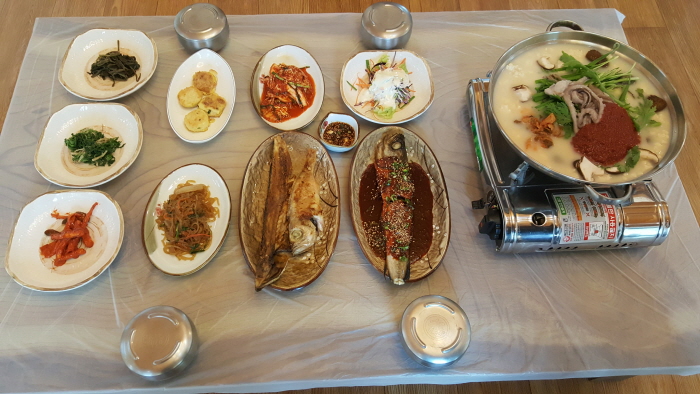
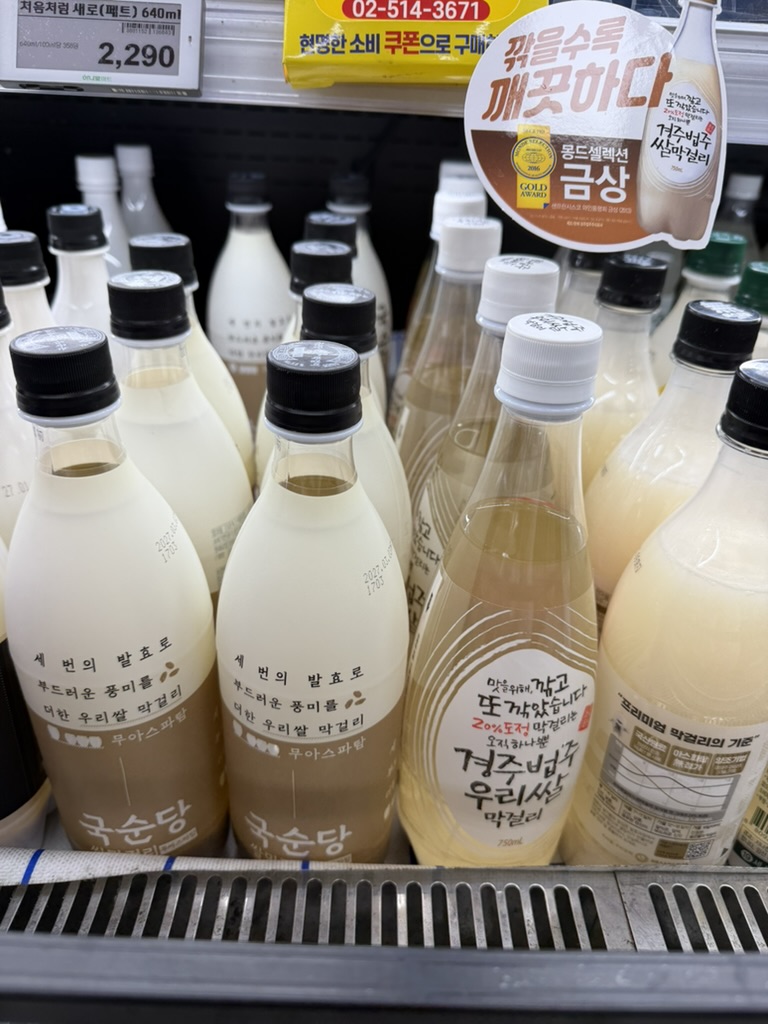
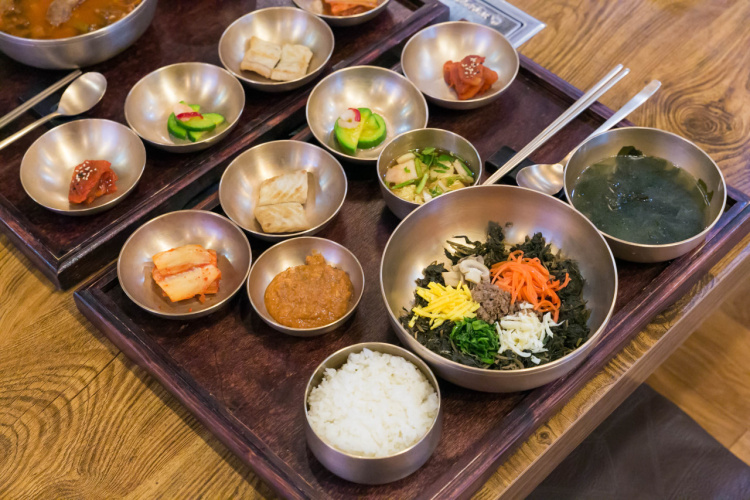
That food culture produced Gyodong Beopju, a clear, refined rice wine brewed from glutinous rice using a method passed down in the Choi household for generations and now recognized as an intangible cultural heritage — one of the more quietly serious traditional liquors in the country, worth seeking out over the mass-market rice wines sold everywhere else. The clan's old residence and its food legacy live on today in restaurants like Yoseokgung 1779, a hanjeongsik house known for a jami set course and widely described as carrying on the Choi family's hospitality tradition — the exact history behind the "1779" in its name is part of that same fuzzy oral-history territory, so take it as branding with a genuine root rather than a documented date.
With only one restaurant carrying the torch here, treat Gyochon as much as a cultural stop as a meal: walk the hanok lanes, see the old Choi house, and sit down for a slow, multi-course lunch that's closer to a tasting menu than a quick bite. It pairs naturally with the temple-hopping most people do on the same afternoon — Gyochon sits an easy walk from both the ssambap alley and Hwangridan-gil, so it's easy to loop through all three without backtracking.
Hanwoo: Cheonbuk Cattle Country

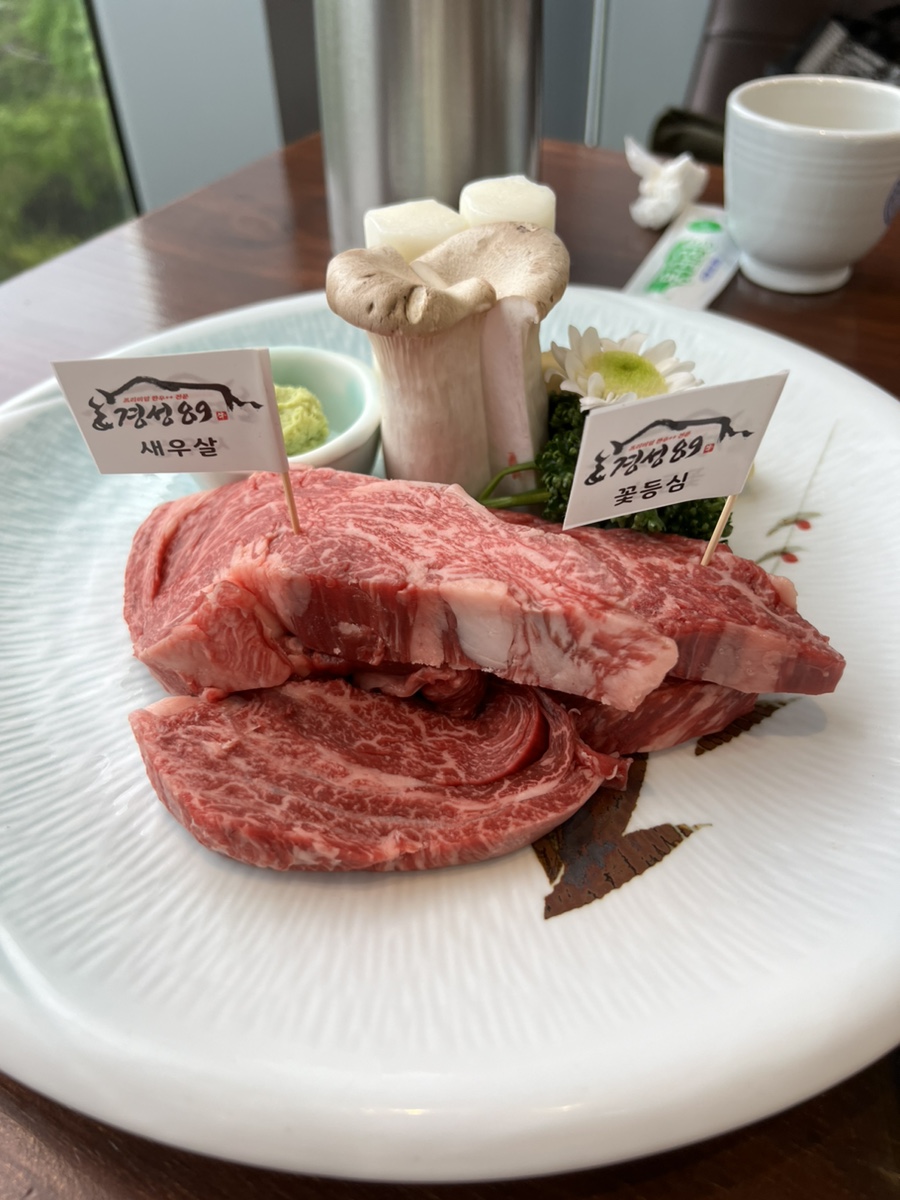
North of downtown, the road through Cheonbuk-myeon runs past a cluster of butcher-restaurants that locals will point you to if you ask where to get good beef — a stretch that's earned itself a cattle-country reputation even without an official name on a sign. Most of these places run on the jeongyuk-sikdang system common across Korea's beef towns: you buy the cut you want at the counter by weight, then take it to a table to have it grilled, with a full spread of banchan and a stew arriving alongside. It's a slightly more hands-on, less touristy way to eat hanwoo than a set-menu restaurant, and it tends to be better value for it.
Mulcheon Hanwoo, out in Cheonbuk proper, pairs its beef with a house-made jip-doenjang (thick, homemade soybean paste) hanwoo stew — a good order if you want the beef experience with a hot, savory stew on the side rather than just grilled meat and rice. Closer to the Bomun tourist complex, Bomun Hanwoo keeps a hanwoo-yukhoe (raw seasoned beef) on the menu for anyone who wants to try Korean beef tartare alongside the grilled cuts — worth doing at least once if you haven't.
Back in the city center, Janggun Amso Sutbul runs its own charcoal grill on Bueong-gil with a galbisal cut as the house order — a good option if a trip out to Cheonbuk doesn't fit your itinerary but you still want the charcoal-grilled hanwoo experience without leaving downtown.
Milmyeon: Gyeongju's Other Noodle Habit

Ask most Koreans where milmyeon (밀면) comes from and they'll say Busan — the story usually traced back to wartime refugee kitchens improvising cold noodles out of wheat and sweet potato starch when buckwheat for naengmyeon ran short. Gyeongju, ninety minutes up the coast, somehow ended up with its own thriving milmyeon culture, dense enough that a single stretch of Taejongno-791beon-gil has turned into a milmyeon alley in its own right, several noodle shops deep. Nobody's claiming Gyeongju invented the dish — but the city has clearly made it its own.
Gyeongju Milmyeon Main Branch runs the defining local combo: a bowl of chewy, chile-red milmyeon alongside seokswoe-bulgogi, thin skewers of grilled marinated beef cooked over a charcoal grate at the table — noodles and barbecue in one sitting, which is as close to a Gyeongju-specific milmyeon identity as it gets. A few doors down, Milmyeon Restaurant Main Branch keeps it simpler with a mul-milmyeon, the broth-based version, for anyone who wants the cold noodles without the extra course.
Out toward the temple side of the city, Bulguksa Mil-myeon serves the same mul-milmyeon-and-grilled-bulgogi combo a short walk from the road up to Bulguksa — a smart lunch stop if you're doing the temple in the same afternoon and don't want to backtrack downtown for the noodle-alley version.
The Bulguksa Tofu Belt

The road running toward Bulguksa and on to the Bomun tourist complex is lined with soft-tofu restaurants, part of a broader, temple-adjacent tofu tradition found around mountain temples all over Korea, where tofu has long been a staple of the plainer, meat-free side of the table. Whatever the deeper history, the practical result for a visitor is excellent: this stretch of road is one of the most reliable places in the city for a fresh, handmade bowl of sundubu.
Millstone Soft Tofu, true to its name, serves a maetdol-sundubu-jjigae — tofu ground fresh on a stone mill rather than store-bought, with a noticeably softer, more delicate curd than the packaged version most restaurants use. Closer to the Bulguksa road proper, Tofu Village runs a spicier eolkeun-sundubu set, a good pick on a cold day or if the standard version feels too mild.
For something heartier before or after the temple visit, Volcanic Charcoal & Handmade Tofu pairs its own handmade tofu with a charcoal-grilled galbisal-sogeumgui (salt-grilled short rib) — tofu as a side dish to grilled meat rather than the main event, and a solid option if your group can't agree on tofu versus barbecue.
Gampo & the East Sea: Mulhoe on the Silla Coast

Here's the part most people skip entirely: Gyeongju has a coastline. Head east from downtown and the road eventually runs straight into the East Sea at Gampo, a small fishing port that also happens to sit near Munmudaewangneung, the semi-submerged tomb where a Silla king is said to have asked to be buried at sea to protect the kingdom's shores. Whether or not you make the detour to the tomb, the port itself is worth the trip for one dish: mulhoe (물회), raw fish sliced thin and tossed in an ice-cold, sweet-and-spicy vinegared gochujang broth, eaten straight or poured over rice or noodles.
Dolphin Sashimi Restaurant, right on the Gampo waterfront, runs the dish as its signature order — a "myeongpum" Gampo mulhoe that locals point to as the reason to make the drive out here specifically, rather than settling for a version closer to town. A little further south along the coast, Yangnam Seafood Kalguksu takes the same coastal seafood and turns it into a knife-cut noodle soup instead, a good option if the ice-cold mulhoe format isn't for you.
If a full trip out to the coast doesn't fit the schedule, Gyeongju Raw Fish Restaurant Mediterranean, back in Dongcheon-dong in the city center, keeps a mixed sashimi platter on the menu for anyone who wants a taste of the sea without leaving downtown — not quite the same as eating it in Gampo with the actual water in view, but a reasonable stand-in.
Hwangridan-gil & the Sweet Stuff

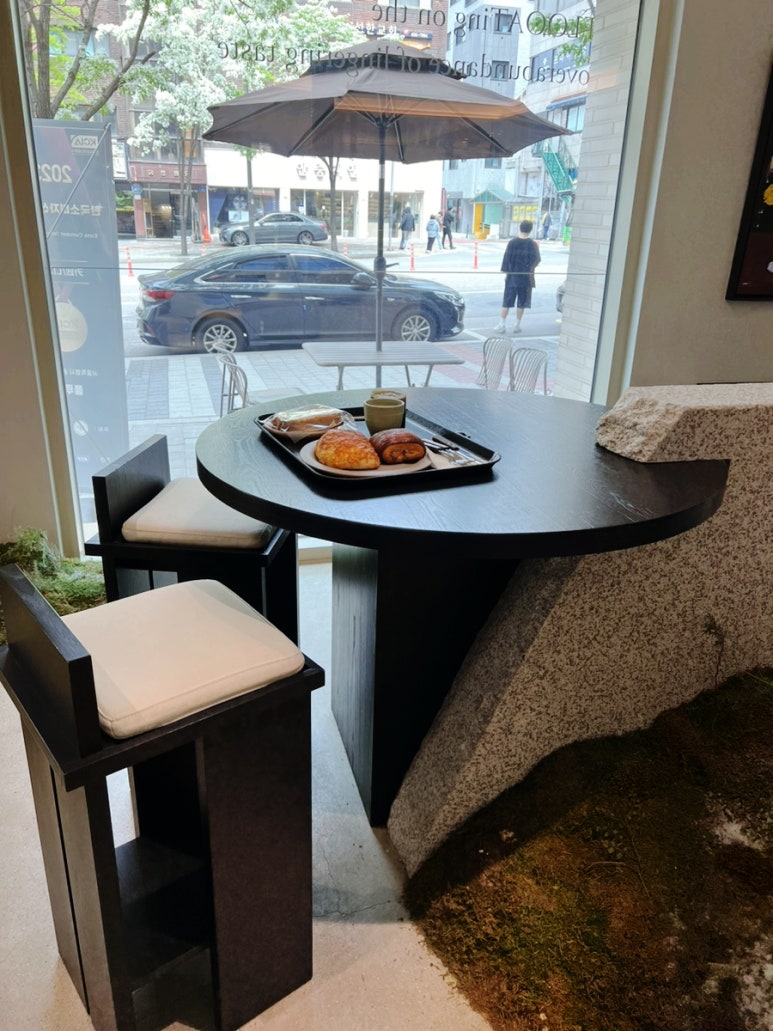
Hwangnam-dong's back streets have spent the last several years turning into Hwangridan-gil — a name that borrows the "-dan-gil" tag Seoul uses for its own trendy hanok-lined alleys, applied here to a stretch of renovated tile-roofed houses now packed with cafés, boutiques, and dessert shops. It's the neighborhood where Gyeongju stops feeling like a history field trip and starts feeling like a place K-culture fans photograph for their feeds — hanok facades, filtered light through paper doors, and a very online, very young crowd working through the dessert menu.
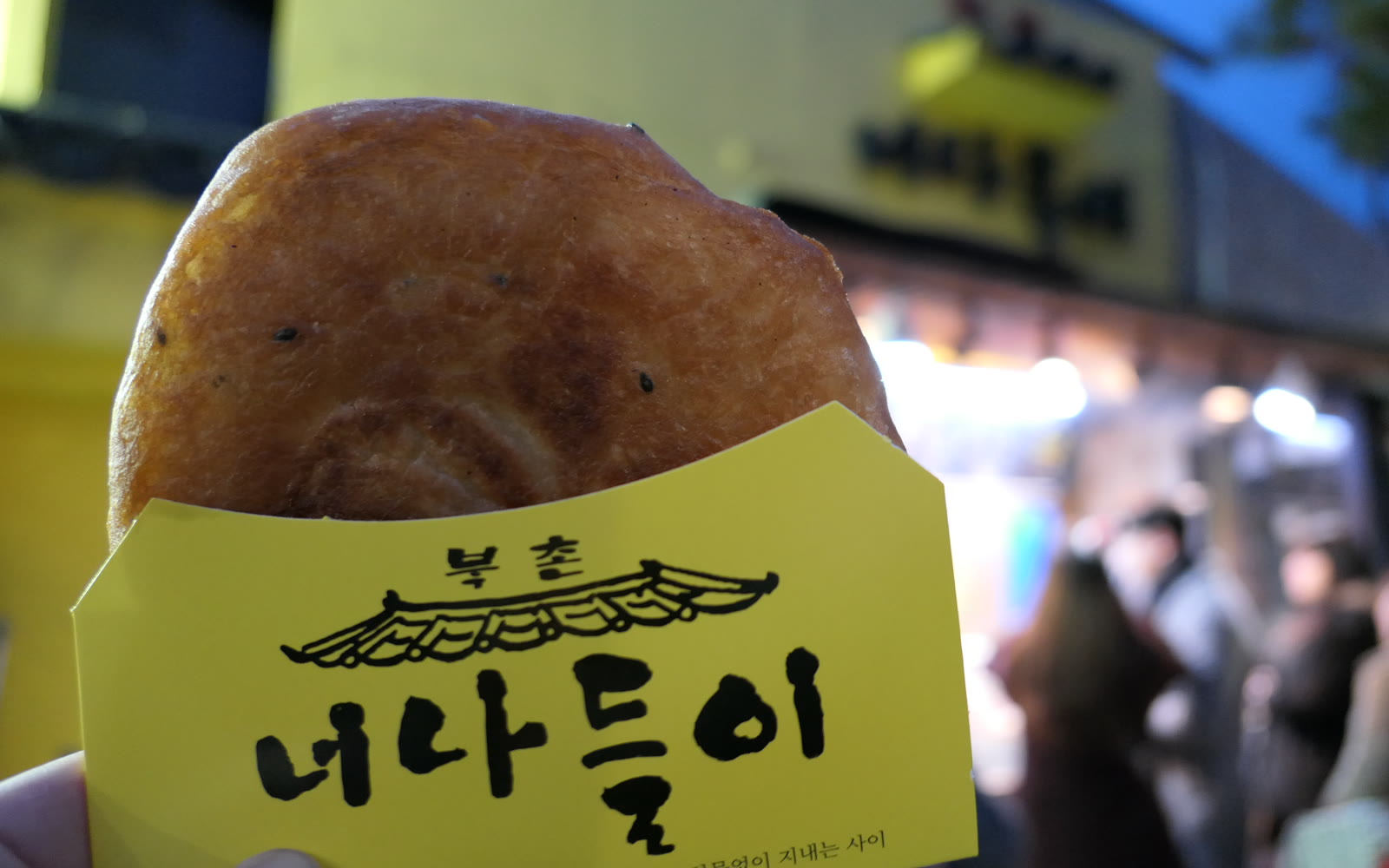
The dessert most associated with the city has actually been around far longer than Hwangridan-gil itself: hwangnam-ppang, a red-bean-filled sweet bun baked in a thin, crisp shell, has been a Gyeongju souvenir staple for generations, sold by the box at bakeries across the city — the exact founding story varies by who's telling it, so treat any specific year you hear as folklore rather than fact. Alongside it, chalbori-ppang swaps the filling for something closer to a barley castella, made with Gyeongju-grown barley for a denser, nuttier crumb. Newer to the scene is sibwon-ppang, the coin-shaped bread that's become one of Hwangridan-gil's more recent hits — it's often talked about as having taken off on this very street, though pinning down exactly where the trend started is harder than it sounds, so take the "birthplace" claim with a grain of salt and just enjoy the bread.
For an actual sit-down meal on the same street, Hwangnam Bibimbap runs a yukhoe-kkotgejeot bibimbap that dresses the usual bowl up with raw beef and salted crab, while Gyeongju Hwangso Gopchang Hwangridan-gil Main Branch keeps a full assorted-offal grill going for anyone craving gopchang over dessert. For a break from savory altogether, Gabong Bangwa runs a traditional confectionery counter built around hwagwaja, delicate seasonal sweets that pair well with a cup of tea between café stops. And if you want one more spicy option before the sugar, Hwangnam Toad Restaurant serves a maeun-deunggalbi-jjim, a fiery braised short rib dish, right in the middle of the strip.
Where to Eat: A Royal Capital, Mapped
Gyeongju's food map still roughly follows the old royal city, which makes it easy to plan a route. Downtown — the ssambap alley along Daereungwon's wall, Hwangridan-gil, and Gyochon Village — is compact enough to cover entirely on foot, with maybe fifteen minutes between any two of them. The Bomun tourist complex, with its lake and resort hotels, sits a short bus or taxi ride east of downtown. The Bulguksa tofu belt runs along the road toward the temple, about twenty-five minutes by bus or car from the center. Cheonbuk, the hanwoo stretch, is north of downtown and best reached by car. Gampo and Yangnam, on the coast, are the furthest out — plan on 40 minutes to an hour by car or bus and treat it as its own half-day trip rather than an add-on. Most visitors arrive via SRT or KTX into Singyeongju Station, which sits a fair distance from the old downtown core, so budget time for the connecting bus or taxi into town before your first meal.
Tips for First-Timers
- Ssambap is a group meal. Most restaurants along Cheomseong-ro set a two-person minimum, and portions are built for sharing — don't try to order it solo.
- Expect a queue at the flagship hwangnam-ppang bakeries. The most famous shops sell out fast, especially on weekends; if the line's too long, plenty of other bakeries around town sell a solid version.
- Don't assume every hanjeongsik restaurant pours Gyodong Beopju by the glass. It's often sold by the bottle to take home rather than served with the meal — ask before you plan a whole evening around it.
- Give Gampo its own half-day. It's far enough from downtown that squeezing it into a packed sightseeing day usually means rushing the drive both ways — better to plan it deliberately.
- Understand the hanwoo butcher-restaurant system before you sit down. At most Cheonbuk spots, you choose and pay for your cut at the counter first, then take it to your table — it's not a set menu.
- Land at Singyeongju, not Gyeongju Station, if you're on the KTX. The new station is further from downtown than the name suggests — factor in a fifteen- to twenty-minute taxi or bus ride to your first meal.
The Gyeongju Table at a Glance
Seven ways to eat your way through a thousand-year-old capital — here's the quick map.
| Dish | What it is | Price | Where |
|---|---|---|---|
| Ssambap | Wrap-your-own rice and grilled meat, tomb-side | expect around ₩13,000–18,000/person | Cheomseong-ro, by Daereungwon |
| Gyochon hanjeongsik | Multi-course set meal with Gyodong Beopju rice wine | expect around ₩30,000–50,000/person | Gyochon Village |
| Cheonbuk hanwoo | Korean beef, butcher-restaurant style | expect around ₩40,000–70,000/person | Cheonbuk-myeon |
| Milmyeon | Cold chewy wheat noodles, often with grilled bulgogi skewers | expect around ₩9,000–13,000 | Taejongno-791beon-gil |
| Sundubu-jjigae | Soft handmade tofu stew | expect around ₩10,000–13,000 | Bulguksa road |
| Mulhoe | Raw fish in ice-cold spicy vinegared broth | expect around ₩15,000–20,000 | Gampo & Yangnam |
| Hwangridan-gil sweets | Hwangnam-ppang, chalbori-ppang & coin bread | expect around ₩3,000–10,000 | Hwangridan-gil |
Gyeongju spends most of its marketing budget on the tombs, and it should — there's nowhere else in Korea where you can walk between burial mounds a king was laid in fifteen centuries ago on your way to lunch. But treat the city as a museum you eat around the edges of and you'll miss the point. The ssambap alley, the hanwoo road, the tofu belt, the fishing port, the dessert street — none of it is dressed up for tourists pretending to be something older than it is. It's just how Gyeongju eats, and the tombs happen to be the view.