In 1883, Incheon's harbor opened as a treaty port, and foreign flags filled the waterfront almost overnight — Japanese merchants on one street, Qing Chinese laborers on the next. Most of what those port workers built has faded, but one thing never left: the food. Shandong dockhands thinning out fermented bean paste with pork and noodles for a quick, cheap lunch between shifts accidentally invented jajangmyeon, the black-bean noodle bowl every Korean kid grows up on. That noodle is still ground zero here — Incheon's Chinatown is where it was born, and it's a short hop from Sinpo Market's fried chicken stalls, Songdo's glass towers, and an airport that funnels tens of millions of travelers a year through the city's front door. If Incheon is just the place your flight lands, you're doing it wrong. Here's what to eat before you leave.
Jajangmyeon: The Noodle Born in Incheon's Chinatown

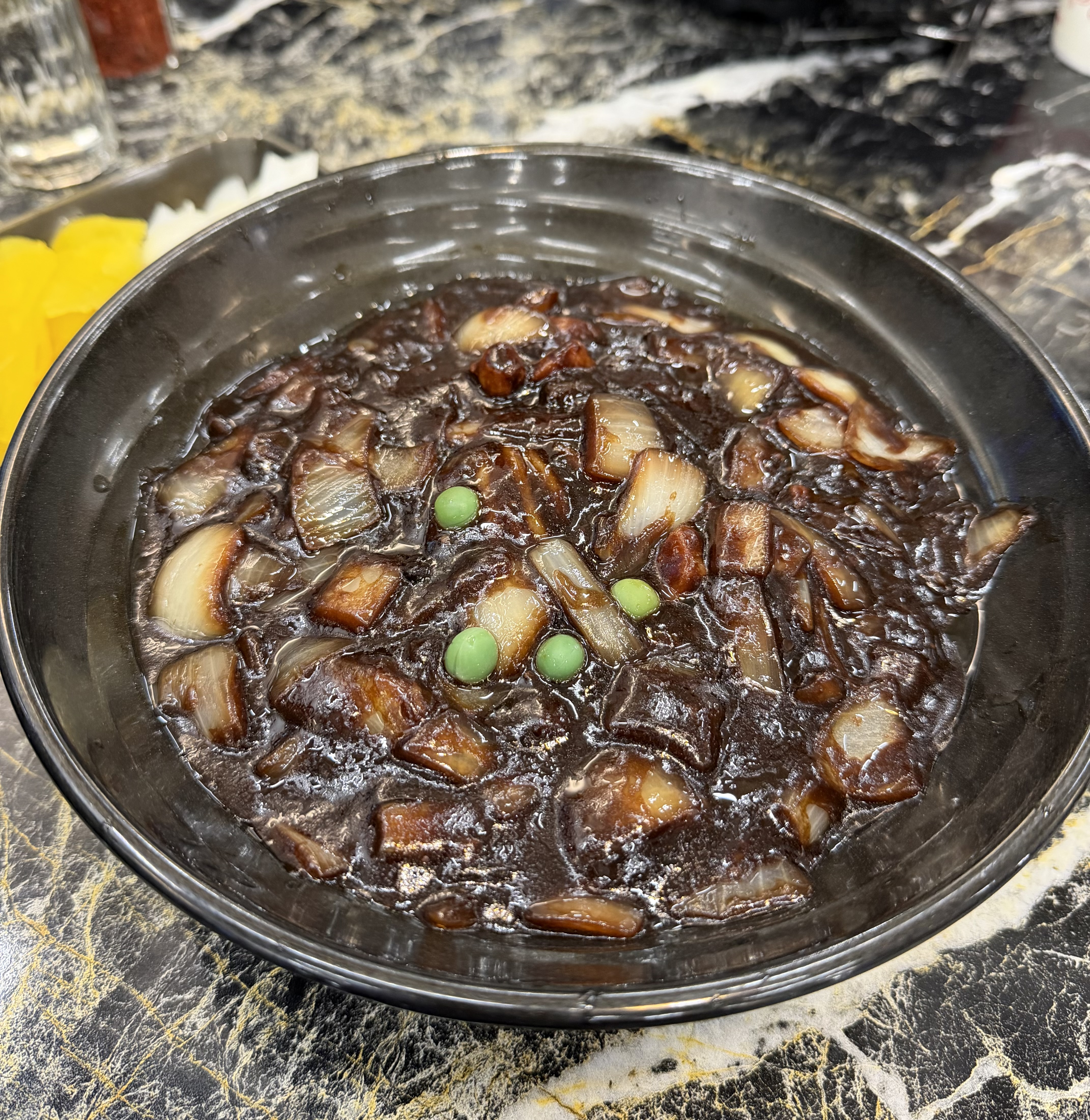
Jajangmyeon (자장면) is Korea's ultimate comfort food — thick wheat noodles slicked in a glossy, almost-sweet black bean sauce — and its origin story starts right here. When Incheon opened as a treaty port, Shandong migrants settled the hillside above the harbor and started cooking for the dockworkers hauling cargo below. Somebody thinned out fermented soybean-and-caramel paste (chunjang) with pork and vegetables, tossed it with noodles, and gave Korea a national dish. Chinatown still runs on it: red lanterns, steep alleys, and a row of jjajangmyeon houses that have been doing this for generations.
Order it right and you'll get either jjajangmyeon, the classic glossy black-bean bowl, or ganjjajang, the same sauce cooked drier and served on the side so the noodles stay springy — regulars usually pick the latter. The building that started it all, the original Gonghwachun on Chinatown-ro, is now the Jajangmyeon Museum, a small shrine to noodle history; the restaurant carrying the Gonghwachun name today is said to be a separate, modern kitchen nearby serving the same classic bowl. And if you're visiting on April 14th, you'll spot groups of single Koreans gathered over black noodles for "Black Day" — the unofficial holiday for anyone without a Valentine's or White Day date, tied to this very dish.
Beyond the museum building, work your way through Chinatown's other kitchens: one nearby spot is known for its uni-jjajang — the same black bean sauce made with finely minced pork and vegetables for a smoother, richer bowl — while another keeps things classic with a straightforward bowl of jjajangmyeon. Expect around ₩7,000–9,000 a bowl, and go hungry; portions run generous.
Jjamppong & the Chinese-Korean Kitchen
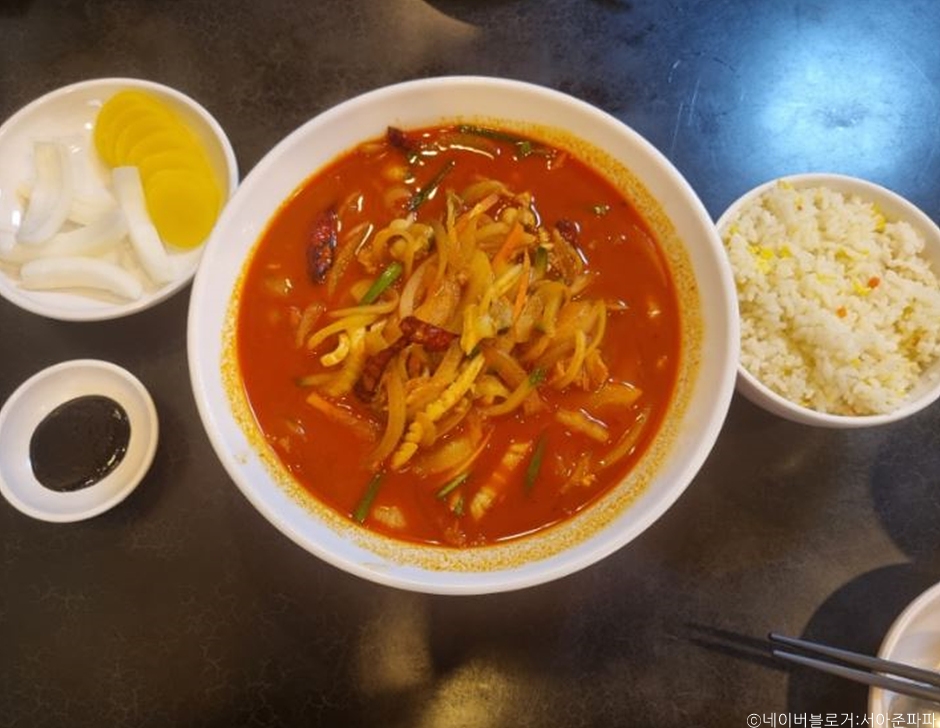
Order jajangmyeon's fire-breathing sibling and you get jjamppong (짬뽕) — a bright red, seafood-loaded noodle soup that's just as central to Incheon's Chinese-Korean kitchens. The story goes that the name traces back to Nagasaki's champon, brought over by Chinese cooks working Japan's own treaty ports and reinvented in Korea with a much heavier hand on the chili oil; whatever the truth, Incheon claims it as its own just as fiercely as it claims jajangmyeon.
A good bowl arrives loaded with squid, mussels, shrimp and cabbage in a broth that's been screaming-hot on the wok, the kind of dish that clears your sinuses in one spoonful. Chinatown kitchens serve the deep, complex samseon-jjamppong (three-treasure jjamppong, stacked with extra seafood), while other spots lean into a fierier, chili-forward bowl for anyone who wants the heat turned up further. Either way it's the move on a cold day walking Chinatown's alleys. Figure on ₩8,000–12,000, more for the deluxe seafood versions.
Sinpo Market & the Open Port: Dakgangjeong and Naengmyeon
A fifteen-minute walk from Chinatown, Sinpo International Market has been Incheon's covered marketplace since the port first opened, and it's where the city's snack culture lives. The headline act is dakgangjeong (닭강정) — bite-size fried chicken tossed in a sticky-sweet-spicy glaze, sold by the box and eaten standing up in the market alley. Korea's whole fried-chicken obsession had to start somewhere, and Sinpo's version — the market's signature snack for decades — is a strong candidate for the original flex. Pair it with gonggalppang, a hollow, oven-baked sweet bread that puffs up like a doughnut with nothing but air inside; both are built for eating on the move between stalls.
Walk a few minutes further into the old open-port district (개항장) and the food shifts from snacks to noodles. This neighborhood filled with refugees from the north after the Korean War, and they brought Pyongyang-style mul-naengmyeon with them — thin buckwheat noodles in an icy, clean beef broth, still served at long-running noodle houses around Sinpo and Dong-gu today. A few blocks over in Hwapyeong-dong, order naengmyeon and you might get it in something closer to a washbasin than a bowl — a local quirk locals will happily explain if you ask why your lunch just arrived the size of your head. (You may also hear that jjolmyeon, Korea's other cult noodle, was born nearby — the story goes that a 1970s factory mistake with naengmyeon dough produced strands too thick to use, and someone served them anyway. Nobody complained.)
Multeombeong: Incheon's Monkfish Stew
Monkfish is one of the homelier catches in the sea, and for a long time Incheon fishermen reportedly didn't even keep it — the story goes they'd toss it straight back over the side, and the splash it made hitting the water gave the fish its local name, multeombeong (물텀벙), roughly "the thing that goes plop." Someone eventually figured out what to do with the meat, and multeombeong-tang is now a Michuhol-gu specialty: firm, almost chewy monkfish simmered in a fiery broth with bean sprouts, the kind of stew that only gets better as the sprouts wilt and soak up the chili oil.
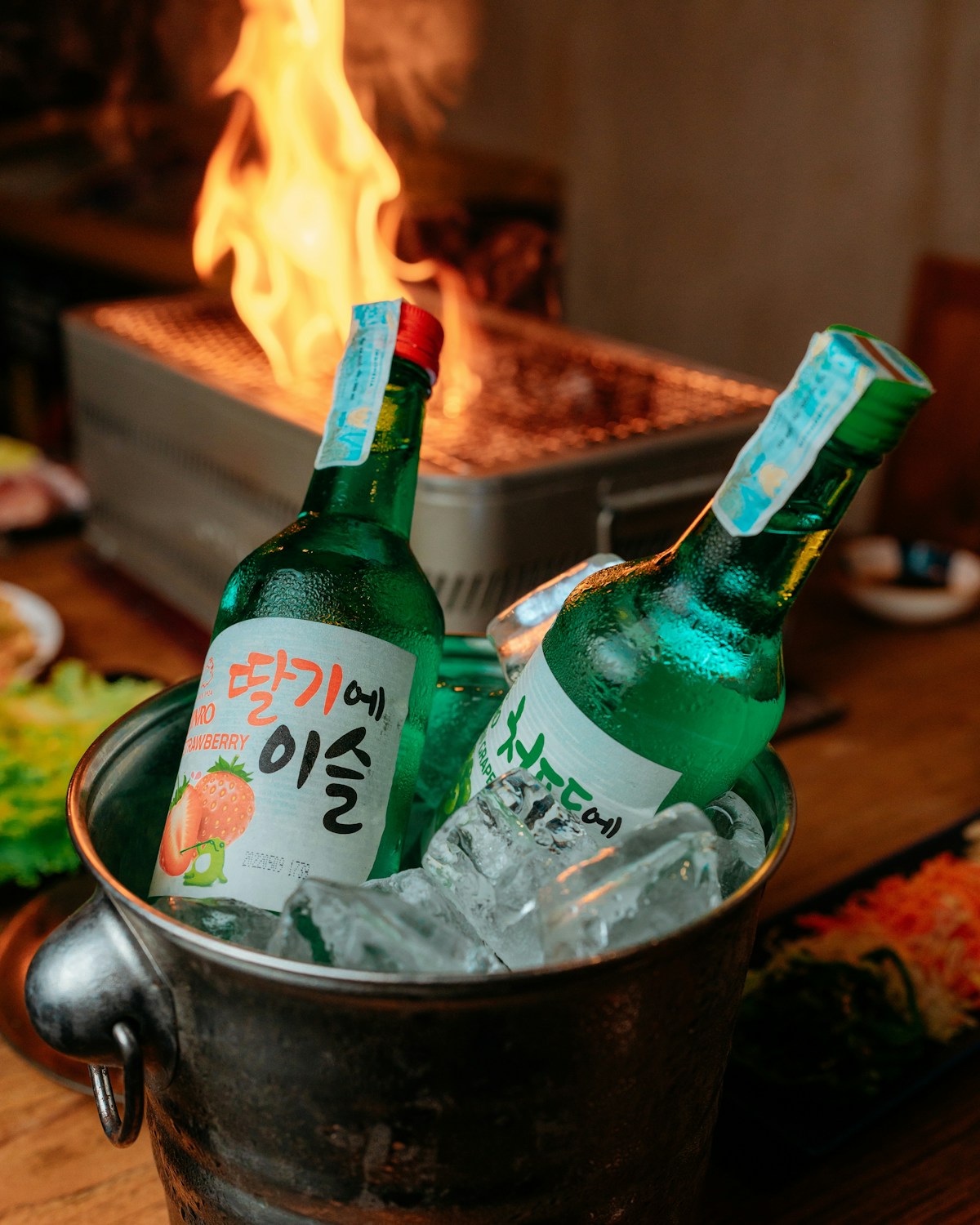
Order it as agujjim (아구찜), the drier, saucier braised version piled with sprouts and vegetables, or agutang (아구탕), a clearer, soupier bowl that leans on the fish itself rather than the chili. The classic version is eaten with soju, loudly, at an old-school spot tucked into Michuhol-gu's backstreets that's been doing this for decades, while a more modern kitchen over in Songdo keeps the same stew on its menu for anyone who's ended up on that side of the city instead. Expect around ₩25,000–35,000 for a portion big enough for two.
The Ganghwa Island Table: Flower Crab, Hanwoo & Baendaengi

Cross the bridge onto Ganghwa Island and Incheon stops feeling like an airport city entirely. Tidal flats stretch for kilometers, mugwort grows wild on the hillsides, and the whole island runs on its own food calendar. The star is kkotge (꽃게), blue flower crab hauled from the Yellow Sea — order it as a bubbling kkotge-tang stew, sweet and briny, or go all in on ganjang-gejang, raw crab marinated in soy sauce until the meat turns translucent and custardy. Locals call ganjang-gejang "rice thief" because one bite and you'll be spooning rice into the shell just to get at the last of the sauce. Crab season runs roughly spring for egg-heavy females and autumn for meatier males, so timing your visit matters if you want the best of it.
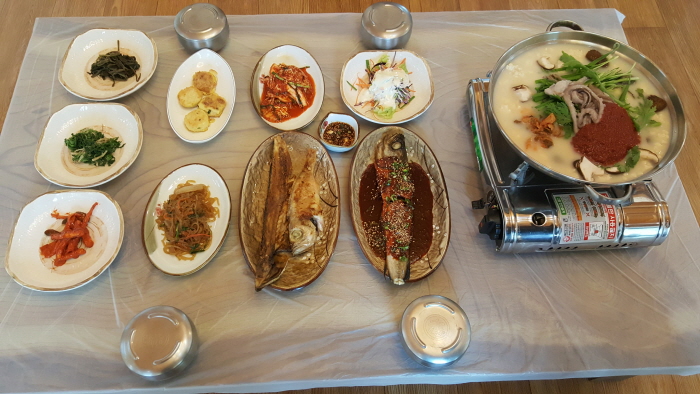
The island's other specialty is ssuk-hanwoo — Korean beef from cattle raised partly on Ganghwa's wild mugwort, prized for a cleaner, slightly herbal edge over standard hanwoo. Round out the table with baendaengi-hoe, thin-sliced raw sea sprat dressed in chili sauce and perilla, and bajirak-kalguksu, hand-cut noodles in a broth built entirely from the island's clams. (If you spot Ganghwa turnip or jeotguk-galbi — pork ribs braised with salted shrimp — on a menu, they're worth a taste too, though that's a story for another day.) A grilled fish plate off the coast rounds things out nicely if you want something simpler. Budget ₩30,000–50,000 per person for the crab, less for noodles and hanwoo.
Grilled Clams by the Airport Sea: Eulwangni, Muui & Yeongjong

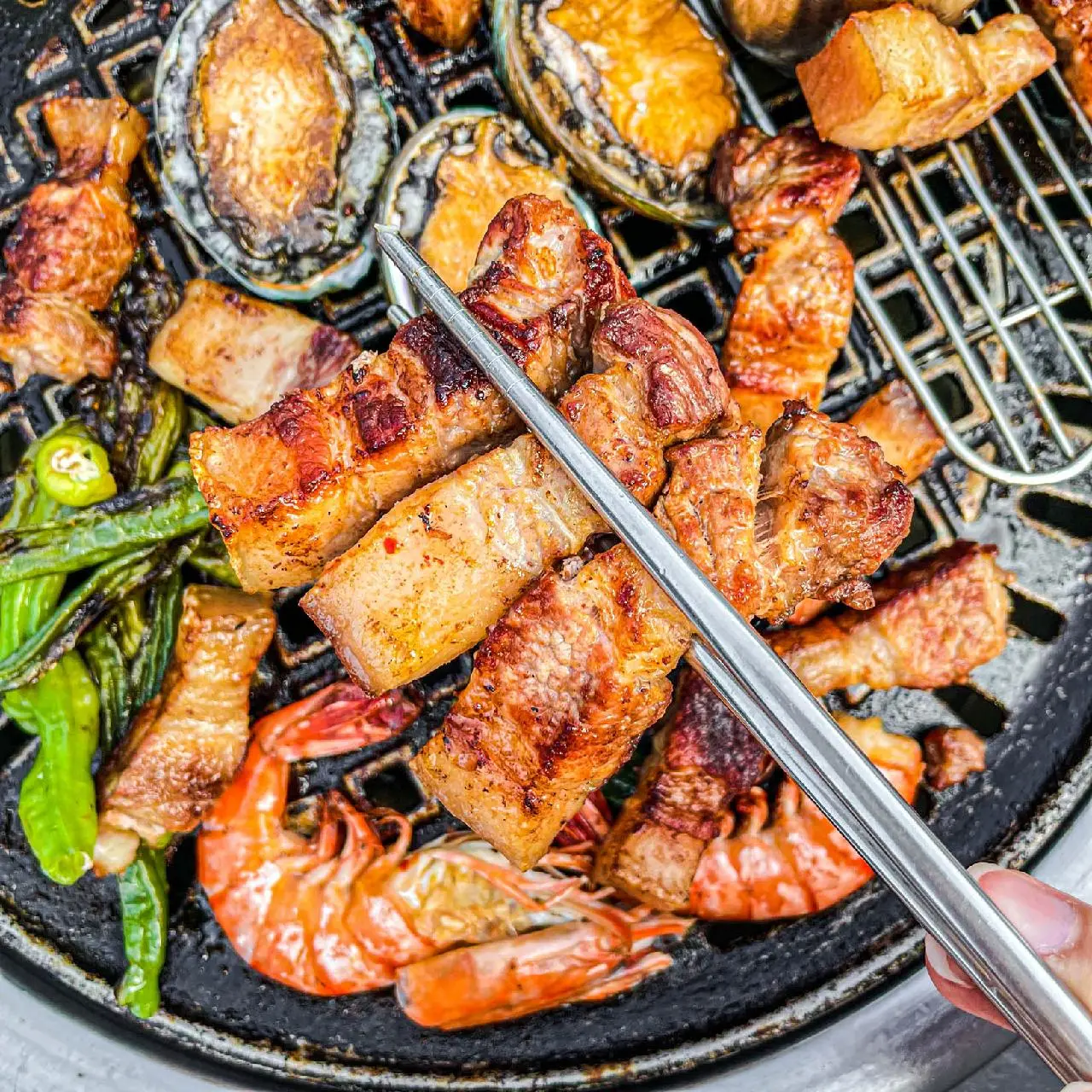
Here's the part most travelers miss entirely: twenty minutes from the runway, Yeongjong Island's beaches — Eulwangni and neighboring Muui — turn into open-air clam grills every evening. Low tide exposes wide mudflats where clams and mussels are still being dug that afternoon, alongside fresh abalone brought in from just offshore; by sunset they're on a wire grill at your table, sizzling in their own juice, while the sky over the Yellow Sea turns orange behind the departing planes. It might be the single best contrast in the city — an international airport ten minutes one way, a beach bonfire clam grill ten minutes the other.
Order the mixed clam grill (조개구이) by the basket and let it steam-cook itself, then ladle the leftover clam broth over rice at the end so nothing goes to waste. If you want something more substantial, look for yeongyang-gulbap — nutrient-rich rice steamed with fresh oysters — or a plate of jeyuk-ssambap, spicy grilled pork wrapped in lettuce, both regulars on menus around Yeongjong and Eulwangni. This is exactly the meal to have on a long layover instead of another airport sandwich — a round trip to the beach and back to the terminal is entirely doable in an afternoon. Budget ₩40,000–60,000 for a clam basket that easily feeds two.
Songdo: The Glass-City Dessert Run

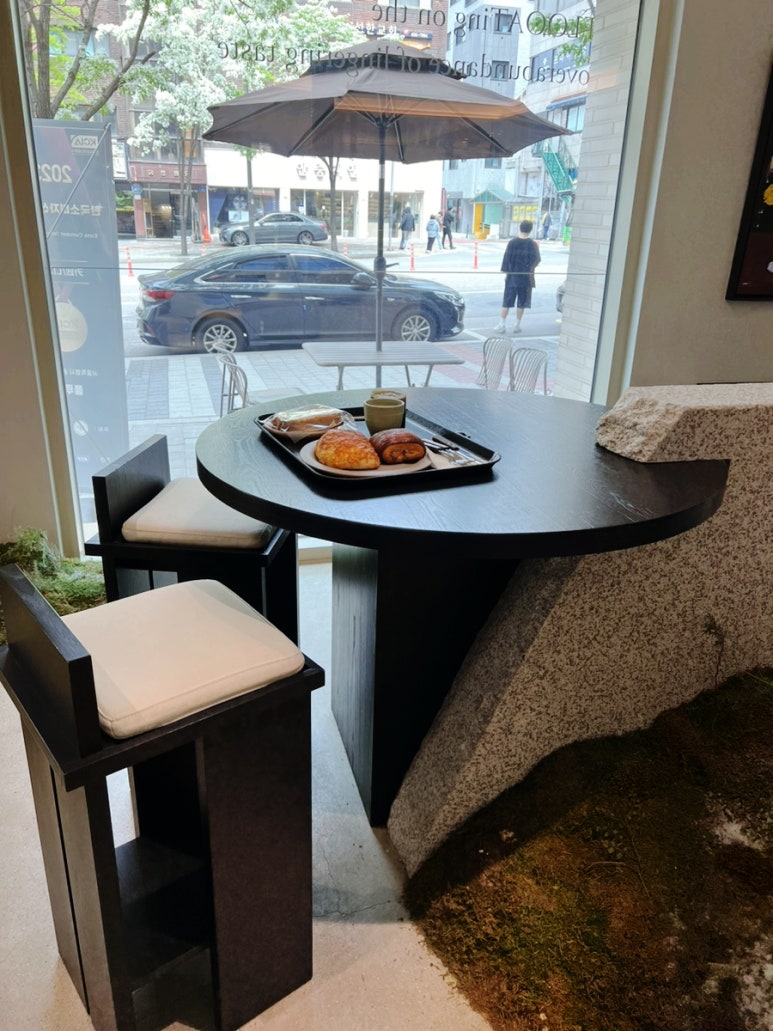
Songdo is the opposite end of the spectrum from everything above — a planned city built entirely on reclaimed tidal flats, all glass towers, canals and a Central Park that looks airlifted in from somewhere else. It's also become one of Incheon's best excuses for an afternoon of café-hopping, popular with the same twenty-something crowd chasing aesthetic interiors and photogenic desserts across Seoul. Expect specialty coffee, elaborate scones and cakes, and the kind of minimalist café design built as much for a camera as for a coffee break — this stretch has quietly turned into a K-dessert favorite in its own right, and a few spots have reportedly started drawing K-drama location scouts, even if nobody's naming names yet.
One recent trend worth chasing down: suyuk-twigim, deep-fried boiled pork, an odd-sounding but increasingly beloved Songdo café favorite that pairs surprisingly well with a coffee. Round out the crawl with a proper scone-and-cake stop and a café known for its signature latte, and you've got a full dessert circuit that feels like a completely different city from the one you started in that morning.
Where to Eat: A Gateway City, Mapped
Incheon's food map runs almost in a straight line from the airport inland, which makes it easy to plan around. Chinatown (인천 차이나타운) sits right outside Exit 1 of Incheon Station, the western terminus of Seoul's Line 1 subway — the whole trip from central Seoul takes under an hour. From there it's a fifteen-minute walk to Sinpo Market and the old Gaehanggae port district. Ganghwa Island is a bus or drive further out, best done as its own half-day trip. Yeongjong Island, Eulwangni and Muui sit right by the airport — about twenty minutes by taxi or bus from the terminals — making them the easiest add-on for anyone flying in or out. Songdo is its own pocket on the far side of the city, reachable by subway or taxi, and worth a dedicated trip rather than squeezing it into the same day as Chinatown.
Tips for First-Timers
- Know your jjajang order. Ganjjajang (sauce on the side, chewier noodles) is the local's move; plain jjajangmyeon (sauce already mixed in) is the classic bowl — both are correct.
- April 14th is Black Day. If you're single in Korea on that date, eating jajangmyeon alongside fellow singles is basically tradition — join in if you're around.
- Time the crab. Ganghwa's blue crab is best with roe in spring (females) and meatiest in autumn (males) — check the season before you commit to a crab feast.
- Grill clams at sunset, with company. Eulwangni's beachside grills are built for two or more and taste best as the tide's out and the light's going gold.
- Turn a layover into a meal. If you've got four-plus hours between flights, a round trip to Eulwangni for grilled clams and back to the terminal is genuinely doable — don't settle for the food court.
- Do the Line 1 pilgrimage. Riding Seoul's subway all the way to its last stop just to eat jajangmyeon where it was invented is a very normal, very worthwhile day trip.
The Incheon Table at a Glance
Seven dishes, one gateway city — here's the quick map for eating your way through Incheon.
| Dish | What it is | Price | Where |
|---|---|---|---|
| Jajangmyeon | Black bean sauce noodles, Incheon's own invention | expect around ₩7,000–9,000 | Chinatown |
| Jjamppong | Fiery seafood noodle soup | expect around ₩8,000–12,000 | Chinatown |
| Dakgangjeong | Sticky-sweet fried chicken bites | expect around ₩15,000–20,000/box | Sinpo Market |
| Multeombeong-tang | Spicy monkfish and bean sprout stew | expect around ₩25,000–35,000 | Michuhol-gu |
| Kkotge-tang / ganjang-gejang | Flower crab stew or soy-marinated raw crab | expect around ₩30,000–50,000 | Ganghwa Island |
| Grilled clams | Beachside clam grill at sunset | expect around ₩40,000–60,000 | Eulwangni & Muui |
| Songdo café run | Specialty coffee, scones, suyuk-twigim | expect around ₩6,000–15,000 | Songdo |
Most people treat Incheon as a layover — a place you land, maybe sleep near, and leave as fast as possible. But this is the city that gave Korea its national comfort-food noodle, that grills clams on the beach twenty minutes from the runway, and that hides an entire glass-and-coffee city on its far edge. Ride Line 1 to its last stop, eat where jajangmyeon was born, and let the rest of the map fill in from there. You probably landed here — don't just pass through.