There is a particular kind of freedom in drinking alone in Korea. No one is waiting for you to finish. No one is choosing the next bar. You sit at a worn wooden counter with a cold bottle of soju, a small plate of anju, and the low hum of a television in the corner — and for a while, the city feels entirely manageable. Koreans even have a word for it: 혼술 (honsul), a contraction of honja (혼자, alone) and sul (술, alcohol). Honsul has its own culture, its own vocabulary, and — increasingly — its own dedicated venues. This guide tells you where to go, what to order, and how to make the most of an evening alone in Seoul.
A note before we start: solo dining and solo drinking in Korea used to carry a faint social stigma. That has changed significantly since the mid-2010s, driven by a generation of single-person households and a wave of dramas and variety shows that depicted honsul not as lonely but as genuinely pleasurable. If you want the companion piece to this guide, 혼밥 (honbap) solo dining covers the food side of eating alone in Korea.
What Is Honsul? The Culture Behind Drinking Alone
South Korea has one of the highest rates of single-person households in Asia — by 2024, roughly 34% of all households in Seoul were single-occupancy. That demographic shift produced an entire market segment around solo living: honbap (혼밥, eating alone), hon-yeong (혼영, watching a film alone), and honsul (혼술, drinking alone). What changed is not that Koreans suddenly started drinking alone — it is that it became socially acceptable to do so openly, and enjoyably, rather than as a last resort.
The cultural turning point is usually traced to around 2015–2016, when the variety show Please Take Care of My Refrigerator and later dramas like Drinking Solo (혼술남녀) depicted professionals sitting alone at convenience store counters or small bars, eating and drinking without the anxiety of being seen without company. The message was clear: honsul is not a sign of failure. It is a choice.
For foreign visitors, honsul is actually an advantage. As a solo traveller, you slip into counter seating that groups cannot fill, you can eat and drink at your own pace, and you often end up in genuine conversation with the staff or neighbouring solo drinkers — which almost never happens when you arrive as a group. The city opens up differently when you are alone in it.
The 5 Best Spots for Solo Drinking
1. Honsul Bars (혼술바) — Built for One
A new category of venue has emerged in Seoul specifically designed for the solo drinker: the honsul bar. These places are not lonely dive bars. They are carefully designed counters — typically eight to twelve seats — where the bar itself is the social space. Each seat has its own small shelf, its own light, sometimes its own power outlet. The staff are trained to be present without hovering. You can read, scroll your phone, or watch the bartender work — all without the social pressure of a group table.
The concept caught on first in Hongdae and Mapo-gu, where single-occupancy apartments are dense and the after-work solo drink is a recognised ritual. Look for venues with the phrase 1인석 있음 (one-person seating available) or 혼술 환영 (honsul welcome) written near the entrance — increasingly common in neighbourhoods like Euljiro and Ikseon-dong.
What to expect: A curated short menu — usually soju, Korean craft beer, and one or two highball options — paired with small-portion anju designed for solo eating. Prices run slightly higher than a pojangmacha but the atmosphere is worth it. Budget ₩15,000–25,000 for a full evening including food.
2. Pojangmacha (포장마차) — The Original Solo Seat
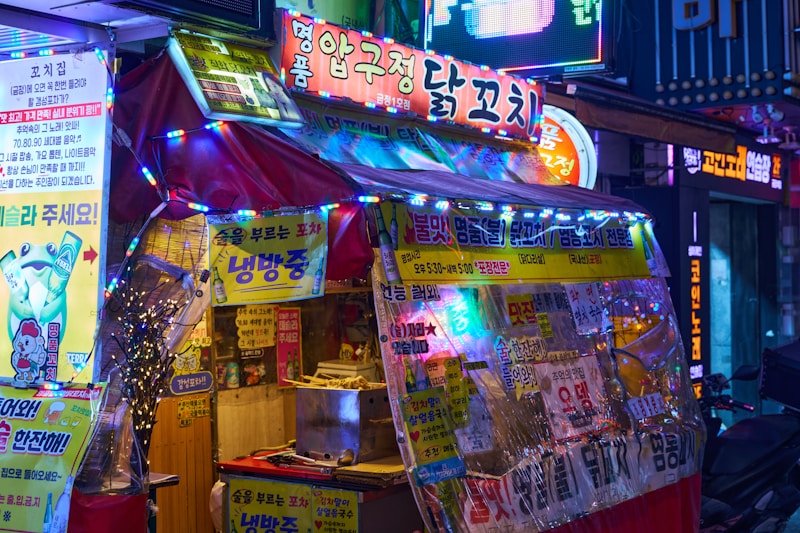
Long before honsul bars existed, there was the pojangmacha (포장마차) — the orange-canopied street stall that has been Seoul's social equaliser for decades. Under the tent, everyone is equal: the lone salaryman, the couple, the group of university students. You slide onto a plastic stool at a shared table, the owner brings a shot glass and a bottle of soju without being asked, and the odeng (어묵, fish cake on a skewer) steams in a pot on the counter in front of you.
The pojangmacha is the most forgiving venue for solo drinking in Korea. No one looks twice at a person sitting alone because the pojangmacha has always been a place where people arrive alone and leave feeling less so. The warmth of the tent, the steam from the food, and the proximity of other bodies at the shared table creates a kind of effortless company that does not require conversation.
Where to find them: Jongno 3-ga (종로3가) is the most famous pojangmacha strip in Seoul, particularly around the alleyways near Tapgol Park after 6pm. Gwangjang Market (광장시장) has covered stalls that function the same way. Euljiro also has a handful of the old-style tents tucked between the workshop buildings. Street vendors near Han River park entrances are a newer version of the same thing.
What to order: Soju (₩3,000–5,000 per bottle), odeng (₩1,000–2,000 per skewer), tteokbokki (₩4,000–5,000), and sundae (순대, Korean blood sausage, ₩5,000). Most pojangmacha owners do not speak English but pointing at what the neighbouring table has ordered is universally understood.
3. Izakaya Counter Seats (이자카야) — Japan's Gift to the Solo Drinker
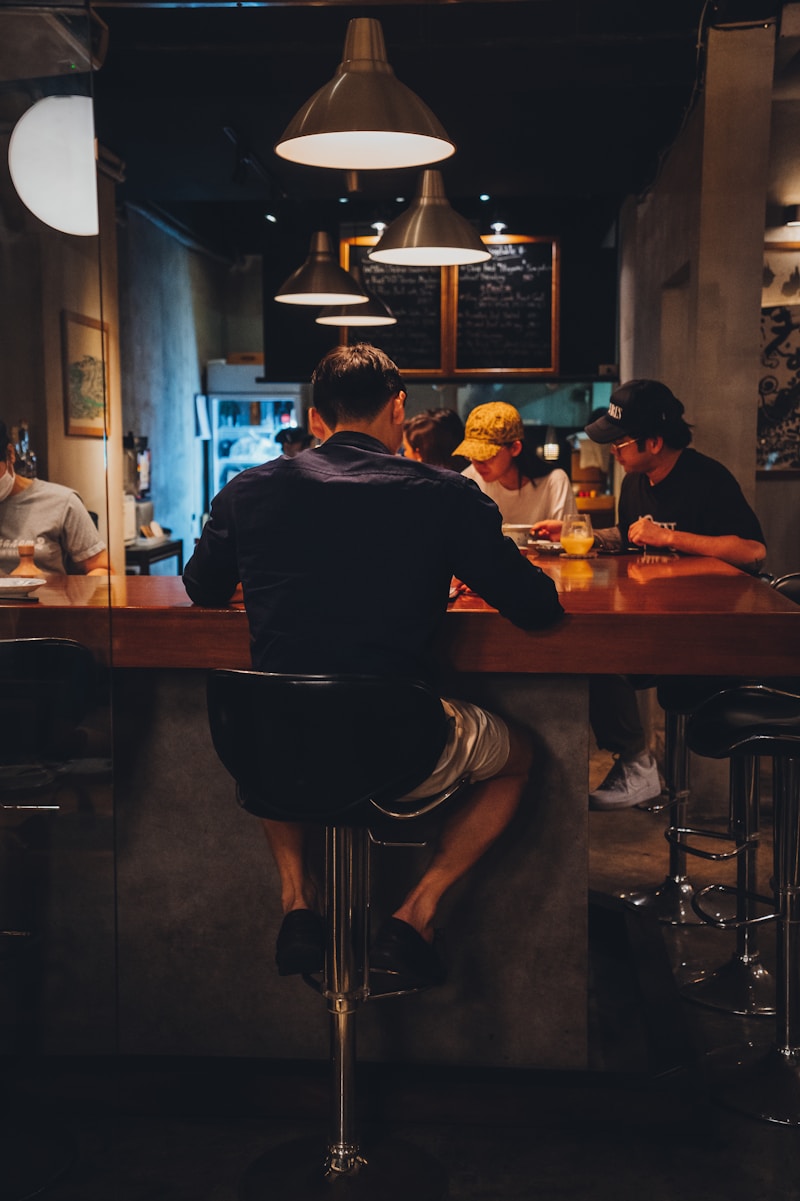
Korean izakaya culture imported from Japan one thing that traditional Korean bar culture lacked: the counter seat as a social institution. In a Japanese-style izakaya (이자카야), the long bar counter facing the kitchen is designed precisely for the solo drinker. You watch the kitchen. The chef acknowledges you. Your food arrives one dish at a time, paced to your drinking rather than to a group order.
Seoul has absorbed and adapted this format extensively. Itaewon and Gyeongnidan-gil have Korean-Japanese izakaya hybrids where the menu mixes yakitori with dakgalbi and the counter overlooks an open charcoal grill. Hongdae has more casual versions. The key phrase to know: "카운터 자리 있어요?" (kaunteo jari isseoyo? — "Is there a counter seat available?"). Counter seats are almost always available for single diners even when group tables are full.
What to drink here: Haiboru (하이볼, Japanese-style highball) is the natural izakaya order — whisky or shochu over ice with soda, clean and long. Korean interpretations often use soju as the base instead of whisky, producing a lighter, more affordable version. A glass runs ₩8,000–13,000 depending on the spirit.
4. Convenience Store Drinking (편의점 혼술) — Seoul's Most Honest Bar
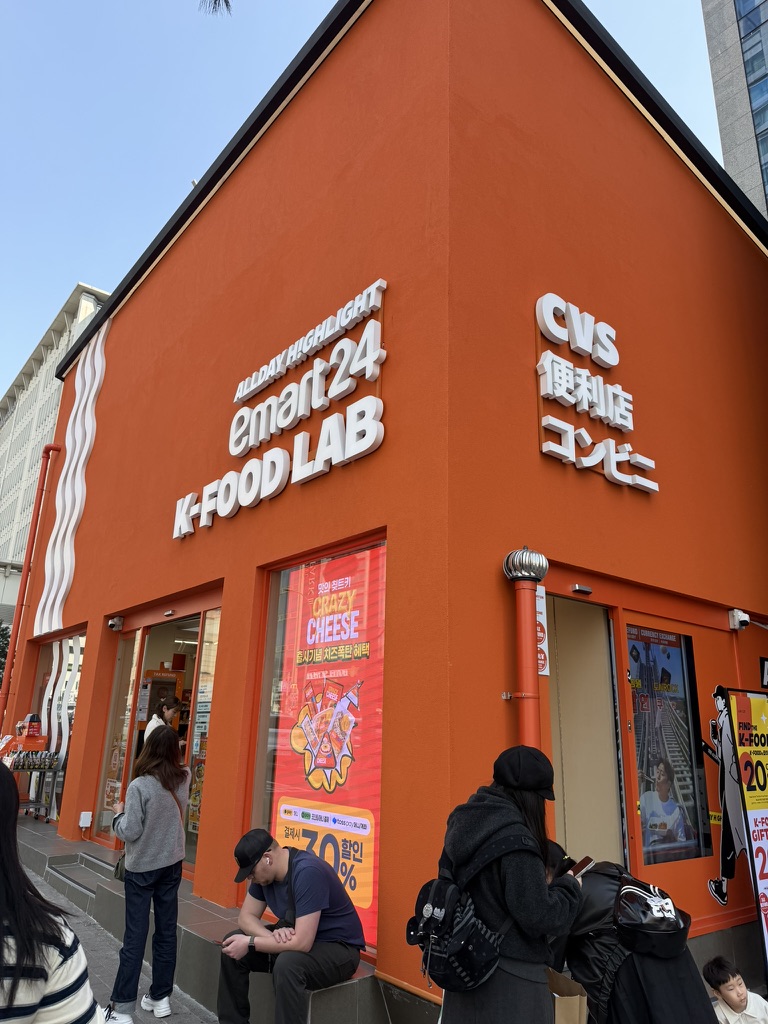
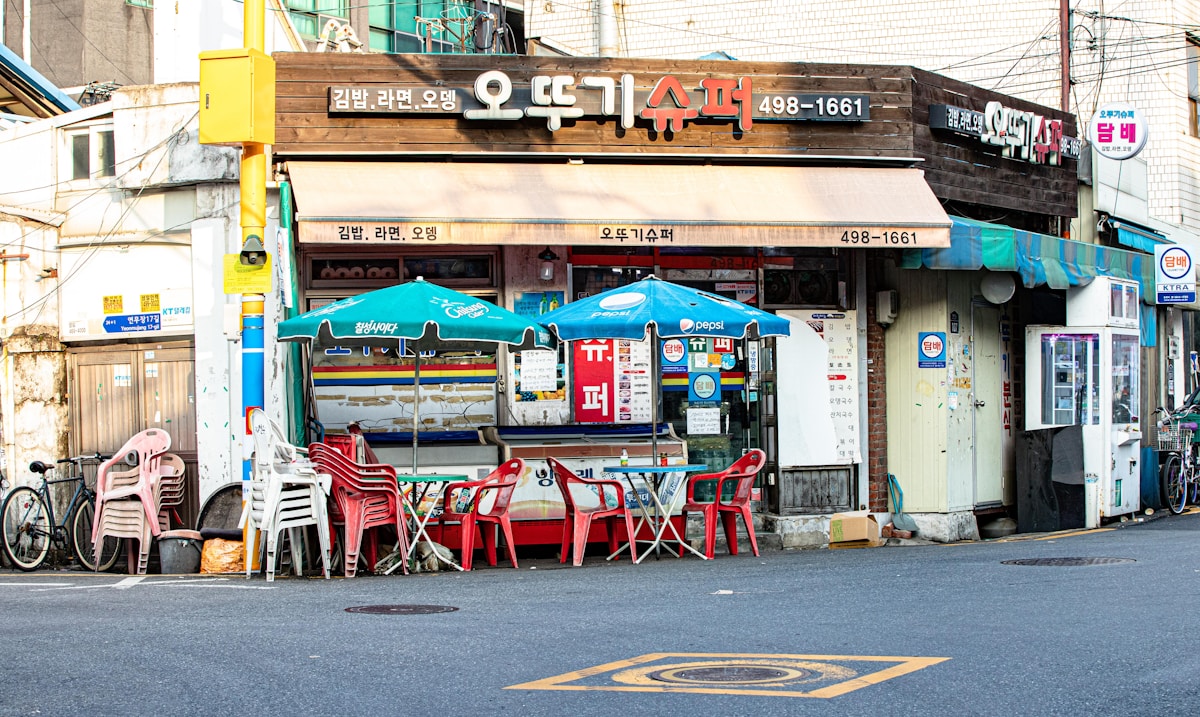
The Korean convenience store — GS25, CU, 7-Eleven, Emart24 — has quietly become one of the best places to drink alone in the country. Most locations have outdoor seating areas just outside the entrance — plastic tables where sitting with a drink is completely normal and accepted. Some stores also have small indoor eat-in spaces, but alcohol inside varies by location; outdoor tables are always the safest bet. You grab a bottle of soju or a can of craft beer from the fridge, pick your snacks from the anju shelf (dried squid, chips, instant ramen cooked in-store), and sit at a plastic table with the city moving around you.
The appeal is total freedom. No one is watching the clock. The alcohol is a fraction of the price of any bar. And convenience stores in Korea are genuinely pleasant spaces — bright, well-stocked, and staffed by people who will not bat an eye at a foreign visitor sitting alone with a soju and a bag of Honey Butter chips at 10pm on a Tuesday.
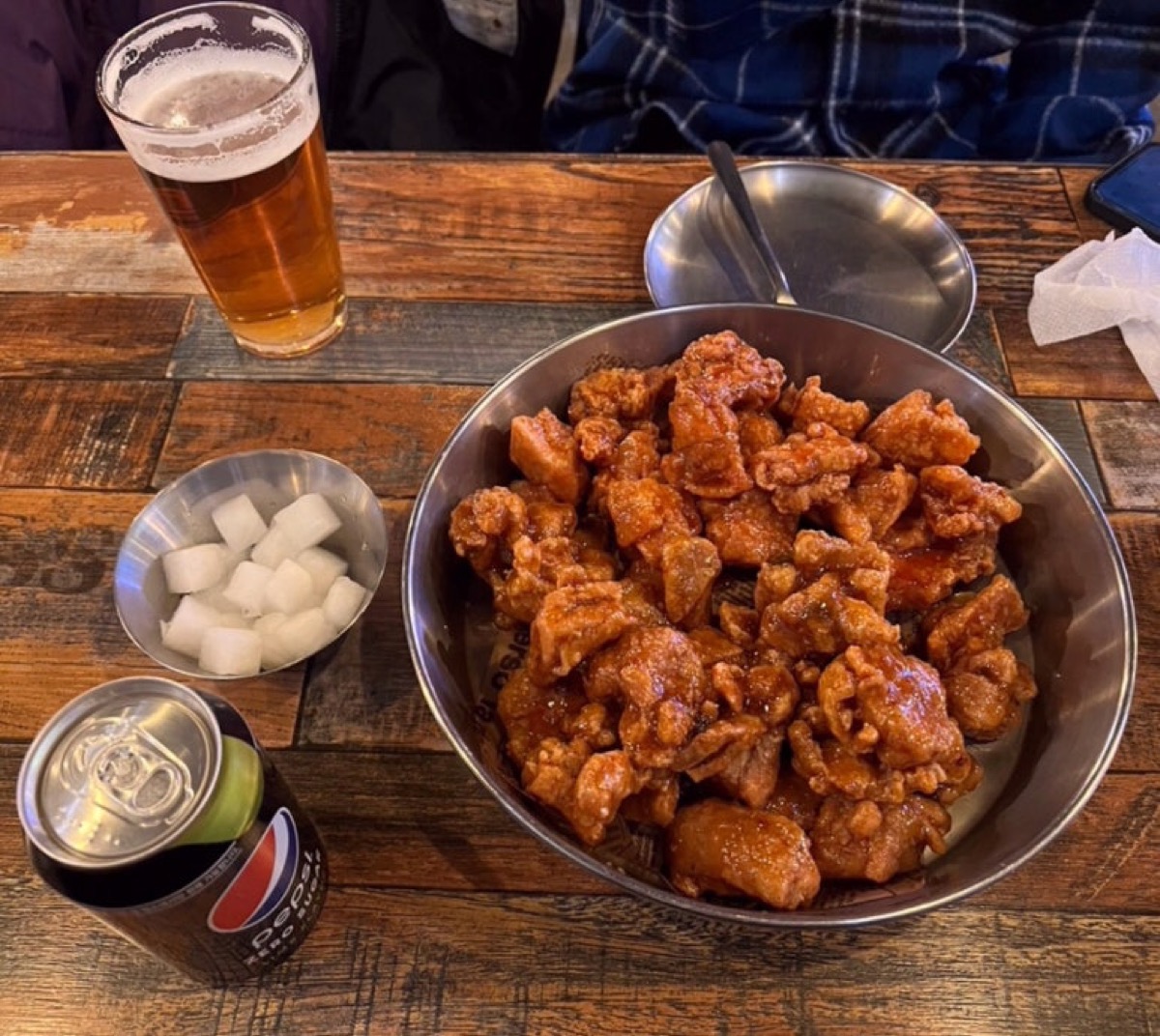
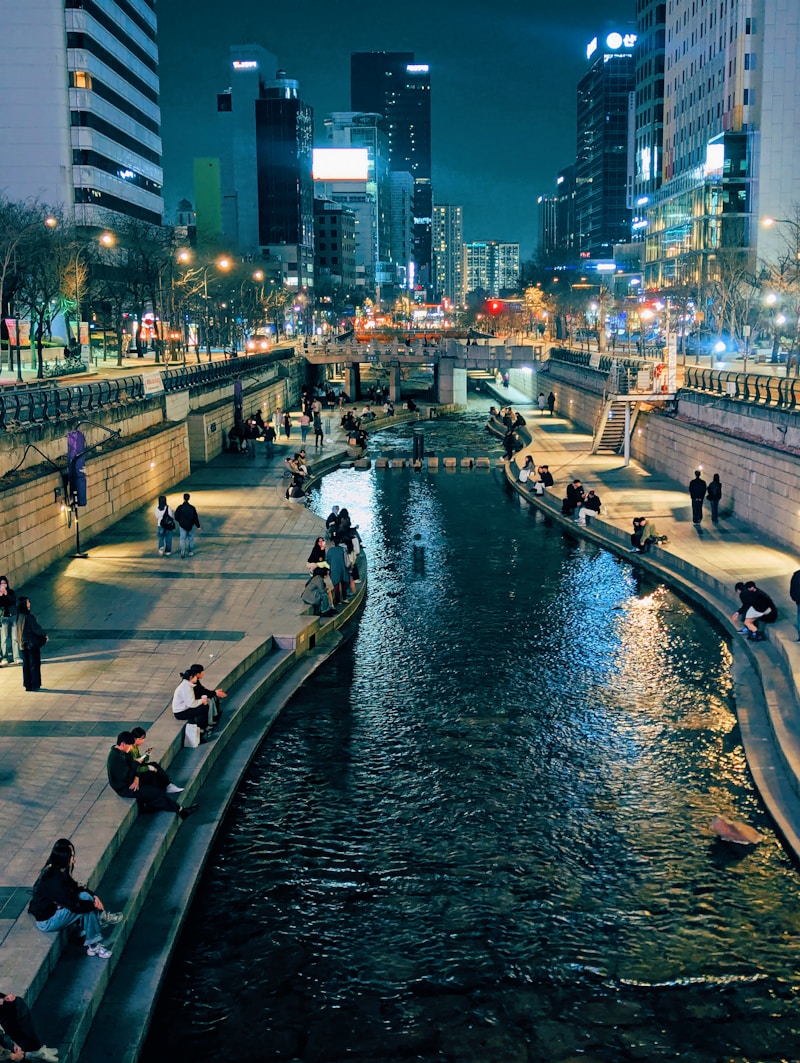
The Han River setup: The most famous version of convenience store honsul is the Han River park session. Buy your drinks and anju at the CU or GS25 at the park entrance (most Han River parks have one within walking distance of the main gate), rent or bring a small mat, and find a spot along the riverside. Chimaek delivery (치맥 — chicken and beer) from nearby restaurants also delivers directly to the park through Baemin or Coupang Eats. The Han River at night, with the bridge lights reflected on the water, is one of those Seoul experiences that costs almost nothing and stays with you for years.
Convenience store anju picks for solo drinkers: Mayak eggs (마약계란, soy-marinated eggs) if available, ojingeo (오징어, dried squid), triangle gimbap (삼각김밥), and any of the instant ramen varieties — GS25 and CU cook it for you at the machine near the counter. Total spend: ₩6,000–12,000.
5. Gamseong Jujeom (감성주점) — Mood Bars
The gamseong jujeom (감성주점, literally "emotional drinking spot" or mood bar) is a Korean invention that deserves its own category. These are bars designed entirely around atmosphere — dim lighting, curated playlists, small tables with candles, and a menu of cocktails and makgeolli that leans heavily on aesthetic presentation. The drinks often arrive in ceramic cups or vintage glassware. The food is plated with care even when it costs ₩5,000.
Gamseong jujeom are inherently solo-friendly because the design encourages quiet presence rather than loud group socialising. Ikseon-dong (익선동) in Jongno-gu is the spiritual home of this format — the neighbourhood's hanok (traditional Korean house) architecture creates natural intimate spaces, and the bars that have moved into the old tile-roofed buildings lean into the contrast between century-old walls and a carefully assembled drinks menu. Euljiro (을지로) has a grittier version of the same mood: retro industrial aesthetics, cheap beer, and the kind of atmosphere that makes a single glass of makgeolli feel like a considered choice.
What to Drink Solo
The drinks landscape for solo drinkers in Korea is essentially identical to the group landscape — but pacing matters more when no one else is setting the rhythm.
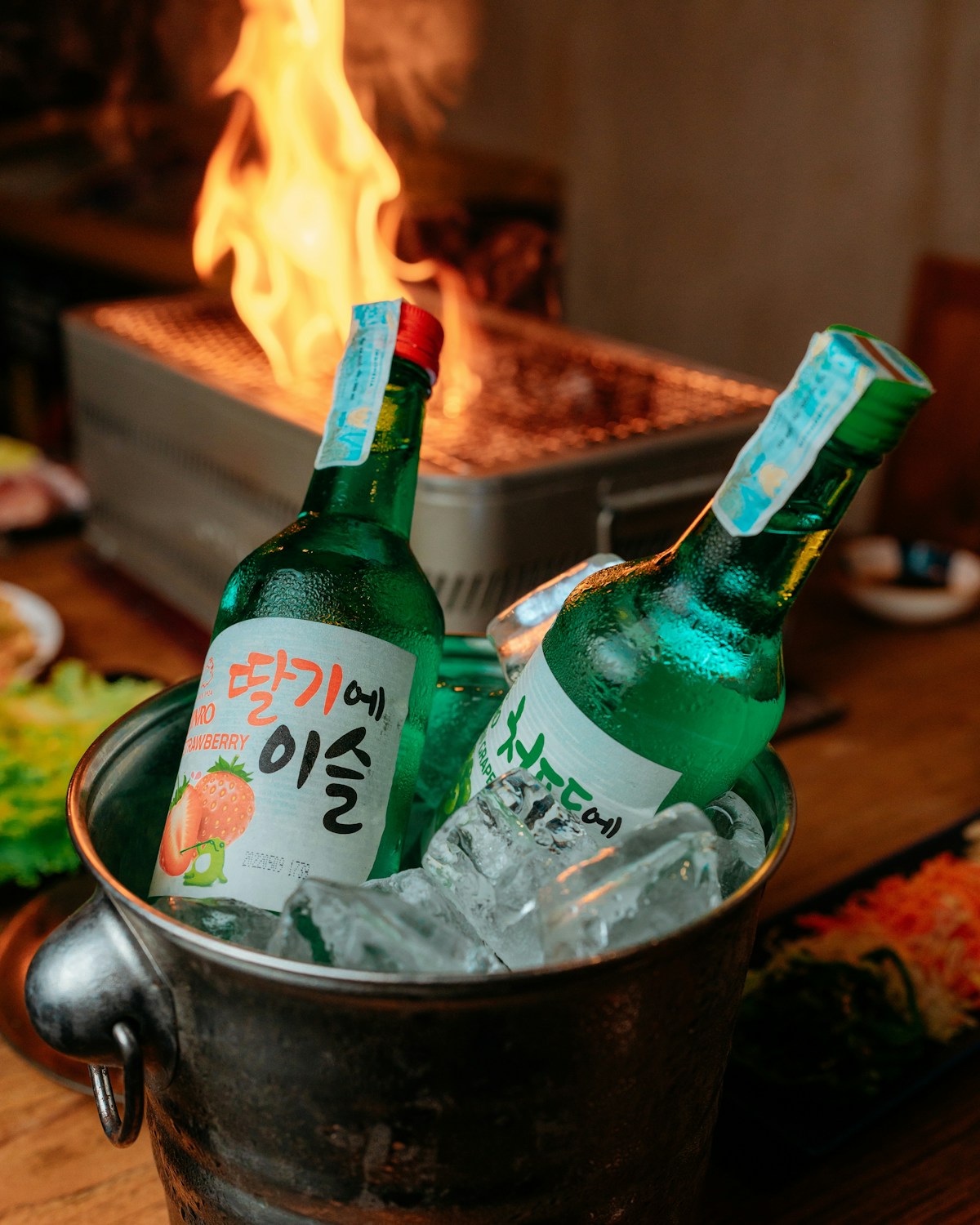
- Soju (소주): The default. A 360ml green bottle at a bar runs ₩3,000–6,000 and contains roughly five standard shots. For a solo session, one bottle is a civilised evening. Flavoured soju (peach, green grape, yuzu) at 12–14% ABV is a gentler entry point than the standard 16.9%. Full guide: Korean Drinking Culture.
- Makgeolli (막걸리): The solo drinker's secret weapon. A 750ml bottle at a pojangmacha or traditional bar costs ₩4,000–7,000 and pours four or five generous cups. The lower ABV (6–8%) and filling nature of the drink makes it naturally self-regulating. Shake before pouring — the sediment is the flavour. Full guide: Makgeolli Guide.
- Korean craft beer (수제맥주): The Seoul craft beer scene has expanded dramatically since 2016. 500ml cans at convenience stores (Jeju Wit Ale, Gompyo Wheat, Magpie IPA) give you a full-flavour solo drink without the commitment of a full session. At a craft taproom, a single pint runs ₩7,000–11,000.
- Highball (하이볼): Pre-mixed highball cans — soju-soda or whisky-soda — are now standard at Korean convenience stores (₩2,500–4,000 per can). At a bar, ask for a haiboru (하이볼). Long, cold, and easy to nurse over an hour.
Anju — The Solo Snack Guide
In Korea, drinking without food is not just unusual — it is quietly frowned upon. Anju (안주) is the umbrella term for drinking food, and the Korean drinking culture has developed an entire sub-cuisine around it. The good news for solo drinkers is that anju culture has adapted accordingly: more venues now offer small-portion or single-serve options designed specifically for one person.
- Ojingeo-bokkeum (오징어볶음): Stir-fried spicy squid. The classic Korean anju — intensely flavoured, pairs perfectly with soju, and arrives in a portion manageable alone. Available at most Korean bars and pojangmacha.
- Dubu-kimchi (두부김치): Pan-fried kimchi served with sliced soft tofu. A brilliant solo order — the tofu cools the palate between spicy kimchi bites, and the dish arrives warm and filling without being heavy. ₩8,000–12,000.
- Pajeon (파전): Green onion pancake, the canonical makgeolli partner. Many makgeolli bars offer a half-portion (반 판, ban pan) for solo diners — worth asking even if it is not on the menu.
- Gobchang (곱창): Grilled beef small intestine. Sounds intimidating, tastes extraordinary — rich, chewy, deeply savoury. Order a small portion (소 곱창) at a pojangmacha or dedicated gobchang bar. The grilling is done at the table so it arrives in stages, which naturally paces a solo meal.
- Gyeran-mari (계란말이): Rolled omelette. Light, mild, and available almost everywhere. The ideal anju if you want something undemanding while you focus on the drink.
- Convenience store anju: Dried squid (오징어, ₩2,500), mayak eggs if available, triangle gimbap (₩1,200–1,500), or a cup ramen cooked at the in-store machine (₩1,500–2,000). A complete solo session for under ₩10,000.
How to Order Alone
Walking into a Korean bar or restaurant alone and communicating effectively requires three or four phrases. That is all. Koreans are not expecting perfect Korean from foreign visitors — they are expecting basic intention and a willingness to try.
- "혼자 왔어요" (honja wasseoyo) — "I came alone." Say this when you arrive. It immediately signals to the staff that you need a single seat and a single set of dishes. Most will nod and show you to a counter or a small table without ceremony.
- "1인석 있어요?" (irinseok isseoyo?) — "Is there a one-person seat?" Useful when looking for counter seating at a bar or izakaya. Many venues that look full at group tables have open counter seats.
- "소주 한 병 주세요" (soju han byeong juseyo) — "One bottle of soju, please." Basic but complete.
- "이거 하나 주세요" (igeo hana juseyo) — "One of this, please." Point at the menu or at what the neighbouring table is eating. Works universally.
- "천천히 마실게요" (cheoncheonhi masilgeyo) — "I'll drink slowly." Useful if a staff member seems surprised by your pace. Also signals that you are not planning to rush and leave — which at quieter venues can relax any anxiety about a solo customer occupying a table.
A practical note on menus: many smaller Korean bars and pojangmacha have no English menu. The most effective strategy is to look at what is on other tables and point, or to ask for the most popular item — "제일 유명한 거 뭐예요?" (jeil yumyeonghan geo mwoyeyo?, "What is the most famous thing here?"). Staff almost always respond positively to this question.
Honsul by Neighbourhood
Different neighbourhoods in Seoul offer different solo drinking experiences. Here is where to go depending on the kind of evening you want.
- Hongdae (홍대) — Mapo-gu: The highest density of solo-friendly bars in Seoul. University district energy, late closing hours (many bars open past 3am on weekends), and a strong honsul bar scene. Counter seating is common and staff are used to foreign visitors. Good for: craft beer, cocktails, late nights.
- Itaewon & Gyeongnidan-gil (이태원 / 경리단길) — Yongsan-gu: The most English-friendly drinking neighbourhood in Seoul. Gyeongnidan-gil in particular has a concentration of independent bars with counter seating and no-reservation cultures. Good for: izakaya, craft beer, international spirits.
- Jongno & Ikseon-dong (종로 / 익선동): The best neighbourhood for solo traditional drinking. Ikseon-dong's hanok bars are atmospheric and designed for quiet drinking. Jongno 3-ga's pojangmacha alley is the most famous solo-friendly street in Seoul. Good for: makgeolli, soju, mood bars.
- Euljiro (을지로): Seoul's hipster retro district — old printing workshop buildings colonised by atmospheric bars with cheap beer and a genuinely local crowd. Low-key, no performance required, excellent for solo sitting and people-watching. Good for: cheap beer, soju, atmosphere.
- Gangnam (강남) — Sinchon & Apgujeong: More polished venue options, higher prices, and a slightly more formal solo-drinking scene. Apgujeong in particular has Japanese-influenced izakaya with proper counter culture. Good for: highballs, whisky, izakaya.
- Han River Parks (한강공원): The outdoor option. Yeouido Han River Park (여의도한강공원) and Banpo Han River Park (반포한강공원) have the best-developed convenience store setups and the most popular late-night riverside spots. Good for: convenience store honsul, summer evenings, a very cheap very memorable night.
Etiquette & Safety
Drinking alone in Korea is safe, enjoyable, and increasingly normal. A few things to keep in mind will make your evening run more smoothly.
Pacing Yourself
The standard Korean group drinking pace is fast — shots poured and downed, glasses refilled before they are empty. Solo, you set your own rhythm. There is no social pressure to keep up with anyone. The phrase "천천히 마실게요" (I'll drink slowly) is all you need if a staff member seems surprised by your pace. One bottle of soju over ninety minutes at a pojangmacha is a perfectly respectable honsul session. Two bottles is a full evening. Three is ambitious even by Korean group standards.
The honest risk of honsul is the opposite of what you might expect: because there is no social friction — no one slowing you down, no one to judge your third pour — it is easy to drink more than you intended. Eating consistently throughout (this is what anju is for) and staying conscious of water intake keeps the evening enjoyable rather than regrettable. Buy a Morning Care (모닝케어) or Condition (컨디션) hangover drink at the convenience store before you start — ₩3,000–4,000, and they genuinely help.
Safety for Solo Women
Seoul is consistently ranked among the safest major cities in Asia for solo female travellers, and the honsul bar and pojangmacha scenes are not exceptions to this. A few practical points: the Jongno pojangmacha area is very well-lit and has a high foot-traffic density throughout the evening. Ikseon-dong bars are small and intimate — staff are visible and present. Itaewon's busier stretches on Friday and Saturday nights are louder and more chaotic; Gyeongnidan-gil is calmer and more pleasant for solo evenings. Avoiding eye contact with extremely intoxicated men (rare but possible near Hongdae on weekend nights) is sensible in any major city. The Kakao T app for taxis is essential — always book through the app rather than hailing from the street after midnight.
Getting Home
Seoul subway closes around midnight on most lines (last trains run from 11:30pm to 12:30am depending on the line and direction). Check the Seoul Metro app before your evening — it shows live last train times by station. If you are out past midnight, Kakao T for taxis is the standard solution; fares are metered and drivers follow the route shown on the app. For Han River park sessions, budget for a taxi back regardless of the time — park entrances are not always close to subway stations.
The Morning After
If the honsul went longer than planned, Korea has a dedicated hangover recovery culture worth knowing about. Convenience stores stock haejangguk instant soups and hangover recovery drinks. Dedicated haejang restaurants open from 6am and serve the classic cures: kongnamul-guk (콩나물국, soybean sprout soup), hwangtae-haejangguk (황태해장국, dried pollack soup), and haejangguk (해장국) in its various forms. Full guide: Korea Hangover Food Guide.
Tips
- Counter seats fill up: At popular izakaya and honsul bars, counter seats go fast on Thursday through Saturday evenings. Arrive before 7pm for the best choice, or go on a weeknight when the energy is calmer and staff have more time to talk.
- 1인 메뉴matters: Look for 1인 메뉴 (single-person menu) on the board — an increasing number of Korean bars and pojangmacha now offer anju portions sized explicitly for one. If you do not see it, ask: "혼자인데 작은 거 있어요?" (honjaindeol jageun geo isseoyo? — "I'm alone, do you have a smaller portion?"). Most kitchens can accommodate this.
- The pojangmacha blanket: Many pojangmacha provide small blankets or lap covers for customers sitting at outdoor or semi-outdoor stalls on cool evenings. Just ask — they are usually stacked somewhere near the counter.
- Naver Maps over Google Maps: When searching for bars in Korea, Naver Maps returns far more accurate results for local venues than Google Maps. Search in Korean characters when possible — 혼술바, 포장마차, 이자카야 — for the most complete results.
- Han River park convenience stores: The CU and GS25 outlets at Han River park entrances consistently stock the best convenience store anju selection — more variety than neighbourhood stores. They also rent mats (돗자리) and camping chairs during summer season for ₩1,000–3,000.
- Timing the pojangmacha: The Jongno pojangmacha strip hits full energy around 8–9pm on weeknights. Arriving at 7pm gives you a choice of seats and a quieter start. By 10pm, most stalls are full and the atmosphere is at its peak. The vendors typically run until 1–2am.
- Legal and social context: Drinking in public is legal in Korea. Drinking alone in a park, on a riverside bench, or at a convenience store table is completely normal and carries no social stigma. This is not universally true across East Asia — it is specific to Korea and makes the country genuinely unusual in the best way.