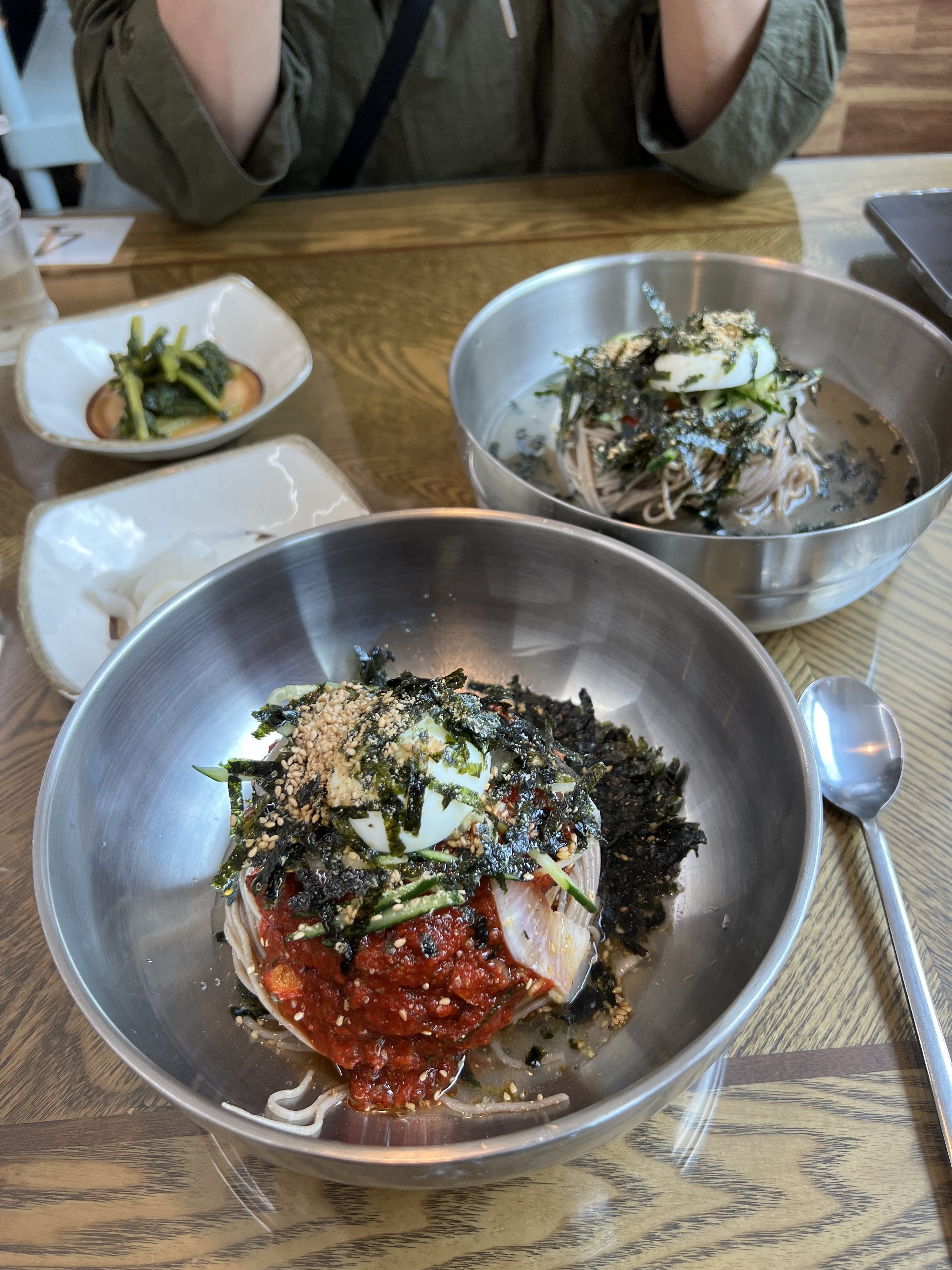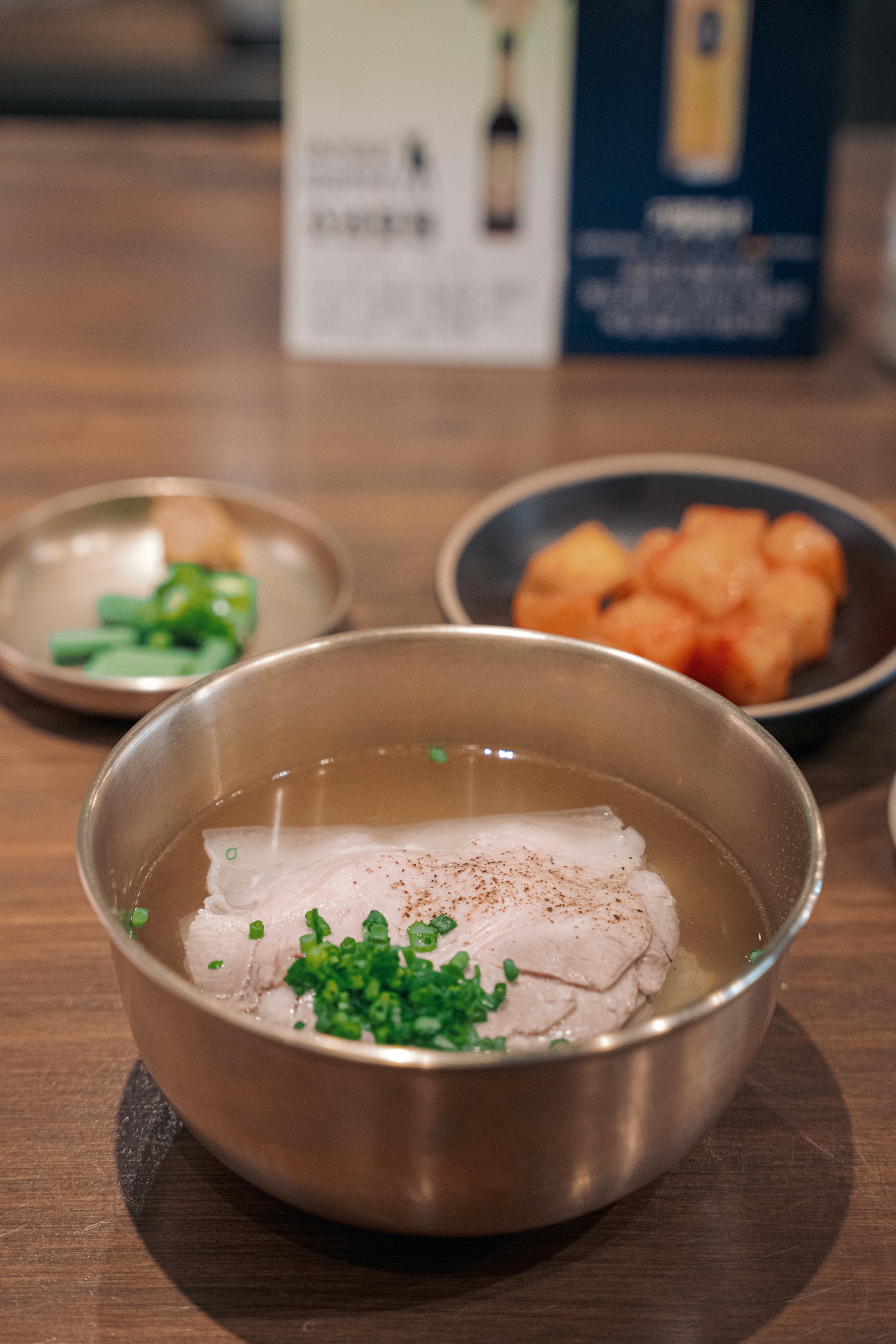
It is 4:50 in the morning in Seoul. The last subway ran hours ago. Somewhere in Euljiro, a fluorescent sign flickers on above a low doorway, and the smell of slow-simmered broth rolls out into the cold street. Inside, three men in wrinkled dress shirts have their heads bowed over stone bowls. A woman in an apron ladles soup without being asked. No one is talking. No one needs to. This is haejangguk (해장국) — the ritual that closes the night and opens the morning — and it is one of the most distinctly Korean things you will ever witness.
Korea has a centuries-old relationship with the morning after. The word haejangguk breaks into haejang (해장, to relieve the stomach) and guk (국, soup). But the concept runs deeper than etymology. In a country where drinking is a communal ritual tied to workplace relationships, social hierarchy, and the release of collective pressure, recovery is taken as seriously as the night itself. There are dedicated 24-hour restaurants, a multi-billion-won convenience store cure industry, and an entire food vocabulary built around this one moment. This guide maps all of it — from the five main soup types to the pre-dawn dining culture that has no real equivalent anywhere else in the world.
What Is Haejangguk?
Haejangguk is not a single dish — it is a category. Any soup eaten with the explicit purpose of recovering from alcohol counts. The through-line is intensity: haejangguk broth is always deep, always savoury, and always built to do something. The flavour profile swings between rich and meaty (ugeoji haejangguk, dried napa cabbage with ox blood) and clean and mineralic (bugeot-guk, dried pollack broth), but the intention is the same: restore what the night took.
The practice is ancient. Historical records from the Joseon period describe ox bone broth consumed after ceremonial drinking occasions. What changed in the 20th century was the infrastructure: as Seoul's nightlife expanded through the 1980s and 1990s, a specific restaurant typology emerged — small, no-frills, steam-heavy, open from midnight through the morning. These places were built for one purpose and they are still operating today. If you have read the gukbap guide, you know the rice-in-soup format that several haejangguk styles use. This guide focuses on the hangover ritual itself rather than the gukbap form — the food overlaps, but the cultural context is different.
A note on haejang as a concept: Koreans distinguish between the soup (haejangguk) and the broader act of hangover recovery (haejang). Going out specifically to eat hangover food is called haejang hada (해장하다). It is something you do, not just something you eat — and that distinction matters when you are at 4AM trying to explain to a taxi driver where you want to go.
The 5 Main Types of Korean Hangover Soup
These are the five varieties you will encounter most frequently, ordered roughly from the most intense to the lightest:
Ugeoji Haejangguk (우거지 해장국) — The Classic
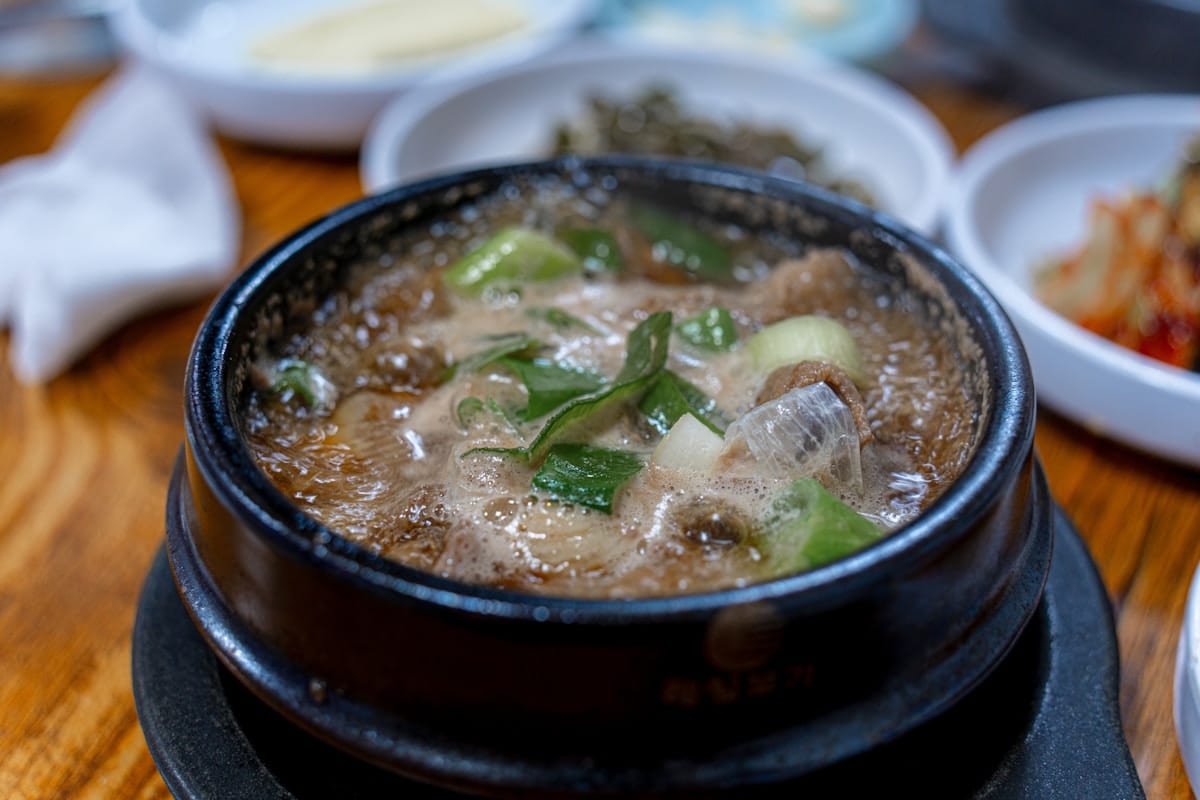
This is what most Koreans picture when they say haejangguk. The base is a long-simmered ox bone broth (sagol guk, 사골국) — deep brown, slightly gelatinous, with a mineral richness that coats the mouth. Into this goes ugeoji (우거지), the dried outer leaves of napa cabbage that would otherwise be discarded. They absorb the broth and turn silky, with a faint fermented edge. Most versions also include seonji (선지, congealed ox blood), which looks alarming on first encounter and tastes like a very mild, soft tofu once it is warm. The soup arrives in a stone bowl, still bubbling. It is topped with a tangle of spring onions and a small mound of minced garlic. Mix everything together, take your first spoonful, and feel your body remember what it is supposed to be doing.
- Best for: Heavy nights, mornings when your stomach needs something substantial
- Intensity: High — the ox blood and fermented cabbage are an acquired taste
- Price: ₩8,000–12,000
- If you want to skip the blood: Tell the staff seonji bbego juseyo (선지 빼고 주세요) — "without blood, please"
Kongnamul Gukbap (콩나물 국밥) — The People's Cure
If ugeoji haejangguk is the storm, kongnamul gukbap is the rain clearing. Soybean sprout soup (kongnamul guk) is one of Korea's most elemental dishes — clear broth, crunchy bean sprouts, a whisper of garlic and doenjang — and in its gukbap form, with rice cooked directly in the broth, it becomes the most widely eaten hangover food in the country. The sprouts contain asparagine, an amino acid that accelerates alcohol metabolism, which gives the dish a biochemical claim to its reputation that the other soups lack. The Jeonju region is famous for kongnamul gukbap — restaurants there serve it with a raw egg cracked directly into the hot soup (stir it fast), dried seaweed, and a row of banchan. A full Jeonju-style bowl at 6AM is one of the best meals you can have in Korea. See the gukbap guide for the full story on this style.
- Best for: Any level of hangover; also works as a light early breakfast
- Intensity: Low to medium — clean, accessible, beginner-friendly
- Price: ₩6,000–9,000
- Order tip: Ask for dal-gyyal (달걀, egg) on the side if you want to add it yourself
Ppyeo Haejangguk (뼈 해장국) — Bone Broth Depth
Where ugeoji haejangguk uses ox blood for richness, ppyeo haejangguk builds its intensity through pork spine bones (gamjatang-adjacent, though not identical). The bones are simmered for hours until the broth turns milky and the meat falls away. A portion of perilla leaves (deulkkae, 들깨), ground sesame, and soybean paste finish the bowl — the result is dense, almost fatty, and deeply warming. This style is less common in the morning-specific haejangguk houses and more likely to be found at late-night restaurants that run through dawn. If you find it on a menu at 3AM, order it.
- Best for: Cold nights, very late nights that have become early mornings
- Intensity: High — the milky bone broth is rich and filling
- Price: ₩10,000–14,000
Bugeot-guk (북엇국) — The Gentle Cure
Dried pollack (bugeot, 북어) soup is the haejangguk that your Korean mother would make at home. The broth is completely clear — pale gold, delicate, almost nothing — but dried pollack has a remarkable ability to pull toxins and rehydrate without demanding anything from a suffering stomach. The fish is shredded into long, soft threads and the soup is seasoned with a light doenjang base, garlic, and egg ribbons. No heat, no heaviness. Korean grandmothers have given this soup to hungover family members for generations, and the science is on their side: the amino acids in dried pollack, particularly methionine, support liver function. It is also the most approachable haejangguk for visitors who are not ready for ox blood at sunrise.
- Best for: Sensitive stomachs, mornings when even food sounds difficult
- Intensity: Low — mild, clean, restorative without being challenging
- Price: ₩7,000–10,000
- Note: More common as a home-cooked dish; look for it at traditional Korean restaurants rather than dedicated haejangguk houses
Sundaeguk (순댓국) — The Late-Night Veteran
Sundae (순대) is Korean blood sausage — a steamed casing of pig intestine filled with glass noodles, barley, and pork blood. Sundaeguk is the soup version: sundae slices and various pork offal in a rich pork bone broth, finished with doenjang and spring onions. It is the soup you eat after a long night of drinking in a market area or near a bus terminal at 2AM — the domain of working-class Korea and the most unapologetically honest food on this list. The flavour is bold and requires no pretense. Dip the sundae in the provided salt-and-pepper mix, mix in a spoonful of saeujeot (새우젓, fermented shrimp paste) to season your broth, and eat quickly while it is still hot.
- Best for: Late-night eating rather than early-morning recovery; adventurous eaters
- Intensity: High — offal, blood sausage, and fermented condiments
- Price: ₩7,000–10,000
- Where to find it: Traditional markets (시장), bus terminal areas, pojangmacha districts
Beyond Soup: The Full Korean Hangover Toolkit
Koreans do not rely on soup alone. The hangover recovery ecosystem extends well into convenience stores, instant noodle aisles, and traditional drinks — and several of these options are faster, cheaper, and more accessible than finding a haejangguk restaurant at 2AM.
Convenience Store Hangover Drinks (숙취해소제)
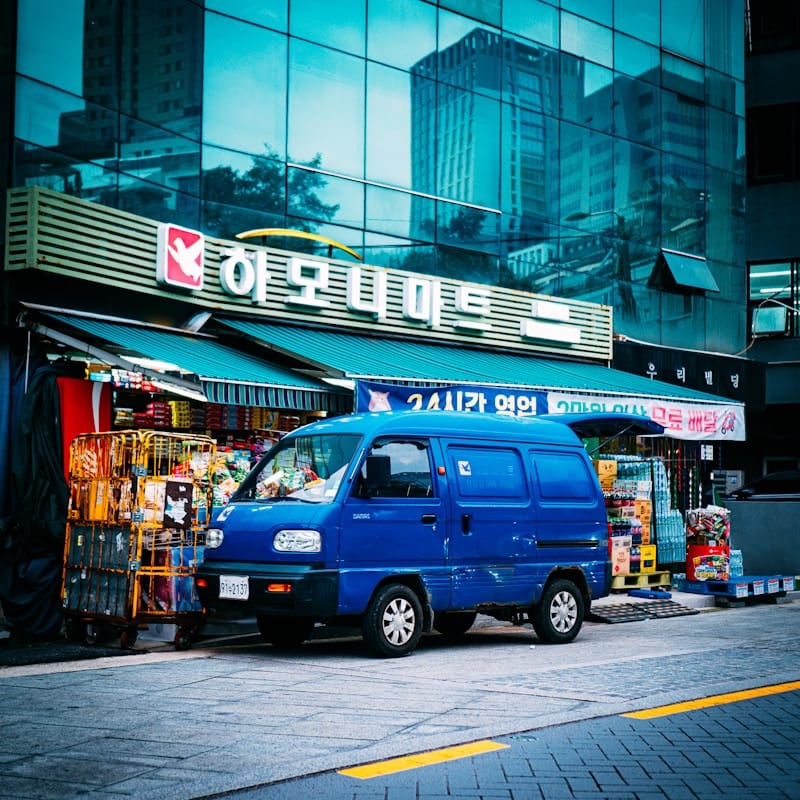
Walk into any GS25, CU, or 7-Eleven in Korea and you will find a dedicated hangover drink section. These are not aspirin — they are small bottles of concentrated herbal extract, typically featuring hovenia dulcis (헛개나무 열매, the Oriental raisin tree fruit), which has documented effects on alcohol metabolism in liver research. The main brands:
- Condition (컨디션) — the original and still most trusted. A 100ml bottle of dark brown liquid that tastes vaguely medicinal. Costs ₩3,500–4,000. Available everywhere.
- Hut-gae Condition (헛개컨디션) — the hovenia dulcis-focused version from the same manufacturer. Slightly more bitter, considered more effective by regular users.
- Morning Care (모닝케어) — the lighter, more palatable alternative. Take before drinking. Tastes less intimidating than Condition.
- Lemon&Dori (레몬&돌이) — the vitamin C-forward option, easiest to drink, good if you find the others too strong.
The Korean consensus: take one before or during drinking for maximum effect, not the morning after. But the morning-after version still helps. Buy whichever one is coldest in the fridge — you want it cold.
Haejangguk Ramyeon (해장라면)
Several instant noodle brands produce hangover-specific ramyeon — slightly spicy, rich in glutamates, with a broth formulated to taste like a simplified haejangguk. Nongshim's Haejangguk Ramyeon and Paldo's Haejangguk Myeon are the most common versions. Convenience stores sell them ready-to-eat in a cup for ₩1,500–2,000, or you can buy the packet and make it at the in-store hot water station. This is the 3AM option — the one you make in your hotel room or at the convenience store counter while waiting for the first subway. It is not the same as the real thing, but it is warm, salty, and it works.
Sikhye (식혜) and Banana Milk
Sikhye (식혜) is a traditional Korean sweet rice punch — very lightly fermented, mildly sweet, served cold. It has been consumed as a digestive aid after meals for centuries. At 4AM it does something specific: the gentle sweetness restores blood sugar without triggering nausea, and the cool temperature helps. It comes in tall cans at every convenience store for ₩1,200–1,500. Pair it with a banana milk (bananameilkeu, 바나나맛우유) — the iconic yellow bottle that has been a hangover companion for generations of Koreans — and you have covered both the sugar deficit and the stomach-lining requirement without needing to find a restaurant.
Cold Water and Electrolytes
Koreans drink Bacchus D (바카스D) — a small amber bottle of taurine-based energy drink that predates Red Bull by decades — both during and after drinking nights. At ₩1,000 per bottle, it is the simplest and cheapest electrolyte hit available. The taste is slightly medicinal and very Korean. If you see older Korean men walking out of a convenience store at 6AM with a Bacchus D, they know something you should know.
Dawn Culture: Why Koreans Eat at 5AM
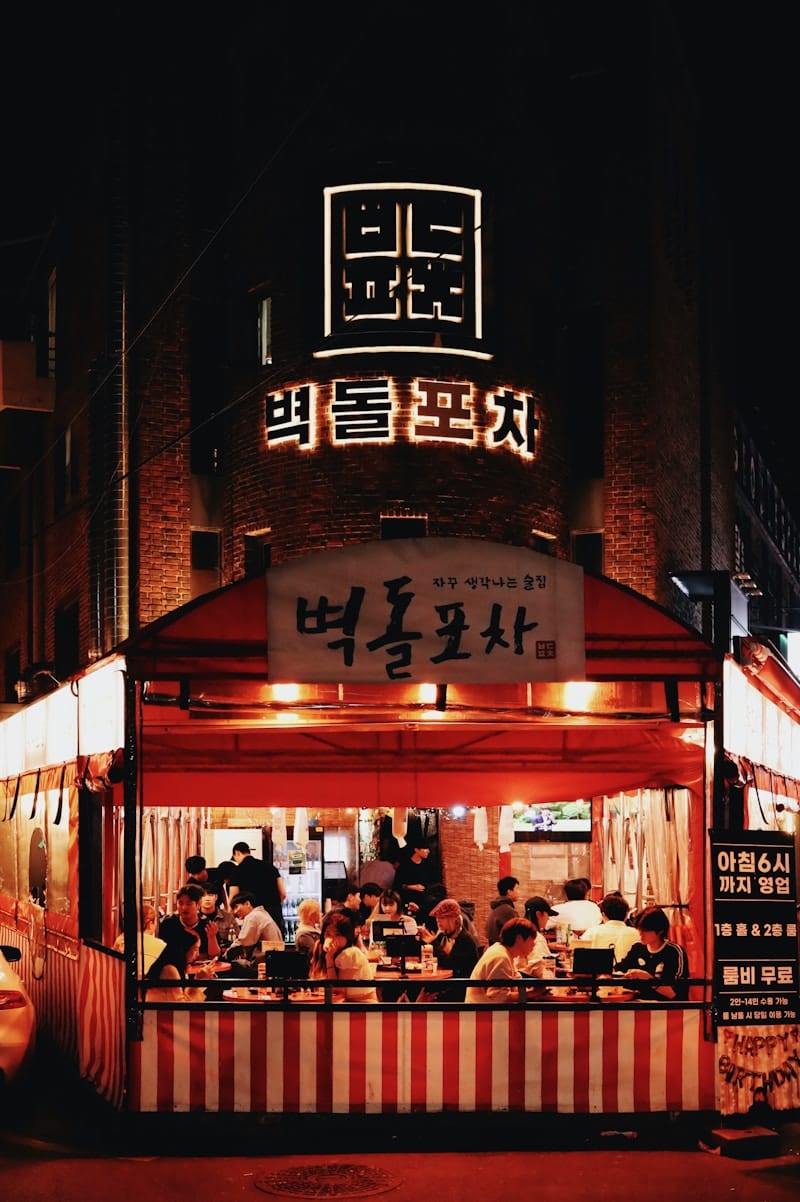
The thing that surprises most visitors about Korean nightlife is not that it runs late. It is that it transitions. Around 2AM in Seoul, something shifts. The clubs and bars thin out, but the restaurants fill up. The fluorescent signs that were dark at midnight flicker on. The pojangmacha tents are doing their best business of the night. The first haejangguk restaurants, which may have been closed since noon, unlock their doors.
This is the haejang culture — the pre-dawn meal that caps the night and begins the morning simultaneously. It exists because Korean drinking culture runs deeper than recreation. Office workers drink with colleagues to navigate workplace relationships; the dynamic of who pours for whom, who is still drinking at 1차 versus 2차 versus 3차, carries real social information. By 4AM, the social obligations of the night have been discharged. What remains is the biological fact of alcohol. The haejangguk restaurant is where you go to resolve that fact, alone or with whoever made it to the end of the night with you.
The restaurants that serve this moment are a specific type. They are small — four to eight tables, maximum. The menus are short and often handwritten or not displayed at all, because regulars know what is available and newcomers order what the regulars order. The kitchens have been running since the previous afternoon; the broth has been going since then too. The staff are usually women in their 50s or 60s who have been running this same operation for decades. They are not warm in the tourist-hospitality sense, but they are efficient and entirely without judgment. You are not the first person who has sat at their table looking the way you look right now.
This culture has a geographical heartbeat in Seoul: Cheongnyangni and Euljiro are the traditional haejangguk districts. The market areas near Gwangjang Market and the streets around Jongno 3-ga have late-night and early-morning food operations that have been continuous for 40 or 50 years. Seoul's wholesale market district near Garak Market in Songpa-gu has workers arriving at 3AM who eat before they start; the restaurants there serve exactly this meal, to exactly this crowd, in the dark before the rest of the city wakes. The Noryangjin fish market (노량진 수산시장) has a parallel dawn culture built around fishermen and buyers — if you want to understand early Seoul eating, that neighbourhood at 5AM tells a complete story. See the seafood guide for the Noryangjin context.
Where to Eat Haejangguk in Seoul
The best haejangguk restaurants are not places you find by browsing Instagram. They are found by knowing the right streets and walking through them late at night or early in the morning. That said, there are established areas where the concentration is high enough that showing up and following your nose will work.
Cheongjimdong (청진동) — The Traditional Centre
Cheongjimdong, in the Jongno district of central Seoul, was historically known as the city's haejangguk district. The area has been redeveloped, but a cluster of traditional haejangguk restaurants persists in the streets south of Gwanghwamun. These are the places that fed the civil servants and office workers of central Seoul for decades. The style here is predominantly ugeoji haejangguk — bone broth, cabbage, the full traditional form. Open from the early hours. Best visited between 5AM and 9AM when the regulars are there. Getting there: Gwanghwamun Station (Line 5), Exit 2, then walk south toward Cheongjimdong-gil.
Euljiro (을지로) — Late Night Into Dawn
Euljiro's identity as Seoul's hipster retro district is built on the bones of an older working city — the printing workshops, hardware wholesalers, and machine shops that run through its streets. Those businesses operate on an industrial schedule, which means the restaurants that feed their workers run late and start early. In the streets around Euljiro 3-ga and 4-ga, you will find pojangmacha tents and small restaurants serving sundaeguk, kongnamul gukbap, and various forms of haejangguk from 11PM through to 10AM. The atmosphere is working Seoul at its most authentic — low stools, shared tables, no menus you can read, and food that arrives without ceremony. If you are already in Euljiro for its bar scene, the pivot from 2차 drinking to 해장 eating happens naturally and on the same block. Getting there: Euljiro 3-ga Station (Line 2/3), Exit 1.
24-Hour Chains — When You Need Certainty
If you are not confident navigating an unlabelled street restaurant at 4AM, Korea's 24-hour restaurant chains provide a reliable alternative. Gimbap Cheonguk (김밥천국, now operating as various successor brands) serves kongnamul guk, ugeoji doenjang-guk, and bugeot-guk at any hour. Bon Juk (본죽) serves Korean rice porridge (juk, 죽) in a slightly more polished setting — plain rice porridge with abalone or vegetables is a legitimate hangover food option if soup feels too heavy. Look for these chains near subway stations; they are ubiquitous across Seoul and almost always open.
How to Order
Most haejangguk restaurants have no English menus. The staff will not necessarily speak English. This is fine — the vocabulary you need is short, and these restaurants are used to feeding people who are not entirely coherent. Point confidently and the rest will follow.
Essential Phrases
- 해장국 주세요 (Haejangguk juseyo) — "Please give me hangover soup." In a haejangguk restaurant, this is sufficient. They will bring you whatever the house version is.
- 콩나물 국밥 주세요 (Kongnamul gukbap juseyo) — "Please give me bean sprout rice soup."
- 선지 빼고 주세요 (Seonji bbaego juseyo) — "Without blood, please." Say this if you are ordering ugeoji haejangguk and want to skip the congealed ox blood.
- 밥 따로 주세요 (Bap ddaro juseyo) — "Rice on the side, please." Many places serve the rice already in the soup; if you prefer it separate, ask.
- 하나 더 주세요 (Hana deo juseyo) — "One more, please." For banchan refills, which are always free and always available.
- 얼마예요? (Eolma-yeyo?) — "How much?" For when there is no menu posted and you want to know the price before ordering.
- 맵지 않은 걸로 주세요 (Maepji aneun geollo juseyo) — "Not spicy, please." Useful if your stomach is not ready for heat.
At convenience stores, the hangover drink section (sukchwi-haesojesik, 숙취해소제) is usually near the cold drink fridges at the back. The staff will understand if you just pick up a bottle and bring it to the counter — no conversation needed.
K-Drama Hangover Moments
The haejangguk scene is a staple of Korean television. It appears so consistently because it is a narrative hinge — the moment after something happened, when characters are honest in the way that only 6AM allows. A few examples that capture the ritual accurately:
In Reply 1988 (응답하라 1988), the neighbourhood mothers wake early and the morning kitchen is central to community life — the same ethic as haejangguk culture, applied to the family unit. The drama's relationship with food is one of the most authentic representations of working-class Seoul eating in Korean television.
In My Mister (나의 아저씨, 2018), the male characters drink together at a neighbourhood pojangmacha with a regularity that feels documentary — the same stools, the same ajeossi faces, the same bottles of soju that stretch into the early hours. The show never romanticises it. It is just what these men do, and the morning after is part of the same truth.
In Itaewon Class (이태원 클라쓰, 2020), the bar and restaurant world of the drama is built around the same late-night food culture that produces haejangguk — the scenes set in the early morning hours of service are particularly accurate about how these kitchens actually operate.
And in virtually every Korean drama that features a drinking scene — from Crash Landing on You to Start-Up to Nevertheless — the hangover morning is treated as a social event in itself, not just a consequence. Someone brings soup. Someone makes the call to get haejangguk. The gesture of showing up with recovery food is as meaningful as the drinking was the night before.
If you drink in Korea, there is a reasonable chance someone — a colleague, a host, a new friend — will suggest getting haejangguk in the morning without being asked. Accept without hesitation. It is not just food. It is the continuation of whatever the night started.
Make It at Home: Kongnamul-guk (Bean Sprout Soup)
You do not need a 5AM Seoul restaurant to get the hangover-clearing effect of kongnamul-guk. The ingredients are available at any Korean or Asian grocery store, the technique is forgiving, and the whole thing takes under 20 minutes. This is the version Korean mothers make — no shortcuts, no special equipment, but nothing intimidating either.
Ingredients (serves 2)
- 300g (about 3 cups) fresh soybean sprouts (kongnamul, 콩나물) — not mung bean sprouts, which are thinner
- 600ml water
- 2 cloves garlic, minced
- 1 tsp doenjang (Korean fermented soybean paste) — or a small piece of dried anchovy for a cleaner broth
- 1 tsp fish sauce (or soy sauce to keep it lighter)
- 2 spring onions, sliced
- 1 tsp sesame oil
- Salt to taste
- Optional: 1 egg per bowl, cracked in raw and stirred immediately
Method
- Rinse the sprouts well. Do not trim the roots — they hold much of the asparagine content.
- Bring water to a boil in a medium pot. Add the sprouts and garlic together. Do not lift the lid for the first 3 minutes, or the sprouts will develop a beany smell.
- After 3 minutes, stir once, then add the doenjang and fish sauce. Simmer for another 5 minutes until the sprouts are tender but still have a slight crunch at the stem.
- Taste and adjust salt. Add sesame oil and spring onions. Remove from heat.
- If adding egg: pour the soup into bowls while very hot, crack one egg directly into each bowl, and stir vigorously for 30 seconds. The residual heat will cook it into soft ribbons.
Why Koreans swear by this for hangovers: Soybean sprouts contain asparagine (아스파라긴산), an amino acid that helps break down acetaldehyde — the toxic byproduct of alcohol metabolism that causes most hangover symptoms. The heat of the soup accelerates digestion and the clear broth rehydrates without straining a sensitive stomach. It is not folklore: Korean nutrition research has confirmed the mechanism, and the effect is measurably stronger from kongnamul than from mung bean sprouts, which is why the distinction between the two matters.
Make It at Home: Bugeot-guk (Dried Pollack Soup)
Bugeot-guk has a reputation as the most domestic of the haejangguk soups — the one you are more likely to find in a Korean home than on a restaurant menu. The key ingredient, shredded dried pollack (bugeot, 북어채), is sold in bags at Korean grocery stores and keeps indefinitely in the pantry. Once you have it, the soup comes together in 15 minutes.
Ingredients (serves 2)
- 30g dried shredded pollack (bugeot-chae, 북어채) — available at Korean grocery stores, usually in the dried goods aisle
- 1 tbsp sesame oil
- 700ml water or light anchovy stock
- 1 tsp doenjang
- 2 cloves garlic, minced
- 1 egg, beaten
- 2 spring onions, sliced
- 1 tsp soy sauce
- Salt and white pepper to taste
Method
- Soak the dried pollack shreds in cold water for 5 minutes to rehydrate slightly. Squeeze out excess water. This removes some of the intense fishiness and softens the texture.
- Heat sesame oil in a pot over medium heat. Add the pollack and garlic, and stir-fry for 2 minutes until lightly golden. This step — toasting the fish in sesame oil — is what gives the broth its characteristic pale golden colour.
- Add water and doenjang. Bring to a gentle boil, then reduce to a simmer for 8 minutes.
- Season with soy sauce and salt. Reduce heat to low.
- Drizzle in the beaten egg in a slow, thin stream while stirring gently to create soft egg ribbons. Remove from heat immediately.
- Serve topped with spring onions and a small pinch of white pepper.
The science behind bugeot: Dried pollack is unusually high in methionine (메티오닌), an essential amino acid that the liver uses to produce glutathione — the body's primary antioxidant for detoxification. Alcohol depletes glutathione rapidly; bugeot-guk helps replenish the precursors. It also provides cysteine, which works alongside methionine in the same detox pathway. Korean medical research has studied this mechanism specifically in the context of haejang foods, and the liver-supporting effect is why bugeot-guk has been the home-cook's choice across generations. The broth is gentle enough for a stomach that does not want food, but restorative enough to actually do something.