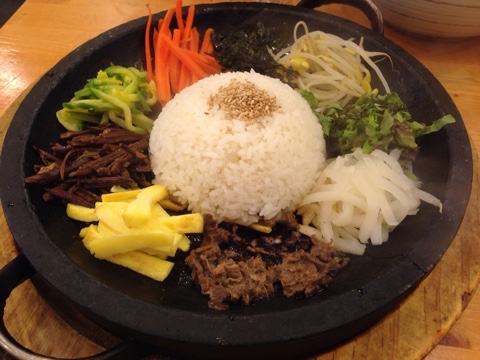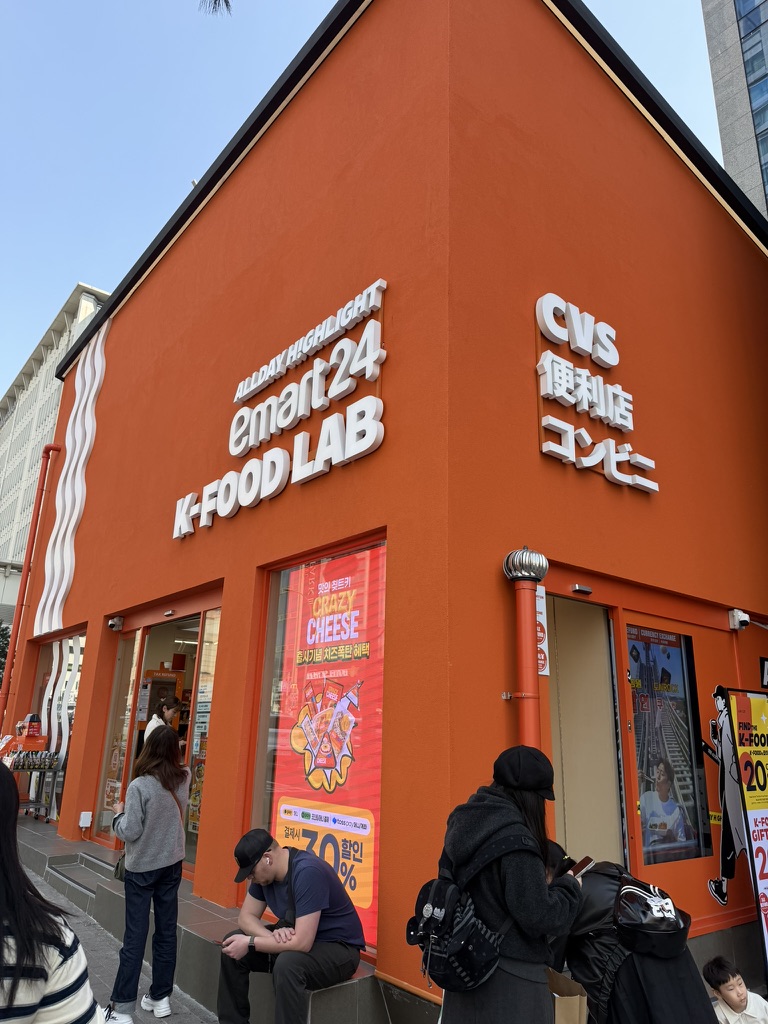
When a Netflix documentary crew spent a week inside Gwangjang Market (Gwangjang Sijang, 광장시장) for Street Food: Asia in 2019, they were documenting something that had already been happening for over 120 years. Founded in 1905 as Korea's first permanent covered market, Gwangjang is not a tourist attraction that happens to serve food — it is one of Seoul's genuine eating institutions, where 5,000 stalls occupy a single city block in Jongno and more than 65,000 people pass through every day. A few subway stops south, Namdaemun Market (Namdaemun Sijang, 남대문시장) is even older and even larger — Korea's biggest traditional market, with over 10,000 vendors, an impossibly dense food alley open from 6am, and dishes you will not find with the same depth or character anywhere else in Seoul. This guide covers both: what to eat, where to stand, how to order, and how to turn a half-day into one of the best meals you'll have in Korea.
Gwangjang Market: Seoul's Street Food Heart
Gwangjang Market sits in the heart of Jongno, Seoul's historical and cultural core. The market was established on July 5, 1905 — making it the oldest continuously operating covered market on the Korean peninsula. Originally a wholesale textile and fabric market, it gradually developed its now-legendary food section over the following decades until the eating culture completely overshadowed the commerce that originally built it. Today, the central food hall is a cathedral of low counters, open griddles, and simmering pots, presided over mostly by women in their 50s, 60s, and 70s who have spent their entire working lives perfecting exactly two or three dishes.
The market is divided into sections: the outer ring handles textiles, vintage clothing, and bedding. The inner food hall — reachable from any of the main gates — is where you want to be. Follow the smell of frying mung beans and the sound of sizzling griddles. Peak hours are 11:00am to 2:00pm on weekdays, when the stools fill with office workers from the surrounding Jongno district. Evenings bring a younger, more tourist-heavy crowd. Weekends are significantly busier than weekdays.
- Address: 88 Changgyeonggung-ro, Jongno-gu, Seoul
- Nearest station: Line 1 — Jongno 5-ga Station, Exit 8 (150m walk)
- Hours: Weekdays 08:30–18:00; some pojangmacha stalls open evenings
Must-Eat Foods at Gwangjang Market
Bindaetteok (빈대떡) — Mung Bean Pancakes
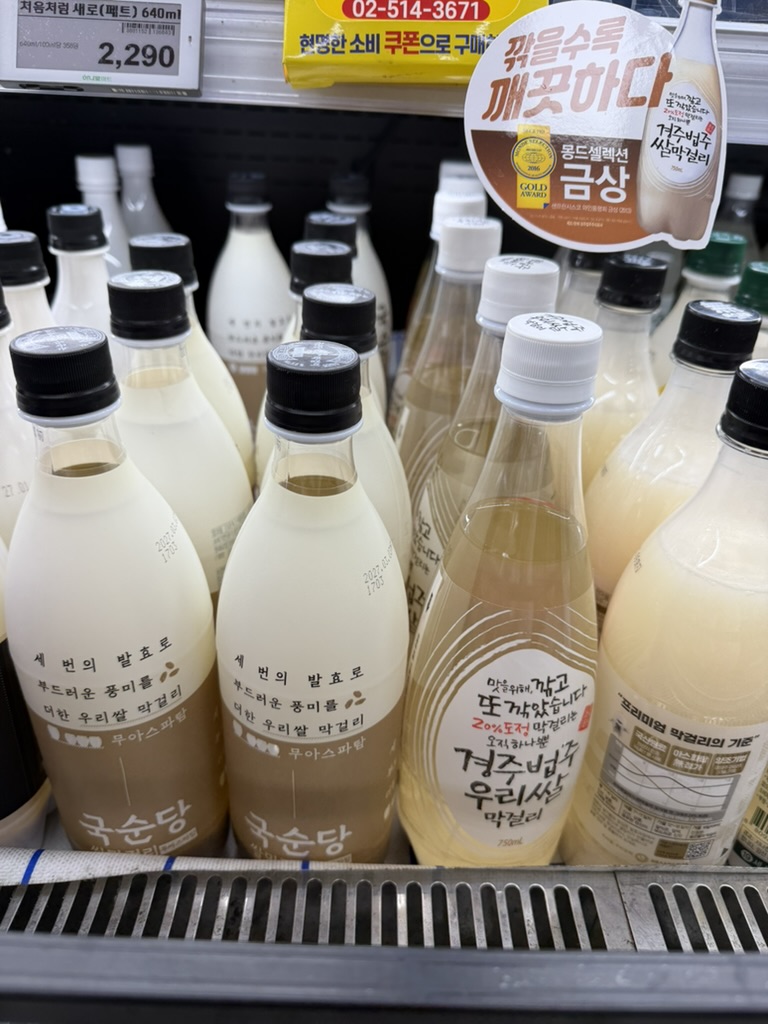
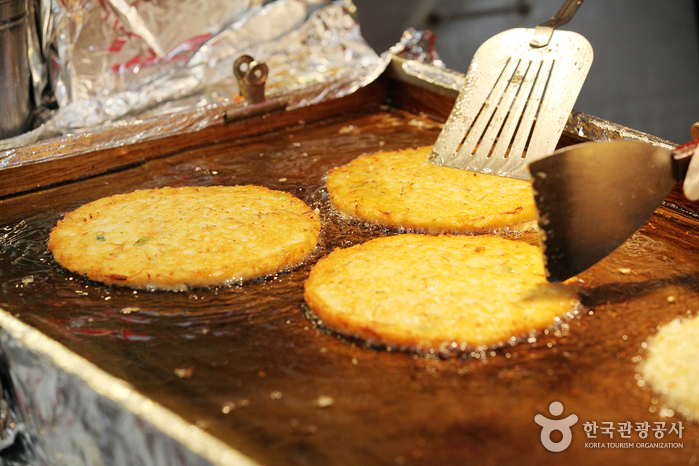
Bindaetteok is the undisputed king of Gwangjang. A thick, crispy pancake made from ground mung beans (nokdu, 녹두), mixed with pork, kimchi, and mung bean sprouts, fried on a cast-iron griddle in generous amounts of oil. The exterior shatters when you bite through it; the interior is dense, earthy, and savoury. It is served hot, cut into wedges, with a bowl of makgeolli (막걸리, rice wine) — the classic pairing. The sound of a dozen griddles frying simultaneously is the market's signature soundtrack. Price: ₩5,000–7,000 per pancake. Note: Some stalls quote ₩12,000–15,000 to tourists — see the scam awareness section below.
Yukhoe (육회) — Beef Tartare
Korean beef tartare is one of the most misunderstood dishes in the country — and one of the most rewarding once you try it. Yukhoe is raw, finely julienned beef tenderloin, seasoned with sesame oil, soy sauce, garlic, sugar, and ground black pepper, served with Asian pear slices and a raw egg yolk on top. The pear adds a clean sweetness and slight crunch that cuts through the richness of the beef. Mixed together and eaten in a single chopstick-load, it is silky, slightly sweet, deeply savoury, and nothing like European tartare. At Gwangjang, Buchon Yukhoe (부촌육회) — which has been in operation since 1965 and holds a Michelin Bib Gourmand rating — is the definitive place to eat it. Expect a queue. Price: ₩15,000–20,000 per serving.
Mayak Gimbap (마약김밥) — Addictive Mini Rolls
Mayak (마약) literally means "narcotics" in Korean. The name refers not to any actual ingredient but to the addictive quality of these tiny gimbap rolls — each one barely larger than a thumb, filled with seasoned rice, carrot, pickled radish, and spinach, tightly wrapped in seaweed. They are served with a small cup of yellow mustard-soy dipping sauce. The combination of the compact, chewy roll and the sharp, tangy dip is dangerously easy to eat — two portions disappear before you realise you've started. Price: ₩3,000 per tray (approximately 12–15 pieces).
Sundae (순대) — Korean Blood Sausage
Korean sundae is a steamed sausage made from pig intestine stuffed with glass noodles (dangmyeon, 당면), barley, vegetables, and pig's blood. The result is far milder than European blood sausages — it has a soft, yielding texture and a subtle, savoury flavour that works best dipped in fermented shrimp paste (saeujeot, 새우젓) or eaten alongside tteokbokki and eomuk as part of a mixed plate (modeum, 모듬). If you are new to offal, start with a mixed plate so you can try sundae alongside less confronting items. Price: ₩5,000–8,000.
Tteokbokki (떡볶이) — Spicy Rice Cakes
Gwangjang's tteokbokki is the traditional, non-fusion version: cylindrical rice cakes (garae-tteok, 가래떡) simmered in a vivid red gochujang (고추장) sauce with fish cakes (eomuk, 어묵) and boiled eggs. It is spicy, sticky, and filling in the best possible way. A Gwangjang tteokbokki serves as a palate-warming starter before moving on to bindaetteok or yukhoe. Price: ₩3,000–5,000.
Kalguksu (칼국수) — Knife-Cut Noodles
Hand-made noodles cut with a knife (kal, 칼) rather than extruded through a machine, served in a clear anchovy-and-kelp broth with zucchini, clams, and spring onion. Gwangjang's kalguksu is the soul food of the market — the dish the vendors themselves eat between rushes. Joyeonsun Gohyang Kalguksu (조연순 고향칼국수) is the stall featured in Netflix Street Food: Asia Season 1, Episode 6 — chef Cho Yeon-sun has been making it here for decades, and the queue regularly extends past the adjacent stalls. Come before 11:00am or after 2:00pm to avoid the longest waits. Price: ₩7,000–10,000.
Ganjang Gejang (간장게장) — Marinated Raw Crab
Raw blue crab (kkotgae, 꽃게) marinated in soy sauce, garlic, chilli, and sesame for several days. The shell softens slightly; the meat takes on a deep, ocean-sweet flavour layered with umami from the fermented soy. Koreans call it "bap dobok" (밥도둑) — "rice thief" — because the intensely savoury crab sauce makes you eat far more rice than intended. Gwangjang's version is premium street food, not a cheap bite. Price: ₩15,000–25,000. Not for everyone on first visit, but unforgettable for those who try it.
Famous Stalls You Can't Miss
Joyeonsun Gohyang Kalguksu (조연순 고향칼국수)
The stall that put Gwangjang Market on the international food map. Chef Cho Yeon-sun — the subject of Netflix Street Food: Asia Season 1, Episode 6 — has run this counter for her entire adult life, making kalguksu noodles from scratch every morning. The broth is built on dried anchovies and kelp, simmered for hours, and the hand-cut noodles have a rough texture that holds the soup in a way machine noodles cannot. There is almost always a queue. Make eye contact with the servers, point at what you want if needed, and wait for a stool at the low counter. Cash only.
Sunhee's Bindaetteok (순희네 빈대떡)
Also featured in Netflix Street Food: Asia, Sunhee's is one of the most photographed stalls in the market. The griddles run continuously from opening to close, and the bindaetteok here has a particular crispiness — the result of a slightly drier batter and higher frying temperature than neighbouring stalls. Order one pancake and a bottle of makgeolli. Eat standing if all seats are taken.
Buchon Yukhoe (부촌육회)
Operating since 1965 and awarded a Michelin Bib Gourmand (Korea's Michelin Guide rating for exceptional value), Buchon Yukhoe is the benchmark for Korean beef tartare in Seoul. The beef is sourced daily, the seasoning is precise, and the pear garnish is always fresh. A single serving is generous. It pairs naturally with a cold beer or a soju shot. Arrive before noon on weekends — the queue can reach 20–30 minutes.
Namdaemun Market: A Different Side of Seoul
Namdaemun Market (Namdaemun Sijang, 남대문시장) is, by number of vendors and physical footprint, the largest traditional market in South Korea. Over 10,000 shops and stalls occupy a complex of buildings and covered alleys just south of the ancient Sungnyemun gate (남대문, South Gate) in central Seoul. Where Gwangjang is primarily a food destination, Namdaemun is a wholesale and retail market for clothing, accessories, kitchenware, food imports, and children's goods — the food, while excellent, lives inside the broader commercial ecosystem of the market rather than dominating it.
The food alleys are concentrated near Gate 6 (the northern entrance closest to Hoehyeon Station) and inside the market's interior lanes. The most important thing to know about Namdaemun's food scene: it starts earlier than anywhere else in Seoul. The kalguksu alley near Gate 6 is fully operational by 6:00am, serving construction workers, wholesale buyers, and market vendors their breakfast before the city wakes up. If you arrive at 9:00am, you are already late for the first rush.
- Nearest station: Line 4 — Hoehyeon Station (회현역), Exit 5 (2–3 minute walk)
- Hours: General market 09:00–17:00 (Mon–Sat); Food alleys 06:00–21:00
Must-Eat Foods at Namdaemun Market
Galchi-jorim (갈치조림) — Braised Hairtail Fish
Namdaemun Market is credited with popularising galchi-jorim as a mass-market dish. Silver hairtail fish (galchi, 갈치) is braised in a deep, spicy sauce of gochujang, garlic, ginger, soy, and radish until the flesh falls from the bone and the sauce reduces to a thick, intensely flavoured coating. It is eaten with rice, and the sauce soaked into the rice at the bottom of the pot is the best part. This dish has a robustness — almost fieriness — that reflects the wholesale market crowd it was originally designed to feed. Price: ₩10,000–15,000.
Namdaemun Hotteok (남대문 야채호떡) — Vegetable-Filled Sweet Pancake
The most famous street snack in Namdaemun is the hotteok (호떡) stall adjacent to IBK Industrial Bank (IBK 기업은행 옆). Standard hotteok is a fried dough filled with brown sugar and cinnamon syrup; Namdaemun's famous version adds stir-fried glass noodles and vegetables (yachae hotteok, 야채호떡) to the filling, cutting the sweetness with a savoury crunch. The exterior is pressed flat on a cast-iron mold until it achieves a blistered, lacquered crispiness. It costs ₩1,500 and is one of the best-value bites in all of Seoul. Queue is constant but moves fast.
Kalguksu (칼국수) — Gate 6 Noodle Alley
The kalguksu alley near Gate 6 is one of the oldest continually operating food corridors in Seoul. The broth here tends to be richer and more milky than Gwangjang's version — made with clams, dried shrimp, and a heavier anchovy base — and the noodles are slightly thicker. A bowl with kkakdugi (깍두기, radish kimchi) on the side is a full, satisfying meal. The alley opens at 6:00am and runs to 9:00pm. Price: ₩8,000–10,000.
Mandu (만두) — Korean Dumplings
Handmade dumplings filled with pork, tofu, glass noodles, and kimchi. At Namdaemun, mandu vendors operate out of small counters with steamers running at full capacity throughout the day. The gogi mandu (고기만두, meat dumplings) are soft-skinned and juicy; the kimchi mandu (김치만두) have a bright, fermented kick. A portion of 5–6 dumplings is a snack rather than a meal — combine with hotteok or kalguksu. Price: ₩3,000–5,000.
Eomuk (어묵) — Fish Cake Skewers
Eomuk (어묵) — flat, processed fish cakes threaded onto wooden skewers and simmered in a light, clear broth of dried kelp and soy — is the quintessential Korean cold-weather street food. At Namdaemun, the eomuk vendors are stationed near the market entrances and serve the broth in small paper cups as a complimentary warm-up drink. The fish cakes themselves are chewy, mild, and faintly oceanic. They cost ₩1,000–2,000 per skewer and function as a palate-cleanser between heavier dishes.
Gwangjang vs Namdaemun: Which One to Visit?
Both markets are worth visiting, but they serve different purposes and different moods. Here is a direct comparison to help you plan:
| Gwangjang Market | Namdaemun Market | |
|---|---|---|
| Primary purpose | Food destination | Shopping + food combined |
| Signature dishes | Bindaetteok, yukhoe, mayak gimbap | Galchi-jorim, hotteok, kalguksu |
| Best time to visit | Weekday lunch (11am–2pm) | Early morning (6–9am) for food |
| Tourist density | High (Netflix effect) | Moderate (more local crowd) |
| Price risk | Bagging scam possible — see tips | More consistent pricing |
| Atmosphere | Intense, aromatic, theatrical | Chaotic, commercial, authentic |
| English menus | Some (photo menus common) | Rare — point and gesture |
| Pairing | Combine with Ikseon-dong evening | Combine with Myeongdong (5 min walk) |
If you can only choose one and your priority is food, choose Gwangjang. If you want to combine shopping with eating and prefer a more local, less touristy crowd, choose Namdaemun. If you have a full day and reasonable stamina, do both — they are connected by a single subway stop on Line 1.
One-Day Market Tour Route
This route covers both markets in a single day with a relaxed pace, ending in Myeongdong for the evening. Total estimated cost: ₩40,000–70,000 per person. Estimated duration: 4–5 hours.
- 09:30 — Gwangjang Market (Line 1, Jongno 5-ga Station, Exit 8). Arrive before the main lunch rush. Start with mayak gimbap (₩3,000) at one of the small counter stalls near the central aisle — they're quick, light, and won't fill you up before the main event. Walk the food hall once to orient yourself and find a bindaetteok griddle that looks busy (busy = fresh batter, constant turnover).
- 10:00 — Bindaetteok + Makgeolli. Sit at any counter serving bindaetteok and order one pancake and a bowl of makgeolli. This is the definitive Gwangjang experience. Take your time — each mung bean pancake takes 5–7 minutes to fry properly.
- 10:30 — Buchon Yukhoe. Walk to the yukhoe section and join the queue for Buchon Yukhoe (부촌육회). A single serving of yukhoe with pear and egg yolk is rich — share one between two people if you've already eaten bindaetteok.
- 11:00 — Kalguksu at Joyeonsun. Queue for a bowl of kalguksu at Joyeonsun Gohyang Kalguksu. This is the Netflix stall — by 11:30am the queue will be long. Arrive precisely at 11:00 for the shortest wait. A full bowl is a meal in itself; eat half if you're pacing for Namdaemun.
- 12:00 — Transit to Namdaemun. Take Line 1 from Jongno 5-ga toward Seoul Station direction, one stop to City Hall, then transfer to Line 4 toward Sadang, one stop to Hoehyeon. Total transit: 6–8 minutes.
- 12:30 — Namdaemun Market, Gate 6 Entrance (Hoehyeon Station Exit 5). Head directly to the hotteok stall near IBK bank and buy one yachae hotteok (₩1,500). Eat it immediately — the filling is molten when fresh.
- 13:00 — Kalguksu in Gate 6 Alley. A bowl of Namdaemun kalguksu will taste noticeably different from Gwangjang's version — compare them consciously. The clam-richer broth and slightly thicker noodles make it a distinct experience.
- 13:30 — Galchi-jorim + Browse. Order a portion of galchi-jorim (₩10,000–15,000) to share. Use the remaining time to browse the market interior — the textile wholesale section, children's clothing area, and imported goods section are all worth a walk even if you're not buying.
- 15:00 — Myeongdong. Exit toward Hoehyeon Station or walk 5 minutes south to Myeongdong for the afternoon K-beauty, street food, and retail strip.
Practical Tips and Scam Awareness
Bring Enough Cash
Both markets operate almost entirely on cash. The vast majority of stalls do not accept cards or mobile payments. Bring at least ₩40,000–50,000 per person — ₩60,000–70,000 if you plan to eat fully at both markets. The nearest ATMs are at Jongno 5-ga Station (Gwangjang) and Hoehyeon Station (Namdaemun); both have machines that accept international cards.
The Gwangjang Overpricing Issue (2025 Update)
In 2024–2025, Gwangjang Market received significant negative Korean media coverage for bbaegi (바가지) — "bucket" price-gouging of foreign tourists. The core scam: a vendor (usually one sitting near the entrance or aggressively calling to tourists) charges ₩12,000–15,000 for a single bindaetteok when the standard market price is ₩5,000–7,000. Always confirm the price before sitting down or before the food arrives. Point at the dish and say "eolmayeyo?" (얼마예요? — "How much?"). If the price is more than ₩8,000 for a single bindaetteok, walk to the next stall. The overprice problem is concentrated at a small number of stalls near tourist entry points. Walk ten metres deeper into the market and prices normalise immediately.
How to Order Without Korean
Most Gwangjang food stalls have either laminated photo menus or the dishes are visible on the griddle in front of you — pointing works perfectly well. Say "i-geo juseyo" (이거 주세요, "this one please") while pointing. For quantities, hold up one or two fingers. Namdaemun stalls are less accustomed to foreign visitors — at the kalguksu alley and galchi-jorim counters, sit down, make eye contact with the server, and point at what the person next to you is eating.
Hygiene and Allergies
Both markets operate under Korean food hygiene regulations. Cross-contamination between meat and seafood dishes is common in shared kitchen spaces. If you have shellfish allergies, avoid the kalguksu broth at both markets (typically made with clams and dried shrimp). Sesame is present in almost every yukhoe and gimbap dish. Bindaetteok contains pork; sundae contains pork intestine and blood. There are very few vegetarian-friendly dishes at either market beyond mayak gimbap and plain tteokbokki.
Best Days and Times
- Gwangjang: Weekday lunch (11am–2pm) for the best atmosphere and freshest-cycling food. Avoid Sunday afternoon — the market is open but thinner on stock and some stalls close. Evenings on Friday and Saturday bring a younger crowd and some pojangmacha stalls.
- Namdaemun: Monday through Saturday. The market is closed on Sundays. Early morning (6–9am) is the food alley's peak. The main retail market peaks 10am–1pm. Arrive on a stomach that has room to work.
Getting There
- Gwangjang Market: Seoul Subway Line 1 → Jongno 5-ga Station (종로5가역), Exit 8. Walk 150m — the market entrance is directly visible from the exit.
- Namdaemun Market: Seoul Subway Line 4 → Hoehyeon Station (회현역), Exit 5. Walk 2–3 minutes northeast toward the Sungnyemun gate.
- Between markets: Line 1, one stop from Jongno 5-ga toward Seoul Station direction, then transfer to Line 4. Total transit time 6–8 minutes. Alternatively, taxi in 8–12 minutes (₩5,000–7,000 via Kakao T).