There is a saying in Korea that goes something like this: when it rains, you drink makgeolli (막걸리) and eat jeon (전, Korean pancakes). Nobody decreed it. Nobody put it in a law. It simply is. If you have watched enough K-dramas — from Reply 1988 to When the Camellia Blooms — you have seen this scene play out in kitchens and pojangmacha tents across the country: rain on the window, the sizzle of pajeon in a pan, a cold bottle of milky rice wine on the table. That cultural reflex is what makgeolli is really about. Korea's oldest alcoholic drink (농주, nongju, literally "farmers' wine") has been made for over a thousand years — and after a brief identity crisis when soju took over in the 20th century, it is now having a full-blown renaissance. Craft makgeolli bars have opened in Itaewon and Yeonnam-dong, traditional breweries are experimenting with fruit infusions and rice varieties, and a new generation of Koreans is rediscovering what their grandparents always knew. This guide is your introduction to drinking it properly.
Types of Makgeolli You Should Know
Not all makgeolli pours the same. Before you order, it helps to know what you are looking at.
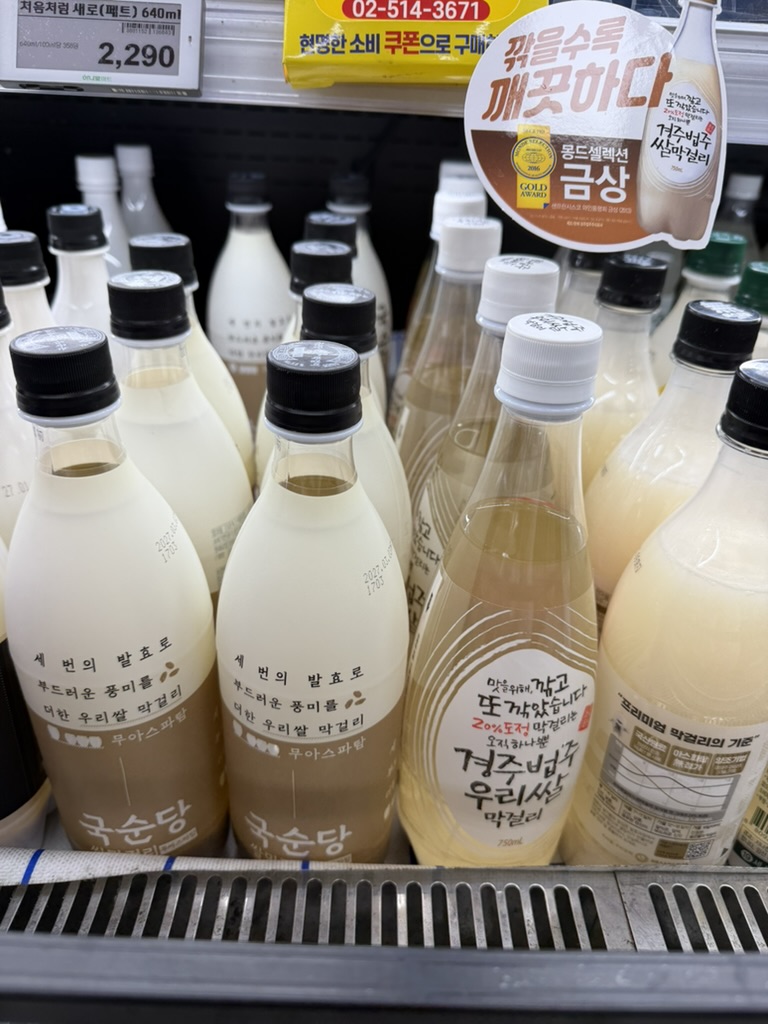
- Ssal Makgeolli (쌀막걸리) — Rice Makgeolli — The classic. Made from fermented rice, nuruk (wheat-based fermentation starter), and water, it has a milky white colour, a slightly sweet-sour flavour, and gentle natural carbonation from ongoing fermentation. Alcohol content is typically 6–8%. This is the baseline experience.
- Saeng Makgeolli (생막걸리) — Fresh / Unpasteurized Makgeolli — Unpasteurized and not heat-treated, so it has a livelier fizz, shorter shelf life, and a more complex, tangy taste. Must be kept refrigerated and consumed within a few days of production. Specialty makgeolli bars often stock local saeng makgeolli from regional breweries — ask for the house recommendation.
- Dongdongju (동동주) — Often confused with makgeolli, dongdongju is made similarly but the rice grains are left floating (dong-dong means "floating") in the drink rather than fully filtered out. It tends to be slightly sweeter and stronger, and is traditionally served in a wide ceramic bowl you drink from communally. You will see it at traditional-style restaurants and pojangmacha.
- Craft Makgeolli (크래프트 막걸리) — The newest category. Think of it like Korean craft beer. Small-batch breweries experiment with ingredients like strawberry, yuzu, black sesame, green tea, and even pine needles. The alcohol content varies widely. Brands like Neurin Maeul (느린마을, "Slow Village") have built cafe-style taprooms across Seoul where you can taste several varieties side by side.
- Yakju (약주) — Technically a separate category, yakju is a clearer, more refined filtered rice wine. If makgeolli is like cloudy farmhouse ale, yakju is like a light white wine. Worth trying if you want to explore traditional Korean alcohol beyond the white milky bottle.
The Rainy Day Ritual: Makgeolli and Jeon
You cannot talk about makgeolli without talking about jeon (전) — Korean savoury pancakes. The pairing is so deeply embedded in Korean food culture that saying "it's raining, let's have makgeolli" automatically implies pajeon will follow. There is actually a food-science reason behind this tradition: the sound of rain hitting the roof is said to resemble the sound of jeon frying in oil (both go jijijijiji). Whether that is the true origin or a charming folk explanation, the pairing works beautifully — the crisp, savoury pancake offsets the sweet-sour fizz of the wine perfectly.
The key jeon varieties to know:
- Pajeon (파전) — Green onion pancake, the most classic makgeolli pairing. Order it with squid (해물파전, haemul pajeon) at any traditional makgeolli bar and you are eating exactly what Koreans have eaten on rainy days for generations.
- Bindaetteok (빈대떡) — Mung bean pancake, denser and earthier than pajeon. A Gwangjang Market specialty. The slightly bitter mung bean flavour is outstanding against cold makgeolli.
- Kimchi Jeon (김치전) — Fermented kimchi pancake, spicy and tangy. A good gateway for first-timers who want familiar Korean flavours in a new format.
- Dubu Kimchi (두부김치) — Stir-fried kimchi with tofu. Not a pancake, but the most popular makgeolli bar side dish alongside jeon — soft tofu absorbs the sauce beautifully and balances the wine's acidity.
How to Drink Makgeolli
The first thing to know: shake or stir the bottle before pouring. Makgeolli settles — the cloudy white sediment (the flavour) sinks to the bottom, leaving clear liquid on top. If you pour without mixing, you get a watery first cup and a sludgy last one. Gently roll the bottle or stir with the ladle provided.
At traditional makgeolli bars and pojangmacha, makgeolli is served in one of three ways. The first is a large plastic jug (주전자, jujeonja) poured into small plastic cups — the most common and most communal format. The second is a wide ceramic bowl shared at the table — the traditional style you see in historical dramas, usually for dongdongju. The third is craft bottles at specialty bars, poured into wine or pilsner glasses to show off colour and carbonation.
Alcohol content runs 6–8% for standard varieties and up to 12–14% for craft versions. It goes down easily, which is part of the danger — pace yourself, especially if you are eating pajeon alongside. The Korean approach is to alternate bites of food with sips of makgeolli throughout the meal, never rushing either.
Where to Drink Makgeolli in Seoul
Seoul's makgeolli scene divides roughly into two experiences: traditional pojangmacha and makgeolli taverns in neighbourhoods like Insadong and Jongno, where the vibe is old-school and the jeon is the star; and craft makgeolli bars in Itaewon, Yeonnam-dong, and Mapo, where the focus is on tasting different varieties in a modern setting. Both are worth experiencing.
For the traditional experience, the streets around Insadong and Bukchon have several longstanding makgeolli taverns where you sit on low stools, order a jug and a plate of pajeon, and watch the neighbourhood go by. In the Jongno and Euljiro areas, older pojangmacha tents operate late into the night — this is where local office workers unwind after long days, and where the makgeolli flows most freely and cheaply.
For the craft experience, Neurin Maeul (느린마을양조장) — literally "Slow Village Brewery" — operates multiple taproom-style locations across Seoul including Seocho-gu, Gangnam, and Yeongdeungpo. The concept is simple: sit at the counter, taste through four or five different makgeolli varieties from different regions, and find your favourite. The staff at most locations can explain the flavour differences in basic English. It is a genuinely excellent way to understand how much variety exists within a single drink.
Han-guk Suljip Ahn-ssi Makgeolli (한국술집안씨막걸리) in Yongsan-gu is a specialist makgeolli bar with a wider-than-average selection of regional varieties alongside traditional jeon pairings — worth visiting if you want depth over breadth.
Buying Makgeolli Outside Restaurants
Every convenience store (CU, GS25, 7-Eleven, Emart24) in Seoul stocks at least two or three makgeolli varieties. The green-capped Seoul Jangsu (서울장수) bottle is the city's most iconic and widely distributed brand — cheap (around ₩1,500 for 750ml), slightly sweet, and reliably decent. It is what most Koreans grew up drinking. More premium options like Neurin Maeul or Bohae (보해) brands appear in larger convenience stores and supermarkets. Traditional markets — especially Gwangjang Market and Tongin Market — have stalls where you can buy locally made saeng makgeolli by the bottle or cup.
Price Guide
Makgeolli is one of Seoul's most affordable drinking experiences. At a traditional makgeolli bar or pojangmacha, a large jug (보통 1.5–2L) runs ₩8,000–₩15,000. A plate of pajeon alongside costs ₩8,000–₩12,000. Budget roughly ₩20,000–₩30,000 per person for a full makgeolli and jeon evening at a neighbourhood tavern. At craft makgeolli bars like Neurin Maeul, individual 300ml pours of specialty varieties cost ₩3,000–₩6,000 each. Convenience store bottles start from ₩1,500 and rarely exceed ₩5,000 even for premium brands.
Tips for First-Timers
- Always shake or stir first. The white sediment at the bottom is not a sign of spoilage — it is the makgeolli. If you forget, your first cup will taste like water and your last will taste like paste.
- It is lighter than it feels. At 6–8% alcohol, makgeolli seems mild but it accumulates. Korean food culture recommends eating consistently while drinking — the jeon is not just a snack, it is structural.
- Try the rainy day ritual if you get the chance. If it rains during your trip, find a pojangmacha or neighbourhood makgeolli bar, order haemul pajeon and a jug of saeng makgeolli, and simply sit. It is one of the more memorable things Seoul offers.
- Ask for saeng makgeolli. At specialty bars and traditional restaurants, always ask if they have unpasteurized saeng makgeolli — the flavour difference over standard commercial bottles is significant, and it is usually priced similarly.
- Craft bars are beginner-friendly. If the pojangmacha scene feels intimidating (menus in Korean only, communal seating), start at a Neurin Maeul taproom. English menus, well-lit space, and tasting flights make it easy to find what you like before exploring further.