Gangneung sits where the Taebaek Mountains crash into the East Sea — a coastal city that spent centuries with the ocean on one side and steep, potato-growing highlands on the other. That geography is the whole story of how it eats. The sea hands over squid, sole and clams so fresh they're barely still, the mountains give the potatoes and buckwheat that fed people when rice wouldn't grow, and the clean seawater itself gets ladled into vats to set the city's famous tofu. Then there's the coffee — because somewhere along the way this quiet beach town became the roasting capital of Korea. K-drama fans already know the scenery: the red-and-white breakwater in Jumunjin where a schoolgirl summoned the Goblin in Guardian, the lonely bus stop on Hyanghae Beach that BTS turned into a pilgrimage site. But sit down at a Gangneung table and you'll find the city's real character is edible. Here's what to order.
Chodang Sundubu: Tofu Made from the Sea (초당순두부)

In a low-slung neighbourhood called Chodang-dong, a few blocks back from the water, tofu is still made the old way — set not with commercial coagulant but with clean East Sea seawater, ladled straight from the ocean. That single swap is everything. Chodang sundubu (초당순두부) comes out softer, silkier and faintly sweet-briny, with a delicate ocean-mineral note you won't find in supermarket tofu. The village has been doing this since the Joseon dynasty; the name traces back to the scholar Heo Yeop, whose pen name Chodang became the district's name — his children, the poet Heo Nanseolheon and the author Heo Gyun, grew up here.
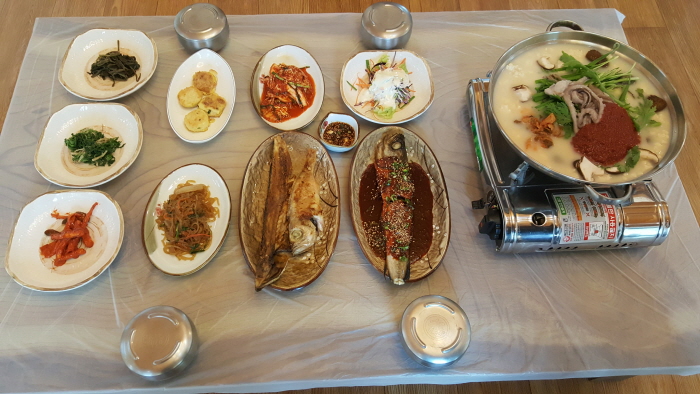
You can eat it a dozen ways. Purists start with sundubu baekban — a bowl of just-set, cloud-soft tofu, barely warm, eaten with a spoon and a drizzle of seasoned soy sauce (yangnyeom-ganjang); it tastes almost like the sea itself. For something heartier, order sundubu-jjigae, the same tofu in a bubbling stew, spicy or plain — ask for it "not spicy" (an-maewo) if you want the tofu's flavour up front. There's dubu-jeongol, a shareable hot pot, and the local fusion everyone photographs: jjamppong-sundubu, soft tofu drowned in a fiery seafood broth.
It's traditionally a breakfast, and the whole cluster of tofu houses opens early — the move is to arrive hungry before 9am, when the first batch of the day is warmest and sweetest. A set runs about ₩8,000–12,000 and comes buried in free banchan. Cheap, gentle, and unlike anything else in Korea.
Mulhoe: The East Sea in a Bowl (물회)
Mulhoe (물회) is what East Coast fishermen invented for themselves: raw fish in a cold, punchy broth, wolfed down fast between hauls. Picture a big bowl of thinly sliced raw fish or squid piled with slivered cucumber, radish, perilla and pear, then flooded with an icy, ruby-red broth that's equal parts sweet, sour and chilli-hot. It's part sashimi, part cold soup, part salad — and on a blazing August day by the coast it's about the most refreshing thing you can put in your mouth.
Gangneung's version leans on whatever the local boats bring in. Ojingeo mulhoe (오징어 물회) — with fresh squid, clean and springy — is the East Sea classic, but you'll also see it made with flatfish (gwang-eo), sea squirt (meongge), or a mix. The broth is built on gochujang and vinegar, sometimes loosened with cold water or crushed ice. The ritual at the end: drop a fist of somyeon noodles or a scoop of rice into the leftover broth and slurp it down so nothing's wasted.
Head for the harbours — Jumunjin Port (주문진항) and Sacheon are the spots, where the fish came off a boat that morning and you can eat it steps from the water. It's a summer dish above all; locals start craving it the moment the heat sets in. Expect ₩12,000–18,000 a bowl. Order one, brace for the cold-sweet-spicy jolt, and you'll understand why coastal Koreans are obsessed.
Gamja Ongsimi: Gangwon Mountain Comfort (감자옹심이)
Climb inland from the beach and the food changes completely. Up in the Taebaek highlands rice was a luxury, but potatoes thrived — and gamja ongsimi (감자옹심이) is the tender proof. Raw potato is grated, wrung dry in cloth, then bound with its own settled starch into small, chewy dumplings (ongsimi means "little balls"). They're simmered in a clean anchovy-and-kelp broth until they turn glassy and springy, landing somewhere between a dumpling and a gnocchi.
The broth is mild and quietly comforting, often studded with soft-cooked potato chunks, kabocha squash and a handful of the same buckwheat or wheat that grows nearby; some houses serve it as ongsimi kalguksu, the dumplings sharing the bowl with hand-cut noodles. It's humble, faintly sweet and deeply warming — grandmother food, the dish Gangwon people mean when they say "comfort."
This is a mountain-and-rainy-day bowl more than a summer one, and it's easiest to find in the old-school Gangwon kitchens around Gangneung's markets. A serving is a bargain at ₩8,000–10,000. Season it lightly, if at all — the whole point is the clean, earthy taste of potato.
Makguksu: Cold Buckwheat Noodles (막국수)

Buckwheat loves Gangwon's cool, thin-soiled highlands, and makguksu (막국수) is the region's gift to a hot afternoon. The name means roughly "just-made, rough-and-ready noodles" — nubby, grey-brown buckwheat strands served cold, either bibim (tossed in a sweet-spicy gochujang sauce) or mul (swimming in an icy, tangy broth, classically the brine of dongchimi radish-water kimchi). Chuncheon gets most of the fame, but Gangneung eats it just as seriously.
A bowl arrives topped with shredded gim (roasted seaweed), cucumber, a wedge of boiled egg and a shower of sesame. The move is to doctor it at the table — a spoon of mustard oil (gyeoja), a splash of vinegar, a pinch of sugar — until the balance sings, then mix it hard before the first bite. Order a side of suyuk (sliced boiled pork) and wrap the noodles up with it, the way locals stretch the meal.
It's a warm-weather staple but served year-round, cheap and quick at ₩8,000–10,000. Buckwheat's nutty, slightly bitter edge is an acquired love; give it two or three bowls and you'll start craving it in the heat like everyone here does.
Gangneung-Style Jjamppong (짬뽕)
Jjamppong — the fiery red seafood noodle soup Korea borrowed from its Chinese-Korean kitchens — is good all over the country, but Gangneung has quietly become a jjamppong pilgrimage town. The reason is obvious the moment you taste it: with the East Sea at the door, the bowls come loaded with mussels, clams, squid, shrimp and whatever else the morning boats landed, and the broth tastes like it was wrung straight from the shellfish.
The heart of it is Gyodong (교동), a Gangneung neighbourhood so bound up with the dish that "Gyodong jjamppong" is shorthand for the deep, clean, seafood-heavy style. Order the classic spicy red bowl, or try baek-jjamppong (백짬뽕) — the "white" version skips the chilli for a milder, milky-savoury broth that lets the seafood sweetness show. Either way you get a small mountain of shellfish over springy wheat noodles.
A bowl runs about ₩8,000–12,000, a little more for the seafood-heavy specials — a genuinely great meal for the money. Split a plate of tangsuyuk if there are two of you, and don't skip the pickled radish. If you only eat one noodle dish in Gangneung, plenty of locals would tell you to make it this one.
Gangneung Coffee: Korea's Coffee City (강릉커피)

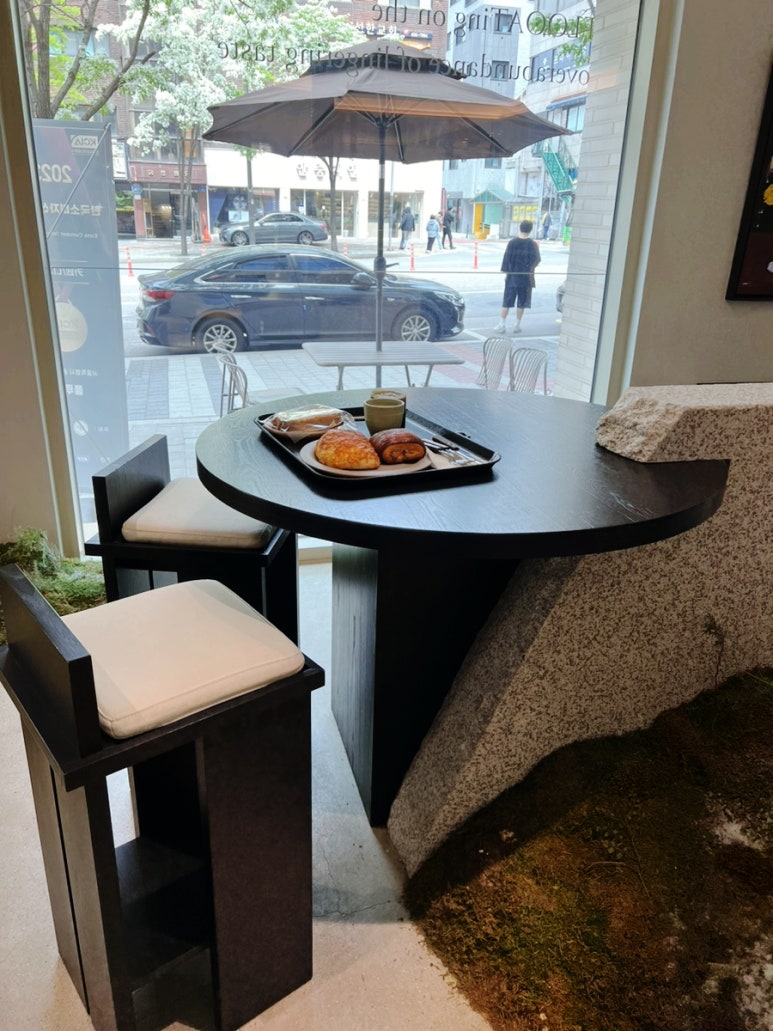
No food guide to Gangneung is complete without a cup, because this beach city is, improbably, the coffee capital of Korea. It started at Anmok Beach (안목해변), where a row of seaside vending machines drew coffee lovers for their oddly beloved sugary automat brew. Over the years the machines gave way to serious roasters, and today Anmok's Coffee Street (커피거리) is a wall of cafes staring straight out at the water.
Gangneung is the birthplace of some of the country's most respected coffee names — Terarosa, the pioneering roaster founded here in 2002, and Bohemian, the workshop of the late Park Yi-chu, a man many call the father of Korean specialty coffee. The city even throws an annual Gangneung Coffee Festival each autumn. Order a hand drip and a slab of cake with a sea view, an espresso from a roaster who cups their own beans, or — for the nostalgia — a paper cup of sweet vending-machine coffee out on the sand.
Prices run the full range, from about ₩500 for the vending-machine cup to ₩5,000–8,000 for a specialty pour-over. Come at sunrise: watching the East Sea light up with a coffee in hand is the single most Gangneung thing you can do.
Where to Eat: Markets, Harbours and the Coffee Coast
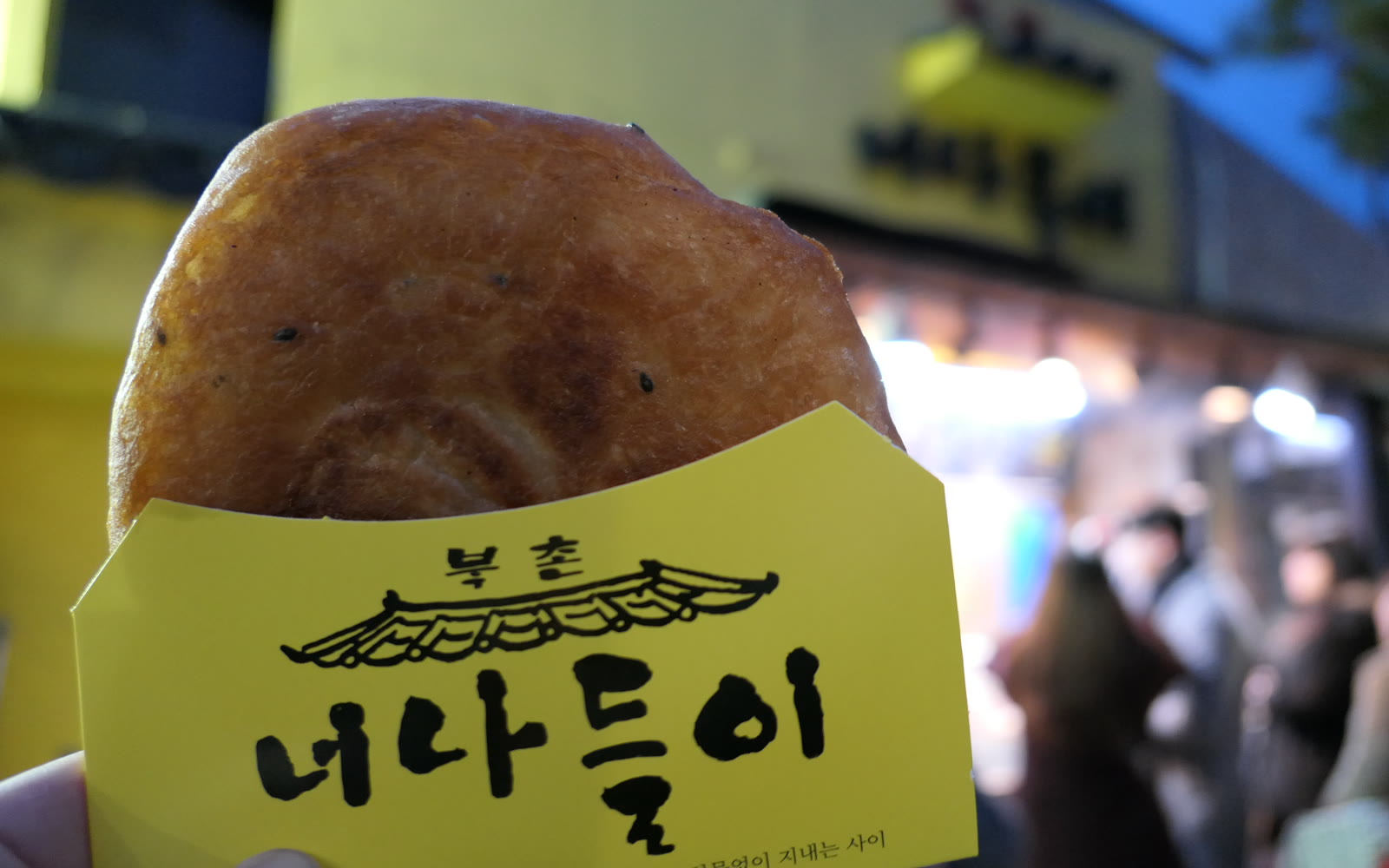
Gangneung clusters its food by geography, which makes eating here easy to map. For Chodang sundubu, go straight to the Chodang Tofu Village (초당두부마을), where dozens of specialists have been setting tofu for generations — arrive for breakfast. For raw fish and mulhoe, the harbours rule: Jumunjin Port (주문진항) has a bustling raw-fish market where you pick your catch and eat it upstairs, and Sacheon Beach is known for squid. The old-town markets — Jungang Market (중앙시장) and neighbouring Seongnam Market — are the place for cheap ongsimi, makguksu, fresh hotteok and street snacks under one roof. For jjamppong, aim at Gyodong (교동). And for coffee, Anmok Beach — though excellent roasters are now scattered across the whole city.
Tips for First-Timers
- Eat the tofu for breakfast. The Chodang houses open early and the first batch of the day is the softest and sweetest — going before 9am is a genuinely different experience.
- Say "an-maewo" if you can't take heat. Sundubu and mulhoe both arrive fierce with chilli by default; ask for the milder version and you'll actually taste the tofu or the fish underneath.
- Time your mulhoe for summer. It's a hot-weather dish; in winter, switch to a steaming bowl of ongsimi or jjamppong instead.
- Finish the mulhoe broth. Ask for noodles or rice to tip into what's left — leaving it behind is a rookie move locals will notice.
- Do the coffee at sunrise. Anmok faces due east, so a dawn cup as the sea turns gold is the city's signature ritual, and the cafes open early for exactly this.
- Chase the K-drama spots between meals. The Jumunjin breakwater from Guardian and the Hyanghae Beach "BTS bus stop" are both a short hop from the seafood harbours — the perfect excuse to work up an appetite.
The Gangneung Table at a Glance
Six dishes, one coastal city — here's the quick map for ordering like you belong.
| Dish | What it is | Price | Where to find it |
|---|---|---|---|
| Chodang sundubu | Silky seawater-set tofu, as a stew or plain | ₩8,000–12,000 | Chodang Tofu Village |
| Mulhoe | Cold raw fish or squid in an icy sweet-spicy broth | ₩12,000–18,000 | Jumunjin & Sacheon harbours |
| Gamja ongsimi | Chewy potato dumplings in a mild clear broth | ₩8,000–10,000 | Old-town markets |
| Makguksu | Cold buckwheat noodles, spicy or in broth | ₩8,000–10,000 | Noodle houses citywide |
| Jjamppong | Seafood-loaded spicy (or white) noodle soup | ₩8,000–12,000 | Gyodong |
| Gangneung coffee | Vending-machine cup to specialty pour-over | ₩500–8,000 | Anmok Coffee Street |
K-pop and K-drama fans come to Gangneung for the postcard shots — the Guardian breakwater, the BTS bus stop, the pine-lined sweep of Gyeongpo Beach — and leave surprised by how much of the city actually lives on a plate. That's the local secret: the best of Gangneung isn't a photo. It's a spoon of warm seawater tofu at dawn, a bowl of icy mulhoe with your feet still sandy, and a coffee as the sun climbs over the same sea that fed you. Order like a local, and let the coast do the rest.