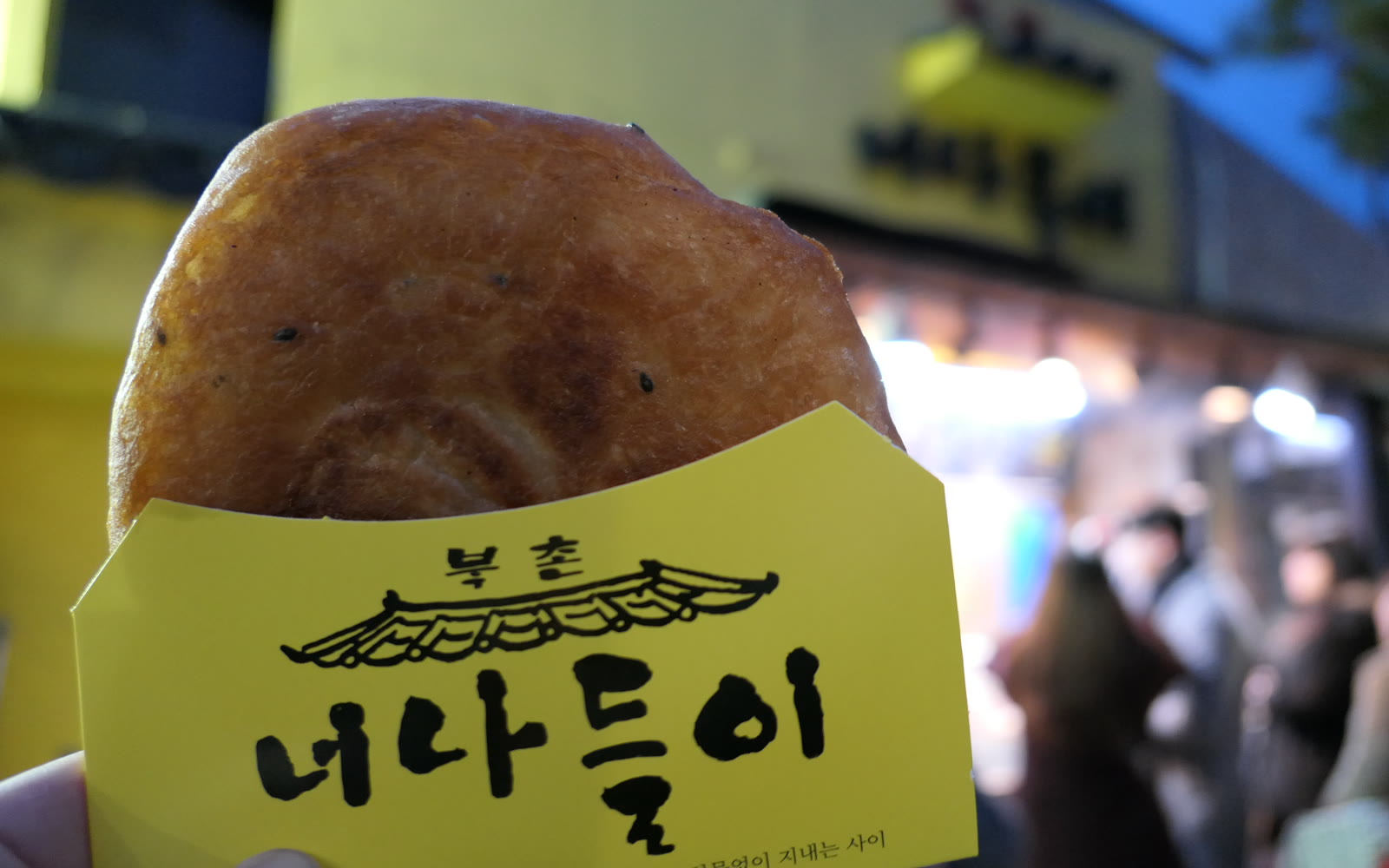
Busan isn't Seoul. Where the capital hums with glass towers and careful, refined plating, Korea's biggest port city runs on something rawer: the cold pull of the sea, the loud warmth of market aunties who wave you over like family, and food that tastes like lived history. This is a city built by refugees and dockworkers, and you can taste that story in every bowl. From noodle stalls that have simmered the same broth for half a century to fish markets that open before the sun, Busan feeds you honestly — big portions, low prices, nothing hidden. Here's what to eat, and how to eat it like you belong.
Busan's Signature Noodles: Milmyeon (밀면)
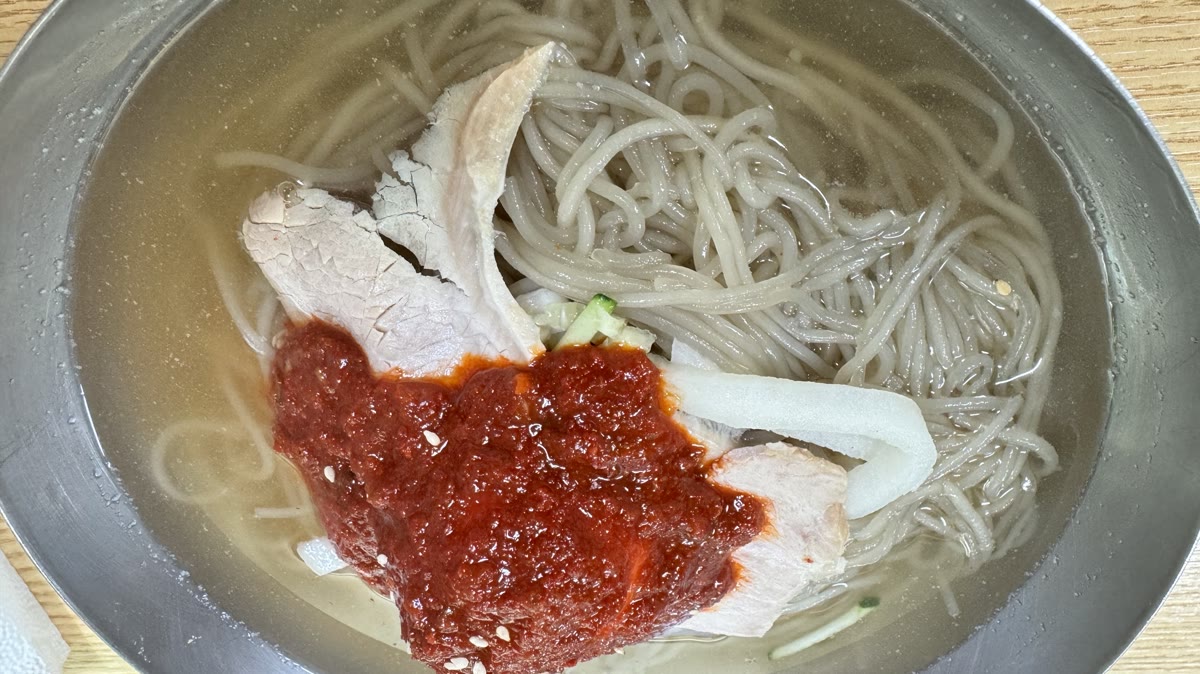
If one dish explains Busan, it's milmyeon (milmyeon, 밀면). The story starts in the 1950s, when refugees from the North arrived during the Korean War carrying the memory of naengmyeon, the chilled buckwheat noodles of Pyongyang. Buckwheat was scarce and expensive in the crowded port; wheat flour, handed out as aid, was everywhere. So they adapted — swapping buckwheat for wheat — and milmyeon was born. What began as survival food is now the taste of a Busan summer: a cold, bracing bowl eaten on a sweltering afternoon.
The noodles are springier and softer than naengmyeon, and there are two ways to order. Mul milmyeon (물밀면) comes swimming in an icy, faintly sweet beef-and-herb broth with cucumber, a boiled egg and a slick of chilli. Bibim milmyeon (비빔밀면) arrives dry, glossed in a fiery-sweet gochujang sauce you mix yourself. First-timers usually love the cold soup; the spicy version wins you over on the second visit. And yes — lifting the metal bowl to drink the last of the broth is not rude here. It's a compliment.
Best of all, it barely dents your wallet: most bowls run ₩6,000–10,000. This is everyday food, the kind Busan locals eat once a week without thinking. For the real thing, old-guard shops carry the flavour: Gaya Milmyeon in Jung-gu has been at it for around 40 years, while Gaegeum Milmyeon in Busanjin has served the neighbourhood for well over half a century. In Busanjin, locals also queue at Danggam Milmyeon; over in Nam-gu, Daeyeon Milmyeon pairs its bowls with a perilla-seed kalguksu; and near Geumjeong mountain, Myeonchaeum gives the classic a lighter, health-minded spin.
Comfort at Any Hour: Dwaejigukbap (돼지국밥)
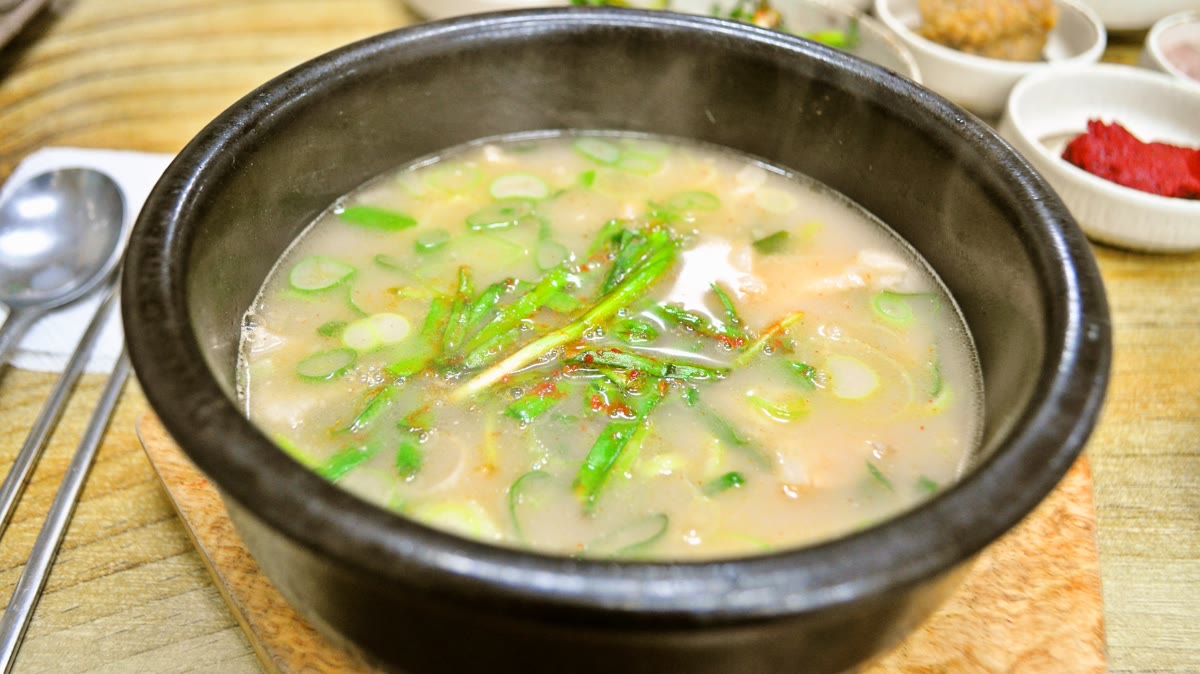
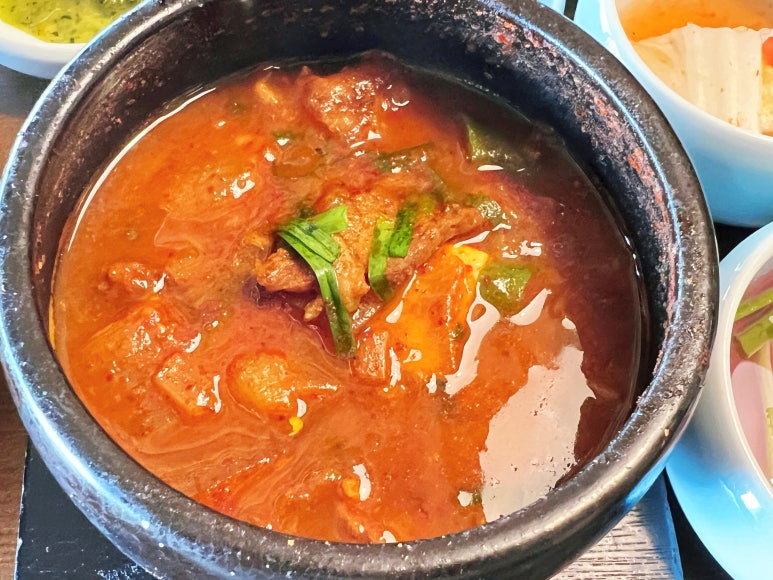
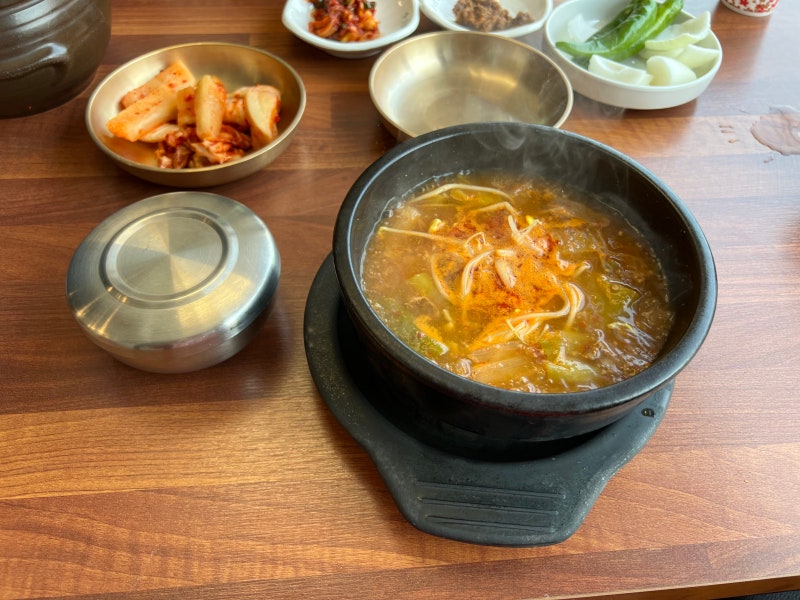
Ask a Busan native for their soul food and most will say dwaejigukbap (dwaeji-gukbap, 돼지국밥) — a milky pork-bone broth poured over rice, crowned with tender slices of boiled pork. It grew up around the clock-free rhythm of a working port: dock crews and market traders needed something hot, cheap and filling at 6am after a night shift, and again at 11pm after too much soju. So the gukbap shops simply never closed. To eat one is to eat the honest, unpretentious mood of the whole city.
The broth is gentle and savoury rather than heavy, and every table comes with a small armoury of seasonings to make it yours: salted shrimp (saeujeot) for depth, chopped chives (buchu) for bite, a spoon of red chilli paste for heat. Order the plain dwaejigukbap, or branch out to naejang gukbap (내장국밥) with richer offal, or suyuk baekban — a plate of sliced boiled pork with rice and soup on the side, so you taste the meat clean. Some pour the rice straight into the soup; others spoon it in bite by bite. There's no wrong way. Drink the broth to the bottom, and refill the banchan as many times as you like.
Prices sit around ₩8,000–15,000 for a bowl that could carry you through the day. In Nampo-dong's International Market, Sinchan Gukbap has become a genuine landmark; in Nam-gu, Ssangdungi Dwaejigukbap is a long-standing favourite. Head to the Dong/Dongnae side and you'll find Uri Dwaejigukbap and the grandmother-run Yuksimnyeon Jeontong Halmae Gukbap, whose name literally nods to sixty years of tradition, while Subok Dwaejigukbap holds it down in Yeonje-gu.
From the Sea: Fresh Seafood & Raw Fish (회)
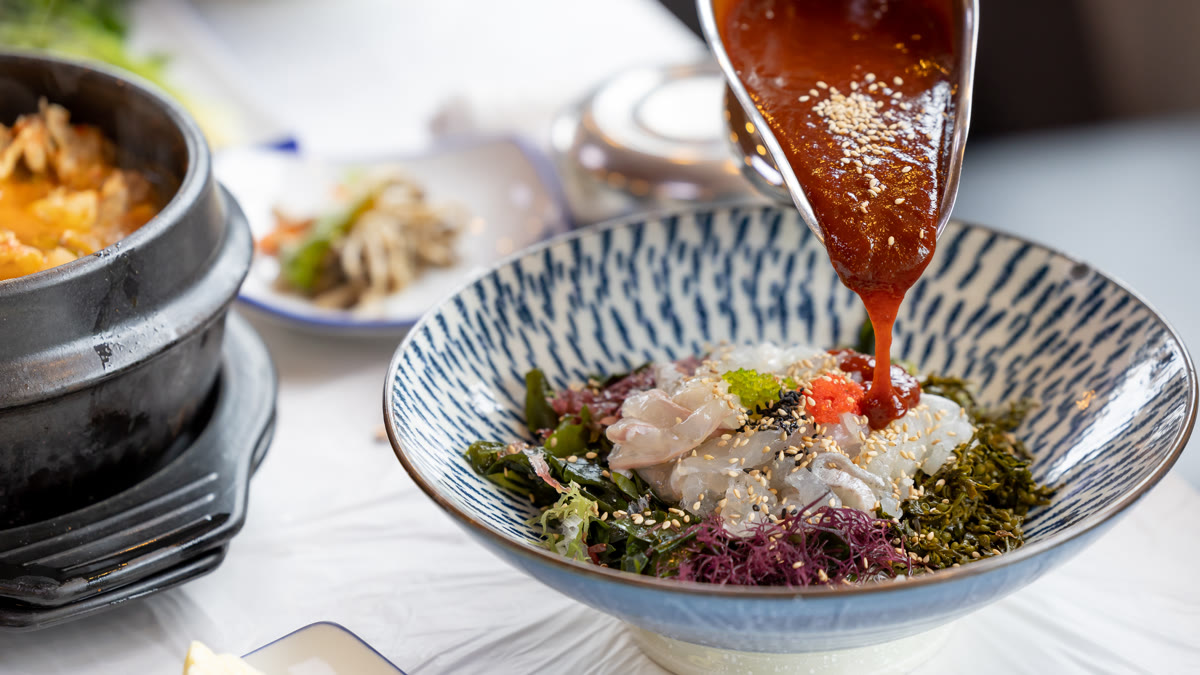
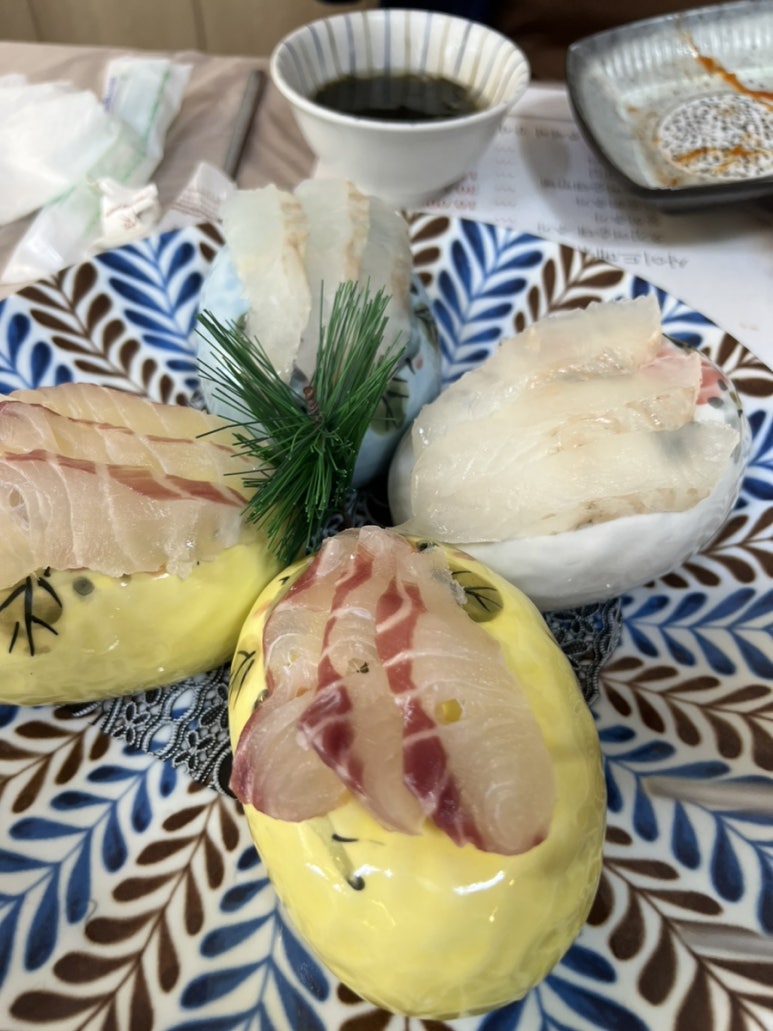
In Seoul, raw fish (hoe, 회) is a special-occasion splurge. In Busan, it's Tuesday. The city sits at the edge of cold, clean waters, and its markets turn over so fast that freshness is simply assumed. That everyday relationship with the sea is the whole point: you're not paying for a hushed, white-tablecloth ritual — you're paying for fish that was swimming an hour ago, sliced in front of you, eaten with your elbows on the table.
Look for squid (ojingeo-hoe, 오징어회), springy and clean; anchovy (myeolchi-hoe, 멸치회), quietly sweet and best in spring; and conger eel (bujang-eo, 붕장어), a richer treat often grilled tableside. The signature Busan move, though, is mulhoe (물회) — raw fish in a chilled, tangy-spicy broth you slurp like a cold soup. It sounds unusual and tastes like summer.
Ordering is refreshingly low-tech. Menus can be short or nonexistent because the catch changes daily, so point, hold up fingers for how many people, and let the owner steer you. Prices aren't negotiable — they track the day's market rate — and a good plate runs roughly ₩12,000–18,000 per person, though a full spread with sides climbs higher. For the classic scene, wander Jagalchi Market in Jung-gu, or go more local and cheaper out at Gijang, where seaside restaurants serve the catch with an ocean view and almost no tourists. For a sit-down version, Sushi Mireune in Haeundae is known for its mulhoe, Jyugajeonghyo nearby does refined sashimi courses, and Baeksan Kitchen on the Dongnae side plates beautifully aged raw fish.
Spicy & Chewy: Nakji Bokkeum (낙지볶음)
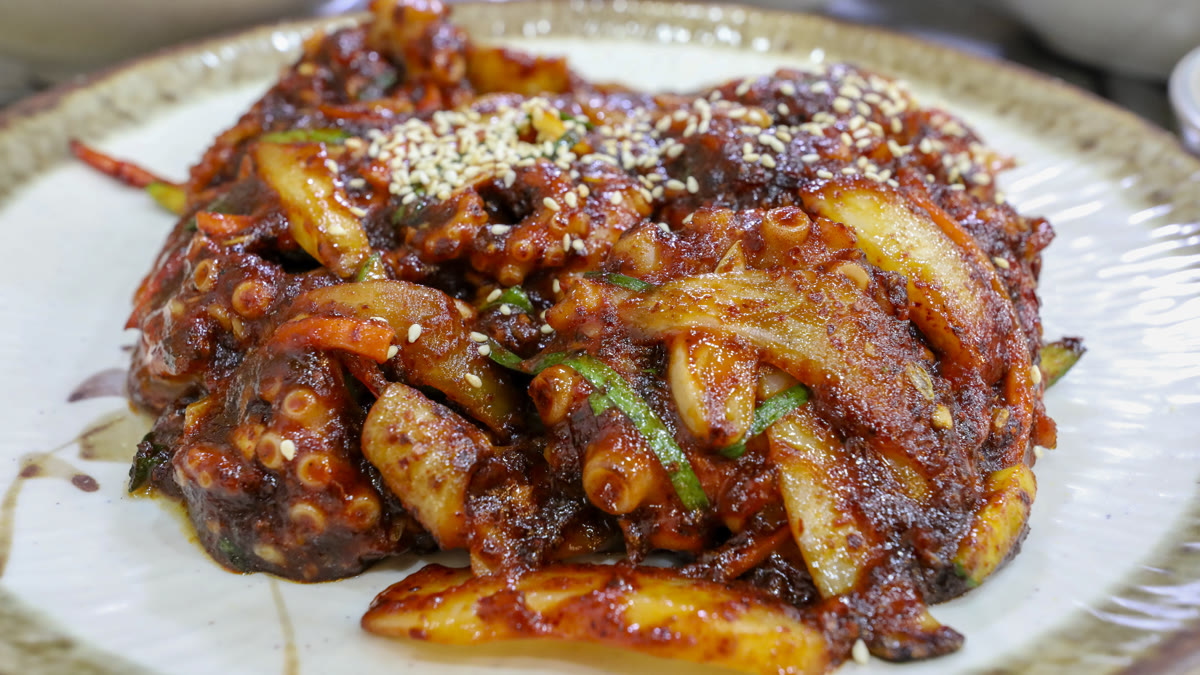
Octopus in Busan is less a dish than a contact sport. Because the port pulls in live octopus so reliably, the city treats it as proof of freshness — and eating it becomes a shared, hands-on event. The headline is nakji bokkeum (낙지볶음), small octopus stir-fried in a blazing red chilli sauce until it's tender, sweet and just spicy enough to make the table go quiet, then loud. It's late-night food, the thing you order when the soju comes out.
You'll meet a few forms. Grilled or stir-fried octopus is the crowd-pleaser; nakji muchim (낙지무침) is a cold, punchy salad dressed in gochujang and sesame oil; and the brave go for san-nakji (산낙지), raw octopus so fresh the pieces still move on the plate — a genuinely startling first bite that locals eat wrapped in perilla leaf with garlic. Whatever the form, the ritual is the same: wrap a bite, pass the plate, keep talking. Slurping the spicy sauce with a spoonful of rice at the end is half the fun.
Expect around ₩12,000–20,000, usually shared over drinks. In Haeundae, the Gaemijip new-town branch is a famous name for stir-fried octopus and tripe hot pot. Busanjin's Wonjo Halmae Nakji is an old grandmother's shop beloved for its fiery pans, while over in Dongnae, Jobang Nakji Madang and Somunnan Wonjo Jobang Nakji are the go-to names for nakgopsae — octopus piled with intestines and shrimp in one bubbling pan.
Where Locals Eat: Beyond the Tourist Zones
Busan rewards travellers who eat on the city's schedule and wander a little past the obvious. Here's how the day actually flows, where to find the real thing, and the small rules that make you an insider instead of a tourist.
Busan's Food Clock
- Morning (6–9am) — dwaejigukbap and noodle soups. This is the workers' breakfast, hot and quick before the shift.
- Lunch (11am–1pm) — milmyeon, raw-fish salad, bibimbap. Fast, cheap, eaten with focus.
- Dinner (5–8pm) — hoe, grilled octopus and grilled fish, poured over with soju. This is when Busan lingers.
- Late night (9pm–dawn) — back to gukbap, noodles and hot fish-cake broth. The port never fully sleeps, and neither do its kitchens.
The Market Experience: Jagalchi & Gijang
Jagalchi Market in Jung-gu is the beating heart of Busan seafood — a full-sensory blast of salt air, shouting vendors and tanks of the day's catch. Pick your fish downstairs, carry it upstairs, and a restaurant will slice and serve it for a small fee. For something quieter and cheaper, take the trip out to Gijang, where seaside spots serve just-landed fish to mostly local crowds — no photo queues, just the sea. And Nampo-dong, though busy with visitors, still delivers: its milmyeon alley and the International Market food lanes are the real thing, not a tourist trap.
Local Etiquette & Unwritten Rules
- Eat with some pace at lunch. Midday tables turn over fast, and a line often forms behind you — lingering over a quick bowl reads as odd.
- Drink the broth. Lifting the bowl and finishing the soup is normal, even flattering to the cook.
- Finish your plate. Clearing fresh seafood signals you enjoyed it; leaving it can seem like a quiet complaint.
- Watch your shoes. Some older shops still seat you on the floor — glance for a shoe rack and follow the room.
- Keep drinking etiquette relaxed but respectful. Younger crowds are easygoing, but pour for elders first and turn slightly away when you sip in their company.
Budget-Friendly Food Adventures (Under ₩15,000 a Meal)
One of the quiet joys of Busan is how far your money stretches. As a port city built on working-class appetites, it prices food to be eaten daily, not celebrated occasionally. Here's roughly how the tiers break down:
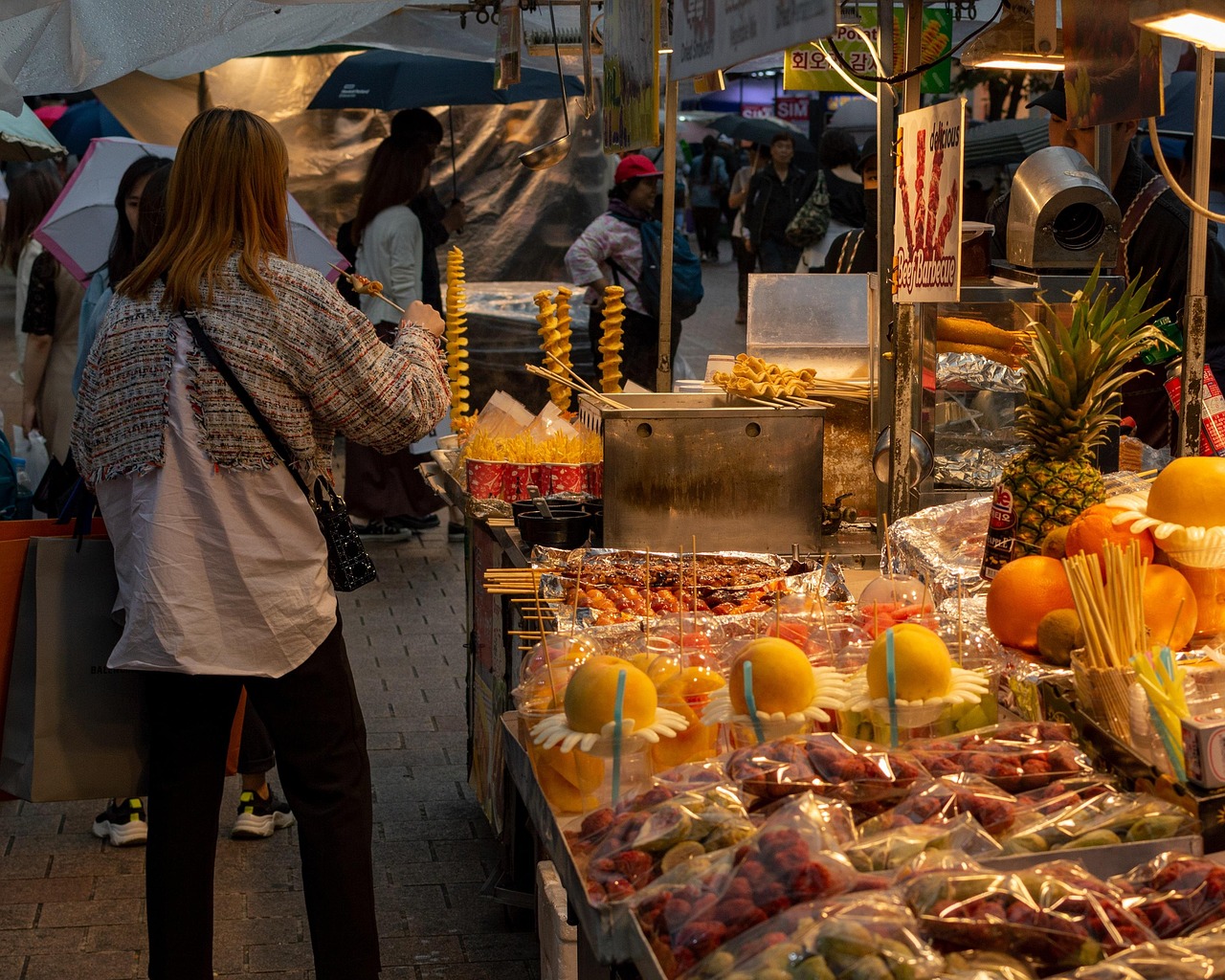
- ₩3,000–6,000 — street snacks: fish-cake broth (eomuk, 어묵), tteokbokki, and Busan's famous seed-stuffed hotteok (ssiat hotteok). Best early, when everything is freshest.
- ₩6,000–12,000 — the sweet spot: milmyeon, dwaejigukbap and raw-fish salad sets. Refill the banchan, drink the broth, walk out full.
- ₩12,000–15,000 — a plate of hoe, an octopus feast or grilled fish. This is where Busan's value peaks: near-Seoul quality at half the price.
Why so cheap? A port supplies its own seafood, freshness keeps overheads honest, and a culture of feeding working people keeps margins thin. You're eating well precisely because this food was never meant to be fancy.
What Makes Busan Different from Seoul
If you've already eaten your way through the capital, Busan will feel like a different country at the table. Same peninsula, different soul.
| Seoul | Busan | |
|---|---|---|
| Seafood | Available but pricey | Fresh, cheap, landed daily |
| Food history | Royal court, refined | Refugee and dockworker roots |
| Portions | Neat and composed | Generous and hearty |
| Ordering | Clear menus | Talk to the owner, point and go |
| Etiquette | More formal | Warmer, looser |
| Hours | Set opening times | Around-the-clock port culture |
| Price | Higher | Noticeably cheaper |
| Philosophy | Harmony and finesse | Honesty, freshness, generosity |
Fans chasing the Busan they've seen on screen — the port's stark drama in Train to Busan, the rough-but-warm streets of the Outlaws films, the beach backdrops of countless idol photoshoots at Gwangalli and Haeundae — usually arrive for the scenery and leave talking about the food. That's the secret locals already know: the city's best story isn't on a screen or a landmark. It's in a steaming bowl, eaten elbow to elbow with strangers, for the price of a coffee back home. Read this like advice from a Busan friend, sit down, and start slurping.