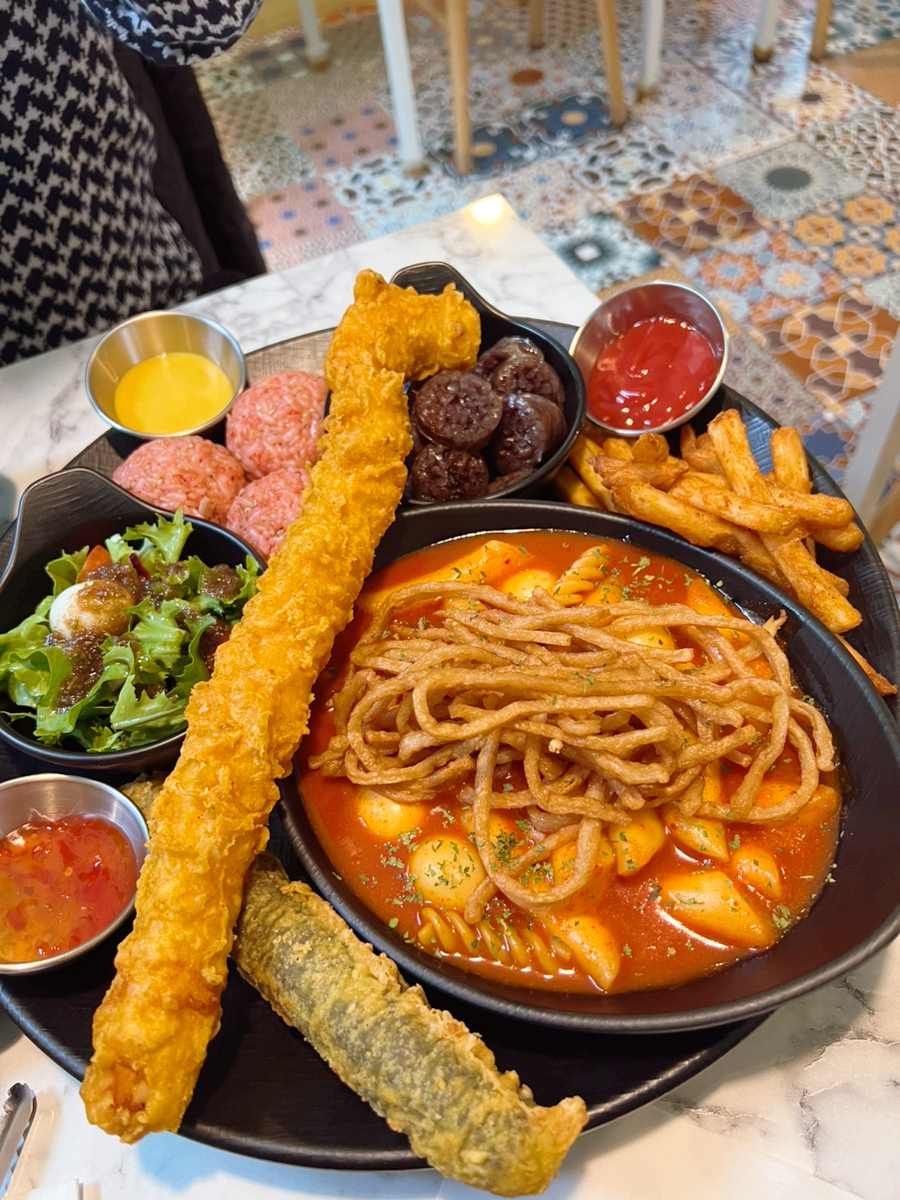
Tteokbokki (떡볶이) is everywhere in Korea. From grandmas at market stalls to late-night convenience stores, these chewy rice cakes in spicy-sweet red sauce are the nation's ultimate comfort food.
If you've watched any K-drama, you've seen someone eating it.
History
Tteokbokki dates back to the Joseon Dynasty, but the original version was soy sauce-based (궁중떡볶이), a mild royal court dish.
The fiery red gochujang version we know today was invented in the 1950s by a street vendor in Sindang-dong, Seoul — now famous as Tteokbokki Town.
Types of Tteokbokki
- Classic (일반 떡볶이) — chewy rice cakes in gochujang sauce with fish cakes and green onions. ₩3,000–5,000
- Cheese Tteokbokki (치즈떡볶이) — topped with melted mozzarella. The K-drama favourite
- Rosé Tteokbokki (로제떡볶이) — creamy pink sauce mixing gochujang with cream. The 2020s viral trend
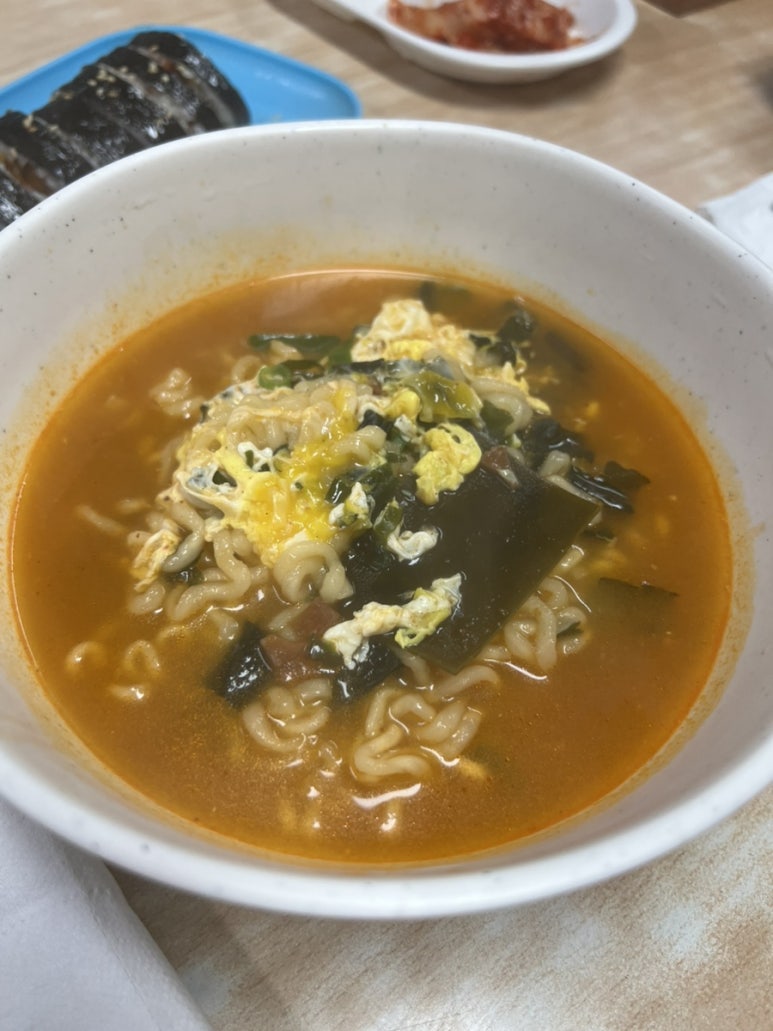
- Rabokki (라볶이) — tteokbokki + instant ramen noodles. Carb heaven
- Sindang-dong Style (신당동식) — served in a shallow pan with cabbage, fish cakes, boiled eggs, and glass noodles
- Royal Court (궁중떡볶이) — soy sauce-based with beef and vegetables. Mild and savoury
How to Eat
Tteokbokki is served piping hot in a communal bowl. Use the provided wooden skewers or small forks — chopsticks work too but the rice cakes are slippery.
The best part? When the sauce reduces, ask for 볶음밥 (bokkeumbap) — the vendor will stir-fry rice in the leftover sauce.
Where to Find It
- Sindang-dong Tteokbokki Town — the birthplace, 30+ specialized stalls near Sindang Station
- Gwangjang Market — classic market tteokbokki alongside bindaetteok
- Myeongdong street stalls — tourist-friendly portions with cheese options
- School zones (학교 앞) — the most authentic experience, tiny stalls near any university
Spice Level Tips
Most tteokbokki is medium-spicy by Korean standards, which means quite hot for most visitors. Ask for "덜 맵게 해주세요" (deol maepge haejooseyo) for less spice.
Cheese and rosé versions are milder. Pair with 순대 (sundae, blood sausage) and 튀김 (twigim, fried vegetables) for the full street food combo.
Price Range
Street stall tteokbokki costs ₩3,000–5,000. Restaurant versions with premium toppings (cheese, seafood, meat) run ₩8,000–15,000. Sindang-dong set menus are ₩10,000–18,000 per person.
Tteokbokki in K-Culture: More Than Just Food
In Korean dramas, tteokbokki is the food of ordinary life — the meal friends share after school, the comfort food someone eats alone when feeling low, the first dish a character cooks to impress someone. In Reply 1988, the neighbourhood kids gather around a market stall; in Twenty-Five Twenty-One, it's the celebratory snack after hard-won victories.
K-pop fans have noticed this too. BLACKPINK's Lisa once listed tteokbokki as her favourite Korean street food. BTS members have referenced it in interviews and variety shows. When you eat tteokbokki at a Seoul pojangmacha (street tent), you're participating in something that runs through the heart of contemporary Korean culture.
The Street Food Combo You Should Order
No tteokbokki experience is complete without the classic trio: tteokbokki, sundae (blood sausage with glass noodles), and twigim (assorted fried items — sweet potato, vegetables, squid). Many stalls sell all three and let you mix them in the same spicy sauce. This combination is called "분식 세트 (bunsik set)" — Korea's beloved fast food platter that predates any burger chain.
Finish the sauce. Seriously — ask for bokkeumbap (stir-fried rice in the remaining sauce) and you'll understand why regulars always order it last.
Making Tteokbokki at Home
The key ingredients are available at Korean grocery stores worldwide: tteok (cylindrical rice cakes, usually sold frozen), gochujang, and fish cakes (eomuk). The sauce is simple — gochujang, soy sauce, sugar, and anchovy stock. Most Korean home cooks have their own version, adjusting the sweetness and spice to taste. It takes about 15 minutes from start to finish, which explains why it's the go-to late-night snack in Korean households.
Sindang-dong Tteokbokki Town: The Pilgrimage Worth Making
Sindang-dong (신당동) is where the modern tteokbokki story begins. In the early 1950s, a vendor named Ma Bok-lim improvised a new sauce by combining gochujang with the standard soy-sauce recipe — and the red tteokbokki era was born. Today, the alley near Sindang Station (Line 2 and 6, exit 8) is lined with more than thirty restaurants that all trace their recipes back to that single moment. Each shop has its own personality: some serve it bubbling in individual iron pots, others in wide communal pans meant for sharing. The walls are covered in decades of celebrity photos and food critic endorsements. It's loud, it's crowded during dinner hours, and it's completely worth it.
The Sindang-dong style — shallow pan, cabbage, fish cakes, boiled eggs, glass noodles, and the option to finish with bokkeumbap — is the definitive tteokbokki experience. Plan at least ninety minutes for the meal.
Gwangjang Market: Tteokbokki Alongside Everything Else
Gwangjang Market (광장시장) in Jongno is one of Seoul's oldest and most famous traditional markets. While it's better known for bindaetteok (mung bean pancakes) and mayak kimbap (sesame-seeded mini rolls), the tteokbokki stalls here offer something different: a simpler, sharper flavour that feels more home-style than the restaurant versions. You sit at a narrow counter, elbow-to-elbow with locals, and eat from a shared pot over a small gas burner. Prices are among the lowest in the city — ₩3,000–4,000 for a generous portion. Exit 11 from Jongno 5-ga Station.
Tips for First-Time Tteokbokki Visitors
- Manage the spice. Say "덜 맵게 해주세요 (deol maepge haejooseyo)" — less spicy, please. Most vendors will adjust without complaint. Cheese and rosé versions are the mildest starting points.
- Always order the trio. Tteokbokki alone is good. Tteokbokki with sundae (순대, blood sausage) and twigim (튀김, fried vegetables and seafood) dipped in the same sauce is the proper experience. Most street stalls sell all three.
- Ask for bokkeumbap at the end. When the sauce has reduced and you've eaten most of the tteok, ask "볶음밥 해주세요." The vendor stirs cooked rice into the remaining sauce over high heat — this is often the best bite of the entire meal.
- Don't try to eat it with chopsticks standing up. The rice cakes are slippery and the sauce stains. Sit down, use the wooden skewer or fork provided, and lean over the bowl.
- Timing matters. Street stalls near schools and universities are busiest after school hours (3–6pm) and again after 9pm. The afternoon window is quieter and you'll get fresher, less reduced sauce.