Hanbok Rental Seoul 2026: From ₩5,840 — Free Palace Entry Included
Places
Hanbok Rental Seoul 2026: Cheapest Options, Best Photo Spots & How to Choose a Shop
The complete hanbok rental guide for Seoul — price comparison from ₩15,000 to ₩50,000, best photo spots near Gyeongbokgung and Bukchon, what's included, and how to choose the right shop.
By Knowaboutkorea·Seoul·2026
Hanbok Rental Seoul 2026: Cheapest Options, Best Photo Spots & How to Choose a Shop · Knowaboutkorea
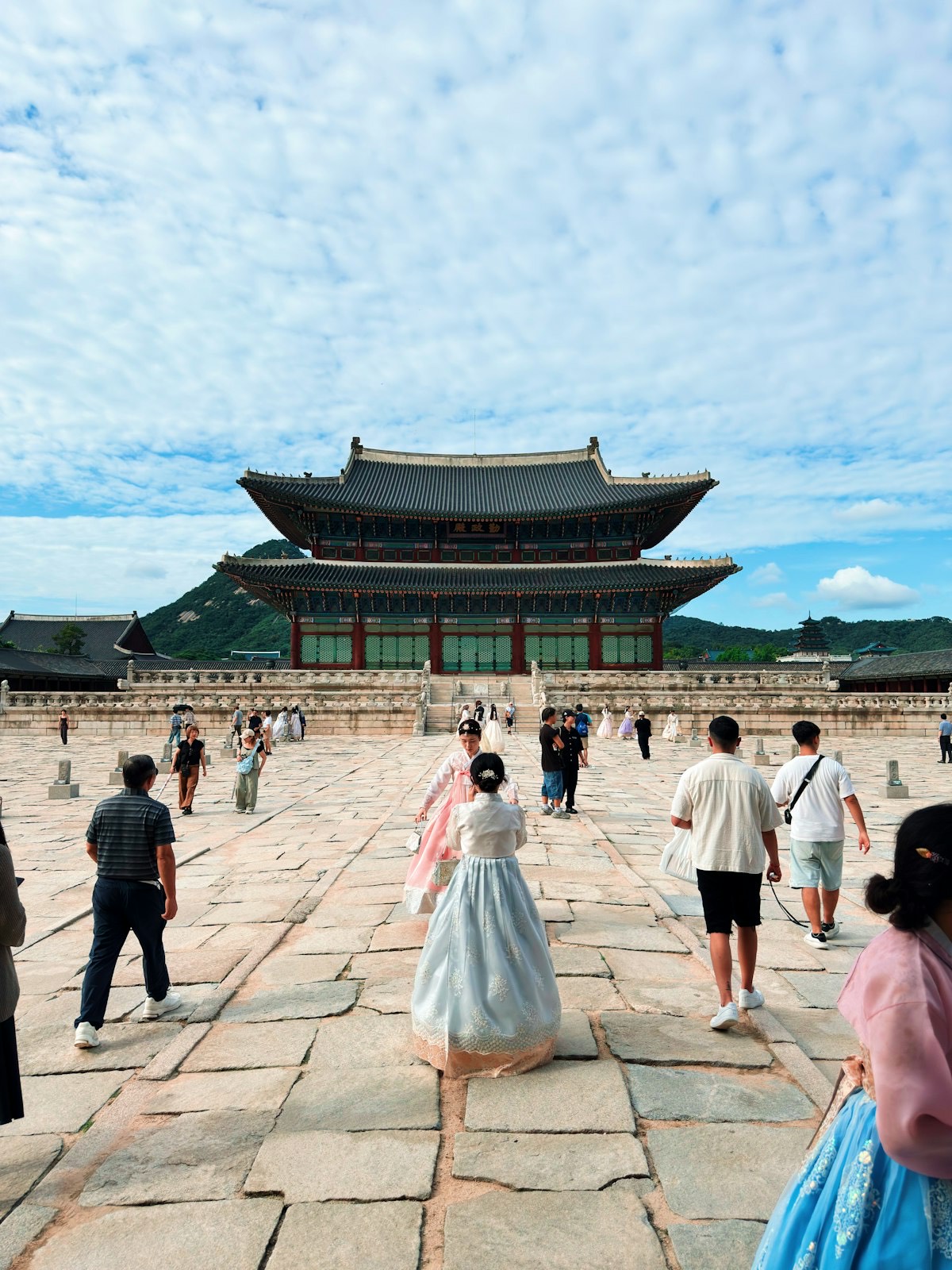
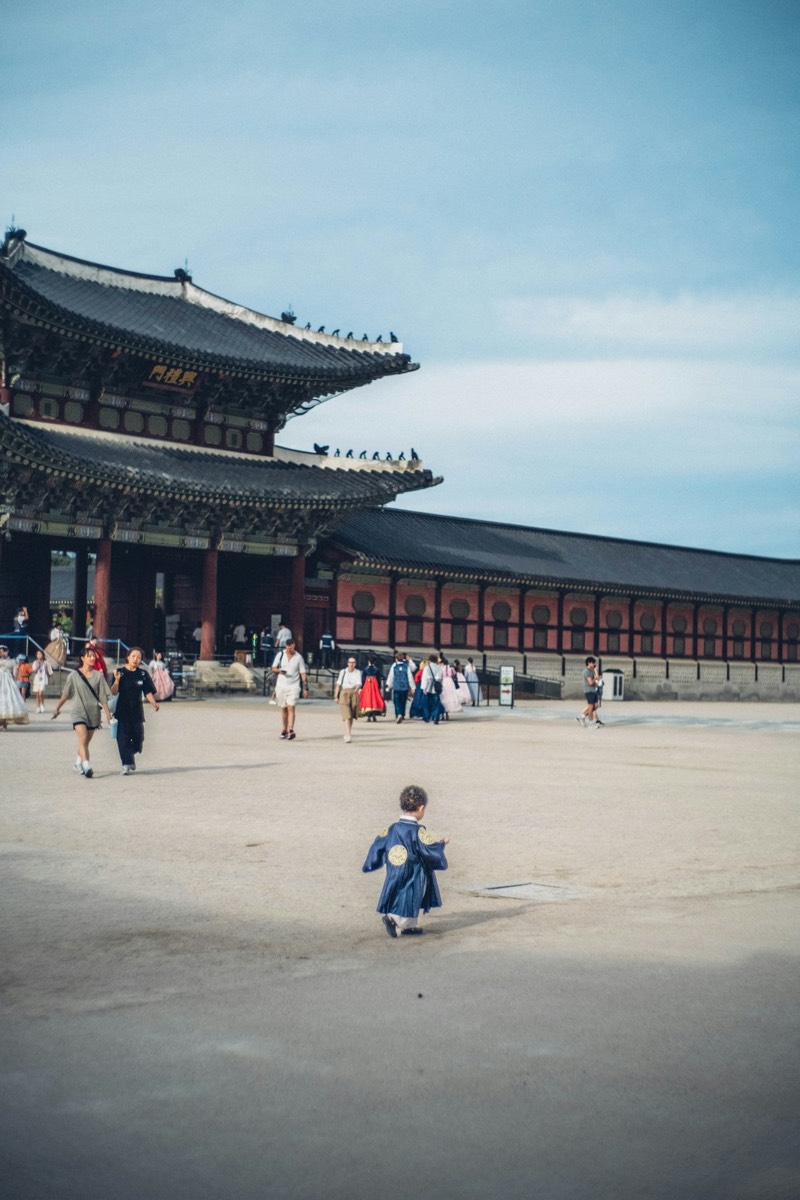
The largest and most visited palace. Regular admission ₩3,000. Open 09:00–18:00, closed Tuesdays. The wide stone courtyard at Geunjeongjeon is the most popular hanbok photo location in all of Korea.
Important rule: You must wear a full traditional set — jeogori (upper garment) plus chima (skirt) or baji (trousers). Modern hanbok-inspired fashion, casual fusion pieces, or just wearing the top without the bottom does not qualify for free entry. All rental shops provide qualifying sets by default.
Line 4 (Myeongdong) → Transfer at Chungmuro → Line 3 → Anguk Station
Exit 3 → 5 min walk to the entrance
🚌
Bus · 20 min
Bus 151 from Myeongdong Station → Changdeokgung Stop → 2 min walk
🚕
Taxi · 8-12 min
Estimated fare: KRW 5,000-10,000 (varies with traffic)
→ Gyeongbokgung Hanbok Experience Zone경복궁 한복 체험존
🚇
Subway · 20 min
Line 4 → Chungmuro → Transfer Line 3 → Gyeongbokgung
Exit 5 → 3 min
🚌
Bus · 25 min
Bus 402 from Myeongdong → Gyeongbokgung area → 5 min
🚕
Taxi · 10-15 min
Estimated fare: 6,000-10,000 KRW
→ Gyeongbokgung Palace경복궁
🚇
Subway · 15 min
Line 4 (Myeongdong) → Transfer at Chungmuro → Line 3 → Gyeongbokgung Station
Exit 5 → 5 min walk to the main gate
🚌
Bus · 25 min
Bus 402 from Myeongdong Station → Gwanghwamun Stop → 3 min walk
🚕
Taxi · 10-15 min
Estimated fare: KRW 6,000-12,000 (varies with traffic)
Your Complete Guide to Hanbok Rental in Seoul
Wearing a hanbok (한복) — Korea's traditional dress — and walking through the courtyards of a 600-year-old palace is one of those travel experiences that stops you in your tracks.
The silk catches the light differently at every angle, the wide skirt sweeps across ancient stone pathways, and for a few hours you step into the same visual world as the royal court dramas you've been watching on Netflix.
It's not a costume — it's a living piece of Korean culture, and Seoul makes it remarkably easy to try.
This guide covers everything you need: the six best hanbok rental shops near Gyeongbokgung (경복궁) with real price comparisons, the free palace entry policy, the best photo spots, and seasonal tips so you look and feel great no matter when you visit.
Whether you're a solo traveler, a couple, or a group of friends, hanbok rental is one of the best-value experiences in Seoul.
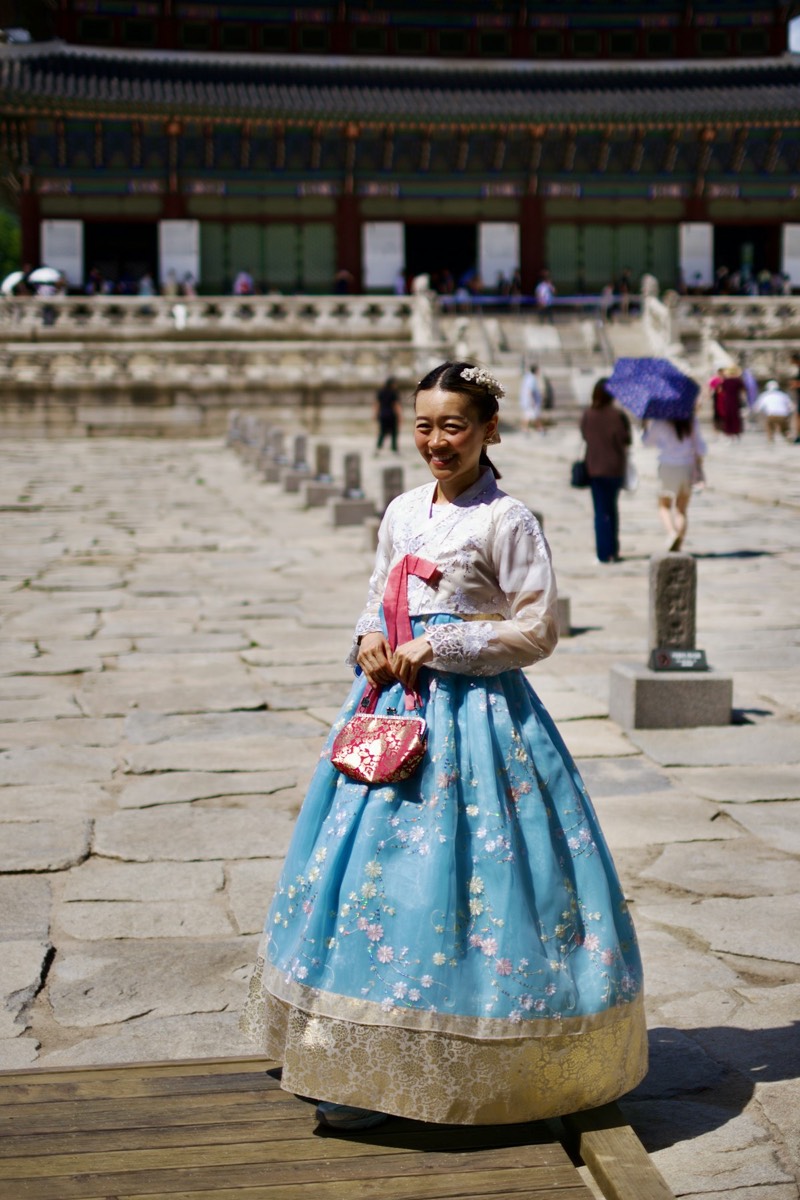
A visitor in traditional hanbok at Gyeongbokgung Palace
Best Photo Spots at Gyeongbokgung
Gyeongbokgung is where most visitors wear their hanbok, and knowing where to stand makes the difference between a nice photo and an extraordinary one. Here are the top five spots inside the palace grounds:
Gwanghwamun Gate (광화문) — The main gate is the classic shot. Morning light (09:00–10:00) hits the gate from the east and creates warm, golden tones on the stone and painted woodwork. Stand centered on the main pathway for a symmetrical composition. Arrive right at opening to get the gate without crowds behind you.
Geunjeongjeon Hall (근정전) — The throne hall's wide stone plaza creates dramatic perspective lines. Position yourself on the central 답도 (stone path) with the hall behind you. The raised stone platform and ornate double-eaved roof are unmistakable. Best in soft morning light or on overcast days when there are no harsh shadows.
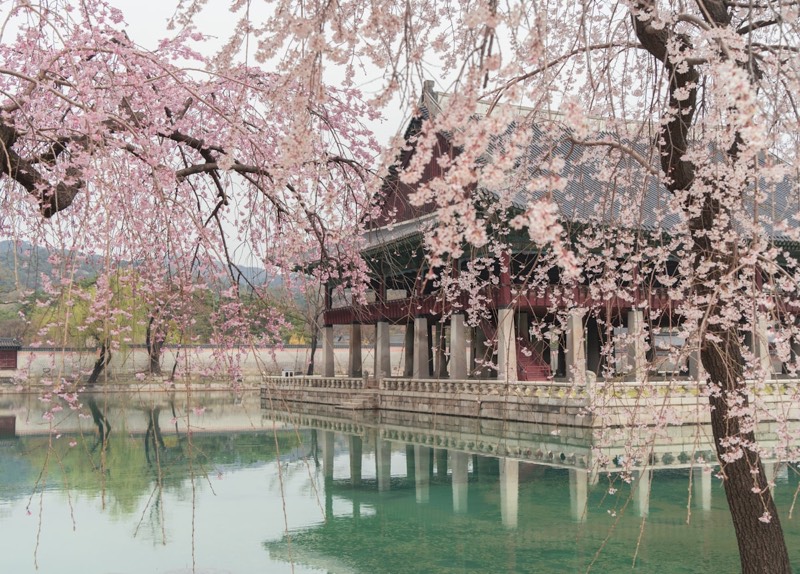
Gyeonghoeru Pavilion (경회루) — The grand banquet pavilion over an artificial lake. Stand on the south bank for reflection shots — on still mornings the pavilion mirrors perfectly in the water. The wooden columns frame beautifully from any angle. This is arguably the single most photogenic spot in all of Seoul's palaces.
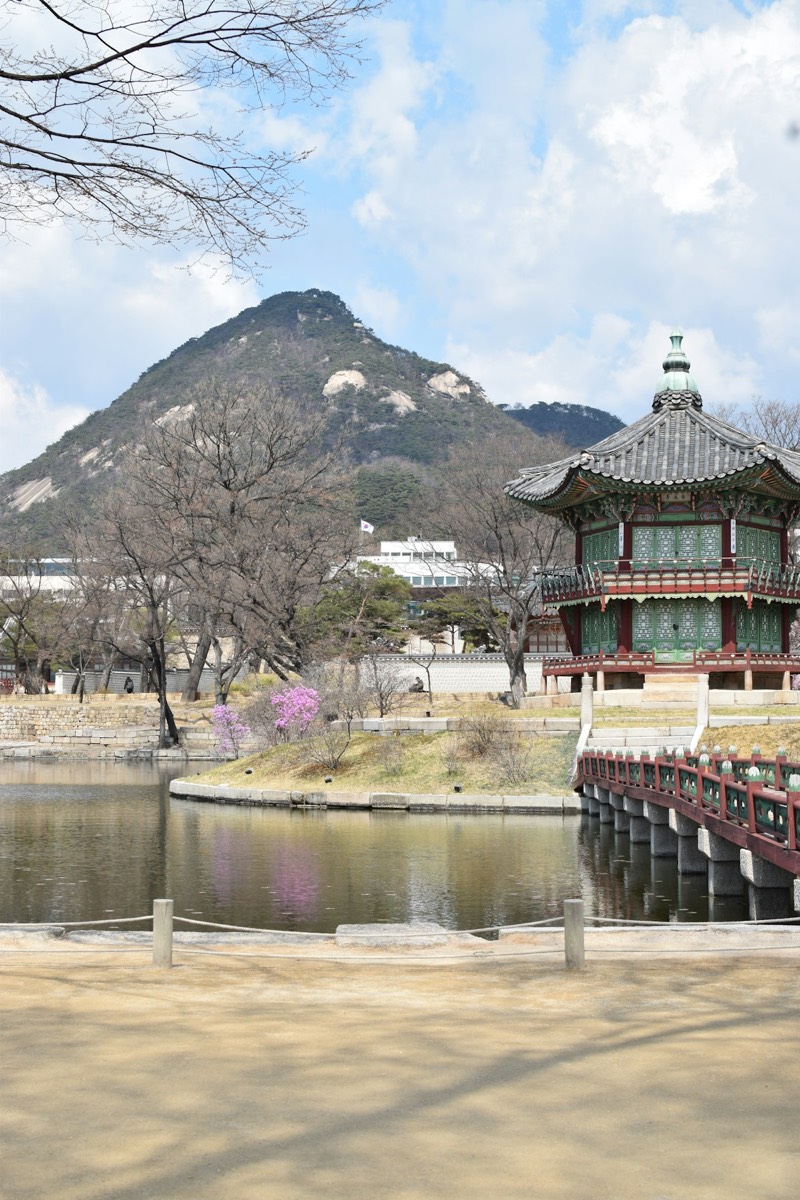
Hyangwonjeong Pavilion (향원정) — A hexagonal pavilion on a small island in the rear garden, connected by a graceful wooden bridge. Far less crowded than the front courtyards because most tour groups don't walk this far back. The intimate scale and surrounding trees make it feel like a private garden. Best at 09:00–10:00 before visitors reach the back area.
Royal Guard Changing Ceremony — Held at Gwanghwamun Gate at 10:00 and 14:00 daily (except Tuesdays). Guards in full Joseon-era military dress march in formation with drums and flags. Standing beside the guards in your hanbok creates a spectacular photo — they're accustomed to visitors posing nearby. Arrive 10 minutes early for a front-row position.
Hyangwonjeong Pavilion (향원정) — a quieter spot for stunning reflection photos
Other Popular Hanbok Areas
While Gyeongbokgung is the most popular destination, Seoul has several other areas that pair beautifully with hanbok. If you rent for a full day, consider visiting more than one location.
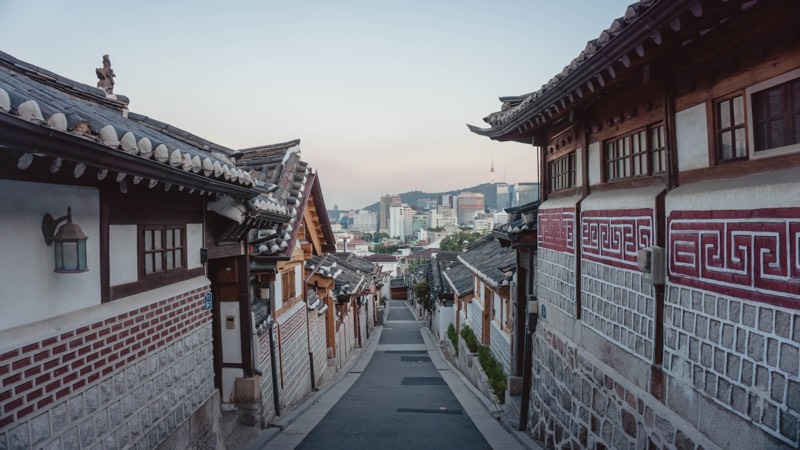
Bukchon Hanok Village (북촌한옥마을) — Just a 10-minute walk east from Gyeongbokgung. The steep alleyways lined with traditional hanok (한옥, Korean traditional houses) with their grey tiled rooftops create an incredibly atmospheric backdrop. The most photographed viewpoint is at Gahoe-dong Alley where the lane descends steeply with hanok rooftops on both sides and mountains behind. Visit before 10:00 to respect residents and avoid crowds. Note: This is a residential neighborhood — keep voices low and stay in designated photo areas.
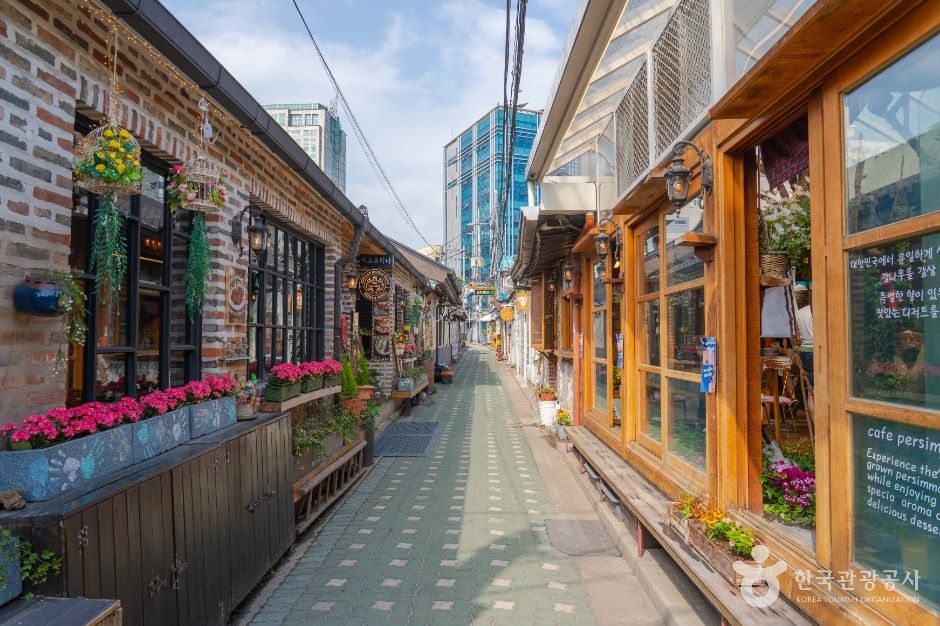
Insadong (인사동) — Seoul's cultural arts district, a 15-minute walk south from Gyeongbokgung. The pedestrian street is lined with traditional craft shops, tea houses, and galleries. Wearing hanbok here feels natural rather than performative — the neighborhood's earthy palette of pottery, wooden signs, and lantern-lit alleys complements traditional dress perfectly. Stop at a traditional tea house like Dawon (다원) for photos with paper screens and ceramic tea sets.
Changdeokgung Secret Garden (창덕궁 후원) — The Huwon (후원, rear garden) at Changdeokgung Palace is a UNESCO World Heritage Site and one of the most beautiful gardens in East Asia. The garden requires a separate reservation (₩5,000, free with hanbok) and is accessible only via guided tour. The Buyongji Pond pavilion surrounded by ancient trees is hauntingly beautiful in every season. Book the earliest tour slot for the best light and fewest people.
What's Included in Rental Packages
Knowing what's standard and what costs extra helps you budget properly and avoid surprises at the counter.
Standard inclusions (all shops):
Full hanbok set — jeogori (top) + chima (skirt) or baji (trousers)
Basic accessories — norigae (ornamental pendant), hair ribbon or pin
Locker for personal belongings
Basic hair styling (simple updo or braids with accessories)
Changing room and mirror
Common add-ons (₩3,000–₩10,000):
Extended time — most shops charge ₩3,000–₩5,000 per additional hour
Premium hair styling — elaborate updos, flower crowns, or traditional daenggi (댕기, ribbon) braids
Traditional Korean fan or parasol for photos
Men's gat (갓, traditional hat) upgrade
Premium extras (₩10,000–₩30,000):
Royal court hanbok — elaborate embroidered designs inspired by Joseon queens and kings
Traditional hwagwan (화관, ceremonial crown) headpiece
Professional photo session (30 min with photographer, 10–20 edited photos)
Couple or family coordination sets with matching color themes
Bukchon Hanok Village (북촌한옥마을) — a perfect hanbok photo backdrop without palace entrySpring cherry blossoms at the palace — the most popular season for hanbok photos
Seasonal Tips for Hanbok Rental
Seoul has four distinct seasons, and each one changes the hanbok experience significantly. Plan your rental around the weather for the best results.
Season
Weather
Hanbok Notes
Spring (Mar–May)
10–20°C, cherry blossoms in April
The most popular season for hanbok rental. Cherry blossom trees inside Gyeongbokgung create a pink canopy that photographs beautifully with colorful hanbok. Book early — shops sell out by 10:00 on April weekends. Light fabrics are comfortable. Bring a light jacket for mornings.
Summer (Jun–Aug)
25–35°C, humid with monsoon rains
Heat and humidity make full hanbok uncomfortable. Choose lightweight or saenghwal hanbok (생활한복, casual modern hanbok) in breathable fabrics. Visit early morning (09:00–11:00) before peak heat. Carry a traditional fan — it's both practical and photogenic. Monsoon season (late Jun–Jul) means checking weather forecasts; most shops provide umbrellas on rainy days.
Autumn (Sep–Nov)
10–22°C, peak foliage Oct–Nov
Tied with spring as the best season. Autumn foliage at Gyeongbokgung (peak: late October) creates stunning gold, red, and orange backdrops. The cooler weather makes wearing multiple layers comfortable. Deep jewel-toned hanbok (burgundy, navy, forest green) complement the fall colors beautifully.
Winter (Dec–Feb)
-5–5°C, occasional snow
Cold but magical — a snow-dusted palace with hanbok is unforgettable. All shops provide warm inner layers and fur-lined cloaks (durumagi, 두루마기) at no extra charge. Gyeongbokgung after fresh snowfall is extraordinary but arrives unpredictably. Fewer tourists mean shorter waits and emptier photo spots. Warm up with hotteok (호떡, sweet pancakes) from nearby street vendors.
Hanbok rental is fun for all ages — kids love the experience too!
Essential Tips for First-Timers
Book online for 10–30% discount. Every shop in this guide offers online reservations through their website or platforms like Klook and KKday. Walk-in prices are always higher, and popular sizes (especially S and M women's sets) sell out on weekends by mid-morning.
Arrive at palace opening (09:00). The first hour has the fewest visitors, the softest light for photos, and the best hanbok selection at rental shops. By 11:00, Gyeongbokgung's main courtyard is packed with tour groups.
Wear comfortable shoes underneath. The long skirt hides your footwear completely, so wear your most comfortable walking shoes — you'll cover a lot of ground on stone paths. Traditional kkotsin (꽃신, embroidered shoes) look great but aren't practical for extended walking.
Deposit or ID required. Most shops require either a ₩10,000–₩30,000 cash deposit or a passport/ID card as security. The deposit is fully refunded when you return the hanbok on time and undamaged. Bring your passport or a copy.
Late return fees apply. Typical penalty is ₩5,000 per 30 minutes past your rental period. Set a phone alarm 30 minutes before your return time — palaces are larger than they look, and the walk back to the shop takes longer than you expect.
Groups should book the same shop. Coordinated group photos look much better when everyone's hanbok comes from the same collection. Most shops offer group discounts for 4+ people. Call or message ahead to reserve matching sets.
Don't forget sunscreen and water. Palace grounds have limited shade, especially in the main courtyards. Apply sunscreen before getting dressed — it's difficult to reapply without staining the fabric.
Use the restroom before dressing. A full hanbok set involves multiple layers and ties. While not impossible to manage in a restroom, it's much easier to go before you get dressed. Most rental shops have restrooms available.
Where to Rent Hanbok in Seoul — Best Areas, Shops & Prices
Seoul has dozens of hanbok rental shops, but location matters as much as the shop itself. The area you rent in determines which palaces and alleys you can walk to within your rental window — and whether you spend your time shooting photos or hunting for a taxi. Here is a practical breakdown by district.
Gyeongbokgung Area (경복궁) — The Most Convenient Zone
The streets immediately north and west of Gyeongbokgung Station (Line 3, Exit 5) are lined with rental shops, and this cluster is the single best base for first-timers. You can be dressed and through the palace gate in under 20 minutes. The Gyeongbokgung Hanbok Experience Zone operates directly beside the palace — it is the most accessible official rental point in the city, with a wide range of sizes and styles. Hanboknam is another well-regarded shop in the same cluster, known for premium fabric options and streamlined booking.
Typical price: ₩15,000–₩25,000 for a 3–4 hour standard rental (jeogori + chima set for women; dopo or baji-jeogori for men)
What's included: Full hanbok set, hair styling, basic accessories (norigae, hairpins), and locker for your belongings
Free palace entry tip: Wearing hanbok grants free admission to all five Seoul royal palaces — Gyeongbokgung (normally ₩3,000), Changdeokgung (₩3,000), Deoksugung (₩1,000), Gyeonghuigung (free), and Changgyeonggung (₩1,000). This alone covers a significant portion of the rental cost.
Book online: Platforms like Klook and KKday offer 10–30% off walk-in prices; popular sizes sell out by mid-morning on weekends.
Bukchon Hanok Village (북촌한옥마을) — Best for Street Photography
Bukchon sits a 10-minute walk east of Gyeongbokgung, making it easy to combine both on a single rental. Several shops cluster near Anguk Station (Line 3, Exit 2) and cater specifically to visitors who want to shoot in the hanok alleyways rather than the palace courtyards. The narrow lanes at Gahoe-dong are iconic — tiered rooftops, mountain backdrop, no palace crowds. See the full Bukchon Hanok Village guide for photo spot locations and visiting tips.
Typical price: ₩18,000–₩30,000 — slightly higher than Gyeongbokgung-zone shops, reflecting the premium tourist footfall
Note: Bukchon is a residential neighbourhood. Keep voices low, stay in designated areas, and avoid visiting before 10:00 to respect residents.
Insadong (인사동) — Most Atmospheric Neighbourhood
Insadong's pedestrian street, traditional craft shops, and lantern-lit alleys make it the most contextually fitting place in Seoul to wear hanbok outside the palaces. A handful of rental shops sit near the main street entrance; renting here and walking the district feels natural rather than staged. If you plan to spend most of your time in Insadong rather than the palaces, renting locally saves a long walk in full costume. Full neighbourhood details in the Insadong guide.
Typical price: ₩15,000–₩25,000, in line with Gyeongbokgung-zone rates
All three zones are within a 20–25 minute walk of each other, so your choice of rental shop doesn't limit where you go — it only affects your starting point. If you're undecided, the Gyeongbokgung zone is the safest default: largest selection, most competitive pricing, and direct palace access. See the Gyeongbokgung Palace guide for full visiting logistics.