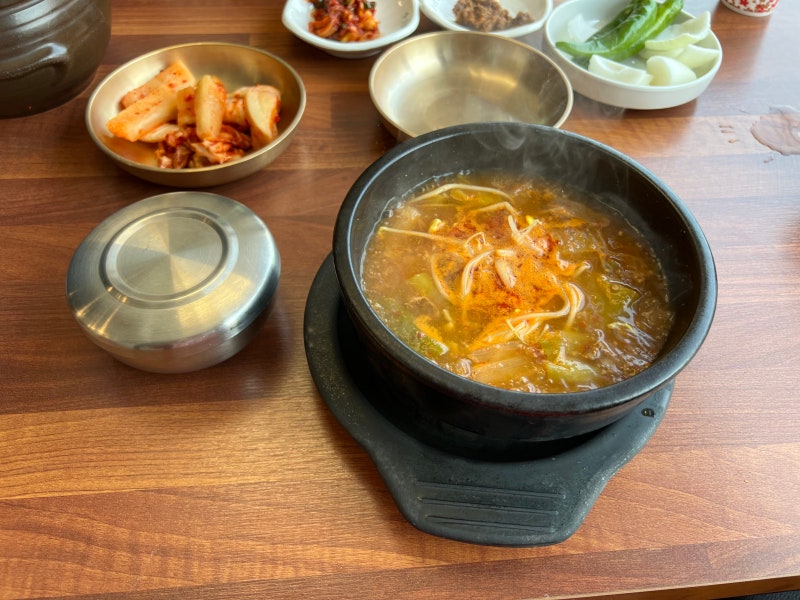
Solo dining (honbap, 혼밥) has gone from social taboo to full-blown cultural movement in Korea.
The word itself — a combination of honja (혼자, alone) and bap (밥, rice/meal) — didn't even exist ten years ago.
Today it's everywhere: dedicated solo dining restaurants, single-seat counters, convenience store eating zones, and even a hit TV series (Let's Eat, 혼술남녀) that celebrates the joy of eating alone.
For visitors travelling solo, Korea is now one of the most solo-diner-friendly countries in Asia — but there are a few traps you need to know about, starting with the dreaded minimum order rule.
This guide covers everything: what to eat, where to go, how to order, how to handle the 2-serving minimum, and yes, how to eat Korean BBQ completely by yourself.
Why Solo Dining Matters in Korea
Korea has traditionally been a communal eating culture. Meals are shared, dishes come in large portions meant for groups, and eating alone was once considered lonely or even pitiable.
The Korean phrase "bap meogeo?" (밥 먹었어?, "have you eaten?") is a greeting — food is social currency.
But rapid urbanisation, rising single-person households (now over 40% of all Korean households), and a cultural shift toward individualism have completely transformed attitudes.
The honbap trend exploded around 2015-2017, driven by young professionals, university students, and a generation that values efficiency and personal freedom over social obligation.
Today, eating alone in Seoul carries zero stigma — in fact, many Koreans actively prefer it.
K-dramas have both reflected and accelerated this cultural shift. Let's Eat (식샤를 합시다, 2013-2018) made solo dining look glamorous across three seasons.
Itaewon Class features a protagonist who eats alone constantly while building his restaurant empire. My Mister has iconic solo drinking and dining scenes that resonated with millions.
Even variety shows like I Live Alone (나 혼자 산다) normalise solo meals as part of a fulfilling independent lifestyle.
If you've watched any of these, you already understand the honbap vibe — now it's time to live it.
The 2-Serving Minimum: Korea's Biggest Solo Dining Obstacle
Before we get to the good stuff, let's address the single biggest frustration foreign solo diners face in Korea: the 2-serving minimum order (2-inbun choeso jumun, 2인분 최소 주문).
At many traditional Korean BBQ restaurants, stew houses, and hotpot places, you'll see this phrase on the menu or at the entrance:
"이인분부터 주문 가능합니다" (Minimum order starts from 2 servings)
This isn't about discrimination against solo diners — it's an economic and culinary reality. Many Korean dishes are cooked in portions designed for 2-4 people: large pots of jjigae (찌개, stew), whole platters of samgyeopsal (삼겹살, pork belly), or sharing plates of jokbal (족발, braised pig's feet).
The restaurant can't easily halve these portions, and the charcoal/gas cost for firing up a grill for one small serving doesn't make business sense.
How the Minimum Order Actually Works
- 2인분 means 2 servings, not 2 people. You can order 2 servings as a solo diner at most places — you'll just pay for both and get double the food. A typical BBQ serving is 150-200g, so 2 servings = 300-400g of meat. That's a lot for one person, but it's doable if you're hungry.
- Ask before sitting down. Say: "혼자 이인분 주문해도 돼요?" ("Honja i-inbun jumun-haedo dwaeyo?" — "Can I order 2 servings by myself?"). Most restaurants will say yes. Some smaller traditional places may hesitate or decline, especially during peak hours when they need the table for groups.
- Kiosk restaurants don't care. If the restaurant uses kiosk ordering, there's no human gatekeeper. Select 2 servings, pay, sit down, and grill. Nobody will question you.
- Mixed orders sometimes work. At some BBQ places, you can order 1 serving of meat + 1 serving of a different item (like naengmyeon or doenjang-jjigae) to meet the minimum. Ask: "고기 일인분하고 냉면 하나 돼요?" ("Gogi il-inbun-hago naengmyeon hana dwaeyo?").
The good news: the 2-serving minimum is disappearing fast. A growing number of restaurants now offer 1-serving options, and an entire category of 1-person BBQ chains has emerged specifically to serve solo diners. More on that below.
Best Foods for Solo Dining
Not every Korean dish works for one person. Many traditional dishes — BBQ, stews, sharing platters — are designed for groups of 2-4. But Korea has an enormous range of foods perfectly suited to solo diners. Here are the categories you should know:
Gukbap (국밥) — Rice Soup
Gukbap (국밥) is the ultimate solo meal. A steaming bowl of rich broth with rice either submerged inside or served on the side, plus banchan.
It's always a single-serving dish, always affordable (₩7,000-10,000), and always satisfying. Every neighbourhood in Seoul has gukbap restaurants with counter seating designed for solo diners.
- Sundaeguk (순대국) — blood sausage soup with offal, intensely savoury and hearty
- Dwaeji-gukbap (돼지국밥) — pork bone broth with sliced pork, a Busan specialty now everywhere in Seoul
- Galbitang (갈비탕) — beef short rib soup, clear and elegant, slightly pricier at ₩12,000-15,000
- Seolleongtang (설렁탕) — milky ox-bone broth simmered for 12+ hours, pure comfort
Ramen & Noodles (라면 & 면류)
Korean ramen shops and noodle restaurants are inherently solo-friendly — counter seating, fast service, individual portions.
Korean-style ramen (ramyeon, 라면) is different from Japanese ramen: it's typically spicier, uses instant-style curly noodles even in restaurants, and comes with egg, vegetables, and sometimes cheese or tteok (rice cakes).
Japanese ramen chains like Ichiran and Ippudo are also hugely popular in Seoul and have dedicated solo booths.
For cold noodles, naengmyeon (냉면) and jjajangmyeon (짜장면) are both single-serving classics.
- Budae-jjigae ramyeon (부대찌개 라면) — army stew ramen, loaded with spam, sausage, and cheese
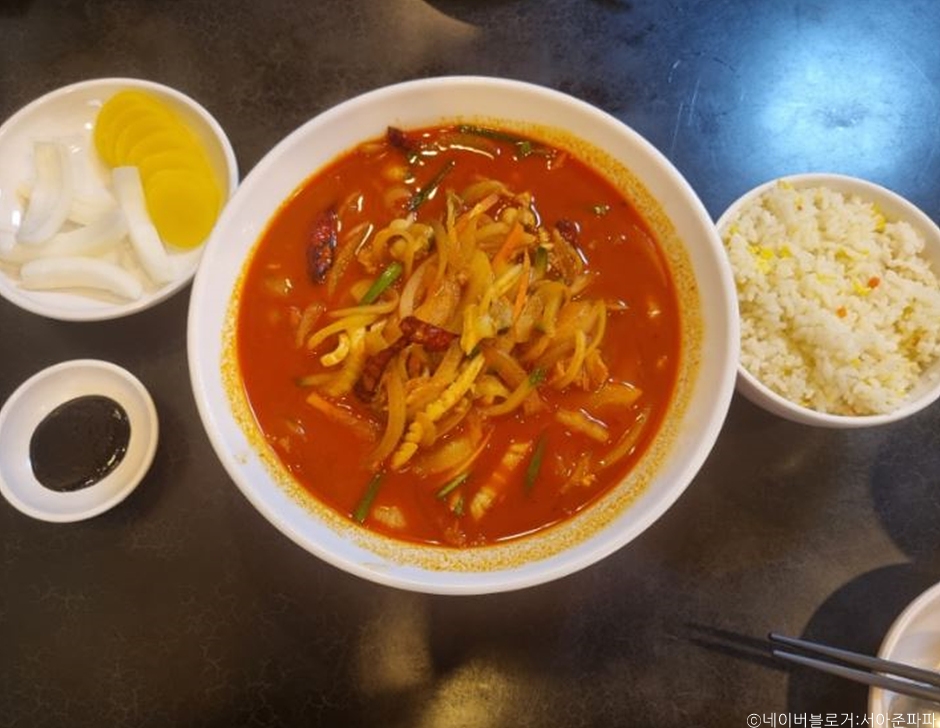
- Jjajangmyeon (짜장면) — black bean noodles, the ultimate Korean-Chinese comfort food
- Kalguksu (칼국수) — hand-cut knife noodles in anchovy or chicken broth
Gimbap & Bunsik (김밥 & 분식)
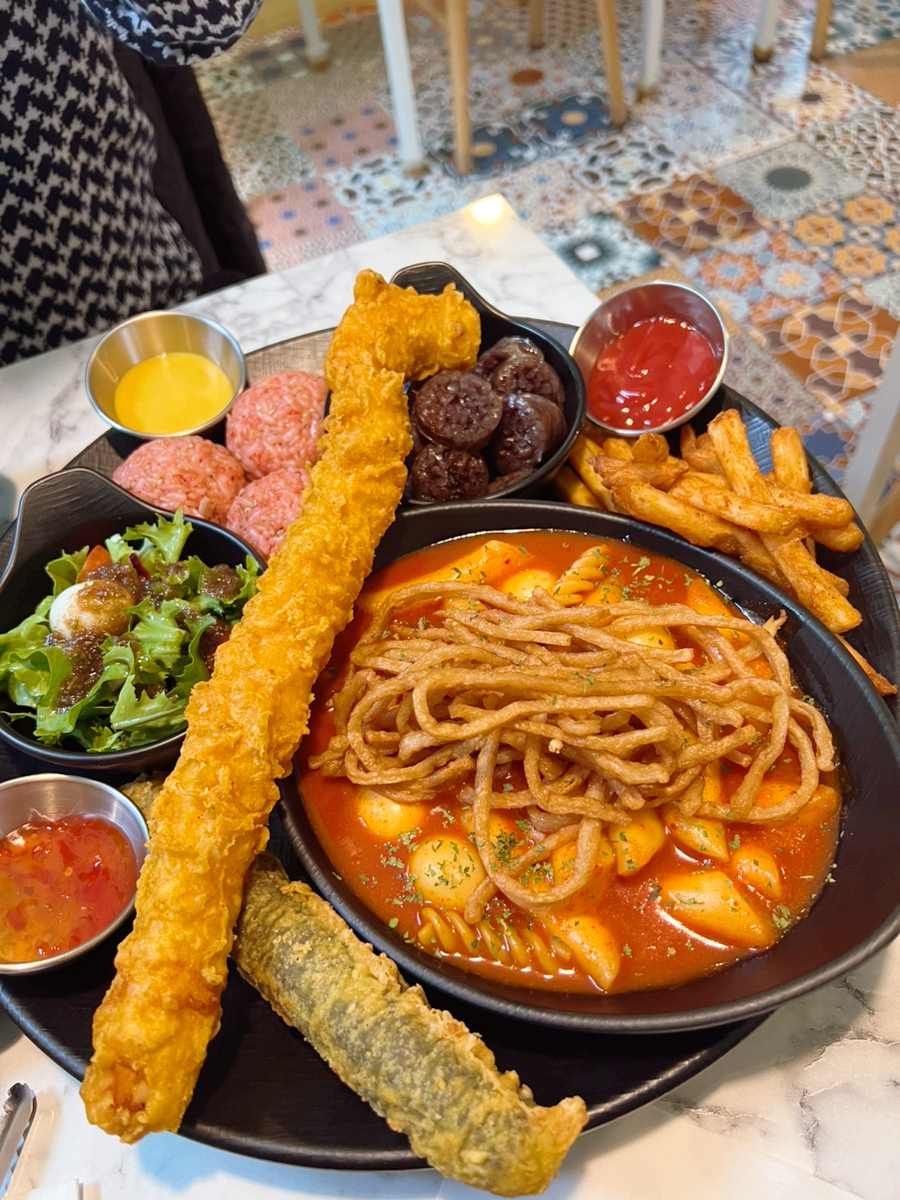
Bunsik (분식) means "flour-based food" and refers to Korea's fast-casual category: gimbap (seaweed rice rolls), tteokbokki (spicy rice cakes), ramyeon, and fried foods.
Bunsik restaurants are the backbone of solo dining in Korea. They're cheap (₩3,000-6,000 per item), fast, and explicitly designed for individual customers.
Chains like Gimbap Cheonguk (김밥천국) and Gimbap Nara (김밥나라) are open from early morning to late night and serve everything from egg gimbap to kimchi fried rice.
No reservation needed, no awkward group-table situation — just walk in, sit down, and eat.
Deopbap (덮밥) — Rice Bowls
The Korean rice bowl — a single bowl of steamed rice topped with meat, vegetables, sauce, and often a fried egg.
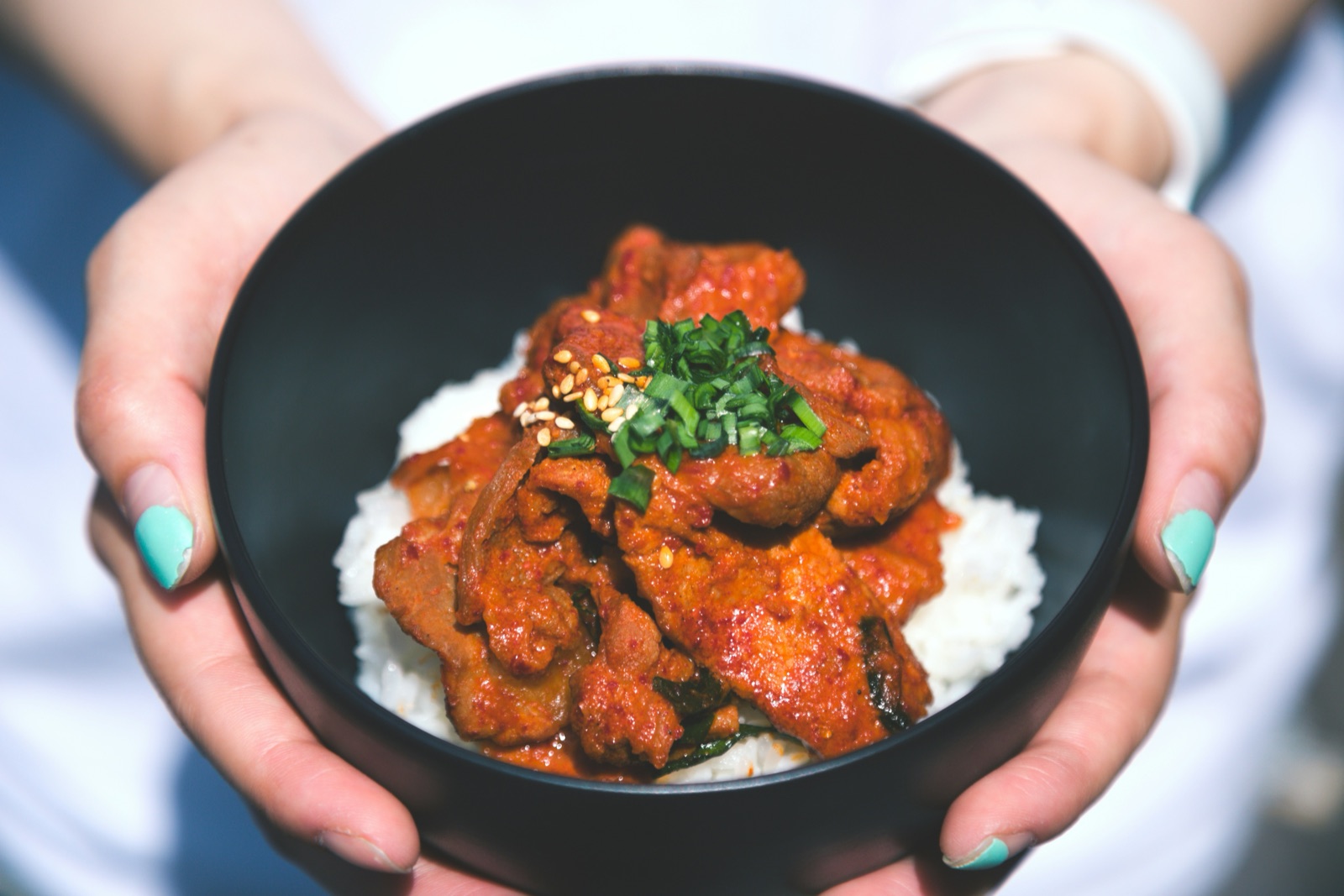
It's the Korean equivalent of a Japanese donburi, and it's inherently a solo dish. Popular varieties include jeyuk-deopbap (제육덮밥, spicy pork over rice), chamchi-deopbap (참치덮밥, tuna mayo over rice), and bulgogi-deopbap (불고기덮밥, marinated beef over rice).
Price: ₩7,000-10,000. Quick, filling, and zero social pressure.
1-Person BBQ: Yes, You Can Grill Alone
Korean BBQ has always been a group activity — most restaurants require a minimum order of 2 servings (2-inbun, 2인분), which effectively excludes solo diners.
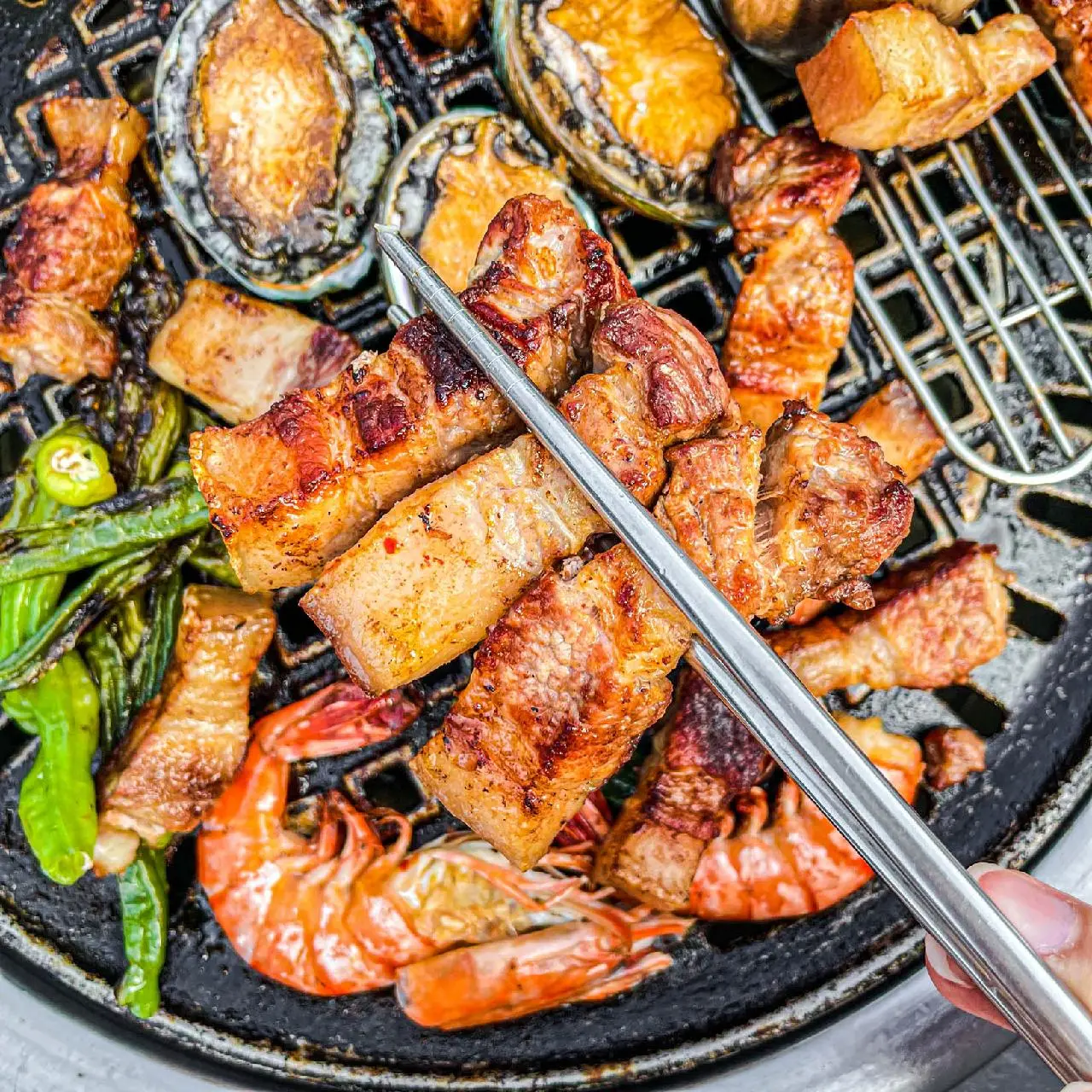
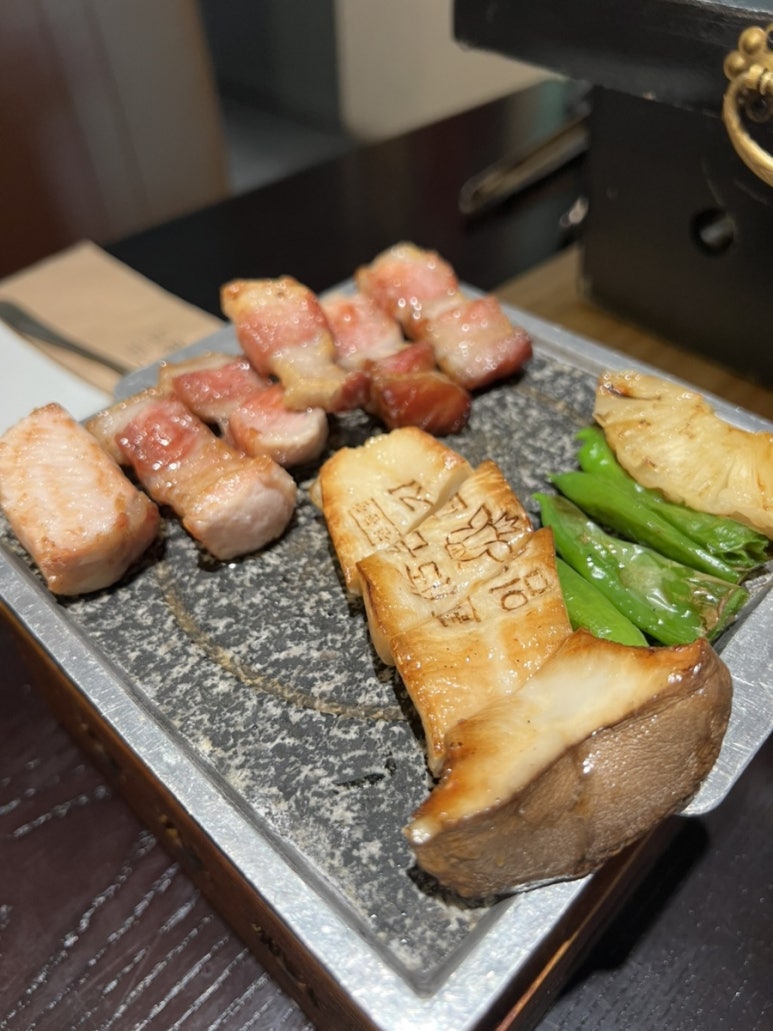
But the honbap revolution has spawned an entirely new category: 1-person BBQ restaurants (1-in gogi-jip, 1인 고기집) where you sit at an individual grill station and cook your own meat at your own pace.
Major 1-Person BBQ Chains
These chains specifically cater to solo BBQ diners and have multiple locations across Seoul:
- Gogitbar (고깃바) — the most well-known 1-person BBQ chain. Individual grill stations, counter seating, kiosk ordering, and 1-serving options starting at ₩9,000. Multiple locations in Hongdae, Gangnam, Sinchon, and Jongno. The name literally means "meat bar" — it's designed like a bar where you sit at a counter and grill your own portions.
- Hongojip (혼고집) — another popular solo BBQ chain whose name is a play on honja (alone) + gogi-jip (meat house). Features individual electric grills, self-serve banchan bar, and all-you-can-eat options around ₩14,000-16,000. Locations in Gangnam, Sinchon, and Kondae areas.
- Gobongbap (고봉밥) — known for generous rice servings alongside solo BBQ sets. Budget-friendly at ₩8,000-11,000 for a meat + rice set.
- Unlimited refill BBQ chains (무한리필) — chains like Saemaeul Sikdang (새마을식당) and Yeokjeon Halmeoni (역전할머니맥주) technically allow solo diners and don't enforce strict minimums, though the experience is more communal than counter-style 1-person BBQ.
What to Expect at a 1-Person BBQ Restaurant
- Individual grill stations — counter-style seating with a personal gas or electric grill built into the table
- No minimum order — order 1 serving (1인분, typically 150-200g) without judgment
- Kiosk ordering — touch-screen ordering so you never need to interact with staff
- All-you-can-eat options — some 1-person BBQ spots offer muhanrefill (무한리필, unlimited refills) for ₩12,000-18,000 per person
- Self-serve side bar — banchan, sauces, lettuce wraps, and rice so you control the pace
What to Order at 1-Person BBQ
- Samgyeopsal (삼겹살) — pork belly, the most common solo BBQ cut. 1 serving: ₩8,000-12,000
- Moksal (목살) — pork neck/collar, leaner and more flavourful than belly. ₩9,000-13,000
- Chadolbaegi (차돌박이) — thin-sliced beef brisket, cooks in seconds. ₩10,000-14,000
- Yangnyeom Galbi (양념갈비) — pre-marinated pork ribs, sweet-savoury and beginner-friendly. ₩10,000-13,000
Pro tip: most 1-person BBQ restaurants also offer dosirak sets (도시락 세트) — a small portion of grilled meat pre-cooked and served over rice with banchan.
It's a faster option if you don't want to grill yourself. ₩8,000-11,000.
How to Order as a Solo Diner
Ordering food alone in Korea is straightforward — often easier than in a group because you don't need to negotiate. Here are the three main ordering methods you'll encounter:
Kiosk Ordering (키오스크)
Kiosks (kiosukeu, 키오스크) have become the default ordering method at fast-casual and solo-friendly restaurants across Seoul.
You select your meal on a touch screen, pay by card (cash is rarely accepted at kiosks), and receive a number.
Your food arrives at your table or you pick it up at the counter. Most kiosks have an English language option — look for a flag icon in the corner.
If there's no English option, look for photos of the dishes and use the numbered meal sets (set, 세트).
Counter Ordering
At bunsik shops, gukbap restaurants, and traditional eateries, you'll often order at the counter or directly with the server. Point at menu photos, use basic Korean phrases, or simply say the dish name in Korean.
Tablet & QR Ordering
Many mid-range restaurants now use tablet ordering systems at each table. Browse the menu, select items, and submit your order without any human interaction.
Some restaurants use QR codes that open the menu on your phone. Both systems are ideal for solo diners who prefer a zero-interaction experience.
Essential Korean Phrases for Solo Diners
You don't need to speak Korean to eat alone in Seoul, but a few key phrases will make the experience smoother — especially at traditional restaurants without kiosks or English menus:
Best Solo Dining Areas in Seoul by District
Some neighbourhoods are more solo-diner-friendly than others. Here are the top areas, with specific recommendations for each:
The university district is packed with affordable solo-friendly restaurants: 1-person BBQ spots (Gogitbar has a branch here), ramen shops, gimbap chains, and 24-hour convenience stores with generous eating areas.
The student crowd means solo dining is the norm, not the exception. Best for: budget solo BBQ, late-night ramyeon, bunsik, and international street food.
Sinchon (신촌), one subway stop away, has a similarly dense solo dining scene.
Seoul's historic centre has a dense concentration of gukbap restaurants, traditional noodle shops, and pojangmacha street stalls that are all naturally solo-friendly.
The older restaurants here have been serving lone diners for decades. Gwangjang Market (광장시장) deserves special mention: communal bench seating where everyone eats shoulder-to-shoulder regardless of group size.
Order bindaetteok (녹두전, mung bean pancakes) or mayak gimbap (마약김밥, "addictive" mini gimbap) and eat alongside locals.
Best for: traditional Korean soups, market food, and old-school atmosphere.
The underground shopping complex near Gangnam Station and surrounding streets have dozens of quick-service restaurants optimised for the solo office worker lunch crowd.
Counter seating, kiosk ordering, and fast turnover are standard. Yeoksam (역삼) is slightly less hectic and has excellent solo-friendly Japanese ramen shops, deopbap (rice bowl) restaurants, and trendy solo BBQ joints.
Best for: kiosk-heavy quick lunches, Japanese-Korean fusion, modern solo BBQ chains.
Seoul's most tourist-dense area has endless solo options: street food stalls, bunsik chains, convenience stores, and fast-casual Korean restaurants.
Nobody bats an eye at solo diners here because half the crowd is solo tourists.
Euljiro (을지로), just one block north, has a growing scene of trendy restaurants and retro omurice (오므라이스) shops that are naturally solo-friendly.
Best for: first-time visitors, street food exploration, zero language barrier.
The international district has the most diverse solo dining options in Seoul: ramen counters, pho joints, Middle Eastern kebab shops, Mexican tacos, and Western-style brunch cafes — all with counter or small-table seating.
Hannam-dong (한남동) up the hill has more upscale solo options including wine bars with counter seating.
Best for: international cuisine, English-speaking staff, casual solo brunch or dinner.
Convenience Store Meal Combinations
Korean convenience store meals deserve their own section because they're genuinely good and perfectly designed for solo eaters.
Korean convenience stores (GS25, CU, 7-Eleven, Emart24) have evolved far beyond snacks — they now serve legitimate meals with dedicated eating areas, microwaves, and hot water dispensers.
- Triangle gimbap (삼각김밥) + cup ramyeon (컵라면) — the classic combo. ₩3,000 total. Fill ramyeon with hot water from the store's dispenser, eat the gimbap while waiting 3 minutes.
- Dosirak lunchbox (도시락) + banana milk (바나나맛우유) — microwave the dosirak (2-3 minutes), pair with Korea's iconic banana milk. ₩4,500 total.
- Instant tteokbokki (즉석떡볶이) + fried chicken (치킨너겟) — spicy rice cakes + crispy chicken. ₩5,000 total. Most stores have a hot food counter with freshly fried items.
- Egg sandwich (에그샌드위치) + iced Americano (아이스아메리카노) — the Korean breakfast standard. ₩3,500 total. Available at every CU and GS25.
- Cup bap (컵밥) + salad — microwaveable rice bowl (bibimbap, curry, etc.) + fresh salad. ₩5,000 total. A surprisingly balanced and filling meal.
A full convenience store meal costs ₩3,000-5,000. It's not just acceptable — it's a genuine part of Korean food culture, especially among students and young professionals. Many tourists make convenience store runs a nightly ritual.
Solo Dining Etiquette & Practical Tips
- No tipping. Korea has no tipping culture. Pay the listed price and leave. This removes one layer of social anxiety for solo diners.
- Water is self-serve. Most Korean restaurants have a water dispenser or water cooler. Grab your own cup and fill it yourself — don't wait for a server to bring water.
- Banchan refills are free. Even as a solo diner, you can ask for more banchan (side dishes). Say "banchan deo juseyo" (반찬 더 주세요). It's completely normal.
- Peak hours matter. Avoid the 12:00-1:00pm lunch rush and 6:00-7:30pm dinner rush if you want a relaxed solo meal. Off-peak hours mean more counter seats available and less crowding.
- Earbuds are your friend. Koreans commonly watch dramas, YouTube, or listen to music while eating alone. It's socially acceptable and removes the "what do I do with my eyes" problem. You'll see locals doing this everywhere.
- Card payment is universal. Korea is nearly cashless. Your credit card or T-money card works at 99% of restaurants, convenience stores, and kiosks. No need to fumble with won bills at a counter.
- Ask about the minimum before sitting down. If you see a BBQ restaurant you want to try, pop your head in and ask "일인분 가능해요?" before committing to a table. It saves time and avoids the awkward "sorry, minimum 2 servings" after you've already sat down.
- Takeout is always an option. If you end up ordering 2 servings to meet a minimum but can't finish, "포장해 주세요" gets you a takeout container. Pack it for a late-night hotel snack.
- Late-night options are abundant. Seoul is a 24-hour city. Convenience stores, some gukbap restaurants, bunsik chains, and late-night ramyeon shops stay open past midnight. You'll never go hungry alone in Seoul.
- Solo drinking (honsul, 혼술) is equally accepted. Bars, pojangmacha (포장마차, street tents), and chimaek (치맥, chicken + beer) joints all welcome solo customers. See our Korean drinking culture guide for more details.
Useful Apps for Solo Diners
Solo Dining Budget Guide
Here's what to expect for a full day of eating alone in Seoul at three budget levels:
| Meal | Budget (₩15,000/day) | Mid-Range (₩30,000/day) | Treat Yourself (₩50,000/day) |
|---|---|---|---|
| Breakfast | Convenience store sandwich + coffee (₩3,500) | Cafe brunch set (₩9,000) | Hotel breakfast or brunch cafe (₩15,000) |
| Lunch | Gimbap + tteokbokki (₩5,000) | Gukbap or deopbap (₩9,000) | 1-person BBQ set (₩14,000) |
| Dinner | Cup ramyeon + triangle gimbap (₩3,500) | Kalguksu or jjajangmyeon (₩8,000) | Solo BBQ 2 servings (₩20,000) |
| Snack | Street food (₩2,000) | Cafe dessert (₩5,000) | Convenience store + street food (₩5,000) |
Even the "treat yourself" tier at ₩50,000 (about $37 USD) is remarkably affordable compared to solo dining in Tokyo, London, or New York.
Korea is one of the best-value destinations in the world for solo food travellers.
Recommended Solo-Friendly Restaurants in Seoul
Knowing a neighbourhood is solo-friendly is one thing. Knowing which door to walk through is another. The restaurants below are in the database for a reason — counter seating, solo-portion options, or a dining culture where nobody looks twice at a table of one. They are organised by district so you can drop the nearest one into your route without rerouting your whole day.
Jongno & Gwanghwamun
This part of the city has been feeding solo diners for longer than the word honbap existed. Office workers, civil servants, and the kind of regulars who have eaten at the same counter for thirty years — they all land here at lunchtime, alone, without ceremony.
- Imun Seolleongtang (이문설농탕) — One of Seoul’s oldest restaurants, over a century in the same location in Jongno. The menu is essentially one dish: seolleongtang (설렁탕), a milky bone-broth soup served with rice and kimchi. You season it yourself at the table with salt and spring onion. Solo dining here is not a trend — it has been the point since the beginning.
- Ihwasu Jeongtong Yukgaejang — Mugyo Branch (이화수전통육개장 서울무교점) — Traditional yukgaejang (육개장), a fiery shredded-beef soup that has fuelled Seoul office lunches for generations. The Mugyo branch sits right in the CBD, which means the lunchtime crowd is thick with solo diners who have exactly forty minutes and zero patience for menus that require a group order.
- Orenoramen Insa (오레노라멘 인사점) — A ramen counter in Insadong. Counter seating is the entire format — you sit, you order, you eat, the person next to you does the same. Nobody is waiting for your table. The ramen is Japanese-influenced but has found a settled place in Seoul’s solo-dining ecosystem.
- Kandasoba Gyeongbokgung (칸다소바 경복궁점) — Soba counter near Gyeongbokgung Palace. The format — counter seats, quick turnover, no pressure — makes it ideal for the kind of solo lunch you have between one museum and the next. The buckwheat noodles are cold or hot; the portion is calibrated for one.
- Jobegisujebi (조벡이수제비) — Hand-torn dough soup (sujebi, 수제비) in Insadong. Thicker than noodles, more satisfying than a light broth, and deeply Korean in a way that does not get enough attention from visitors. One bowl is a meal. The restaurant is small, which means counter or communal seating is common — both work fine alone.
Myeongdong & Jung-gu
Myeongdong is the most tourist-dense part of Seoul, which has an unexpected upside for solo diners: restaurants here are accustomed to single visitors, English menus are common, and nobody on staff is going to make you feel odd for sitting alone.
- Gwanghwamun Gukbap (광화문국밥 본점) — The flagship location of one of Seoul’s most recognised gukbap (국밥) chains. A bowl of pork-bone soup with rice costs roughly ₩9,000–11,000. You eat it at a small table, alone, and nobody interprets that as strange — because half the restaurant is doing the same thing. This is what honbap looks like when it is just called lunch.
- Menten (멘텐) — A ramen counter near Myeongdong. The location puts it within easy reach of the shopping district, which means it catches a specific kind of solo diner: the person who wandered off from a group, or who finished shopping early and wants a proper meal before the subway. Counter seating, no group minimum.
Itaewon & Hannam
Itaewon has always been the part of Seoul most practised at welcoming visitors who do not speak Korean — which also makes it the easiest district to eat alone without navigating a language barrier.
- Nammae Gukbap Itaewon (남매국밥 이태원본점) — An English-friendly gukbap restaurant in the heart of Itaewon. The staff are comfortable with solo international visitors, the menu is approachable, and a bowl of soup does not require you to be part of a group. Worth knowing if you are staying in the Itaewon or Hannam area and want a proper Korean meal without the coordination overhead.
Hongdae & Mapo
Hongdae moves fast. Students, freelancers, the after-class crowd — the solo diner fits naturally into this neighbourhood because everyone here seems to be going somewhere on their own schedule.
- Orenoramen Hapjeong (오레노라멘 합정본점) — The Hapjeong flagship of the Orenoramen chain. Popular enough that there can be a short wait at peak hours, but the counter format means turnover is quick and solo diners are never at the back of the queue. Ramen portions are individual by definition.
- Kandasoba Hongdae (칸다소바 홍대점) — The Hongdae branch of the same soba counter near Gyeongbokgung. If you are based in the Hongdae area and want a light solo lunch that does not involve queuing at a tourist spot, this is a reliable option.
- Hakatabunko (하카타분코) — Hakata-style tonkotsu ramen in Hapjeong. The counter runs along the wall, the broth is rich enough that you do not need a side dish, and the format is specifically designed for the solo diner who wants to be left alone to eat. A good option if you have reached the point in a trip where you want great food with zero social performance required.
- Itsmoramen (이츠모라멘) — A cosier ramen spot in Hongdae — smaller, warmer, and slightly more neighbourhood-feeling than the chain options. The name is a play on itsumo (いつも), the Japanese word for “always,” which tells you something about the regulars.
Solo Dining for Women
If you have spent time reading about honbap culture online, you will have noticed that most of the discourse around “is solo dining awkward?” is written from a male perspective. The answer, for women travelling alone in Seoul, is worth addressing separately — not because it is more awkward, but because the practical logistics are slightly different.
The short answer: Seoul is one of the safer cities in Asia for women eating alone, and the honbap trend has made solo dining so normalised that most restaurant staff register it without comment. That said, a few specifics are worth knowing.
- Counter seating is your default. A seat at the counter — facing the kitchen or the wall — is not a consolation prize. It is the format purpose-built for solo dining. You are not on display, you are not waiting for someone, you are just eating. Counter seats at ramen and soba restaurants are the clearest example, but gukbap restaurants and many deopbap (덮밥, rice bowl) spots also have counter options.
- Window seats, when available, are worth requesting. If the restaurant has a counter along a window facing the street, ask for it (changga jari, 창가 자리). You have something to look at, and the spatial arrangement — facing outward — feels less exposed than sitting in the centre of a dining room alone.
- Lunch over dinner for the first solo meal. The lunchtime honbap crowd in Seoul is overwhelmingly composed of solo diners — office workers, students, delivery riders on break. Eating alone at noon is invisible. Dinner alone at a table for four in an empty restaurant, conversely, can feel uncomfortable regardless of what city you are in. Start with lunch and see how it feels.
- Myeongdong, Hongdae, and Insadong are the most comfortable areas. High foot traffic, international visitors, and staff accustomed to solo customers of all descriptions. Quieter residential neighbourhoods are perfectly safe but may feel more conspicuous if the restaurant is small and the other tables are all groups.
- Evening is fine at counter-format restaurants. Ramen counters, soba counters, and gukbap spots do not have a “this is a dinner restaurant” dynamic. Solo dining at 7 p.m. at a ramen counter is indistinguishable from solo dining at noon. The concern about dinner applies mainly to sit-down restaurants with table service.
Honsul — Solo Drinking in Korea
Honbap (혼밥) has a sibling: honsul (혼술), the portmanteau of honja (혼자, alone) and sul (술, alcohol). If honbap was the quiet revolution, honsul was the louder one — because Korean drinking culture has historically been one of the most group-oriented in Asia, and the idea of someone deliberately choosing to drink alone was, for a long time, read as a signal that something had gone wrong in their life.
That reading has shifted. Significantly. Honsul now has its own product lines (convenience stores stock single-serve cocktail cans specifically marketed at the solo drinker), its own content genre on YouTube, and enough cultural normalisation that ordering a beer alone at a bar in Seoul no longer requires an explanation.
Convenience Store Honsul
The simplest and most democratic form of solo drinking in Seoul. Every GS25, CU, 7-Eleven, and Emart24 sells beer, soju, makgeolli (막걸리, rice wine), and a growing range of ready-mixed drinks at prices that are notably lower than bar prices. The convenience store itself often has outdoor seating — a few plastic tables and chairs — where the after-work solo drinker, the post-exam student, and the traveller who just got off a long flight all converge without requiring any of them to perform sociability. A can of Hite or Cass costs around ₩1,500–2,000. A small bottle of soju runs ₩1,500–1,700. Combine with a samgak gimbap (삼각김밥, triangular rice ball) and you have solved dinner and drinks for under ₩5,000.
Izakaya Counter Seats
Japanese-style izakayas have a strong presence in Hongdae, Itaewon, and Seongsu, and many are structured around counter seating that makes solo dining and solo drinking natural. The format — small plates, drinks, unhurried pace — works well for one person. Look for places where the counter faces an open kitchen; the activity gives you something to watch, which makes the solo experience feel less static.
Makgeolli Cafes
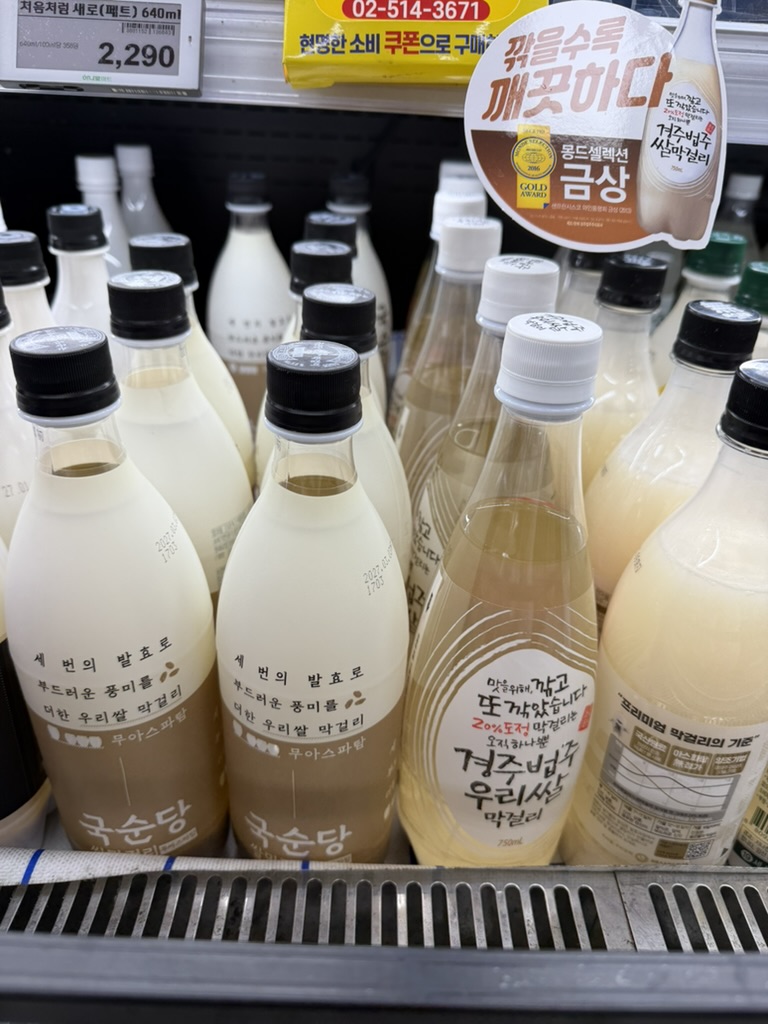
Makgeolli (막걸리) — lightly carbonated, slightly sweet fermented rice wine — has moved from grandmother’s drink to design-conscious cafe menu item over the past decade. Makgeolli cafes, particularly in Insadong and the Bukchon area, often have individual counter seats or small two-person tables that work well for solo visitors. The pours are by the glass or small ceramic bowl, which means you are not committed to a full litre. A civilised solo drink option if you want something Korean, alcoholic, and lower-ABV than soju.
A Note on Solo Drinking Etiquette
The cultural shift toward honsul is real but uneven. At a lively group-format bar on a Friday night in Hongdae, a solo drinker at the counter is fine; a solo drinker at a large table is not — you are occupying space that the bar needs for revenue. At a quieter neighbourhood bar, or anywhere with counter seating as the primary format, solo drinking is unremarkable. Read the room: if most tables are groups and the bar is busy, take a counter seat or choose a different venue.
Convenience Store Dining (편의점 혼밥)
Before you dismiss this section: convenience store dining in South Korea is not a fallback. It is a food culture with its own logic, its own regulars, and its own surprisingly high ceiling for quality.
The four main chains — GS25, CU, 7-Eleven, and Emart24 — are open 24 hours and stocked with a rotating seasonal menu that food journalists in Seoul cover with the same seriousness as restaurant openings. GS25 and CU in particular run regular collaborations with Korean chefs and food brands that produce limited-edition items worth seeking out.
What to Order
- Samgak Gimbap (삼각김밥, triangular rice balls) — The entry point. Seaweed-wrapped rice with a filling (tuna mayo, bulgogi, kimchi, spicy pork, and rotating specials). Peel the wrapper in three steps following the numbered tabs. ₩1,200–1,800 each. Buy two if you are actually hungry.
- Cup Ramen (컵라면) — A category unto itself. Korean cup ramen — particularly Shin Ramyun, Buldak (fire chicken), and the various GS25 and CU private-label variants — is not the same product as what is sold internationally. The soup base is more complex, the noodles hold better, and the heat levels are higher. Ask for hot water at the counter; most convenience stores have a designated hot water dispenser near the ramen display. Wait three minutes. ₩1,000–2,000.
- Dosirak (도시락, convenience store bento) — Pre-packed meals with rice, protein, and side dishes in a single container. Heat in the microwave (30–60 seconds; the staff will help if you ask). Quality ranges from adequate to genuinely good. The seasonal editions at GS25 and CU are worth checking. ₩3,500–6,000.
- Sandwiches and Onigiri — Japanese-influenced triangle sandwiches and egg salad options. Better than expected. Reliable for breakfast or a light lunch. ₩2,000–3,500.
- Fried Chicken and Hot Foods — The hot food counter near the register sells fried chicken pieces, corn dogs (hotteok-style), fish cake skewers (eomuk, 어묵), and rotating items. Priced individually at ₩500–2,000 per item. Street-food quality at convenience-store prices.
How to Use the Store
The microwave is at the back or beside the counter — ask staff if you can’t find it; they will point you there without drama. Hot water dispensers for ramen are usually on the counter near the ramen display. Chopsticks and spoons are free at the condiment station. Most stores have an outdoor seating area (몇몇 편의점 야외 테이블) — plastic tables and chairs on the pavement or in a small covered area beside the building. This is where you eat. It is not glamorous. It is also frequently where you end up having unexpected conversations with other solo travellers doing the same thing.
Total cost for a filling convenience-store meal: ₩3,000–8,000. At that price, it is not a compromise — it is a legitimate choice.