Knowaboutkorea
FoodPlacesEssentialsUsefulLocal ReviewsAbout
ENJA
Dobong-guDongdaemun-guDongjak-guEunpyeong-guGangbuk-guGangdong-guGangnam-guGangseo-guGeumcheon-guGuro-guGwanak-guGwangjin-guJongno-guJung-guJungnang-guMapo-guNowon-guSeocho-guSeodaemun-guSeongbuk-guSeongdong-guSongpa-guYangcheon-guYeongdeungpo-guYongsan-gu
MichelinHanwooBBQKoreanJapaneseCafeStreet FoodBuffetSteakHalalChickenSnacksChineseSeafood
🔥 TrendingEating Alone in Korea: The Complete Honbap Guide — Solo BBQ, Minimum Orders & Best SpotsK-Drama Filming Locations Tour: Seoul's Best Spots in One DayBukhansan Hiking Guide: Seoul's Mountain Escape (Trails, Tips & Getting There)HYBE INSIGHT: The Ultimate BTS & K-Pop MuseumMoney in Korea: Currency, Cards & Exchange Tips10 Must-Have Apps for Traveling in Korea
Knowaboutkorea
Essentials·Privacy Policy·Terms of Service·About·Contact
© 2026 Knowaboutkorea
  1. Korean BBQ: The Complete Guide for First-Timers
Food Guide

Korean BBQ: The Complete Guide for First-Timers

By Knowaboutkorea Team · March 1, 2025

The complete Korean BBQ guide: every pork and beef cut, social rules locals follow, the actual eating sequence, and the best Seoul neighbourhoods by vibe.

Korean BBQ: The Complete Guide for First-Timers 1
Korean BBQ: The Complete Guide for First-Timers 2
Korean BBQ: The Complete Guide for First-Timers 3
1 / 3
Korean BBQPork BellyGalbiGrillSeoul Food Tour
Quick Facts

What You Need to Know

🌡️
Best Season
Year-round
All seasons
💰
Price Range
₩15,000–50,000
per person
📍
Origin
Seoul
Overview

What Is It?

That scene in Reply 1988 where the whole neighbourhood crowds around a smoking grill in someone’s yard — that is not a TV set. That is a Tuesday night in half the residential alleyways in Seoul. Gogi-gui (go-gi-gui, 고기구이), literally “meat grilling,” is less a meal category than a social event: a reason to gather, a way to mark an occasion, and the closest thing Korea has to a universal ritual. You may already know samgyeopsal (삼겹살), the pork belly cut that has become shorthand for Korean BBQ abroad — and we cover it in full in our Samgyeopsal guide. But Korean BBQ runs much deeper than one cut of pork. This guide covers the rest: the social rules that separate regulars from first-timers, the cuts worth ordering beyond pork belly, the difference between a charcoal restaurant and a coal briquette joint, and which part of Seoul to head to depending on what kind of night you want.

The Social Rules Nobody Tells You

If you have watched Misaeng (미생, Incomplete Life), you already understand one unwritten rule: the most senior person at the table picks up the tongs first. At a Korean BBQ table, the grill is also a social map. Who manages the meat, who pours whose drink, who sits closest to the exhaust fan — none of it is accidental. Knowing a few of these dynamics turns an awkward first visit into something that feels genuinely local.

  • Tongs and seniority. At a casual dinner with friends, anyone can grab the tongs. At a work dinner (hoesik, 회식), the senior person typically manages the grill or delegates to someone they trust. At higher-end restaurants, a staff member will grill for you entirely — the clearest signal you are in a full-service establishment.
  • Scissors are the knife. Every BBQ table has a pair of kitchen scissors (gawi, 가위). Use them to cut meat directly on the grill while it is still cooking, then push pieces to the cooler edge to finish. Do this with confidence and you will immediately signal that you are not at your first Korean BBQ.
  • Ssam in one bite. When you wrap meat in a lettuce or perilla leaf (ssam, 쌈), the entire parcel goes into your mouth at once (han ibue, 한 입에). Biting it in two is considered awkward — the fillings fall and the whole thing loses its point. If the wrap feels too large, use a smaller leaf or less filling.
  • Pour for others first. You do not refill your own glass in Korea. You refill the glass of the person next to you, and they do the same for you. Watch for empty glasses around the table before touching your own. This applies whether you are drinking soju, beer, or water.
  • Wait for the first bite. When dining with someone older or more senior, the unspoken expectation is to wait until they have started eating before you begin. It takes about three seconds of awareness and signals a great deal of respect.
  • Grill changes are free to request. When the grill surface is coated in char and burnt fat, flag down the staff. A fresh grill is standard and there is no charge for the swap. If you know the phrase: 그릴 바꿔 주세요 (geu-ril ba-kkwo ju-se-yo).

Pork Cuts Beyond Samgyeopsal

Samgyeopsal is the entry point — and a very good one. But most Korean BBQ menus list several other pork cuts that rarely get ordered by first-time visitors. The cuts below appear alongside samgyeopsal on most menus, can be added as extra portions at the same table, and each offers something the standard pork belly does not.

  • Ogyeopsal (오겹살, o-gyeop-sal) — five-layer pork belly with the skin still attached. Chewier and slightly fattier than standard samgyeopsal; the skin layer adds a crackling texture that divides opinion sharply. Locals who grew up with it tend to love it; first-timers are sometimes surprised by the chew. If you see it on the menu alongside samgyeopsal, order one of each and compare.
  • Moksal (목살, mok-sal) — pork neck or collar, heavily marbled with fat running through the muscle. It stays juicy even if the timing is slightly off, which makes it the most forgiving cut for anyone nervous about managing a grill. The flavour is richer and slightly more complex than standard samgyeopsal — a favourite at after-work dinners where the conversation is louder than the cooking.
  • Hangjeongsal (항정살, hang-jeong-sal) — pork jowl. A smaller, premium cut with an intense, nutty flavour and a firmer texture. Many restaurants sell out of it early in the evening. If it is on the menu and available, order it. It is genuinely one of the more interesting cuts in Korean BBQ, and typically pairs better with sesame oil and salt than with ssamjang, which can overpower the flavour.
  • Daepae samgyeopsal (대패삼겹살, dae-pae-sam-gyeop-sal) — paper-thin shaved pork belly, the opposite end of the spectrum from thick-cut samgyeopsal. It cooks in under ten seconds and is easy to over-cook. Pile several pieces together on the grill to form a thicker layer, watch closely, and pull them the moment the fat turns opaque. For a full treatment of samgyeopsal varieties including daepae, see our Samgyeopsal guide.

A practical strategy for a table of two or three: anchor with moksal for reliability, add hangjeongsal for something more interesting, and use the samgyeopsal slot as your familiar reference point.

Beef at the Korean BBQ Table

In Korean food culture, galbi is the celebration cut. Samgyeopsal is for Tuesday. Galbi (gal-bi, 갈비) — beef short ribs — is what you order for birthdays, promotions, and family dinners that matter. The price difference reflects this: galbi tends to be noticeably more expensive than pork cuts, and at premium restaurants it is served with a ceremony that makes the distinction obvious. Understanding this hierarchy makes the menu easier to navigate and sets the right expectations for the bill.

  • Yangnyeom galbi (양념갈비) — bone-in short ribs marinated in soy sauce, garlic, sesame oil, and sugar. The marinade caramelises quickly on the grill, which is both what makes it delicious and what makes it easy to burn. Watch the edges; as soon as they start to colour, flip or move the pieces.
  • Saeng galbi (생갈비) — unmarinated short ribs, sometimes called “raw galbi.” No marinade competing with the beef, so quality matters more here than with the marinated version. This is the cut that premium Korean beef restaurants lead with, and at charcoal restaurants in Gangnam it is often the only galbi on offer.
  • Chadolbaegi (차돌박이, cha-dol-bae-gi) — paper-thin sliced brisket. It goes on the grill, curls immediately, and is done in roughly ten seconds flat. The most common first-timer mistake is leaving it too long — overcooked chadolbaegi turns from tender to tough very quickly. Watch the fat go translucent, then move pieces immediately.
  • Hanwoo (한우) — premium Korean native cattle, with a fat marbling profile distinct from Wagyu or USDA Prime. Significantly pricier than imported beef; the price difference is visible on the menu. For a full breakdown of grades, where to find it, and what to expect, see our Hanwoo guide.
  • Bulgogi (불고기) — marinated beef, typically thinly sliced, and usually cooked in a shallow pan rather than directly on a grill. For the full picture, see our Bulgogi guide.

How to Eat — the Actual Sequence

A Korean BBQ meal follows a loose rhythm that most regulars follow without thinking. If you are new to it, having the sequence in mind ahead of time removes a lot of the uncertainty.

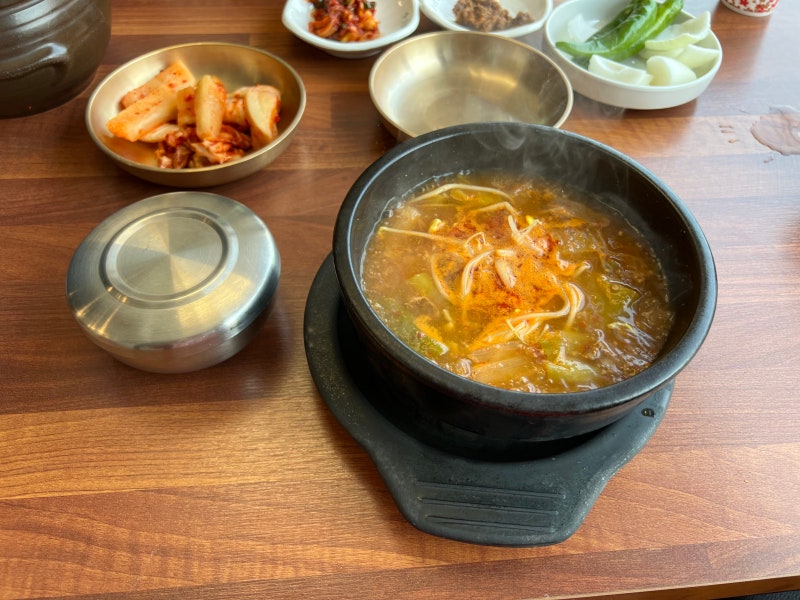
When you sit down, banchan (반찬, side dishes) will arrive first — kimchi, radish kimchi (kkakdugi, 깍두기), bean sprouts (kongnamul, 콩나물), and often steamed egg (gyeran-jjim, 계란찜). These are free and refillable throughout the meal. Ask for more whenever you want them; it is expected.

Once the grill is lit, the general flow:

  • Place the meat on the hotter centre of the grill and let it cook undisturbed until the edges change colour and fat begins to pool on the surface.
  • Use the scissors to cut pieces into bite-sized portions on the grill, then push them to the cooler edge to finish without burning.
  • Dip in sesame oil and salt (chamgireum sogeum, 참기름 소금) for plain cuts, or in ssamjang (쌈장, fermented chilli-soybean paste) for ssam wraps.
  • To make a ssam: hold a lettuce or perilla leaf flat in your palm, add a piece of meat, a smear of ssamjang, a slice of raw garlic, and optionally a sliver of green chilli. Fold it closed and eat it in one bite.
  • Request a grill change mid-meal if the surface is starting to stick — this is normal and the staff expect it.

When the meat is finished, many tables order bokkeum-bap (볶음밥) — fried rice cooked on the same grill in the leftover fat. It needs to be requested separately, sometimes costs a small extra amount, and is one of the best parts of the evening. Cold naengmyeon (냉면, buckwheat noodles) is also a popular way to cut through the richness of the meal; you will see it on most BBQ menus for exactly this reason.

Charcoal, Gas, or Yeontan

The heat source at a Korean BBQ restaurant is not just a technical detail — it shapes the smell, the flavour, and the type of place you are in. Most restaurants use one of three methods, and you can usually tell before you sit down.

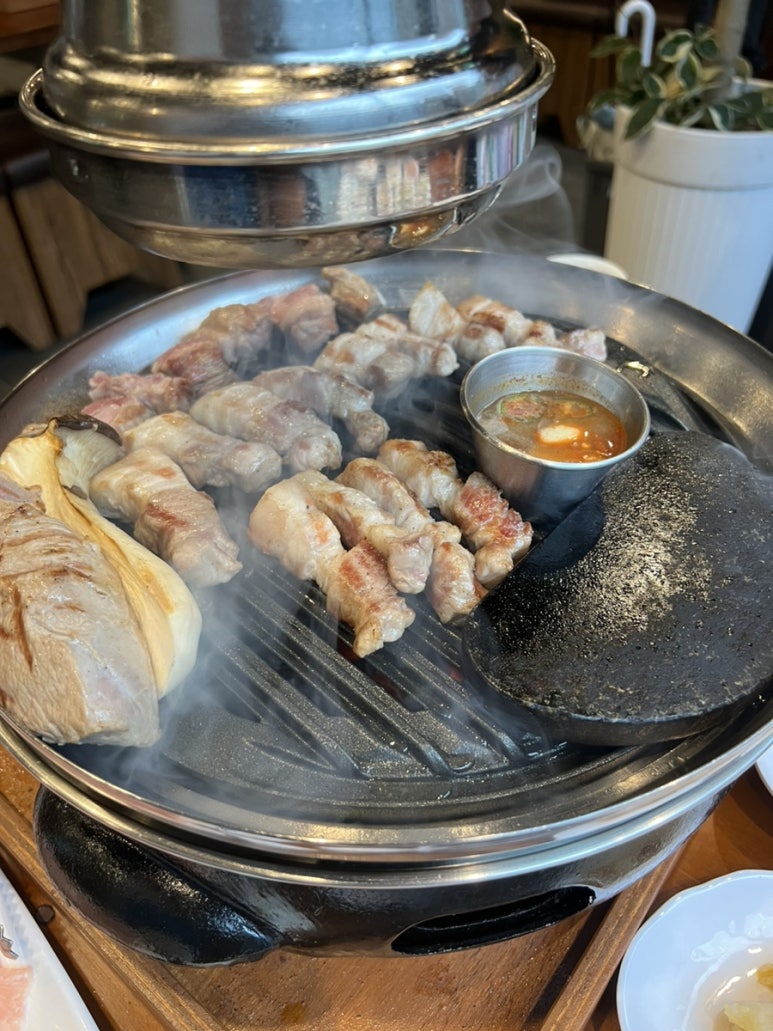
  • Gas grill — the most common setup, especially at casual restaurants in Hongdae, Hapjeong, and most neighbourhood streets. Consistent heat, less smoke, and easier to manage if you are grilling yourself. The flavour is clean and the experience is beginner-friendly. The majority of Korean BBQ restaurants you will encounter run on gas.
  • Charcoal (숯불, sutbul) — real charcoal produces a faintly smoky aroma and caramelises the meat differently from gas. These restaurants tend to sit in the mid-to-upper price range. Gangnam and Itaewon have a concentration of sutbul restaurants that cater to diners willing to pay for the difference. The higher heat also sears the exterior of thicker cuts more effectively.
  • Yeontan (연탄) — coal briquettes, the cylinder-shaped fuel blocks that were once standard in Korean homes for heating. A small number of restaurants in the Mapo-gu area still use yeontan grills, and locals seek them out specifically. The flavour is earthier than charcoal, the smoke is heavier, and the experience feels further from the tourist trail than any other format. If your table has a round metal dome sitting over the grill and a heavy exhaust fan directly above, you are at a yeontan restaurant. It is worth going once.

Where to Eat Korean BBQ in Seoul

Korean BBQ restaurants are everywhere in Seoul, which makes choosing harder, not easier. The better question is what kind of experience you are after. The neighbourhoods below each have a distinct character, and the BBQ restaurants within them reflect it.

  • Mapo-gu (마포구) — the local’s Seoul. Hongdae, Hapjeong, and the surrounding streets have a dense concentration of casual, well-priced BBQ restaurants that cater primarily to residents rather than tourists. This is also where yeontan grills are most commonly found. Jangguniine Daepae Samgyeop (장군이네 대패삼겹, near Hongdae Station) is a well-regarded local spot known for daepae samgyeopsal and a straightforwardly local atmosphere (₩₩).
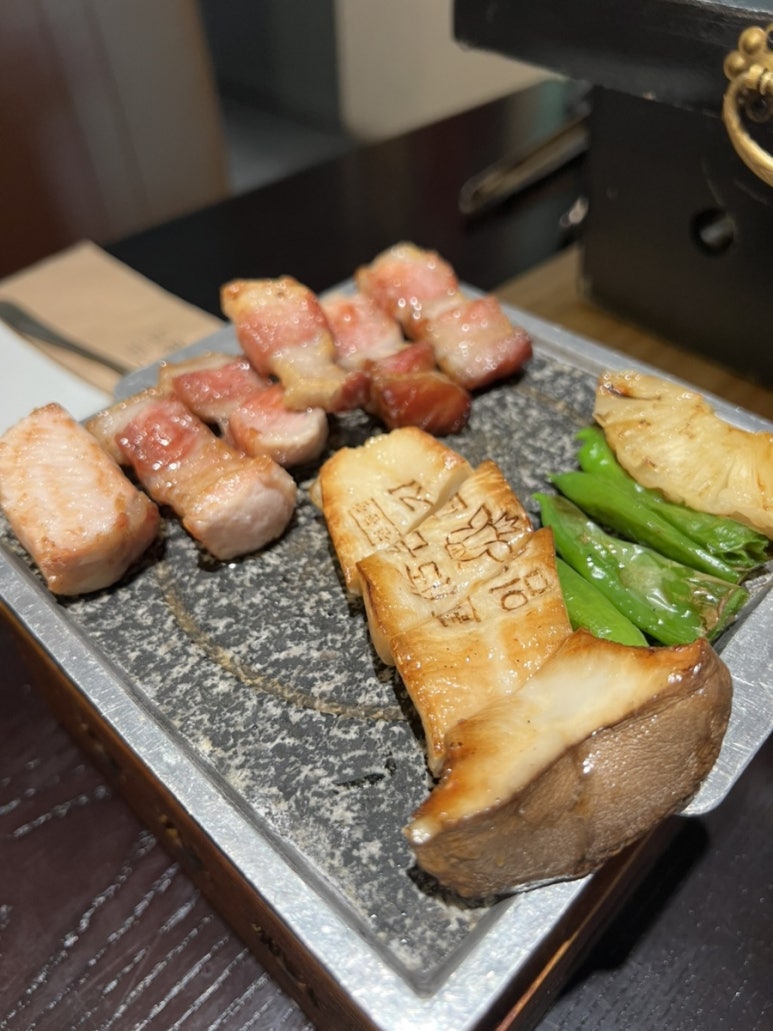
  • Jung-gu (중구) / Myeongdong — accessible for first-timers. English menus are more common here and staff at many restaurants are accustomed to non-Korean visitors. Seomun Dolpan Saengsamgyeopsal (서문돌판생삼겹살, Myeongdong Station) offers a reliable introduction to the stone-plate cooking style (₩₩). The tradeoff is a busier, louder atmosphere than most residential areas.
  • Seocho and Gangnam (서초·강남) — premium galbi territory. If you are going specifically for beef — saeng galbi, hanwoo, or high-end charcoal cuts — this is where to look. The restaurants here tend to be more expensive and more formal in presentation. Full-service tableside grilling is more common here than in other parts of the city. Jangsu Jeong-yuk-sikdang (장수정육식당, Seocho Station) is a notable example of the jeong-yuk-sikdang hybrid format at a premium address (₩₩).
  • Seongsu and Seongdong (성수·성동) — local and unhurried. A neighbourhood that has shifted from industrial to residential-creative over the past decade. BBQ restaurants here tend toward the casual and unpretentious. Mugeunji Wang Sotdukkong Samgyeopsal (묵은지왕솥뚜껑삼겹살, Seongsu Station) draws well among residents in the area, known for aged kimchi pot-lid pork belly — a cooking style in its own right (₩₩).

By district, Seongdong-gu, Jungnang-gu, Mapo-gu, Jung-gu, and Seocho-gu all have a high concentration of Korean BBQ restaurants — so wherever you are based in Seoul, a good option is unlikely to be far.

Jeong-yuk-sikdang: The Butcher-Restaurant

A jeong-yuk-sikdang (정육식당) is a hybrid that most visitors walk past without realising what it is. The front half operates as a butcher shop (jeongyukjeom, 정육점) where you select and purchase your meat by weight at butcher-shop prices. You then carry it to the back, which functions as a regular grill restaurant with tables and gas or charcoal grills. The per-person cost is often 20 to 30 percent lower than a standard BBQ restaurant for comparable quality meat — and you get more control over what you order and how much. Gangnam’s Jangsu Jeong-yuk-sikdang is among the better-known examples of this format in Seoul.

First-Timer Mistakes Worth Knowing

Most of these are easy to avoid once someone mentions them. The problem is that almost nobody does.

  • Leaving chadolbaegi on the grill too long. Paper-thin brisket is done in about ten seconds. Another thirty seconds and you have expensive jerky. Watch the fat go translucent, then pull immediately.
  • Eating ssam in two bites. The whole point of the wrap is one complete mouthful. If it is too large, rebuild it smaller — do not bite through it halfway.
  • Being cautious with banchan. Side dishes are free and unlimited. Take as much as you want, ask for refills, and use them throughout the meal. They are not a garnish.
  • Trying to cut meat with chopsticks. The scissors on your table are there specifically for this. Pick them up and use them on the grill.
  • Pouring your own drink. Refill the glasses around you first. Someone at the table will take care of yours.
  • Forgetting to ask for a grill change. If the surface is darkening and meat is starting to stick, say 그릴 바꿔 주세요 (geu-ril ba-kkwo ju-se-yo) — the staff will bring a fresh grill. This is completely normal.
  • Skipping the end-of-meal rice. The bokkeum-bap cooked in leftover grill fat is not an afterthought. Order it once and you will understand why regulars save room for it.

Frequently Asked Questions

Common questions from first-time visitors planning a Korean BBQ meal in Seoul.

What is the difference between samgyeopsal and galbi?

Samgyeopsal (삼겹살) is pork belly — thick-cut, unmarinated, grilled tableside at an affordable price point. It is the everyday option: a meal for a Tuesday with coworkers or friends. Galbi (갈비) is beef short rib, often marinated, and sits at a higher price point and a more celebratory register in Korean dining culture. See our Samgyeopsal guide for the full detail on that cut.

How much does Korean BBQ cost in Seoul?

At a casual neighbourhood restaurant, expect around ₩15,000–25,000 per person for pork cuts including banchan, before drinks. Beef cuts and galbi restaurants typically run ₩30,000 or more per person. A full dinner for two with soju tends to land between ₩40,000 and ₩70,000 depending on where you go and what you order. The jeong-yuk-sikdang format is often the best value for quality: butcher-shop pricing with a small table fee on top.

Can I eat Korean BBQ alone?

The majority of Korean BBQ restaurants have a minimum order of two portions (i-inbun, 이인분), which makes solo dining awkward or expensive at traditional restaurants. That said, single-person Korean BBQ restaurants have grown significantly in number in Seoul over the past several years, particularly in the Hongdae and Sinchon areas. Search for 1인 BBQ (il-in BBQ) or 1인분 삼겹살 to find options near you.

Do I need to book in advance?

For casual neighbourhood restaurants, walk-ins are usually fine except on Friday and Saturday evenings. Higher-end galbi restaurants in Gangnam or Seocho — especially those known for charcoal grilling — can be fully booked on weekends. If you have a specific restaurant in mind, a reservation is worth making. Most accept reservations by phone; some now take bookings through Naver.

Is there vegetarian Korean BBQ?

The banchan and ssam vegetables are mostly plant-based, and some restaurants offer mushrooms or tofu for grilling. Fully vegetarian or vegan Korean BBQ options are limited, however — dedicated vegetarian BBQ restaurants are rare in Seoul. If plant-based eating is a priority, the banchan-focused meal is your best strategy at a standard BBQ restaurant.

📖 Brief History

Everything you need to know about Korean BBQ — from how to order and grill at the table to the best cuts and dipping sauces.

By Neighborhood

Restaurants by District

📍
Gwanghwamunyanggalbi
광화문양갈비
🚇Jongno 3-ga Station · 1.4km
View →
📍
Mijinsutbulmakchang
미진숯불막창
🚇Jongno 3-ga Station · 1.1km
View →
📍
Toenmaru House Doenjangyesul
툇마루집된장예술
🚇Jongno 3-ga Station · 590m
View →
📍
Seochondalgalbi Gwanghwamun Main Branch
서촌닭갈비 광화문본점
🚇Jongno 3-ga Station · 1.6km
View →
📍
Simin Restaurant Main Branch
시민식당 본점
🚇Myeongdong Station · 1.0km
View →
📍
Gwanghwamunseokgalbi D Tower Branch
광화문석갈비 D타워점
🚇Jongno 3-ga Station · 1.2km
View →
📍
Gwanghwamun Gogi House
광화문 고기집
🚇Jongno 3-ga Station · 1.6km
View →
Watch & Explore

See It in Action

Discover More

Ready to explore Korean BBQ restaurants?

Browse our full list of Korean BBQ spots across Seoul.

Share
Korean BBQ
Explore All Korean BBQ Restaurants →
Home
Food

Related Guides

Dakgalbi: Korea's Spicy Stir-Fried Chicken
Seoul
Korean Fried Chicken: Crispier, Saucier, Better
Seoul
Samgyeopsal: Korea's Beloved Grilled Pork Belly
Seoul
Solo Travel Korea: The Complete Female Solo Dining Guide — Safe Spots, Counter Seating & Confidence Tips
Seoul

Explore More on Knowaboutkorea

🏯

Places to Visit

K-Drama spots, palaces & hidden gems.

Explore →
🧳

Travel Essentials

SIM cards, T-money, visas & practical tips.

Explore →
🗺️

Useful Places

Pharmacies, ATMs & traveler services in Seoul.

Explore →
✍️

Local Reviews

Honest food picks from people who live in Seoul.

Explore →