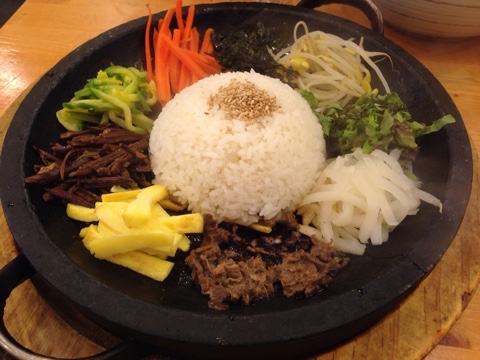
Bibimbap is one of the most famous Korean dishes. A bowl of warm rice gets topped with seasoned veggies, meat, a fried egg, and gochujang (red chili paste). Then you mix it all together. It's healthy, filling, and easy to love.
History
Bibimbap has been eaten for centuries. It started as a way to use leftover rice and side dishes from ancestral rites.
The Jeonju region in South Korea is known for the best bibimbap. Korean Air helped make it famous globally by serving it as their in-flight meal since the 1990s.
Regional Styles
- Jeonju Bibimbap: The gold standard. Rice cooked in beef broth, 30+ toppings, and raw beef. Served in a brass bowl.
- Dolsot Bibimbap: Served in a hot stone pot. The rice gets crispy at the bottom. That crispy layer is the best part.
- Jinju Bibimbap: Topped with raw beef and special soy sauce from the Jinju region.
- Hoedeopbap: Raw fish bibimbap. Popular in coastal cities. Fresh sashimi over rice with chili sauce.
How to Eat
The rule is simple: mix everything. Add as much gochujang as you like. Use your spoon to mix from the bottom up. Every grain of rice should be coated.
For dolsot bibimbap, let it sizzle for 2–3 minutes first. This builds the crispy rice layer at the bottom.
Common Toppings
- Namul: Seasoned spinach, bean sprouts, fern shoots, bellflower root, and zucchini.
- Protein: Bulgogi beef, fried egg, or raw beef in the classic version.
- Gochujang: The key ingredient. Start with one spoon and add more to taste.
- Sesame oil: A small drizzle adds a rich, nutty flavor.
Vegetarian Friendly
Bibimbap is one of the easiest Korean dishes to make vegetarian. Just say "no meat" — in Korean, that's "고기 빼주세요." The veggie toppings and egg make a full, rich meal. Many temple food restaurants also serve vegan bibimbap.
Price Range
A basic bowl at a local spot costs ₩8,000–10,000. Stone pot versions are ₩9,000–12,000. A full Jeonju-style bowl with 30+ toppings runs ₩12,000–18,000.
How to Order Bibimbap in Korea
Walk into any Korean restaurant and say "비빔밥 주세요 (bibimbap juseyo)" — that's all it takes. Most menus have a photo, so pointing works fine too. If you want the stone pot version, say "돌솥비빔밥 (dolsot bibimbap)." For Jeonju style, look for the words "전주비빔밥 (Jeonju bibimbap)" on the sign.
Koreans typically order banchan (side dishes) alongside — these come free and are refillable. Doenjang jjigae (soybean paste soup) is the classic pairing, warming the stomach while the bibimbap satisfies the appetite.
K-Drama Moment: Why Bibimbap Feels Familiar
If you've watched Korean dramas, you've almost certainly seen a character eating bibimbap — often alone late at night, or sharing a bowl with someone they care about. It's the drama writers' go-to comfort food scene. Shows like Reply 1988 and Crash Landing on You use it as shorthand for home, warmth, and belonging.
That cultural resonance is part of why first-time visitors to Korea so often choose bibimbap as their first proper Korean meal. It feels known before you've even tasted it.
Where to Eat Bibimbap in Seoul
- Insadong and Jongno: Traditional restaurants with brass-bowl Jeonju-style bibimbap.
- Gwangjang Market: No-frills market stalls serve simple, hearty versions that feel genuinely local.
- Near Gyeongbokgung: Tourist-friendly restaurants with picture menus and English staff.
- University areas (Sinchon, Hongdae): Affordable dolsot bibimbap under ₩10,000.
Practical Tips for First-Timers
- Ask for gochujang on the side if you're not sure about spice — you can add it gradually.
- The egg should still be slightly runny when you start mixing; it coats the rice beautifully.
- In dolsot versions, scrape the crispy rice (nurungji) off the pot bottom — it's the best bite.
- Bibimbap reheats poorly, so eat it fresh and hot.
- Temple food versions skip the meat and often the egg, making them fully vegan.
Jeonju Bibimbap: Why It Has Its Own City
If you ask a Korean where to eat the best bibimbap, the answer is almost always Jeonju (전주) — a city four hours south of Seoul by bus, and entirely worth the journey for food alone. Jeonju bibimbap is distinct in three specific ways: the rice is cooked in beef bone broth instead of plain water, the bibimbap is served in a brass bowl (yugi, 유기) rather than stone, and the number of toppings is staggering — a proper Jeonju bowl arrives with thirty or more individual vegetable preparations, each seasoned differently.
The Jeonju Hanok Village (한옥마을) neighbourhood is the epicentre of the bibimbap tradition there. Restaurants line both sides of the main street, and most have been refining their recipe for generations. If you have time to make only one food trip outside Seoul, Jeonju deserves serious consideration. The city is also known for its kongnamul (bean sprout) cultivation, and the local bean sprout bibimbap — kongnamul bibimbap — is a more casual, cheaper version that locals eat daily.
Seoul Bibimbap: The Best Neighbourhoods and What to Order
You don't need to travel to Jeonju to eat outstanding bibimbap. Seoul has its own concentration of specialists, particularly in older neighbourhoods where food tradition has been preserved alongside the city's rapid change.
- Insadong (인사동) and Jongno (종로) — The highest concentration of traditional Korean restaurants in Seoul. Look for places advertising "전주식 비빔밥 (Jeonju-style bibimbap)" or "유기그릇 비빔밥 (brass bowl bibimbap)." These are usually multi-course meals — the bibimbap arrives after several small dishes. Budget ₩14,000–20,000 for a full experience.
- Gwangjang Market (광장시장) — The market stalls offer a pared-down version that is about pure flavour rather than ceremony. Sit at a counter, get a sturdy bowl, mix it yourself. Under ₩9,000. The market is best visited between 10am and 2pm before the afternoon crowds arrive.
- Gyeongbokgung Palace area — Tourist-friendly restaurants near the palace typically have English menus, bilingual staff, and photo displays. The food quality is reliable if unspectacular. Good for families or first visits when you want to minimise ordering stress.
- University areas (Sinchon, Hongdae, Anam) — Dolsot bibimbap for under ₩9,000 at a dozen small restaurants within walking distance of each campus. No atmosphere, no ceremony — just excellent value and authentic food.
How to Order Bibimbap Without Anxiety
Bibimbap is one of the most foreigner-friendly dishes in Korea. Here is the full ordering sequence, from walking in to eating.
- Walk in and say "비빔밥 주세요 (bibimbap juseyo)." If you want the stone pot version, say "돌솥비빔밥 (dolsot bibimbap)." If you want Jeonju style, look for "전주비빔밥" on the menu or sign.
- For no meat: "고기 빼주세요 (gogi bbaejuseyo)." For no egg: "계란 빼주세요 (gyeran bbaejuseyo)." Both requests are understood immediately at most restaurants.
- Gochujang usually arrives on the side or already in the bowl. Add it gradually — one spoon first, mix, taste, then add more. You can always add heat, never subtract it.
- Banchan (반찬) — small side dishes — comes free and refillable. Doenjang jjigae (된장찌개, soybean paste soup) is the standard pairing and typically included with a set meal.
- For dolsot bibimbap: let it sizzle for two to three minutes before mixing. This builds the nurungji (누룽지) — the crispy scorched rice layer at the base of the pot — which is considered the best part by most Koreans.