Find It on the Map
A lesser-known royal palace.
Seoul's Free Palace — The Western Palace Few Visitors Find
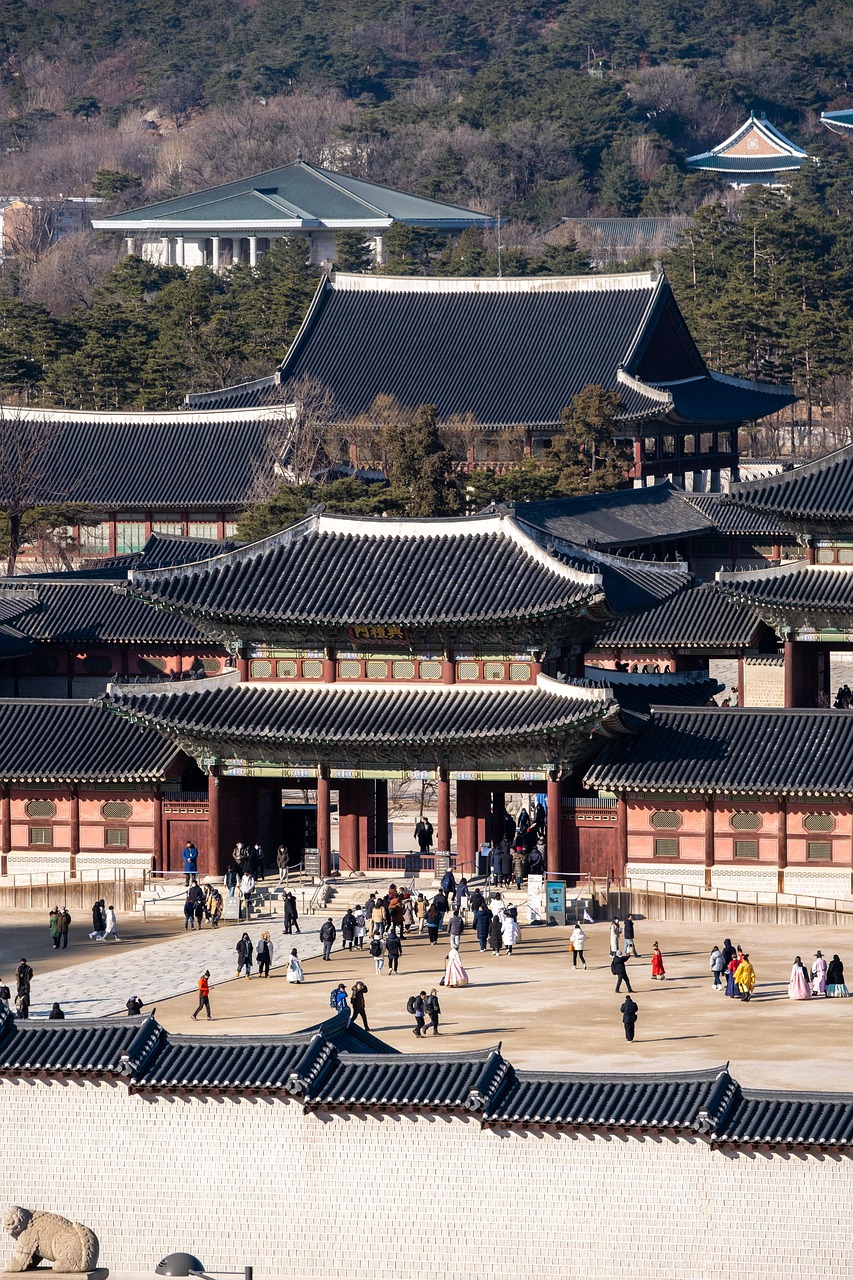
Gyeonghuigung (Gyeonghuigung, 경희궁) was the western complement to Changdeokgung in Seoul's Joseon palace geography — while Changdeokgung served as the eastern palace (donggyeol), Gyeonghuigung served as the western palace (seogyeol). Built in 1617 under King Gwanghaegun, it housed ten Joseon kings across two centuries of use. Today it is the smallest of Seoul's five remaining royal palaces, the least visited — and the only one with completely free admission. For travelers who have already queued at Gyeongbokgung or paid for Changdeokgung's Secret Garden, Gyeonghuigung offers an unhurried, uncrowded palace experience that feels genuinely off the tourist trail.
What Happened to Gyeonghuigung?
Gyeonghuigung's present modest scale is the result of deliberate destruction during the Japanese colonial period (1910–1945). The original palace complex encompassed over 100 buildings across a far larger site. The Japanese colonial government relocated the main palace buildings, demolished most structures, and converted the site into a Japanese middle school. After independence, restoration work began in the 1980s and continues today — but only a fraction of the original palace has been reconstructed. The result is a palace that reads as much as a historical wound as a historical site, and understanding this context transforms how you see the rebuilt structures.
What to See at Gyeonghuigung
Heungnyemun — The Reconstructed Main Gate
Heungnyemun (흥례문) is the reconstructed main gate facing south. The gate itself was originally located elsewhere on the site and relocated during the colonial period to serve as the entrance to Ito Hirobumi's memorial shrine — a particularly bitter piece of history. The current gate standing at the restored entrance is a reconstruction based on historical records. TourAPI records the associated Heunghwamun gate (흥화문, contentid: 1604784) as a heritage landmark.
Sungjeongjeon — The Throne Hall
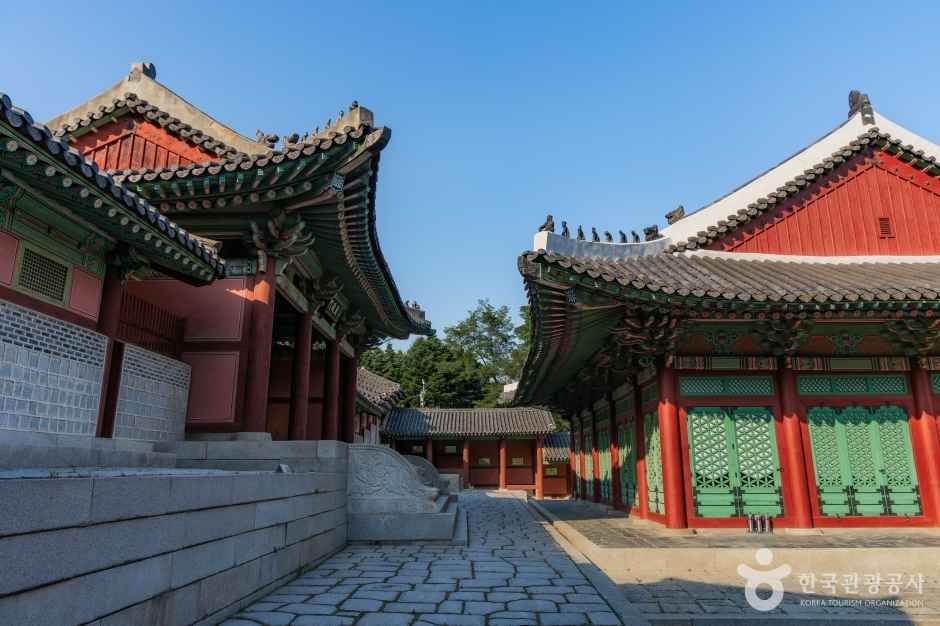
Sungjeongjeon (숭정전) is the reconstructed throne hall, the centerpiece of the restored palace. The original Sungjeongjeon was relocated to Dongguk University during the colonial period (where it still stands as part of a Buddhist temple). The current hall is a faithful reconstruction completed in 1994. Despite its relatively recent reconstruction, the building's proportions and painted interior feel authentic, and the stone courtyard in front provides good photographic compositions — especially in morning light when the surrounding trees cast long shadows across the courtyard paving stones.
Taeryeongjeon — Portrait Hall
Taeryeongjeon (태령전) was used to enshrine royal portraits. The restored building sits at the northern end of the main complex and is often quieter than the throne hall area.
Gyeonghuigung Park (경희궁공원)
The broader palace grounds include a landscaped park area (TourAPI contentid: 1604824) that extends across what was once the full palace site. Cherry trees, ginkgo trees, and grassy slopes make this a popular lunchtime destination for office workers from the nearby government district — a good sign of how integrated the space is into daily Seoul life rather than existing purely as a tourist attraction.
Seoul Museum of History — The Essential Companion
The Seoul Museum of History (서울역사박물관) shares the Gyeonghuigung site and is housed in the building that once served as the colonial-period school. Admission is free. The museum's permanent collection covers Seoul from prehistoric times through the modern city, with particular strength in the Joseon and colonial periods that directly connect to Gyeonghuigung's own history. Interactive maps of historic Seoul and reconstructed street models from the early 20th century are highlights. Plan at least 1–1.5 hours here.
- Address: 55 Saemoonan-ro, Jongno-gu (same complex as Gyeonghuigung)
- Hours: 9:00 AM – 8:00 PM weekdays / 9:00 AM – 6:00 PM weekends (closed Mondays)
- Admission: Free
- Website: museum.seoul.go.kr (English available)
Best Time to Visit
Gyeonghuigung is a pleasant all-seasons destination but particularly rewarding in autumn (October–November) when ginkgo trees in the palace park turn bright yellow, and in spring (April) when cherry trees bloom along the inner pathways. Because visitor numbers are low year-round, there is no meaningful peak-season pressure — you can visit on a Saturday afternoon and still feel like you have the grounds largely to yourself.
Getting There
- Subway (Line 5): Seodaemun Station (서대문역), Line 5 (Purple), Exit 4 — 5-minute walk east
- Subway (Line 5): Gwanghwamun Station (광화문역), Line 5, Exit 7 — 8-minute walk west
- From Myeongdong: Line 4 to Hoehyeon → Line 1 to City Hall → Line 5 to Seodaemun (~20 min)
- From Hongdae: Line 2 to Hapjeong → Line 6 to Mapo → Line 5 to Seodaemun (~25 min)
- From Gangnam: Line 3 to Gwanghwamun → walk 8 min west (~30 min total)
- Address: 55 Saemoonan-ro, Jongno-gu, Seoul (서울특별시 종로구 새문안로 55)
Practical Information
- Opening hours: 9:00 AM – 6:00 PM daily
- Closed: Every Monday
- Admission: Free
- Seoul Museum of History: Free, same complex, closed Mondays
- Nearest station: Seodaemun (Line 5, Exit 4)
- Recommended visit time: 1 hour (palace) + 1–1.5 hours (museum)
- Accessibility: Mostly flat, paved paths; suitable for strollers and wheelchairs
Combining Gyeonghuigung with Other Attractions
- Gyeongbokgung Palace: A 15-minute walk east along Sajik-ro. Do both in one morning — Gyeonghuigung first (free, uncrowded) then Gyeongbokgung. See our Gyeongbokgung guide.
- Inwangsan Shamanist Village (인왕산): The forested ridge visible behind Gyeonghuigung to the north has shamanic shrines and hiking trails accessible within a 20-minute walk.
- Seodaemun Prison History Hall (서대문형무소역사관): 15-minute walk north — the former colonial-period prison is one of Seoul's most significant independence movement memorial sites.
Tips for First-Time Visitors
- Free admission makes this a no-brainer add-on: Even if palace fatigue sets in after Gyeongbokgung and Changdeokgung, Gyeonghuigung costs nothing to enter and takes only an hour.
- The museum is the main event: Many visitors spend more time in the Seoul Museum of History than in the palace itself — plan accordingly and arrive when the museum opens at 9:00 AM.
- Quiet weekday mornings: You may have the entire throne hall courtyard to yourself on a Tuesday or Wednesday morning — a genuinely rare experience among Seoul's major attractions.
- Context enriches the visit: Read briefly about the colonial-period destruction of the original palace before visiting — the reconstructed buildings make more sense, and the gaps in the complex become as meaningful as the buildings that remain.
- Nearby transport: See our Seoul transportation guide for T-money card and subway directions.