Seoul's Public Transportation Is World-Class
Seoul has one of the best public transportation systems in the world. Clean, affordable, punctual, and incredibly extensive. With a T-money card in hand, you can get virtually anywhere in the city for under ₩2,000.
T-money Card: Your Essential Travel Companion
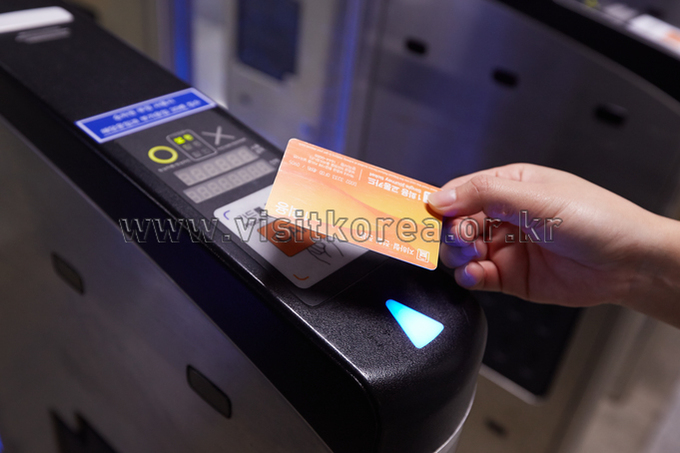
The T-money card is a rechargeable transit card that works on subways, buses, taxis, and even convenience stores.
Where to Buy
- Any convenience store (GS25, CU, 7-Eleven, Ministop)
- Subway station ticket machines
- Incheon Airport arrivals hall
Cost
| Item | Price |
|---|---|
| Card deposit (non-refundable) | ₩2,500 |
| Recommended initial load | ₩20,000–₩30,000 |
| Recharge | Any convenience store or subway machine |
Save ₩100 per ride vs. single-journey tickets, plus enjoy free transfers between subway and bus within 30 minutes. No fumbling with cash — just tap and go.
Seoul Subway (Metro)
The Seoul Metro has 23 lines covering over 700 stations. All stations have English signage and announcements — the system is incredibly user-friendly.
Key Lines for Tourists
- 1 Line 1 — Seoul Station, Jongno, Dongdaemun
- 2 Line 2 — Hongdae, Gangnam, Jamsil, Euljiro (circle line)
- 3 Line 3 — Gyeongbokgung, Anguk (Bukchon), Express Bus Terminal
- 4 Line 4 — Myeongdong, Seoul Station, Itaewon area
- 6 Line 6 — Itaewon, Hangang River parks
Hours & Frequency
| Schedule | Time |
|---|---|
| First train | ~5:30 AM |
| Last train | ~midnight (varies by line) |
| Rush hour frequency | Every 2–5 minutes |
| Off-peak frequency | Every 5–10 minutes |
Fare
| Ticket Type | Base Fare | Coverage |
|---|---|---|
| T-money card | ₩1,400 | Up to 10 km |
| Single-journey ticket | ₩1,500 | Up to 10 km |
| Additional fare | +₩100 | Per 5 km over 10 km |
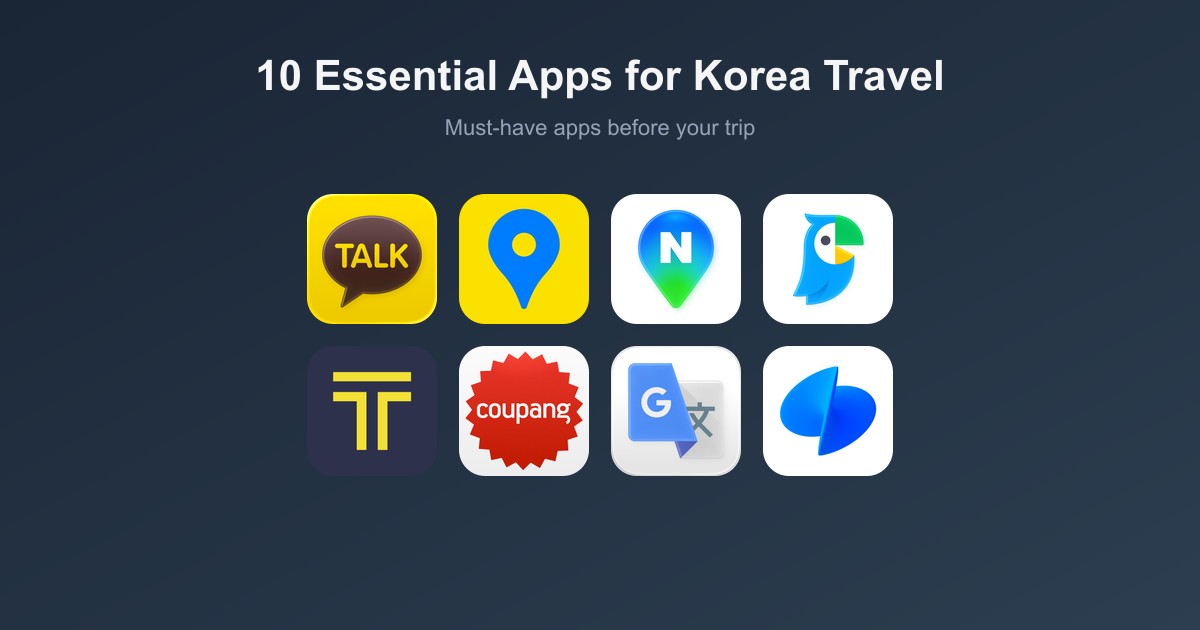
Use Kakao Map or Naver Map for directions — Google Maps has limited functionality in Korea. Look for exit number signs near gates to save lots of walking.
Seoul Bus System
Buses fill the gaps the subway doesn't reach. They're color-coded by type:
| Color | Type | Route |
|---|---|---|
| Blue | Trunk | Long-distance routes across the city |
| Green | Feeder | Neighborhood routes connecting to subway |
| Red | Express | Routes to suburbs (Bundang, Ilsan) |
| Yellow | Circular | Short circular routes in central Seoul |
Tap your T-money card when boarding AND exiting — the exit tap is required to calculate your fare and qualify for free transfers.
Taxis
Seoul taxis are safe, plentiful, and affordable compared to most major cities.
| Type | Color | Base Fare |
|---|---|---|
| Regular | Silver/White | ₩4,800 |
| Deluxe | Black | ₩7,000 |
| Jumbo (van) | Various | Varies |
Use the Kakao T app to hail taxis — it shows the estimated fare upfront, supports in-app card payment, and is available in English.
KTX (High-Speed Rail)
Planning a day trip to Busan or other cities? The KTX bullet train is your best bet.
| Route | Duration | From |
|---|---|---|
| Seoul → Busan | 2h 30min | ₩59,800 |
| Seoul → Daejeon | 50 min | ₩22,800 |
| Seoul → Gyeongju | 2h 10min | ₩52,800 |
Book KTX tickets early via the Korail website or SRT app — early bird discounts can save up to 40% off the standard fare.
Getting Around at Night
After the last subway (~midnight), you have two options:
- Night buses (N-buses): Run major routes until ~3–4 AM
- Taxis: Available 24/7 — note the 20% late-night surcharge after midnight
- Kakao T: Easiest way to grab a late-night taxi
T-money vs. Cashbee: Which Card to Get
Both T-money and Cashbee are contactless transit cards accepted across Seoul and all major Korean cities — but they aren't identical, and choosing the right one matters depending on where you'll travel.
| Feature | T-money | Cashbee |
|---|---|---|
| Coverage | Seoul metro, buses, some taxis, Kakao T, GS25/7-Eleven payments | Seoul metro + all intercity buses + some areas T-money doesn't cover |
| Top-up locations | GS25, 7-Eleven, CU, subway station machines | GS25, subway station machines; fewer convenience store options |
| Transfer discounts | Yes — subway-to-bus transfers within 30 minutes reduce fare | Yes — same discount system applies |
| Availability for tourists | Everywhere — easiest to find at Incheon Airport and any convenience store | Less common in tourist-facing outlets; more often bought by locals |
| Best for | Seoul-centric visitors | Travelers doing regional bus trips outside Seoul |
Recommendation for most tourists: Get T-money at Incheon Airport on arrival. Load ₩30,000–₩50,000 to cover the first few days. Top up at any GS25 or 7-Eleven — tell the cashier "T-money charge" and hand over cash; they handle it in 30 seconds.
Seoul Metro: Line Overview
Seoul Metro has 23 lines and over 300 stations. You won't use most of them. The tourist-relevant lines are:
- Line 1 (dark blue): Long north-south corridor. Dongdaemun, Seoul Station, Suwon connections.
- Line 2 (green): The big circle. Hongdae, Sinchon, Ewha, City Hall, Gangnam, Jamsil, Hongik University — if you're going somewhere interesting in Seoul, this line probably gets you there.
- Line 3 (orange): Diagonal through the city. Gyeongbokgung, Anguk (for Bukchon Hanok Village), Apgujeong, Sinsa (for Garosugil).
- Line 4 (light blue): Insadong/Anguk area, Dongdaemun, Myeongdong — a cultural tour line.
- Line 5 (purple): East-west through the center. Kwanghwamun, City Hall, Yeouido, Gimpo Airport connections.
- Line 9 (gold): Express service, fewer stops. Gimpo Airport to Gangnam in under 30 minutes — fastest cross-city route.
- Sinbundang/Bundang Line: Connects Gangnam to Suwon and Bundang; also stops at Apgujeong Rodeo and Seolleung.
- AREX: Airport Express — Incheon Airport Terminal 1 and 2 to Seoul Station. Direct service (non-stop) or all-stop.
All station names are posted in Korean, English, Chinese, and Japanese. The English app — Naver Maps or Kakao Maps — gives real-time navigation with English station names and line change instructions.
KTX Inter-City Trains: Seeing Beyond Seoul
Korea's high-speed rail network is one of the genuinely transformative pieces of infrastructure for tourists. Cities that once required overnight travel are now day-trip distance from Seoul:
- Seoul → Busan: 2 hours 15 minutes by KTX Express. Running approximately every 30 minutes from Seoul Station and Suseo Station (SRT service). Busan in the morning, back for dinner — entirely doable.
- Seoul → Gyeongju: 2 hours (Singyeongju Station). UNESCO heritage sites, ancient Silla kingdom tumuli, temple complexes. A rewarding day trip or overnight.
- Seoul → Jeonju: 1 hour 40 minutes (KTX to Jeonju Station). Korea's traditional food capital, hanok village, makgeolli culture. The best food day trip from Seoul.
- Seoul → Gangneung: 2 hours (KTX via KTX-eum). The east coast, Gyeongpo Lake, the coffee street that hosted the 2018 Winter Olympics — genuinely beautiful and dramatically different from Seoul's urban energy.
Book KTX at Korail (letskorail.com) or via the Korail Talk app — both have English interfaces. Book at least 2–3 days in advance for weekend travel; popular routes sell out. Bring your passport for the booking process as a foreign national.
Intercity and Regional Buses
For destinations the KTX doesn't serve directly, Korea's express bus network covers the gaps. The main terminals in Seoul:
- Seoul Express Bus Terminal (서울고속버스터미널): Lines 3, 7, 9. Serves southern Korea — Busan, Gwangju, Daejeon, Jeonju express. Attached to a large underground shopping mall (Goto Mall) if you have time to kill.
- Dong Seoul Terminal (동서울터미널): Line 2, Gangbyeon Station. Serves east and northeast — Sokcho (gateway to Seoraksan National Park), Gangneung, Wonju.
Buses are slightly cheaper than KTX and often more comfortable than you'd expect — modern coaches, reclining seats, USB charging. Purchase at the terminal or via the Kobus app (Korean UI, but navigable).
Tips for Getting Around as a Tourist
- Naver Maps over Google Maps: In Korea, Google Maps transit data is incomplete due to data regulation restrictions. Naver Maps and Kakao Maps have full real-time transit data, walking routes, and bus timings. Download Naver Maps before you arrive.
- The transfer discount is meaningful. Taking a subway and then a bus within 30 minutes (using the same T-money card) applies a fare reduction — roughly ₩100–₩450 back. Over a week of Seoul travel, this adds up.
- Taxis are affordable by international standards. Base fare ₩4,800 for the first 2km; most cross-city Seoul journeys run ₩8,000–₩15,000. Kakao T (the Uber equivalent) makes flagging safer — the app shows driver ID, route, and estimated fare before you book, and payment is handled in-app.
- Bikes (따릉이, Ttareungyi): Seoul's public bike share has 40,000 bikes at over 2,400 stations. A 1-hour pass costs ₩1,000. Excellent for Han River parks and the Cheonggyecheon stream path. Register on the Ttareungyi app with a credit card.