Find It on the Map
Seoul international neighborhood
From Your Hotel Area
→ Itaewon이태원
Why Itaewon Still Matters
Itaewon Class turned this neighbourhood into a pilgrimage destination. But even before Park Saeroyi''s pojangmacha became the backdrop for one of Korean drama''s most-watched underdog arcs, Itaewon was Seoul''s most genuinely international neighbourhood — and that is still true. It is the one place in the city where the restaurant next to a Korean BBQ joint is a proper Lebanese mezze spot, where the clothing shop speaks five languages, and where the street itself feels like it was assembled by people from everywhere deciding they wanted to stay.
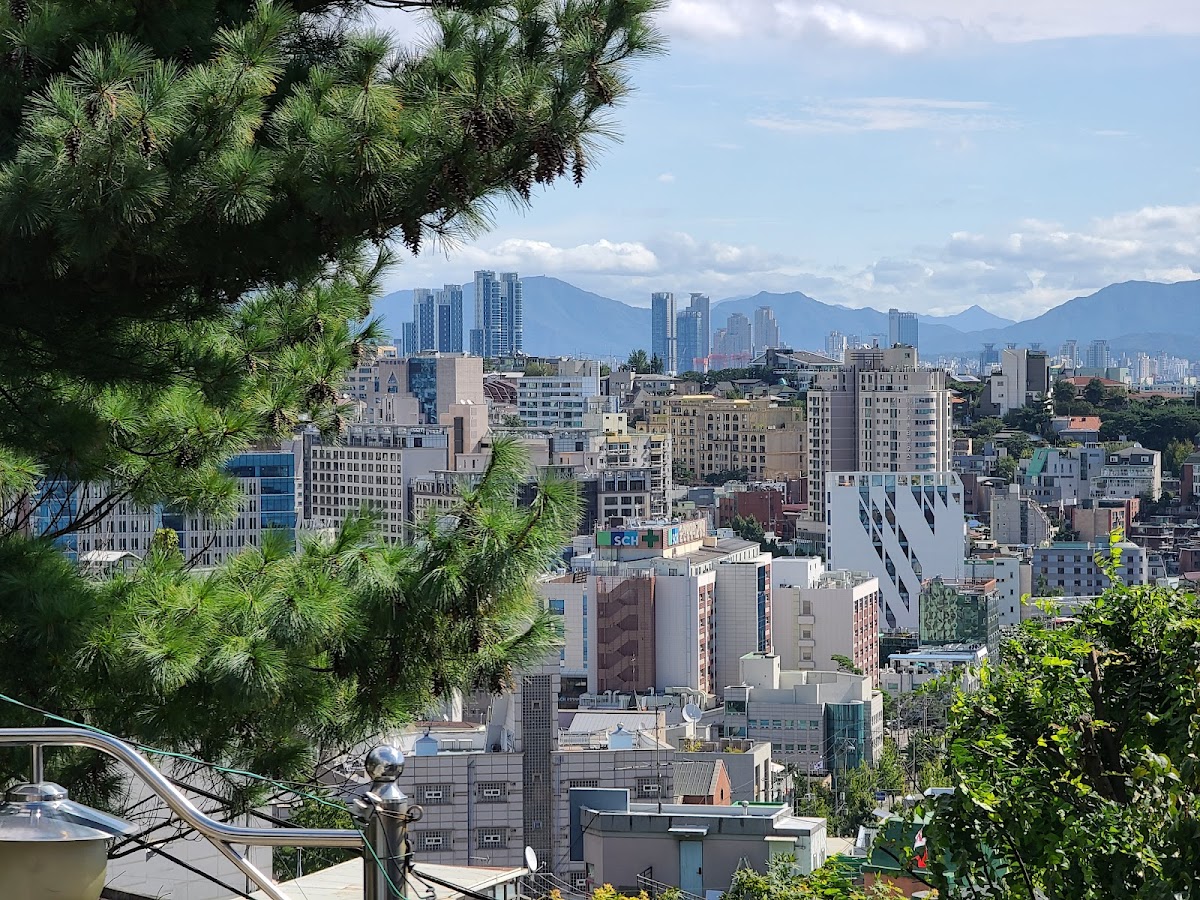
Itaewon sits in Yongsan-gu, between Namsan mountain to the north and the Han River to the south. Its international character developed around the US military base that operated nearby for decades, and the neighbourhood absorbed layer after layer of immigrant communities, expat residents, and Seoul residents who wanted something different. What resulted is a district with real texture — the kind that comes from actual people living and working somewhere over time, not from redevelopment.
One note before you arrive: the neighbourhood carries the memory of the October 2022 crowd crush that killed 159 people near Itaewon Station. The businesses have largely recovered, the streets are busy again, and people continue to visit — but it is worth knowing the history of the place you are walking through.
Itaewon Class: Walking in the Drama
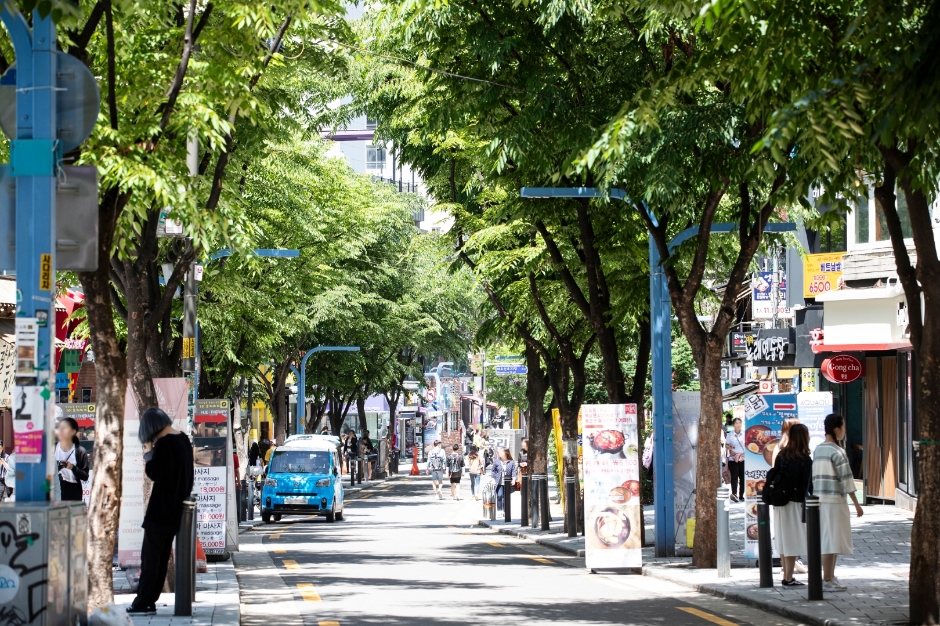
Itaewon Class (이태원 클라쓰, 2020) is set almost entirely in this neighbourhood, and the main street — Itaewon-ro (이태원로) — functions in the drama as it does in real life: as the backbone of the district, a long commercial strip running from Itaewon Station east toward Hannam-dong.
The pojangmacha (포장마차) "Danbam" from the drama was constructed as a production set rather than an existing building, which means there is no single fixed address to visit. What you can do is walk the Itaewon-ro stretch from the station eastward — the drama captures the feel of the street accurately, and several locations along this route were used for exterior filming. The main character''s walk from the subway station down toward his restaurant, the background of the nighttime street scenes, the mix of neon signs and international restaurants — all of this maps onto the real street.
For fans wanting to follow a specific route: start at Itaewon Station Exit 1 and walk east along Itaewon-ro for about 600 metres. The streetscape changes as you walk — from the dense commercial strip near the station toward the slightly quieter blocks approaching Hannam-dong. This is the geography of the drama.
📸 Photo Spot: The stretch between Exit 1 and Exit 3 at night, when the neon signs are lit and the street has the atmosphere the drama captured. Early evening (7–9pm) is the best window.
Food in Itaewon: A World on One Street
Itaewon''s food scene is the most diverse in Seoul, and this is not an exaggeration. Within a ten-minute walk from the station you can eat Turkish doner kebab, Nepali dal bhat, Mexican tacos, Ethiopian injera, Filipino adobo, and a proper New York-style burger. For visitors who want a break from Korean food mid-trip — or who want to experience Korean-inflected versions of cuisines they already love — this is the neighbourhood.
International Cuisines
The main strip concentrates American, Mediterranean, and Southeast Asian options. Prices trend higher than in Korean neighbourhoods — a burger runs ₩12,000–20,000, a sit-down international meal ₩15,000–25,000 per person. This reflects both the imported ingredients and the bilingual staff costs. The quality is generally good; Itaewon restaurants earn their prices more often than not.
Halal Food Street
Heading from Itaewon Station toward Exit 3 and uphill brings you to the area around Seoul Central Masjid (서울중앙성원) — the largest mosque in Korea, operating since 1976. The streets below the mosque have developed into Seoul''s primary halal food district, with Turkish, Middle Eastern, South Asian, and Indonesian restaurants clustered together.
This is the most reliable place in Seoul to find halal-certified food. The mosque itself is worth a brief stop even for non-Muslim visitors — the building is architecturally distinctive and the surrounding streets have a character unlike anywhere else in the city. If you are visiting the mosque, dress conservatively (shoulders and knees covered).
Gyeongnidan-gil vs Haebangchon: Which One Is Your Style?
Itaewon-ro is the main road, but the best parts of the neighbourhood are up the hills on either side. Two sub-districts have developed distinct identities that appeal to different kinds of visitors:
| Gyeongnidan-gil (경리단길) | Haebangchon (해방촌, HBC) | |
|---|---|---|
| Vibe | Instagram-curated, boutique cafés, weekend crowds | Neighbourhood bars, craft beer, local residents |
| Getting there | Exit 2, uphill toward Namsan (10 min walk) | Exit 3, toward Sookmyung Women''s University (7 min walk) |
| Best for | Brunch, independent restaurants, daytime café browsing | Evenings, drinks, a quieter version of Seoul nightlife |
| Price level | Medium-high | Medium |
| Crowds | Busy on weekends | More spread out, even on Saturdays |
Gyeongnidan-gil climbs steeply from Itaewon-ro toward Namsan, and the gradient means the neighbourhood is arranged in layers — you can see the next set of cafés from where you are standing. The walk itself, with Namsan tower visible above, is part of the experience. Come here for brunch, for the independent restaurant scene, for the kind of casual people-watching that good café seating is designed for.
Haebangchon developed differently — it was the neighbourhood where Seoul''s long-term expat community settled, which means the bars know their regulars and the prices have not yet caught up with the trendiness. Craft beer spots, low-key wine bars, restaurants that have been open long enough to know what they are doing. If you want to feel like a Seoul resident rather than a tourist on an evening out, Haebangchon is the choice.
Itaewon as Seoul''s Most Inclusive Neighbourhood
The neighbourhood''s history as an international crossroads has made it Seoul''s most openly diverse district. The area around Usadan-ro (우사단로), sometimes called Homo Hill, has been Seoul''s LGBTQ+ gathering point for decades — a cluster of bars, clubs and cafés that have served the community since a time when this kind of space barely existed in Korea. It is not a designated district in the way some cities have formal neighbourhoods; it is more an organic concentration along a few streets uphill from the main road. The scene is active primarily on weekend nights.
For English-speaking visitors more broadly: Itaewon is the one place in Seoul where you can navigate almost entirely in English. This lowers the activation energy for trying new restaurants and asking questions — which is part of why the neighbourhood functions as a good base for first-time Seoul visitors before they are comfortable navigating the rest of the city.
Getting There
- Subway Line 6 → Itaewon Station (이태원역), Exit 1 — Directly onto Itaewon-ro, the main commercial strip.
- Gyeongnidan-gil: Exit 2 → walk uphill southeast toward Namsan (10 minutes). The slope is noticeable; wear comfortable shoes.
- Haebangchon: Exit 3 → walk uphill northwest (7 minutes). Slightly gentler gradient than Gyeongnidan-gil.
- Halal food street / Seoul Central Masjid: Exit 3 → follow the signs for the mosque up the hill (5 minutes).
Practical Tips
- Itaewon is an evening neighbourhood. Many restaurants and cafés do not open until noon, and the area only reaches full energy after 6pm. Coming at 10am will find half the shutters down.
- Weekday evenings are underrated. Weekends in Itaewon — especially Friday and Saturday nights — are genuinely crowded near the main strip. Tuesday to Thursday evenings are when the neighbourhood shows its real character: busy enough to be lively, spacious enough to move.
- English works here. You can ask questions, check menus, and navigate almost any restaurant or shop in English. This is the one Seoul neighbourhood where not speaking Korean creates essentially no friction.
- The hills are real. Gyeongnidan-gil and Haebangchon both require uphill walking. Sandals and heels are technically possible; trainers are better.
- Watch prices on the main strip. Some restaurants near Itaewon Station charge significantly above-average prices. Walk one or two streets back from the main road and quality-to-price ratio improves.
- Mosque visit etiquette. Seoul Central Masjid welcomes respectful non-Muslim visitors during non-prayer times. Shoulders and knees covered, shoes removed at the entrance. The interior is genuinely beautiful and the view from the mosque grounds over Itaewon-ro is excellent.