Find It on the Map
Seoul best local market
From Your Hotel Area
→ Mangwon Market망원시장
Why Mangwon (Not Gwangjang)
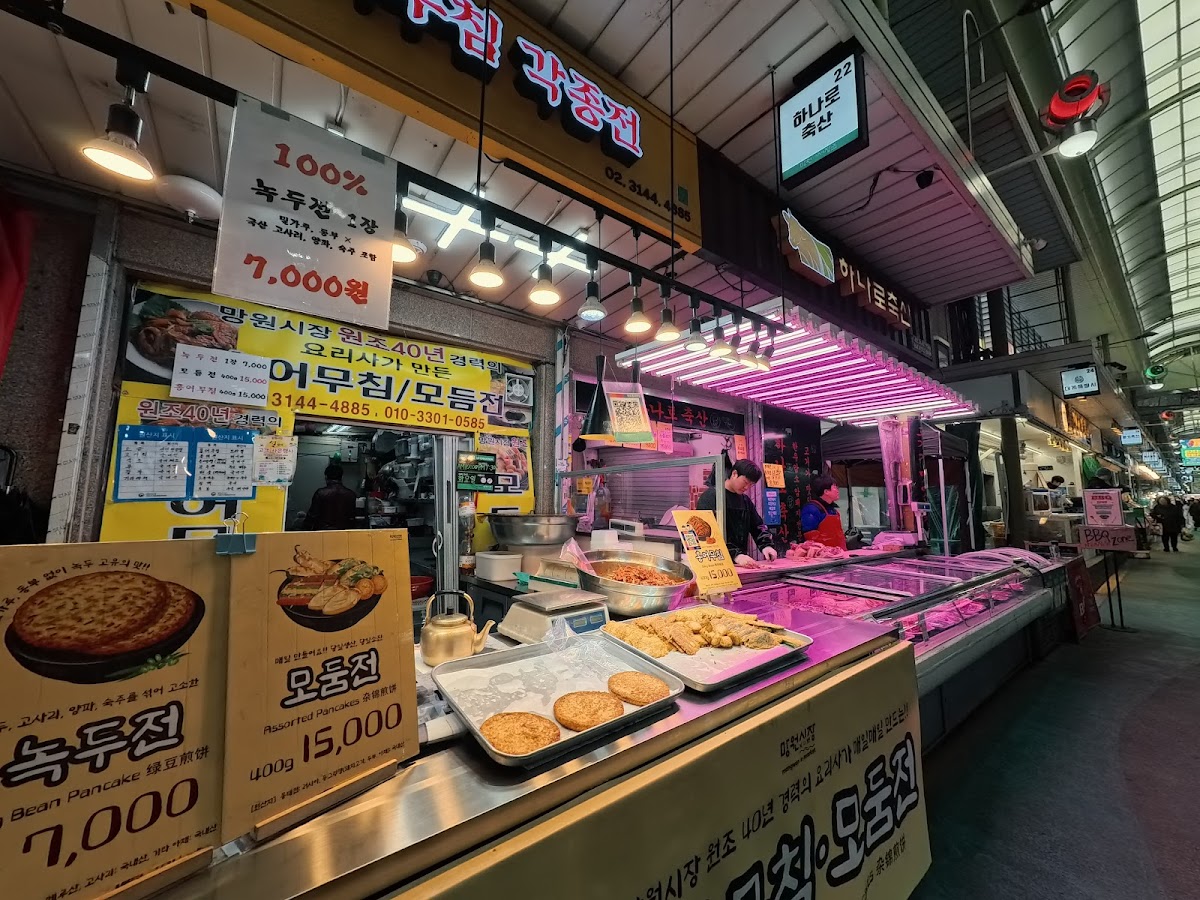
Every travel blog will send you to Gwangjang Market. Tourists line up there for bindaetteok while someone photographs them doing it. Mangwon is different. Walk through the narrow aisles on a weekday morning and you will see a grandmother arguing the price of perilla leaves, a young couple splitting a paper cup of tteokbokki over the stall counter, a delivery rider loading up on side dishes for the week. Nobody is performing for a camera. This is just how Seoul people eat.
Mangwon Market (Mangwon Sijang, 망원시장) sits in Mapo-gu, a fifteen-minute subway ride from Hongdae. It has been a neighbourhood market since the 1970s, and the fact that it has not been renovated into a tourist attraction is exactly its appeal. Prices here run roughly half what you would pay at more famous markets. The vendors know their regulars by face. And if you buy your ingredients here and walk ten minutes to Mangwon Hangang Park, you will have assembled the most authentic Han River picnic in Seoul — the kind that K-dramas keep recreating because it is genuinely one of the best things you can do in this city.
What to Eat: The Mangwon Market Food Map
The market is not large, but it rewards slow wandering. Start at the main entrance from Mangwon Station and work your way inward — the deeper you go, the more local it gets. Here is what to look for:
Savoury Picks
- Tteokbokki (떡볶이) — Chewy rice cakes in a rust-red gochujang sauce, ₩3,000–4,000 per cup. Eat standing at the stall. This is not a dish you sit down for.
- Sundae (순대) — Glass noodle and glutinous rice stuffed into pork intestine casing, served with a dipping salt and doenjang. ₩4,000–5,000. The name has nothing to do with ice cream.
- Pajeon (파전) — Spring onion pancake, sometimes with seafood, cooked to order on a flat iron. ₩5,000–7,000. Best eaten hot and immediately.
- Eomuk (어묵) — Fish cake skewers bobbing in a clear hot broth. The broth is free; drink it from a paper cup. ₩1,000–2,000 per skewer. Perfect for cold days.
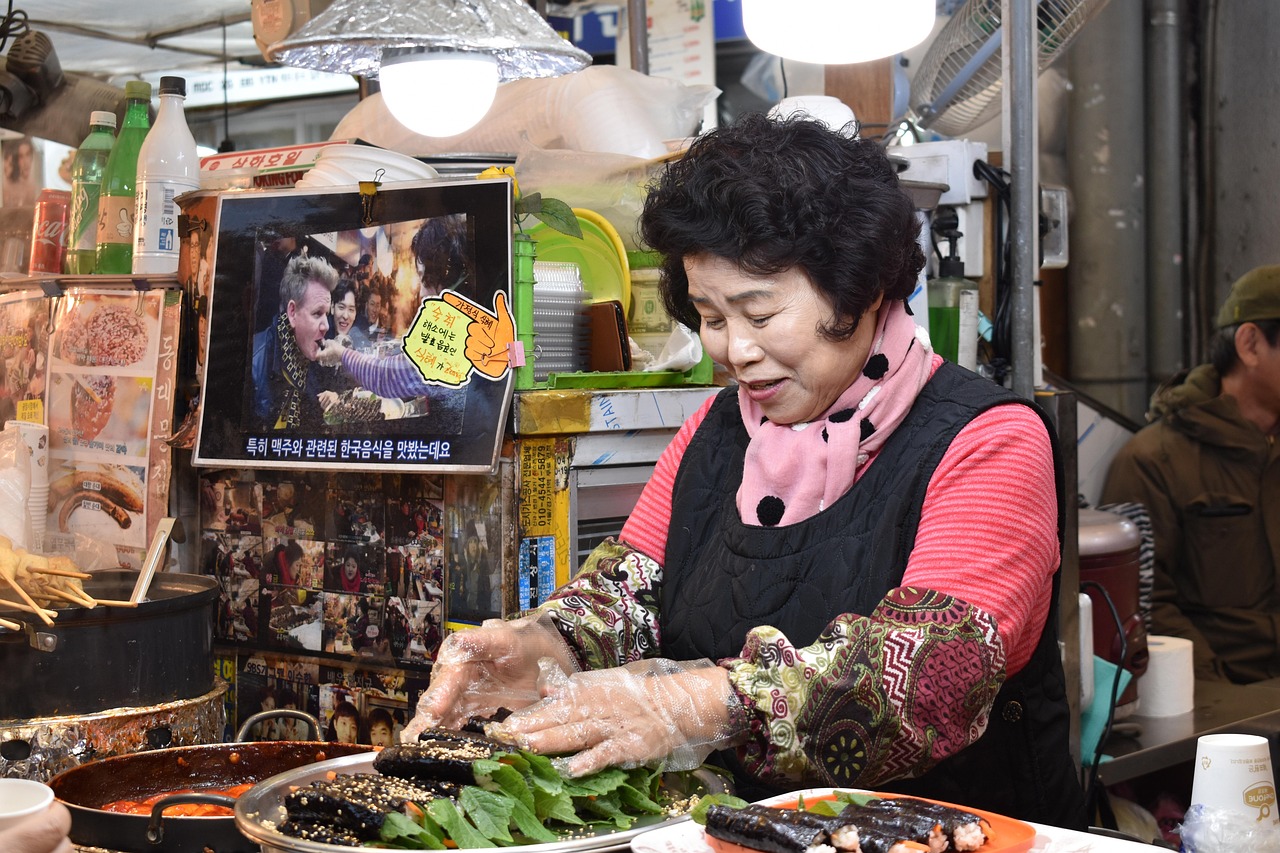
- Gimbap (김밥) — Freshly rolled seaweed rice rolls from the halmeoni (할머니, grandmother) vendors near the produce section. ₩2,000 per roll. Ask for chamchi gimbap (참치김밥) for tuna filling.
Sweet Picks
- Hotteok (호떡) — Brown sugar, cinnamon and walnut pancake fried until the outside is crisp and the inside pulls apart in syrup strings. ₩1,500–2,000. There will be a line; it is worth it.
- Yakgwa (약과) — Honey-soaked traditional cookies shaped into flower molds. They went viral on Korean social media a few years ago and the hype was justified. ₩3,000–5,000 for a small bag.
- Dakgangjeong (닭강정) — Crispy fried chicken pieces glazed in sweet-spicy sauce. This is one of Mangwon Market''s signature items — order a small portion and eat it walking.
Fresh Produce and Local Shopping
Beyond the street food stalls, Mangwon Market functions as a real working market for the neighbourhood. The produce section sells seasonal vegetables at prices that will reset your expectations about Korean grocery costs. Spring brings strawberries and garlic shoots. Summer fills the stalls with perilla and green plums. Autumn means persimmons and sweet potatoes piled in wooden crates.
The banchan (반찬) section — ready-made side dishes — is worth a slow browse even if you are not cooking. You will see kimchi in about eight different forms, fermented soybean paste, seasoned spinach, dried anchovies, pickled radish. This is what Korean home cooking actually looks like when someone has not had time to make everything from scratch.
If you are staying in a place with a kitchen, buy a container of kimchi and a bag of rice here. It will cost less than one coffee at a Gangnam café and it is the best souvenir you can legally take home in your carry-on.
The Mangwon-dong Neighbourhood Walk
The market is a good reason to come to Mangwon-dong. The neighbourhood itself is a better reason to stay. Exit the market from the back alleys heading north and you will find yourself in one of Seoul''s most photographed but least tour-grouped streets — independent cafés, vintage clothing shops, small bookstores, plant shops that spill onto the pavement. This is the neighbourhood that gets called "the new Hongdae" by Seoul lifestyle magazines, which is accurate in the sense that it has the same creative energy without the university-town noise.
Mangwon-dong has a reputation as a neighbourhood where creative industry people live — musicians, designers, writers. Whether or not you spot anyone recognisable, the neighbourhood has the particular atmosphere of a place that does not need to announce itself.
Mangwon to Han River: The Picnic Route
This is the move. Buy your food at the market, walk fifteen minutes south through the residential streets, and arrive at Mangwon Hangang Park (망원한강공원). Find a spot on the grass with a view of the river. If you did not bring a mat, vendors near the park entrance sell them for a few thousand won.
K-dramas use the Han River picnic as shorthand for a particular kind of Seoul happiness — spontaneous, informal, shared. The scene where two characters sit by the river with convenience store bags between them is not a fantasy. People actually do this, regularly, and the version where you have hotteok from Mangwon Market and the Bukhansan mountains visible in the background is better than any drama set.
The park itself has bicycle rental, riverside running paths, and enough space that even on a weekend afternoon you can find a quiet patch. Plan to stay at least an hour.
Getting There
- Subway Line 6 → Mangwon Station (망원역), Exit 1 — Walk straight for 5 minutes. You will smell the market before you see it.
- Subway Line 2 → Hapjeong Station (합정역), Exit 1 — 15-minute walk through Hapjeong-dong residential streets. Worth the walk if you want to see more of the neighbourhood.
When to Visit
The market operates roughly 9am–8pm, with most stalls closed on Mondays. Weekday mornings between 10am and noon are the sweet spot: produce is at its freshest, the regulars are there but the crowds are not yet. Weekend afternoons are the most lively — more vendors, more street food options — but expect to queue for the popular stalls.
Avoid the 12pm–1pm lunch rush if you dislike crowds. The market gets genuinely packed during this window and navigating it with food in both hands requires some patience.
Practical Tips
- Bring cash. Many stalls are cash only. There is an ATM near the main entrance, but having ₩20,000–30,000 in small bills before you arrive makes everything easier.
- Pointing works. Most vendors speak no English, but this has never stopped anyone from eating well here. Point at what you want, hold up fingers for quantity. The transaction will complete itself.
- Bring a bag. If you are buying produce or banchan, the market does not reliably provide bags. A reusable tote in your backpack is useful.
- Eat as you walk. This is not a sit-down market. The experience is about moving through the stalls and eating as you go. Pace yourself so you can try more things.
- The Han River adds an hour. If you are planning the picnic route, factor in the walk and at least an hour riverside. Make this a half-day, not a quick stop.