Find It on the Map
Seoul's vibrant youth and arts district near Hongik University. Known for indie music, street performances, clubs, quirky shops, and affordable street food.
From Your Hotel Area
→ Hongdae Street홍대 거리
What Is Hongdae? Seoul's Capital of Youth Culture
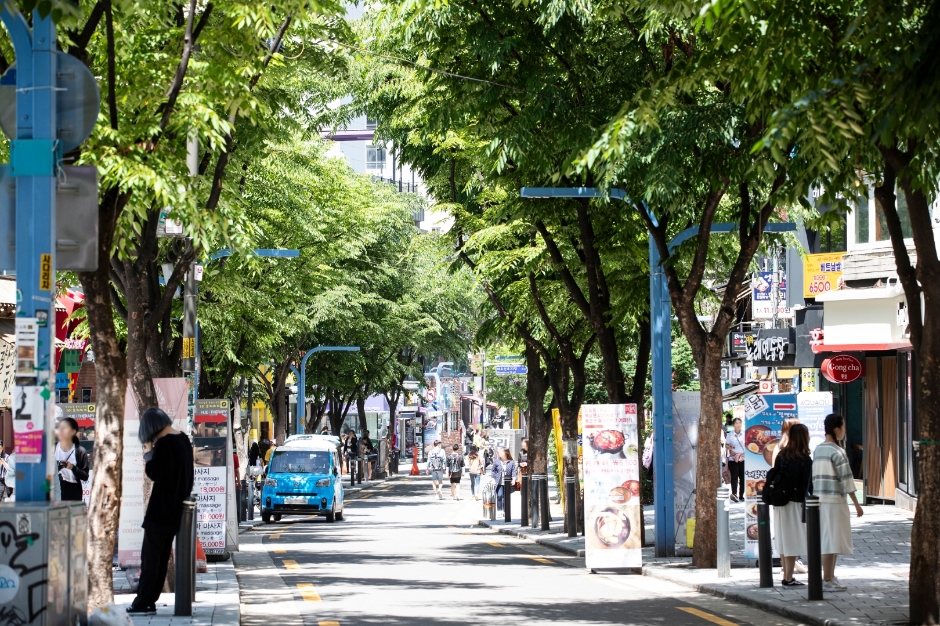
Hongdae (홍대) is the neighborhood that never sleeps — and never wants to. Named after Hongik University (홍익대학교), one of Korea's most prestigious art and design schools, the area has spent decades absorbing the creative energy of its student population and turning it into something the whole city comes to experience. By day, Hongdae is a maze of indie boutiques, K-pop merchandise shops, specialty cafes, and street murals. By night, it becomes one of the most concentrated nightlife districts in East Asia. Whether you are here for busking performances, live music, club culture, or simply the best cheap food street in Seoul, Hongdae delivers across every hour of the day.
Busking and Live Street Performances
Hongdae's busking culture is one of the most vibrant in Korea — and one of the most accessible to international visitors. The main busking zone sits near Hongik University Station Exit 9, where a wide pedestrian plaza becomes an open-air stage from late afternoon onward. Performers range from solo singer-songwriters and indie bands to dance crews, cover singers performing K-pop hits, and occasional classical ensembles. Quality varies, but the atmosphere is consistently electric, especially on Friday and Saturday evenings from around 18:00 to 22:00.
Hongdae's busking scene is also historically important: many K-pop artists and indie musicians began their careers performing here before labels noticed them. Watching a weekend evening set is less tourist spectacle and more a live glimpse into how Seoul's pop music ecosystem operates at grassroots level.
- Best time for busking: Friday and Saturday evenings, 18:00–22:00
- Location: Pedestrian plaza near Hongik University Station Exit 9
- Cost: Free (voluntary tips appreciated)
Live Music Venues and Club Street
Beyond busking, Hongdae has a genuine live music infrastructure that distinguishes it from Seoul's other nightlife districts. The concentration of small venues, recording studios, and music schools in the surrounding streets means that on any given evening, a dozen shows will be running simultaneously within a 10-minute walk.
Key Venues
- Club FF: Hongdae's most storied indie music venue. The basement space has hosted nearly every major Korean indie act at some point in their career. Expect guitar-heavy bands, post-punk, and experimental electronics on weeknights; DJ sets on weekends. Entry typically ₩10,000–15,000 with a drink ticket.
- V-Hall: A mid-sized live hall used for up-and-coming band showcases and occasional K-pop artist fan concerts. The sound system is better than the intimate venues, and sightlines are good from most positions. Check listings on Naver or Melon for upcoming shows.
- Club Cocoon / Basement venues: The stretch of streets between Exit 6 and Exit 9 contains dozens of basement clubs running electronic music, hip-hop nights, and K-pop remix sets. Entry on weekends is ₩10,000–20,000 and typically includes one drink. Weeknights are often free before midnight.
Club Street Tips
- Carry your passport or a copy — ID checks at club doors are common and Korean ID alone is often not accepted from international visitors.
- Clubs typically fill between 23:00 and 01:00. Arriving before midnight usually means shorter queues and cheaper entry.
- The main strip gets very crowded on Saturday nights. Stay aware of your belongings in dense crowds near the main plaza.
Street Art and Visual Culture
Hongdae's walls have been a rotating public gallery for decades, shaped by Hongik University's art faculty and the generations of graphic designers, illustrators, and muralists it has trained. The densest concentration of street art runs along the alleyways between Wausan-ro and the Sangsu-dong border. Pieces range from commissioned large-scale murals to small sticker art layered over years of contributions. The neighborhood treats its walls as collaborative infrastructure rather than vandalism, and the visual texture is genuinely unlike anything in more polished Seoul districts.
The Trick Eye Museum (트릭아이 미술관) near Hongdae also offers interactive 3D mural photography for visitors who want a more structured experience — entry is around ₩15,000 and it is consistently popular with K-drama fans who recognize the style from television segments.
Shopping: K-Pop Stores and Indie Fashion
Hongdae is one of Seoul's best neighborhoods for K-pop merchandise and independent Korean fashion. The zone between Exits 6 and 9 hosts multiple dedicated K-pop stores carrying photobooks, photocards, albums, and idol-branded merchandise for all major groups. These shops are well-stocked, competitively priced, and used to international visitors — English is common at the counter.
The side streets running east from the main strip toward Sangsu-dong host a different type of shopping: thrift stores (구제) stocked with vintage Korean workwear, 1990s sports brands, and secondhand denim, alongside indie fashion boutiques from local designers. Prices are more negotiable in the thrift stores than the boutiques.
- K-pop stores: Cluster around Exit 9 and along the main Hongdae street. Most open by 11:00 and run until 22:00.
- Vintage / thrift: Best selection in the Sangsu-dong alleyways — explore on foot rather than navigating by map.
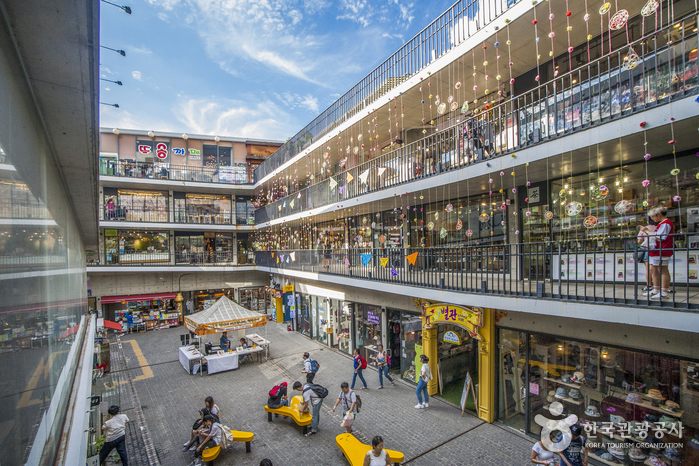
- Hongdae Underground Shopping: The passages connecting Hongik University Station to the street level host small accessory vendors, phone cases, and cheap fashion at market prices.
Cafes and Food in Hongdae
Hongdae has some of Seoul's most affordable and eclectic food, shaped by its student population and the steady flow of international visitors. The range runs from ₩3,000 street tteokbokki to mid-range Korean BBQ to concept cafes that charge for the experience as much as the drink.
Concept and Specialty Cafes
Hongdae pioneered Seoul's concept cafe genre: animal cafes, board game cafes, VR cafes, and study cafes all have multiple representatives in the neighborhood. For specialty coffee without the concept, the streets near Sangsu Station (the next stop east on Line 6) have developed a quieter third-wave coffee scene worth exploring if you want to step away from the main commercial strip.
Street Food and Budget Eating
The pedestrian food alley near Exit 9 is one of Seoul's best quick-eating strips. Tteokbokki (spicy rice cakes) starts at ₩3,000–4,000 for a generous portion. Hotteok (sweet pancakes with brown sugar filling) costs ₩1,500–2,000 from street vendors. Korean fried chicken portions at sit-down restaurants near the strip average ₩15,000–20,000 for a half-chicken with sides. For a fuller Korean BBQ lunch, sets in the surrounding streets run ₩8,000–12,000 during daytime hours.
Extending Your Visit: Yeonnam-dong and Mangwon-dong
Hongdae is best understood as the anchor of a broader creative neighbourhood cluster rather than a single destination. Two immediately adjacent areas reward a short walk or taxi ride:
- Yeonnam-dong (연남동): A 10-minute walk north from Hongdae's main strip, Yeonnam-dong is calmer, greener, and increasingly popular with the brunch crowd. The former Gyeongui Line railway corridor has been converted into a linear park (Gyeongui Line Forest Park / 경의선숲길) flanked by independent cafes and wine bars. Less crowded than Hongdae proper, and increasingly recognised as one of Seoul's best neighbourhoods for a slow afternoon.
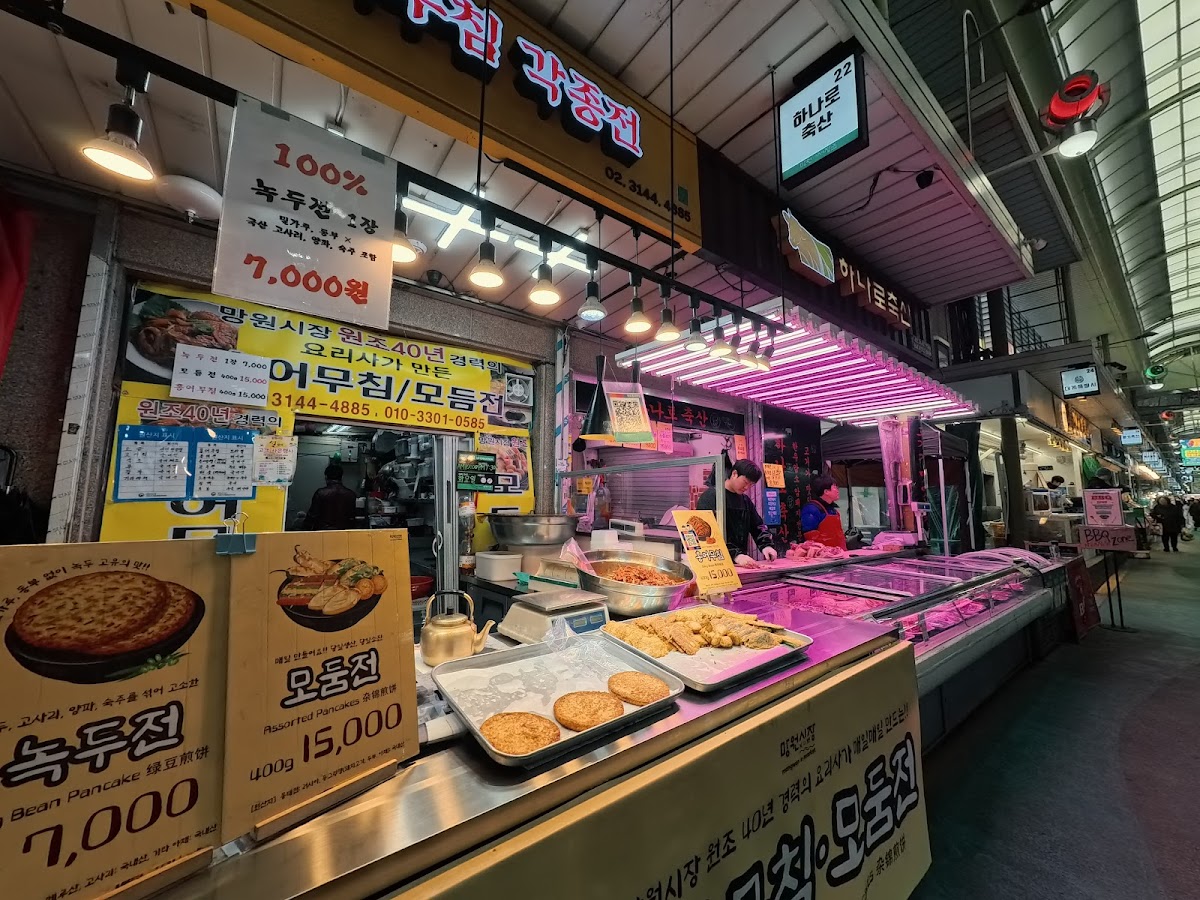
- Mangwon-dong (망원동): Continue 10–15 minutes further north to reach Mangwon-dong, now established as one of Seoul's best local-neighbourhood dining destinations. Mangwon Market (망원시장) is a traditional covered market with exceptionally affordable food stalls. The surrounding streets host a mix of small restaurants, independent bakeries, and wine bars that attract a late-20s and 30s Seoul crowd rather than tourists.
Both areas connect back to Hongdae Station or to their own metro stops (Yeonnam: walk back to Hongdae; Mangwon: Mangwon Station on Line 6).
Getting to Hongdae
Hongdae is one of Seoul's best-connected entertainment districts for transit. Hongik University Station (홍대입구역) is served by three lines: Line 2 (green), Line 6 (brown), and the Airport Railroad (AREX).
- From Incheon Airport: AREX direct train to Hongik University Station — approximately 43 minutes, ₩9,500. The most direct airport-to-nightlife connection in Seoul.
- From Myeongdong: Line 4 to City Hall, transfer to Line 2 west to Hongik University — approximately 20 minutes.
- From Gangnam: Line 2 west (counter-clockwise) to Hongik University — approximately 35 minutes.
- From Seongsu-dong: Line 2 west to Hongik University — approximately 25 minutes.
Exit 9 leads directly to the main busking plaza and K-pop store strip. Exit 3 or 4 takes you toward Yeonnam-dong. See the Korea Transportation Guide for T-money card top-up and line transfer guidance.
Nightlife Tips for Hongdae
- ID: Carry your passport at all times after dark. Clubs and bars enforce age verification. A photo on your phone is not always accepted — the physical document is safer.
- Timing: Daytime (12:00–18:00) is best for shopping, cafes, and the concept experiences. Busking peaks 18:00–22:00. Clubs reach capacity from 23:00 onward.
- Last metro: The last trains on Line 2 depart around 01:00. Plan your return journey — late-night taxis from Hongdae can queue significantly after 01:00 on weekends. Kakao T (카카오T) ride-hailing app is the most reliable alternative.
- Budget: Budget ₩30,000–50,000 per person for an evening covering one club, a meal, and a drink or two. Add ₩10,000–20,000 for club entry on weekends.
- Safety: Hongdae is generally safe. The main strip is very crowded on weekend nights — keep bags zipped and in front of you.