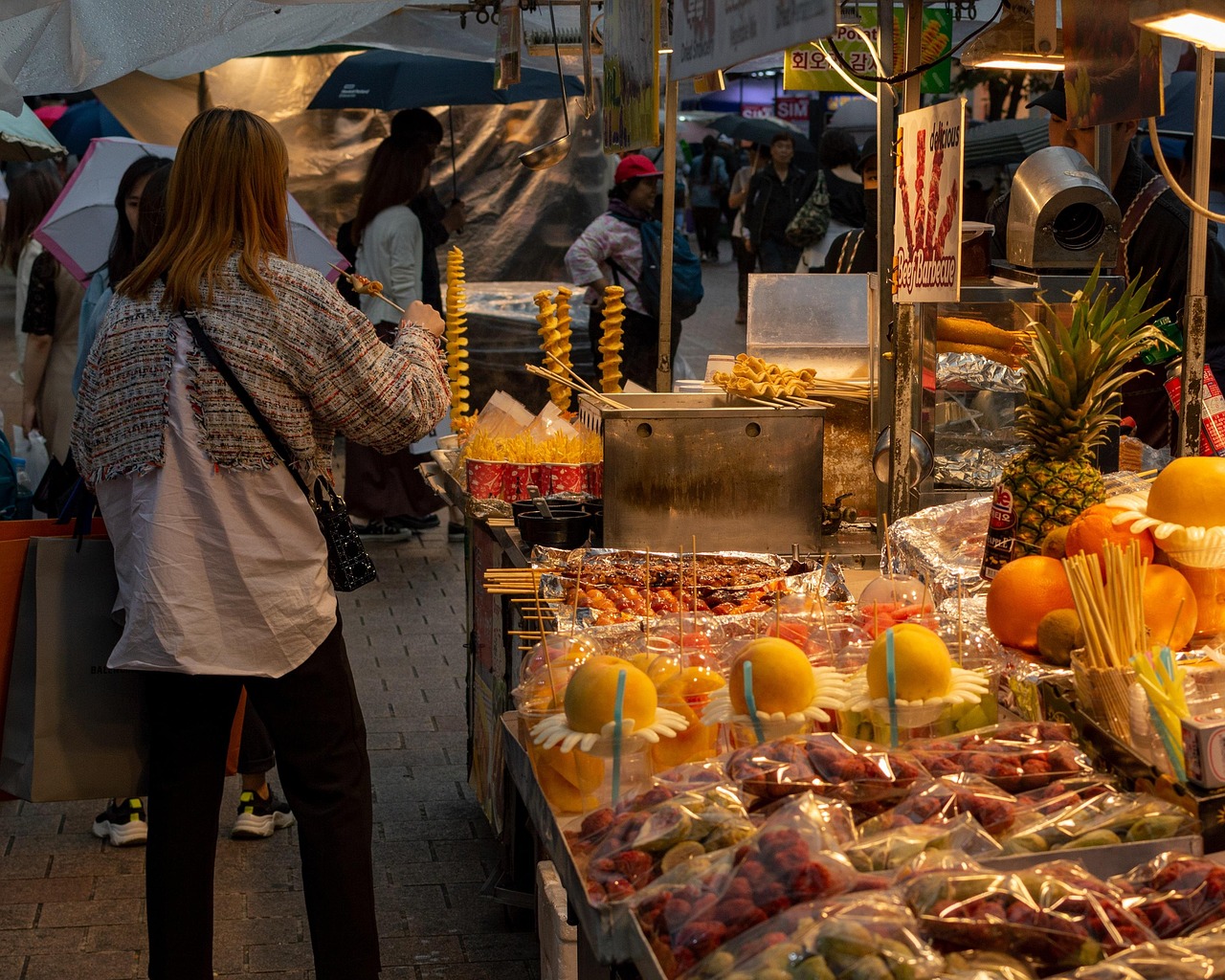
Korean street food (gili-eum-sik, 길거리 음식) is a national institution built on affordability, speed, and communal eating. Every neighbourhood has its pojangmacha (포장마차) — orange-tent food stalls that come alive at dusk — and every tourist district has vendors selling iconic snacks from carts piled high with tteokbokki and hotteok. This is the cheapest and arguably most authentic way to eat in Korea. Budget ₩10,000–15,000 and you can spend a full afternoon grazing through a market without sitting down once.
The Essential Street Foods — Ranked by Popularity
- Tteokbokki (떡볶이) — #1 Korean street food. Chewy cylindrical rice cakes (tteok) simmered in a sweet-spicy gochujang sauce with fish cakes and boiled eggs. The sauce is addictive — thick, red, and complex. Vendors cook in large flat pans and serve in a paper cup or small plate. Price: ₩3,000–5,000. Spice level: medium-high. Available everywhere, all day.
- Twigim (튀김) — Best paired with tteokbokki. Assorted deep-fried items: sweet potato (goguma, 고구마), squid (ojingeo, 오징어), vegetables, and dumplings. Dipped in tteokbokki sauce or a light salt-and-pepper mix. Price: ₩500–1,500 per piece. Combo deal: tteokbokki + twigim for ₩5,000–7,000.
- Odeng / Eomuk (어묵/오뎅) — Best warming snack. Flat fish cake sheets folded on skewers and simmered in a clear savoury broth. The broth is served free in small cups alongside — sip it between bites. A winter essential but eaten year-round. Price: ₩500–1,500 per skewer.
- Hotteok (호떡) — Best sweet snack. Pan-fried dough pancake stuffed with brown sugar, cinnamon, and crushed nuts. The filling melts into a hot syrup when you bite through. A winter staple but now available in spring and autumn too. Green tea and mixed-seed versions have become popular. Price: ₩1,000–2,000.
- Gyeranppang (계란빵) — Best breakfast snack. A sweet bread roll with a whole egg cracked and baked on top. Savoury-sweet, portable, and filling. Best eaten hot from the cart in winter. Price: ₩1,500–2,000.
- Gimbap (김밥) — Best meal-in-one. Seaweed-wrapped rice rolls filled with pickled radish, spinach, egg, and ham or tuna. Sold as a full roll or sliced. Gwangjang Market's mayak gimbap (마약 김밥, "narcotic" gimbap — small rolls with a sesame-mustard dip) are legendary. Price: ₩2,000–4,000 per roll.
- Dakkochi (닭꼬치) — Best protein snack. Grilled chicken skewers glazed with soy sauce and gochujang. Cooked over an open flame and eaten walking. Price: ₩2,000–3,500 per skewer.
- Bungeobbang (붕어빵) — Best winter snack. Fish-shaped waffle iron pastry filled with sweet red bean paste (pat, 팥) or custard cream. Only available October–March. Price: ₩1,000 for 2–3 pieces.
- Tornado Potato (회오리감자) — Most photogenic. A whole potato spiral-cut on a stick, deep fried until golden, and seasoned with cheese powder, barbecue, or spicy flavour. Price: ₩3,000–4,000.
- Sundae (순대) — Most adventurous. Korean blood sausage made with glass noodles, barley, and pork blood stuffed into a casing, then steamed. Served sliced with a salt-and-pepper dip or doused in tteokbokki sauce. Common at markets and pojangmacha. Price: ₩3,000–5,000 per portion.
Best Street Food Areas — Ranked
Myeongdong (명동) — Best for tourists. Seoul's most concentrated street food corridor. After 5pm, vendors line both sides of the pedestrian main road selling everything from tteokbokki to lobster skewers to Korean corn dogs. Prices are slightly higher than neighbourhood markets but the variety and atmosphere are unmatched. Nearest subway: Myeongdong station (Line 4).
Gwangjang Market (광장시장) — Best for market depth. Korea's oldest traditional market, open since 1905, located in Jongno. The inner food hall is famous for mayak gimbap, bindaetteok (빈대떡, mung bean pancake), and yukhoe (육회, raw beef). Sit at the communal benches and order from the auntie (ajeumma) vendors. Expect long queues for the famous stalls on weekends. Hours: 9am–11pm. Nearest subway: Jongno 5-ga (Line 1).
Namdaemun Market (남대문시장) — Best for affordable eating. The country's largest traditional market complex. The food alleys on the north side are famous for galchi (hairtail fish) and kalguksu (칼국수, knife-cut noodle soup). Less touristy than Myeongdong, lower prices. Hours: 24 hours (most food stalls 6am–9pm). Nearest subway: Hoehyeon (Line 4).
Insadong (인사동) — Best for traditional snacks. The cultural arts district also hosts vendors selling traditional sweets like yeot (엿, Korean taffy) and dasik (다식, pressed rice cakes). More sedate atmosphere, good for families.
Hongdae (홍대) — Best for night eating. The university district around Hongik University is packed with late-night food carts and pojangmacha tents. Skewers, tteokbokki, and Korean corn dogs dominate after midnight. Peak hours: 10pm–2am. Nearest subway: Hongdae Ipgu (Line 2, Airport Railroad).
Pojangmacha Culture (포장마차 문화)
Pojangmacha (포장마차) literally means "covered wagon" — these orange-canvas tent stalls set up on pavements, under bridges, and along river banks from late afternoon onward. Inside: plastic stools, a gas burner, and an auntie or uncle who has been running the same spot for decades. The menu is short: tteokbokki, sundae, twigim, odeng, and usually soju or makgeolli.
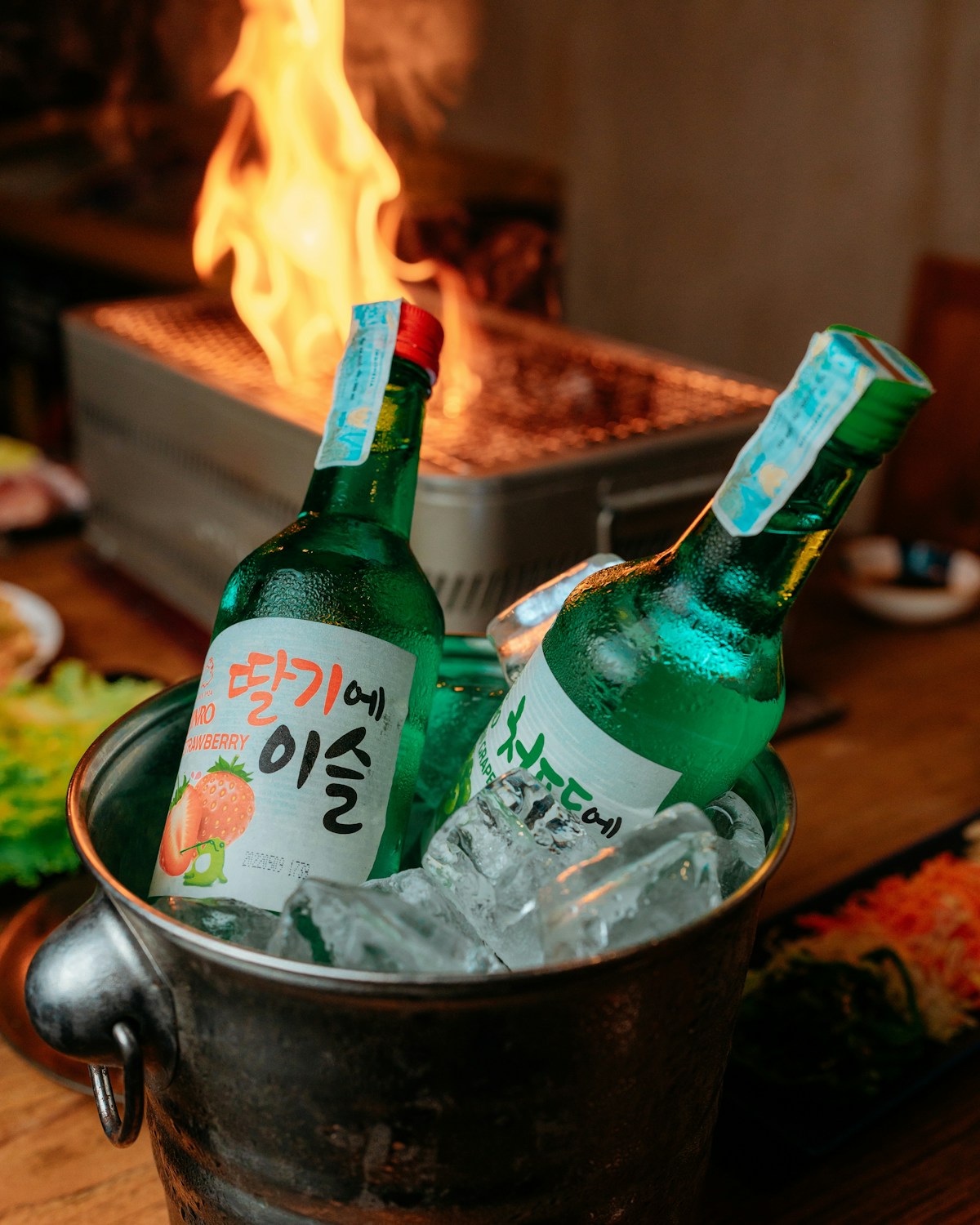
The correct way to experience pojangmacha: sit down, order a shared plate of tteokbokki + sundae (₩8,000–12,000 combined), and a bottle of soju (₩4,000–5,000). Share a table with whoever is there. The informal communal atmosphere is the point. Pojangmacha are disappearing from central Seoul due to city regulations — find them along the Han River banks, in Mapo, Mapo-gu, and near subway exits in residential areas.
How to Order — Practical Tips
- Point at the food and hold up fingers for quantity. "Hana" (하나) = 1, "Dul" (둘) = 2, "Set" (셋) = 3. Most vendors understand.
- Pay in cash — most street food stalls and pojangmacha do not accept cards. Have ₩10,000 notes ready.
- At Gwangjang Market, sit at any stall and order directly — do not wander with your food, as benches belong to the stall you sit at.
- Tteokbokki spice level: if you find it too hot, order the non-spicy version (gungjung tteokbokki, 궁중떡볶이) — soy sauce-based, mild, and slightly sweet.
- Corn dogs (hotogu, 핫도그) at Myeongdong now come in mozzarella, rice batter, and potato-coated versions — the rice batter version (ssal-hotogu, 쌀핫도그) is the local favourite.
Price Guide
- Tteokbokki (1 portion): ₩3,000–5,000
- Twigim (per piece): ₩500–1,500 / combo with tteokbokki: ₩5,000–7,000
- Odeng skewer: ₩500–1,500
- Hotteok: ₩1,000–2,000
- Gimbap (1 roll): ₩2,000–4,000
- Dakkochi (chicken skewer): ₩2,000–3,500
- Sundae (portion): ₩3,000–5,000
- Pojangmacha full meal for 1 (tteokbokki + sundae + soju): ₩12,000–18,000
- Gwangjang Market lunch for 1 (gimbap + bindaetteok): ₩8,000–12,000
Quick Tips
- Myeongdong street food is best after 5pm — most vendors do not set up until late afternoon.
- Gwangjang Market is busiest on weekends. Go on a weekday morning for shorter queues at the famous mayak gimbap stalls.
- Cash only at 90% of street food stalls. ATMs (현금인출기) are at every CU and GS25 convenience store.
- Street food is meant to be eaten standing or on a stool. Do not take food into sit-down restaurants.
- Winter (November–February) is the best season for pojangmacha — the contrast of cold air and hot broth is a quintessential Seoul experience.
- Combine Namdaemun Market (morning) with Gwangjang Market (lunch) and Myeongdong (evening) for a full-day street food tour of central Seoul on ₩30,000–40,000 total.