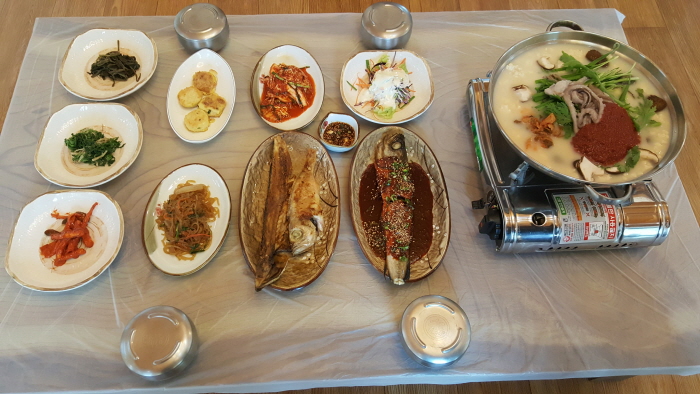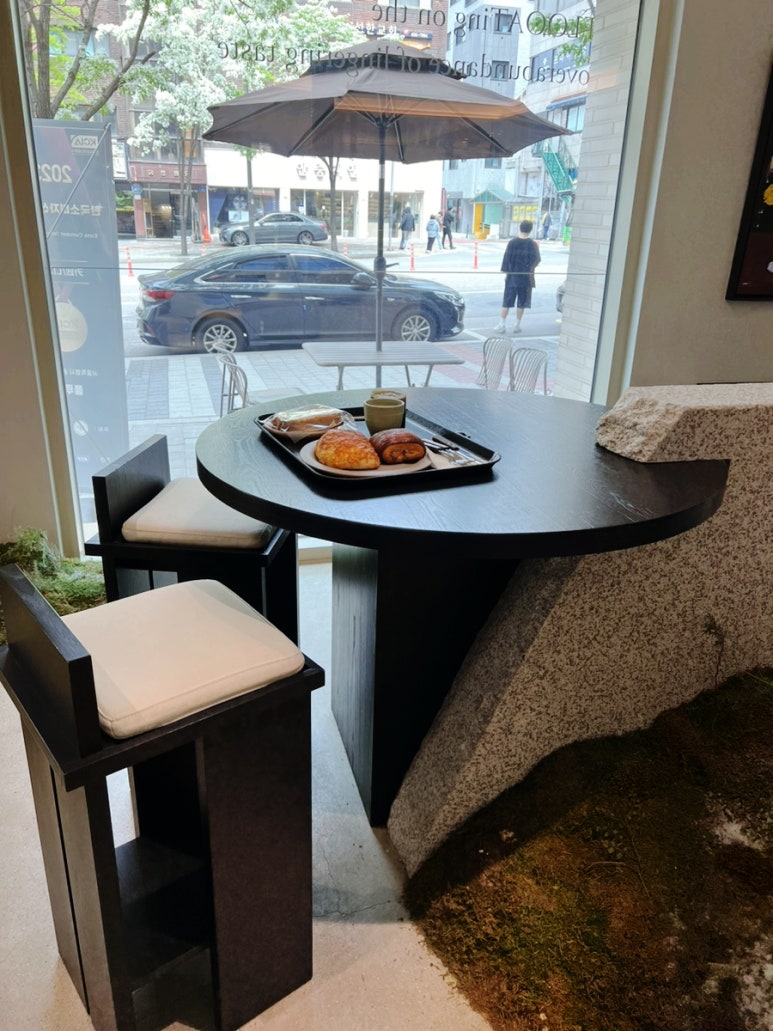
You have just landed in Seoul. It is the second morning, your travel companion is sleeping off jet lag, and you want breakfast — real breakfast, the kind with broth and rice and something hot. You find a gukbap place two blocks from the hotel on Naver Map. You walk in alone. The server, a woman in her fifties, looks up, holds up one finger and tilts her head slightly. You nod. She points to a seat at the counter by the wall, brings a glass of cold water, and moves on. The restaurant hums around you. Within three minutes you have a bowl of milky pork-bone soup, a cluster of side dishes, and nobody paying you the slightest attention. You eat slowly, watching the kitchen. It is — without any drama — one of the best meals of the trip.
This is what female solo dining in Seoul actually looks like most of the time. Not a test of nerve. Not an ordeal requiring preparation. A meal. But the gap between "most of the time" and "all of the time" is where this guide lives. If you have already read our Solo Dining in Korea guide, you know the cultural background — why honbap (혼밥) went mainstream, how counter seating works, which food types are naturally solo-friendly. This guide picks up where that one leaves off: the specific, practical experience of eating alone in Seoul as a woman, from how to read a restaurant before you walk in to the phrases that make every interaction feel easy.
Reading a Restaurant as a Woman
Not every solo-friendly restaurant is equally comfortable, and the difference is visible before you even open the door. Learning to read a space quickly — from the street, from a photo on Naver Map, from the energy when you step inside — saves you from discovering that you have chosen poorly only after you are already seated and committed.
The first thing to look at is the counter. If a restaurant has one — a row of seats facing a wall or an open kitchen, separated from the main floor — it is already doing something right. Counter seats give you a defined personal space with a natural focal point that is not the room. Your back is to the other diners. You face the kitchen or the window. The body language of the seat itself signals that you are here to eat, not to be observed. This is not a subtle effect: it changes the texture of the meal entirely. Check the interior photos on Naver Map before you arrive. You can usually tell within two or three images whether a counter exists, how many seats it has, and whether it is the kind of narrow wooden counter designed for focused solo eating or a wider bar-style counter that invites lingering.
The second thing is lighting. Bright, even lighting — the kind you find in gukbap restaurants, bunsik shops, and most ramen counters — means a space that is not trying to create atmosphere, which means a space that is equally comfortable for everyone in it regardless of party size. Lower, warmer lighting at a restaurant built for couples or groups can make a solo diner feel more conspicuous by contrast. Neither is wrong as a design choice, but bright lighting is almost always more comfortable for solo female dining.
The third signal is staff composition. A restaurant where at least some of the visible staff are women — servers, kitchen staff, owners — tends to read the comfort level of a solo female diner more intuitively. This is not a hard rule, and plenty of excellent solo dining spots have entirely male staff. But if you are choosing between two ramen counters you know nothing about and one clearly has a woman running the front of house, that information is worth something.
The fourth signal is the existing clientele. Before you sit down, take five seconds to look at who is already there. Are there other solo diners? Are any of them women? Even one woman eating alone at a counter tells you that the space normalises what you are about to do. Seongsu and Hongdae have this in abundance. Older traditional restaurant areas in Jongno can be more mixed. Tourist-heavy Myeongdong tends to normalise anything international visitors do, which includes eating alone.
One specific configuration to seek out actively: the individual booth divider. Some ramen counters — particularly those modelled on Japanese solo dining formats — have narrow wooden panels between counter seats, giving each diner a small private compartment. If you see this setup in the interior photos, you have found the most private solo dining available in a public restaurant. It is the kind of thing that makes a solo meal feel genuinely considered rather than merely tolerated.
Timing Your Solo Meals
The hour you arrive shapes your experience as much as the restaurant you choose. Seoul''s dining day has distinct rhythms, and working with them rather than against them makes solo eating consistently more comfortable.
Lunch: 11:30 to 13:30
This is the most natural window for solo female dining anywhere in Seoul. Office workers eat at their desks or at the nearest gukbap counter. Students eat between classes. The mix of people eating alone, in pairs, and in small groups is so varied that a single woman at a counter seat at 12:15 on a Wednesday is simply part of the traffic. Restaurants are busy, which means fast service, no pressure to linger, and the natural anonymity that comes with a full room. The food is also at its freshest: broths have been going since early morning, banchan is freshly prepared, and the whole kitchen is running at capacity.
The practical downside: popular counter-seat spots fill fast. Counter seats are scarce by definition — most ramen and soba counters have ten to fifteen seats total. Arriving at 11:30, when doors open, almost guarantees a seat without waiting. Arriving at 12:30 may mean standing at the entrance for fifteen minutes while the lunch crowd moves through.
Off-Peak: 14:30 to 17:00
The gap between lunch rush and dinner is when Seoul''s restaurant rooms are quietest and most spacious. If you are not committed to eating at a conventional hour, this window offers something lunch and dinner cannot: unhurried service, your choice of seats, and staff who have time to be helpful. It is the best window for a first visit to a restaurant you are not sure about — you can settle in, look at the menu without pressure, and ask questions without anyone waiting behind you. The trade-off is that some smaller restaurants close between services, typically from 15:00 to 17:00. Check Naver Map operating hours before you commit.
Early Dinner: 17:30 to 18:30
The most comfortable dinner window for solo dining. Restaurants have reopened for the evening but the main dinner crowd — which arrives between 19:00 and 20:00 in most Seoul neighbourhoods — has not yet appeared. You get dinner-quality food at lunch-hour density. The atmosphere is relaxed. This window is particularly useful at slightly nicer restaurants where the 19:30 crowd will be louder, more group-oriented, and more likely to make a solo diner feel like a contrast rather than simply another customer.
Weekday vs. Weekend
Weekdays are reliably easier than weekends for solo female dining. The Friday and Saturday evening surge — groups celebrating, couples at restaurants built for two, tables of friends that fill every corner — creates a social energy where a solo diner is more visibly alone by contrast. Not unwelcomingly so, but more noticeably. Tuesday through Thursday evenings have a more individually varied energy: people eating alone or in small pairs after work, the same mix that makes weekday lunch comfortable. If your trip schedule has flexibility, save your most ambitious solo dinner — the restaurant you most want to try — for a weekday evening.
Late Night: After 21:00
Korea eats late, and 24-hour gukbap restaurants, ramen shops, and convenience stores are specifically designed for the hours after the conventional dinner window closes. Eating at 22:00 near a major subway station — Hongdae, Itaewon, or Myeongdong — puts you in a space that is still well-populated and well-lit without the intensity of peak hour. The late-night solo meal at a GS25 or CU counter watching the street outside turns out, in practice, to be one of those travel experiences that is better than it sounds on paper. Korean convenience store food is genuinely good, and no one in a convenience store at midnight is paying attention to anyone else.
Best Districts for Female Solo Dining in Seoul
Seoul is large enough that neighbourhood shapes the experience — not just for the food available, but for the energy, the density of solo diners, and how naturally you settle into a table by yourself. Each area below has something specific to offer, and each suits a different kind of solo meal.
Hongdae is the easiest starting point for female solo dining in Seoul, and the reason is demographic: the area around Hongik University draws a constant stream of women in their twenties — students, solo shoppers, locals running errands, tourists from across Asia and further. Solo female dining here is not a statement; it is simply what a large portion of the clientele is doing. Counter-seat ramen shops, small soba counters, and casual gukbap restaurants sit a few doors apart on the same streets. The area stays busy and well-lit until well past midnight.
The adjacent Hapjeong and Sangsu neighbourhoods — a ten-minute walk west along the river side — offer a slightly quieter version of the same energy. Fewer tourists, more regulars, the kind of neighbourhood ramen counter where the server remembers the regular who always orders the same thing. This is the version of Hongdae that suits a solo dinner where you want to feel like you belong to the place rather than passing through it.
Recommended spots:
- 오레노라멘 합정본점 (Orenoramen Hapjeong) — The original Hapjeong branch of this ramen group, positioned in a residential pocket just west of the Hongdae bustle. Counter seating, focused broth, and the settled energy of a place that serves regulars rather than foot traffic. The walk from Hapjeong Station takes five minutes; the meal takes twenty; the feeling of having eaten well in a real neighbourhood lasts longer.
- 칸다소바 홍대점 (Kandasoba Hongdae) — Counter-seat soba in the middle of Hongdae. Soba restaurants are among the most naturally solo-friendly formats in Korean-Japanese dining culture: the food is quiet, the eating is focused, and the counter arrangement gives you a private space within a public room. When you want a genuinely calm solo lunch in the heart of one of Seoul''s busiest neighbourhoods, this is the format that delivers it.
- 하카타분코 (Hakatabunko) — Hakata-style tonkotsu ramen in Mapo, with the full counter experience: narrow seats, focused bowls, and the kind of private atmosphere the best ramen counters create simply by the direction you face. A solid choice for a solo dinner when you want something warm and substantial without needing to speak to anyone beyond the order.
Jongno and Insadong are best for daytime solo dining. The pace here is slower and more varied than Hongdae: traditional Korean restaurants, teahouses, and small restaurant-cafes line streets and alleys that have been in use for several hundred years. The clientele skews older and more mixed than university-adjacent neighbourhoods — grandmothers, office workers from nearby government buildings, domestic tourists, international visitors in hanboks rented from shops near Gyeongbokgung. A solo female traveller fits into this mix without friction.
The area quietens significantly in the evening, which makes it less interesting after dark but also more peaceful and less complex for a solo diner who wants a calm meal without navigating weekend crowds. The best use of Jongno for solo dining is a midweek lunch or an early dinner before 18:00, when the streets still have energy and the restaurants are not yet empty.
Some of Seoul''s oldest restaurants operate in this area — places that have been feeding the city for decades and have no particular investment in making any category of diner feel either special or out of place. Eating alone at a restaurant that opened in the 1960s, surrounded by the ordinary rhythm of a city going about its day, is one of the more grounding solo dining experiences Seoul offers.
Recommended spots:
- 이문설농탕 (Imun Seolleongtang) — One of Seoul''s oldest soup restaurants, serving milky ox-bone broth that has been on the menu essentially unchanged for generations. The bowl arrives quickly, the side dishes are minimal and refillable, and the clientele is genuinely mixed across age, gender, and purpose. A solo female diner here is simply part of the room — which is, frankly, the best thing a restaurant can offer.
- 오레노라멘 인사점 (Orenoramen Insa) — The Insadong branch of the ramen group, quieter and more relaxed than the Hapjeong flagship. Well-positioned for a Jongno afternoon: close to the main sights, counter seating, and a bowl of broth that does not require any particular decisions once you have ordered it.
- 칸다소바 경복궁점 (Kandasoba Gyeongbokgung) — Soba near Gyeongbokgung Palace, in a location that works naturally as either a post-palace lunch or a quiet standalone meal. The format — counter seating, cold or hot soba, minimal interaction required — makes it one of the most straightforwardly comfortable solo dining options in the Jongno area.
- 조베기수제비 (Jobegisujebi) — Hand-torn noodle soup in the Jongno area. Sujebi (수제비) is one of Korea''s most comforting solo meals: a single bowl, irregular hand-pulled noodles in anchovy or seafood broth, no decisions to make once you have sat down. On a cold or wet day in Jongno, a bowl of sujebi at a quiet table by the window is exactly the meal the neighbourhood calls for.
Myeongdong''s saving grace for solo female dining is its tourist density, which works in your favour in a specific way: being a foreign woman eating alone in Myeongdong makes you less visible, not more. You are one of thousands of international visitors. Every restaurant, street food stall, and convenience store in the area is calibrated for individual, anonymous consumption. English menus are the standard rather than the exception. Staff are accustomed to international guests arriving alone and will not be unsettled by a solo diner who does not speak Korean.
The trade-off is that Myeongdong''s restaurants reflect tourist pricing and tourist-oriented menus. The best solo meals here tend to be the most straightforward — a reliable gukbap, a ramen counter, street food from the main pedestrian strip — rather than a deep dive into less-familiar Korean cuisine. Use Myeongdong for the meal where you want zero friction and maximum ease. Save the more interesting solo dining for Seongsu or Hapjeong, where the food rewards slightly more engagement.
Recommended spots:
- 광화문국밥 본점 (Gwanghwamun Gukbap) — One of Seoul''s better-known gukbap restaurants, within reach of Myeongdong. The format is built for solo eating by design: arrive, order, receive your bowl, eat, leave. The restaurant does not linger on you; you do not linger on it. The broth is good, the side dishes are quietly refillable if you ask, and the whole experience is over in twenty minutes if you want it to be.
- 멘텐 (Menten) — A ramen counter in the Myeongdong area. Counter seating, focused bowls, no expectation of conversation. A practical choice for a solo dinner before or after an evening in the main Myeongdong shopping district — close enough to be convenient, good enough to be worth it.
Itaewon has always been Seoul''s most internationally oriented neighbourhood, and that orientation works directly in your favour as a solo female traveller. English is widely spoken and understood. Menus are frequently bilingual. The mix of nationalities across both staff and clientele means that a solo foreign woman eating alone is the least noticeable configuration in the room — you are simply another international visitor, which in Itaewon is the majority demographic on most evenings.
Hannam-dong, a short walk east along the Han River ridge from Itaewon Station, has a different register: slightly higher price point, more residential-international in feel, with streets between Hannam and Itaewon that host a cluster of restaurant-cafes well-suited to an unhurried solo afternoon. If you want the experience of eating alone in the way contemporary Seoul women in their late twenties and thirties actually spend a Saturday — not the tourist version of Seoul, but the city-resident version — eating in Hannam is one of the more accurate versions of that available to a visitor.
Recommended spots:
- 남매국밥 이태원본점 (Nammae Gukbap Itaewon) — Gukbap in the most internationally oriented neighbourhood in Seoul. English is understood, the atmosphere is genuinely relaxed, and the food is the same warming bowl of pork-bone soup you would find anywhere in the city — except here, arriving alone as a foreign visitor is simply unremarkable. A reliable anchor meal for an Itaewon afternoon.
Seongsu is where female solo dining feels most natural in a specifically contemporary Korean way, and understanding why requires understanding what Seongsu has become over the past decade. Old industrial buildings converted into cafes, brunch restaurants, furniture workshops, and lifestyle brand flagship stores. A neighbourhood where the dominant daytime demographic is women in their twenties and thirties — many of them alone, many of them with a laptop or a book, treating a good solo meal or a long coffee as an entirely ordinary way to spend a Saturday. The solo female diner in Seongsu is not an outlier. She is the baseline.
Small pasta restaurants here often have counter views onto open kitchens. Single-origin coffee shops have enough natural light and enough social permission for a two-hour solo visit that no one marks or notices. Weekend brunch spots have queues that are largely solo women who came from across Seoul because the food is good and the atmosphere rewards the trip. If you want to feel like you are eating in the version of Seoul that contemporary Korean women actually inhabit — not a tourist approximation of it — eat alone in Seongsu on a weekend morning.
Note: Seongsu''s restaurant scene shifts quickly enough that Naver Map reviews are more reliably current than any fixed list. Search for 카운터석 (kaunteoseok, counter seating) in the Seongsu area for the most current solo-friendly options, and filter by recent reviews from women diners — that demographic reviews Seongsu restaurants in detail and frequently.
Essential Korean Phrases for Female Solo Diners
You do not need Korean to eat alone in Seoul — English is understood at most tourist-adjacent restaurants, and pointing at menus is universally accepted. But a handful of phrases opens more doors, smooths over the small awkward moments, and makes the experience feel considerably more at home. Every phrase below has been chosen for its practical usefulness specifically to a solo female diner — not a general tourist phrasebook list, but the eight things you will actually find yourself needing.
Using Naver Map to Find Solo-Friendly Spots
Naver Map is the dominant navigation and restaurant discovery app in Korea, and it is more useful for solo female dining research than any fixed list — including this one. The app is updated constantly by local reviewers, which means it reflects what a restaurant is actually like right now, not what it was like when a guide was written. Here is how to use it specifically for this purpose.
Searching for Counter Seats
The Korean term for counter seating is 카운터석 (kaunteoseok). Type this into the Naver Map search bar alongside a neighbourhood name — for example, "홍대 카운터석 라멘" (Hongdae counter-seat ramen) — and the results will prioritise restaurants that mention this in their listings. You can also search for "혼밥 가능" (honbap available, i.e. solo dining possible) to find restaurants that explicitly advertise single-diner friendliness.
Once you have a restaurant result, open the photo section before anything else. Interior photos from other visitors almost always show the seating layout. You can see within seconds whether a counter exists, how private it feels, whether the lighting is bright or dim, and how the space feels — information that no text description fully captures. Scroll through photos from multiple contributors to get a sense of the room across different times of day.
Reading Reviews for Solo Dining Context
Naver Map reviews are written in Korean, but Papago (Naver''s own translation app) handles Korean restaurant reviews more accurately than Google Translate, particularly for food-specific vocabulary and nuance. When reading reviews, search for two specific phrases. The first is 혼밥 (honbap, solo dining) — if multiple reviews mention this positively, the restaurant is genuinely solo-friendly. The second is 혼자 와도 괜찮아요 (honja wado gwaenchanha-yo, "it''s fine to come alone") — this specific phrase in reviews is a reliable signal that solo diners are actively welcomed rather than merely tolerated.
You can also filter reviews by star rating, but a more useful filter for solo dining research is recency — reviews from the past three months reflect the current ownership and atmosphere, which matters more than aggregate ratings at restaurants that change hands or staff frequently.
Confirming Hours and Counter Availability
Many smaller solo-friendly restaurants — particularly counter-seat ramen and soba shops — have unusual hours: they may close between lunch and dinner service (typically 15:00 to 17:00), close entirely on one or two days per week, or stop accepting new customers when the counter fills up rather than maintaining a fixed closing time. Naver Map shows current operating hours and, for many restaurants, real-time busy-level indicators. Check this before making the trip, particularly for restaurants that are a significant walk from the nearest subway station.
For the most reliable confirmation, the Naver Map listing often includes a phone number and, increasingly, a chat function where you can ask a question in advance. If your Korean is limited, a simple message in English is worth trying — many restaurant owners of solo-friendly spots are accustomed to international customers and will respond, or will at least confirm hours with a quick reply.
The Naver Map Review Photo Trick
When evaluating a new restaurant, open the photo tab and filter by "visitor photos" (방문자 사진) rather than "owner photos" (사장님 사진). Owner photos show the restaurant at its best, usually professionally shot. Visitor photos show what the space actually looks like on a normal Tuesday at noon — the real lighting, the real density of tables, the real size of the counter. This is the information that matters for solo dining comfort, and it is almost always more honest than the official listing images.
Handling Unwanted Attention
Let''s be accurate about frequency first: being approached unwantedly while eating alone at a restaurant in Korea is genuinely rare. Korean dining culture has a strong norm of staying within your own table''s world, and this norm works strongly in a solo diner''s favour. The more common experience is a brief look — natural curiosity about a foreign visitor, or the ordinary scan anyone does when a new person enters a room — not an approach or an intrusion.
When attention does come, it typically takes one of three forms. Attentive staff is the most common: some restaurant staff check on a solo foreign diner more frequently than usual, from a mix of genuine hospitality and mild uncertainty about whether you need help with a Korean-only menu. A smile, a brief nod, and holding your hand up slightly — the Korean non-verbal "I''m fine" — handles this. Most staff take the cue immediately and give you space.
Occasionally, an older diner at an adjacent table will attempt a friendly exchange — usually genuine curiosity rather than anything more pointed, and it stops immediately if you do not engage. Headphones are a universal and entirely comprehensible signal across Korean public culture that you are in your own space. You do not need to be listening to anything. The presence of earbuds communicates what you need to communicate.
The most useful structural tool for avoiding unwanted attention is already built into the solo dining recommendations above: counter seats. When you face a wall or a kitchen, your back is to the room. The physical arrangement removes you from the social field of the dining room in a way that table seating does not. A ramen counter puts a bowl of broth between you and everything else, and that turns out to be a genuinely effective arrangement.
If you ever feel genuinely uncomfortable at a restaurant, the staff are your resource. Korean restaurant owners have clear authority over their dining rooms, and a quiet word — pointing to a situation and indicating discomfort — will result in it being addressed. Korean restaurant culture takes guest comfort seriously. An uncomfortable diner is a problem the staff want to solve.
FAQ
Is it weird for a foreign woman to eat alone in Korea?
Not meaningfully. You may attract slightly more notice than a Korean woman eating alone — the combination of being visibly foreign and being solo makes you mildly visible — but notice is not the same as unwelcome. In most restaurants you will be seated, served, and left to your meal exactly as any other customer. In tourist-heavy areas, you blend in entirely. The question worth asking is not "will anyone notice?" but "will anyone make it my problem?" The answer to that is: very rarely, and the situations where it arises are manageable with the tools described above.
What if a restaurant tries to seat me at an unfavourable table?
Solo diners are sometimes guided to smaller tables or counter seats — which is practical (you take less space) rather than discriminatory, and counter seats are genuinely the better option anyway. If you are seated somewhere you find uncomfortable, it is entirely acceptable to ask for a different spot. Use 조용한 자리로 주세요 (joyonghan jariro juseyo — a quieter seat, please) or simply gesture toward a counter if one is available. Korean staff generally respond well to polite, specific requests.
Are there times of day I should avoid eating alone?
Late Friday and Saturday evenings at restaurants built for groups or couples are the times when solo dining is most visibly at odds with the surrounding energy. Not unsafe — simply more conspicuous. If you prefer to blend in entirely, aim for weekday lunches, off-peak afternoons, or early weekday dinners. These windows consistently offer the most comfortable solo dining experience across all the neighbourhoods covered in this guide.
What is the easiest district for a first solo meal in Seoul?
Myeongdong for absolute ease: English menus, international crowd, zero friction. Hongdae for a more authentic experience that is still very accessible: counter-seat ramen and soba shops, a natural mix of solo diners at most hours, and a neighbourhood that normalises single women eating alone simply because so many do. If you want to feel like you are actually in Seoul rather than in a tourist-comfortable version of it, start with Hapjeong or Sangsu — the quieter western edge of the Hongdae area, where the restaurants serve more regulars than tourists.
Is Naver Map available in English?
Naver Map has partial English support — the app interface can be navigated in English, and many restaurant listings include some English information. Reviews are almost entirely in Korean, but Papago (Naver''s translation app, available separately) translates Korean reviews more accurately than Google Translate for food-specific language. Using both apps together gives you effective access to the full Naver Map review system without requiring Korean reading ability.