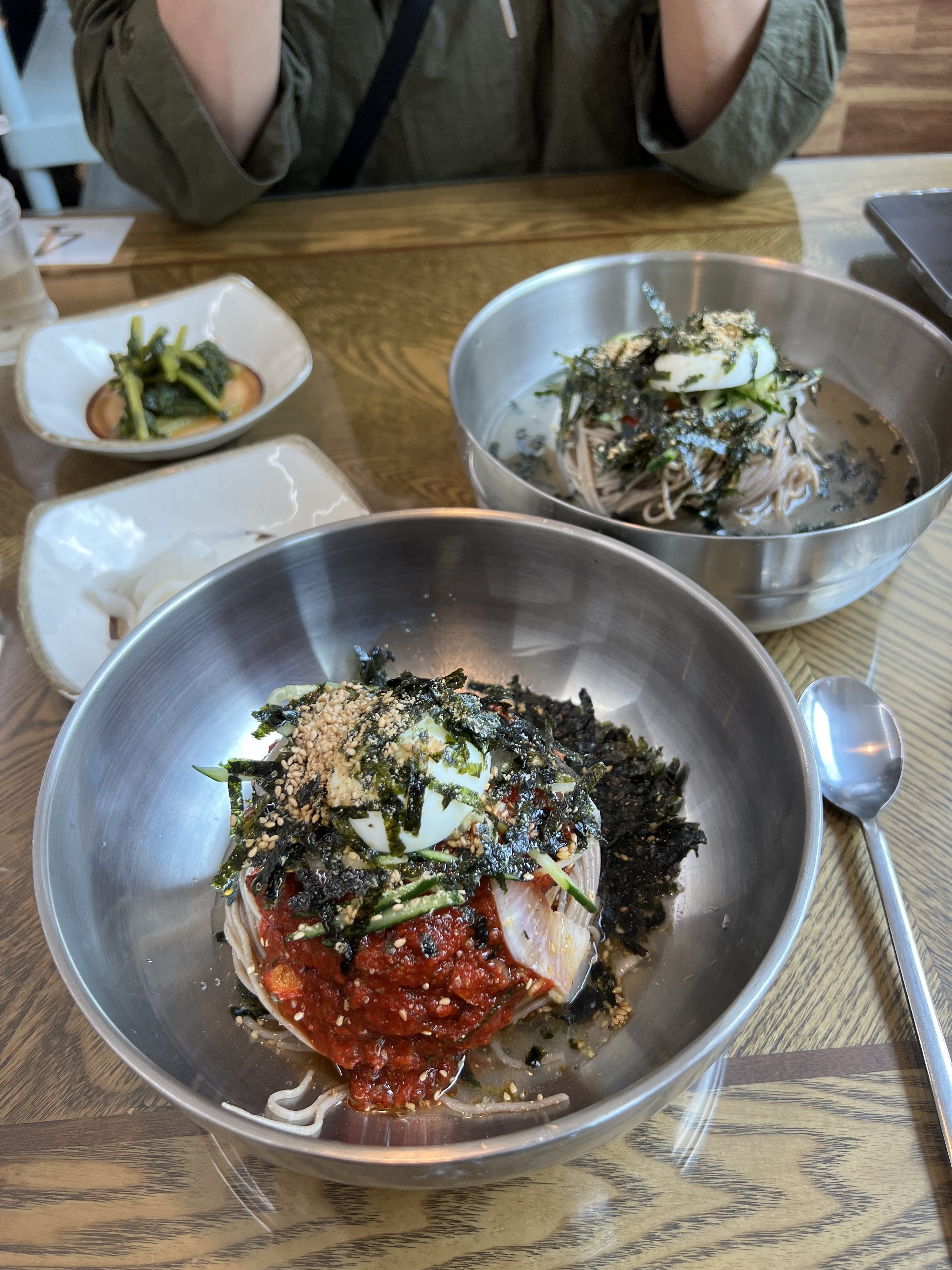
Naengmyeon (냉면, literally "cold noodles") is one of Korea's most iconic dishes — thin, chewy buckwheat noodles served in ice-cold beef broth or tossed in spicy gochujang sauce.
Originally a winter dish from Pyongyang and Hamhung in what is now North Korea, it became a year-round favourite in the South.
The dish even made global headlines when it was served at the 2018 Inter-Korean Summit between Moon Jae-in and Kim Jong-un.
The Two Main Styles
- Mul Naengmyeon (물냉면) — Pyongyang Style
Thin buckwheat noodles in icy dongchimi (radish water kimchi) or beef broth. Topped with sliced beef, pickled radish, cucumber, a boiled egg half, and sometimes Asian pear. The broth should be tangy, slightly sweet, and cold enough to have ice crystals. This is the refined, subtle version - Bibim Naengmyeon (비빔냉면) — Hamhung Style
Thinner, chewier noodles (made from potato or sweet potato starch) tossed in a fiery gochujang-based sauce with raw fish (홍어 or 가오리). No broth — just intense spice and chewy texture. A small cup of broth is served on the side to sip between bites
How to Eat
When your bowl arrives, cut the noodles with the scissors provided (or ask the server to cut — "면 잘라주세요").
Korean noodles are intentionally long (symbolising longevity), but naengmyeon is nearly impossible to eat without cutting.
Add mustard (겨자) and vinegar (식초) from the table to brighten the broth. Mix bibim naengmyeon thoroughly from the bottom.
Cultural Significance
Naengmyeon carries deep cultural weight. In North Korea, it was traditionally eaten in winter — the logic being that cold noodles pair with ondol (heated floor) warmth.
After the Korean War, North Korean refugees brought their recipes south, establishing legendary restaurants in Seoul.
The Pyongyang naengmyeon served at the 2018 Panmunjom Summit came from Okryugwan, Pyongyang's most famous restaurant, and became a symbol of inter-Korean peace.
Famous Spots
- Woo Lae Oak (우래옥) — operating since 1946, known as the original Pyongyang naengmyeon in Seoul
- Pildong Myeonok (필동면옥) — beloved by locals for its clean, deep beef broth
- Eulji Myeonok (을지면옥) — Euljiro institution, perfect dongchimi broth
When to Eat
Peak season is summer (June–August), but Koreans eat it year-round. After a heavy Korean BBQ meal, ordering naengmyeon as a finisher is a beloved tradition — the cold noodles cleanse the palate perfectly.
Price Range
A bowl of naengmyeon typically costs ₩10,000–14,000. Famous establishments charge ₩12,000–16,000. It's always one bowl per person — sharing is not the done thing.
The Summit Bowl: Why Naengmyeon Matters Beyond the Table
When North Korean leader Kim Jong-un crossed the border at Panmunjom in April 2018, the dinner table told its own story. The naengmyeon served that night came from Okryugwan — Pyongyang's most celebrated restaurant, established in 1960. South Korean President Moon Jae-in remarked that he hoped the dish would help ease the long separation between North and South.
For many Koreans, naengmyeon is inseparable from the story of division. The refugees who brought their recipes south after the Korean War kept something of home alive in a bowl of cold noodles. Today's legendary Seoul naengmyeon restaurants — Woo Lae Oak, Pildong Myeonok — are direct descendants of that migration. Eating naengmyeon in Seoul is, in a quiet way, participating in that history.
The After-BBQ Ritual
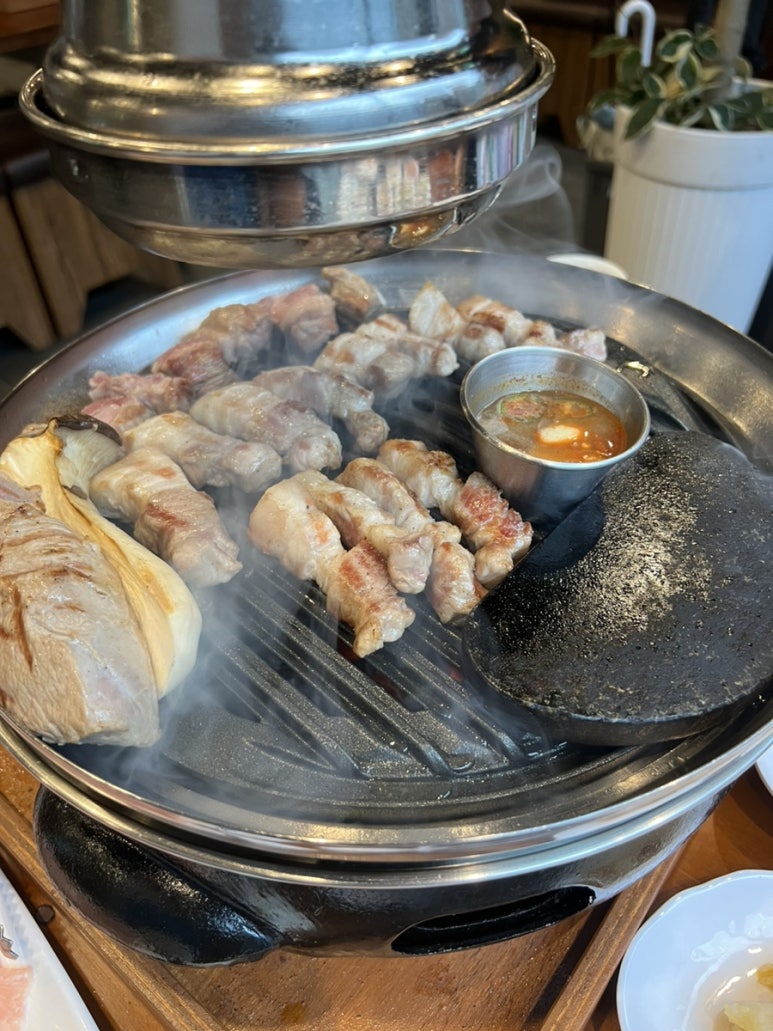
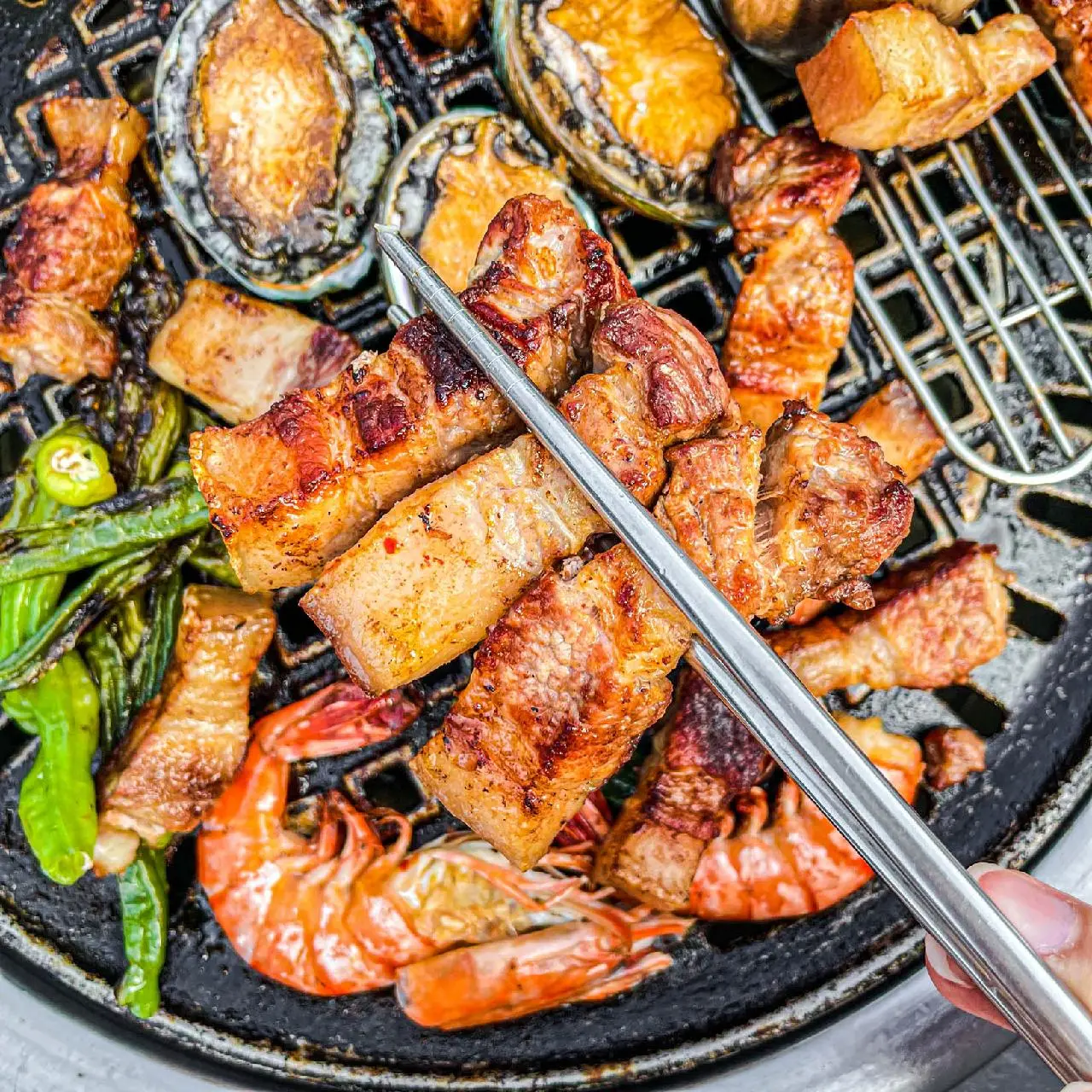
One of the most distinctly Korean dining experiences is the sequence: Korean BBQ followed by naengmyeon. After an hour of grilling samgyeopsal or galbi, the table is heavy with smoke, sesame oil, and soju. Then a cold bowl of mul naengmyeon arrives — and the transformation is immediate. The icy broth cuts through the richness, the buckwheat noodles reset the palate, and suddenly you feel capable of eating again.
This combination is so ingrained in Korean dining culture that many Korean BBQ restaurants have naengmyeon permanently on the menu as the expected finale. If you're planning a BBQ dinner, hold space for it.
Understanding the Noodle Texture
Naengmyeon noodles are unlike anything in most Western cuisines. Buckwheat gives mul naengmyeon its slightly gritty, earthy chew — denser than ramen, more elastic than pasta. Hamhung-style noodles made from sweet potato starch are even chewier, with a glossy translucence that makes them look almost glass-like.
First-time eaters sometimes find the texture unexpected. The noodles resist cutting between your teeth in a satisfying way — each bite requires a small deliberate effort. This is considered a quality marker, not a flaw. A naengmyeon noodle that breaks apart too easily is considered inferior.
Practical Tips for Ordering
- At most naengmyeon restaurants, the menu is essentially two items: mul (broth) or bibim (spicy). Point, or say the name.
- Ask the server to cut the noodles if scissors aren't provided: "면 잘라주세요 (myeon jallajuseyo)."
- Add vinegar and mustard gradually — the broth transforms noticeably with each addition.
- Mul naengmyeon broth should arrive near-freezing, sometimes with actual ice chips. If it's not cold, it's not right.
- Famous restaurants often sell out by early afternoon — arrive before noon for the best experience.