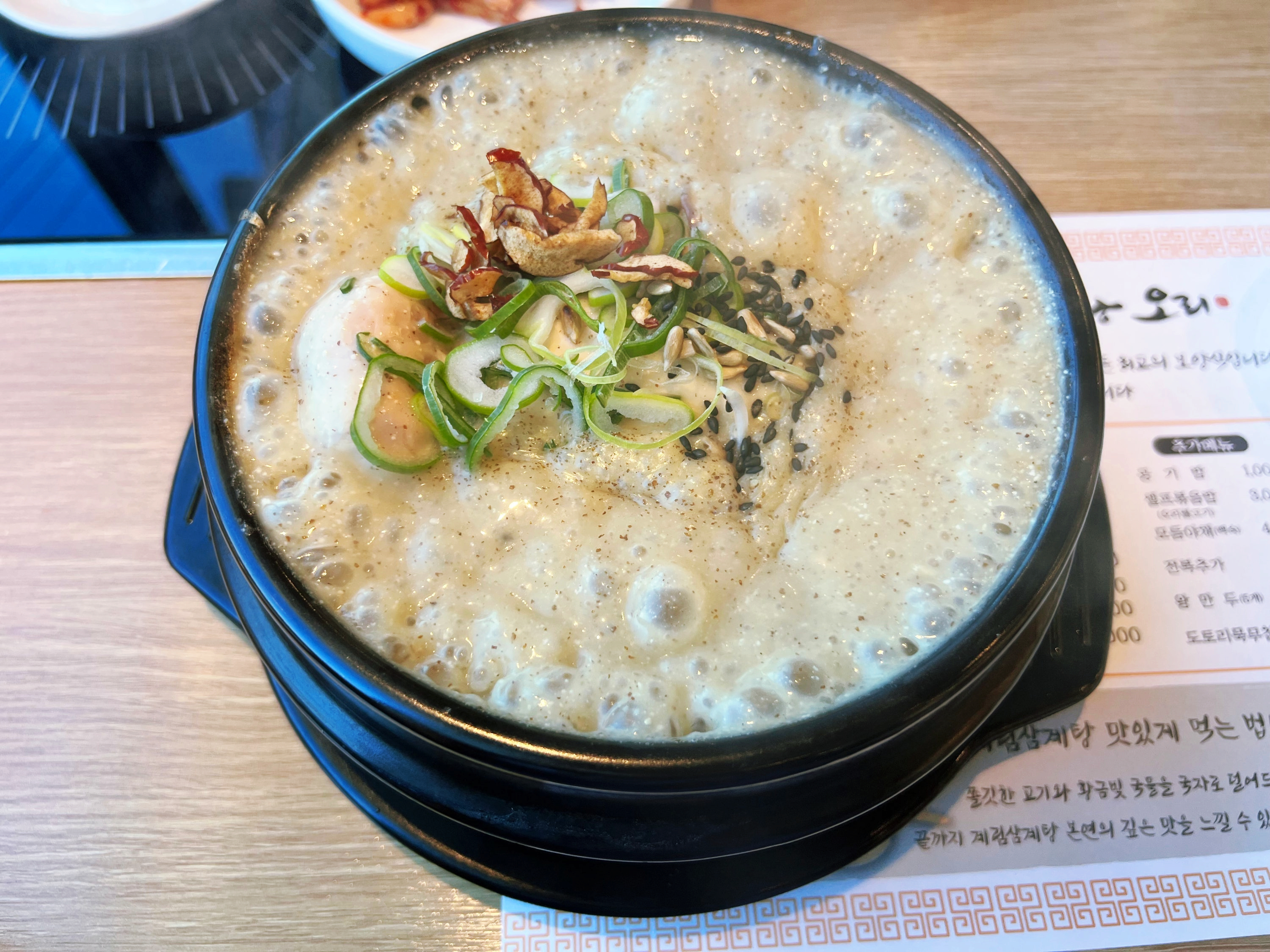
Samgyetang (삼계탕) is Korea's answer to chicken soup for the soul — literally. A whole young chicken (cornish hen size) is stuffed with glutinous rice, fresh ginseng root, jujube dates, and garlic, then slow-simmered until the broth turns milky and golden.
Koreans believe in "이열치열" (fight heat with heat), so this piping-hot soup is most popular during the three hottest days of summer (복날, boknal).
History
Ginseng chicken soup has roots in traditional Korean medicine (한의학). The combination of ginseng for energy, jujube for immunity, and garlic for circulation makes it a medicinal food (약식동원).
The modern restaurant version became popular in the 1960s, and famous shops like Tosokchon near Gyeongbokgung have been serving it for decades.
What's Inside
- Chicken (영계) — a small whole chicken (400–500g), tender enough to pull apart with chopsticks
- Glutinous rice (찹쌀) — stuffed inside the chicken, absorbs all the flavour
- Fresh ginseng (수삼) — the star ingredient. Earthy, slightly bitter, deeply aromatic
- Jujube dates (대추) — adds sweetness and is believed to boost energy
- Garlic (마늘) — whole cloves that melt into the broth
- Ginkgo nuts & chestnuts — premium versions add these for extra richness
How to Eat
Each person gets their own stone pot. The chicken is so tender it falls apart — pull the meat with chopsticks and dip in the provided salt and pepper mix.
Eat the rice from inside the chicken with the broth. Add salt to taste — the soup is intentionally under-seasoned so you can adjust.
Many restaurants offer ginseng wine (인삼주) as a pairing.
Variations
- Classic Samgyetang (삼계탕) — standard version. ₩15,000–18,000
- Ogolgye Samgyetang (오골계삼계탕) — made with black-bone silkie chicken. ₩20,000–25,000
- Abalone Samgyetang (전복삼계탕) — with whole abalone added. ₩22,000–30,000
- Nurungji Samgyetang (누룽지삼계탕) — served with crispy scorched rice
When to Eat
Koreans queue for hours on Chobok (초복), Jungbok (중복), and Malbok (말복) — the three hottest days based on the lunar calendar (usually July–August).
But samgyetang is excellent year-round, especially when you need a health boost or are recovering from a night out.
Price Range
Standard samgyetang costs ₩15,000–18,000. Premium versions with black chicken or abalone run ₩20,000–35,000. Most famous restaurants have just 2–3 menu items, keeping it simple.
The Boknal Ritual: Korea's Most Sweltering Tradition
To understand samgyetang properly, you need to understand boknal. These three days — Chobok, Jungbok, and Malbok — fall during the hottest stretch of the Korean summer, spaced ten days apart. The logic behind eating hot soup on the hottest days of the year sounds counterintuitive to most visitors, but Koreans swear by it: sweating out the heat replenishes your energy and restores balance.
On boknal, even casual samgyetang restaurants see lines stretching down the block by 11am. The atmosphere is part of the experience — strangers bonding over steaming pots while the summer heat radiates off the pavement outside. If you happen to be in Seoul during July or August, going through this ritual is one of the most genuinely Korean experiences you can have.
Where to Eat Samgyetang in Seoul
- Tosokchon (토속촌) — the most famous samgyetang restaurant in Seoul, operating for over 30 years near Gyeongbokgung. Long waits are normal; arrive before 11am or after 2pm. ₩17,000
- Gyeongbokgung area: Multiple traditional restaurants within walking distance of the palace make this the natural samgyetang neighbourhood.
- Insadong: Several restaurants here serve samgyetang in a calmer, less queue-heavy environment.
- Convenience stores (편의점): CU and GS25 sell instant samgyetang cups — not the real thing, but a useful comparison.
Health Claims and What Koreans Actually Believe
Korean traditional medicine (한의학, hanbang) classifies ginseng as a warming, energising ingredient that strengthens the body's vital force (기, gi). Jujube dates support blood circulation and calm the mind. Garlic builds immunity. Together, Koreans regard samgyetang not just as a meal but as a tonic — the kind of thing you eat when you're tired, sick, or facing a gruelling week ahead.
Whether or not the medicinal claims hold up to modern scrutiny, the practical result is undeniable: the broth is deeply nourishing, the protein is substantial, and finishing a bowl leaves most people feeling genuinely restored. That's reason enough.
Practical Tips
- The pot arrives extremely hot — let it settle for two minutes before eating.
- Season gradually with the salt provided; the broth tastes flat at first but builds as you add seasoning.
- Chew the ginseng root if you want the full bitter-earthy experience, or leave it in the broth.
- The rice inside the chicken absorbs the broth — scoop it out with your spoon and eat it like porridge.
- Ginseng wine pairs beautifully, but even a cold barley tea works if you prefer non-alcoholic.