Places to Visit
Seoul's oldest hanok neighborhood transformed into a trendy district with retro cafes, restaurants, and boutiques. A perfect blend of old and new Korea.
From Your Hotel Area
→ Ikseon-dong Hanok Alley익선동 한옥골목
→ Insadong인사동
How to Use This Tour Guide
This guide covers three destinations in central Jongno-gu with a strong food thread running through all of them. Insadong is the traditional craft and street food district in the morning; Jongmyo is the UNESCO-listed royal shrine in the early afternoon (guided tour only); Ikseon-dong is the hanok restaurant and food lane destination for the late afternoon and evening. The three stops connect on foot or by one short subway ride.
Start Course A by 10:00 to allow time for Insadong and the Michelin Bib Gourmand lunch before the 14:00 English-language guided tour at Jongmyo (Jongmyo can only be entered with a guide). Plan to arrive at Ikseon-dong around 15:30–16:00 for the afternoon food tour while the lanes are still quiet, before the evening dinner crowd builds after 18:00.
Course A: Insadong — Traditional Craft Street & Street Food
The morning course is anchored in Insadong, Seoul's most intact traditional arts and food street. The pedestrian-only main road and the spiral Ssamziegil mall are best explored slowly — stop for street food along the way and browse the hanji paper shops and celadon galleries before the lunch stop in the back alleys.
📍 Stop 1: Insadong & Ssamziegil (인사동 & 쌈지길)
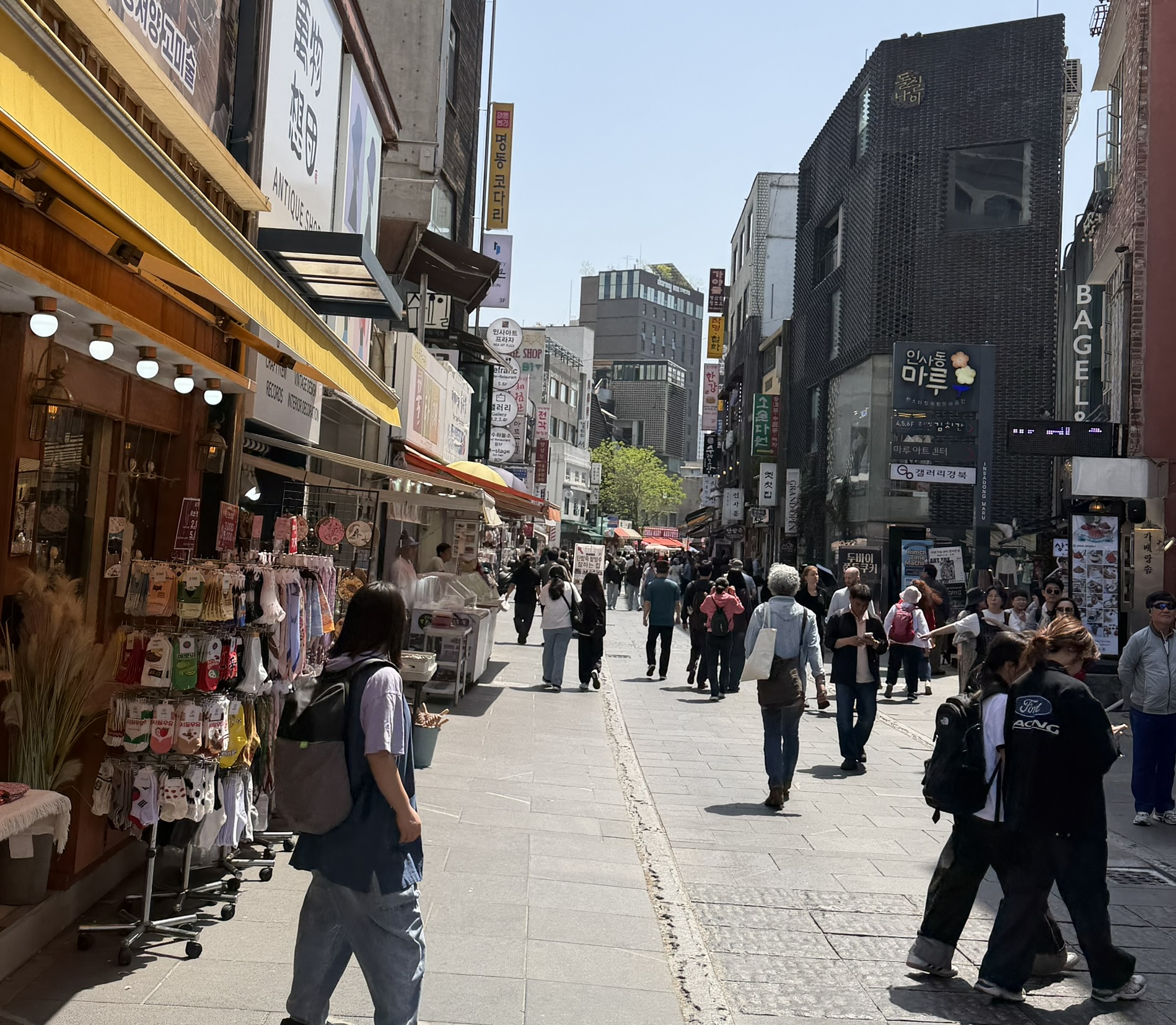
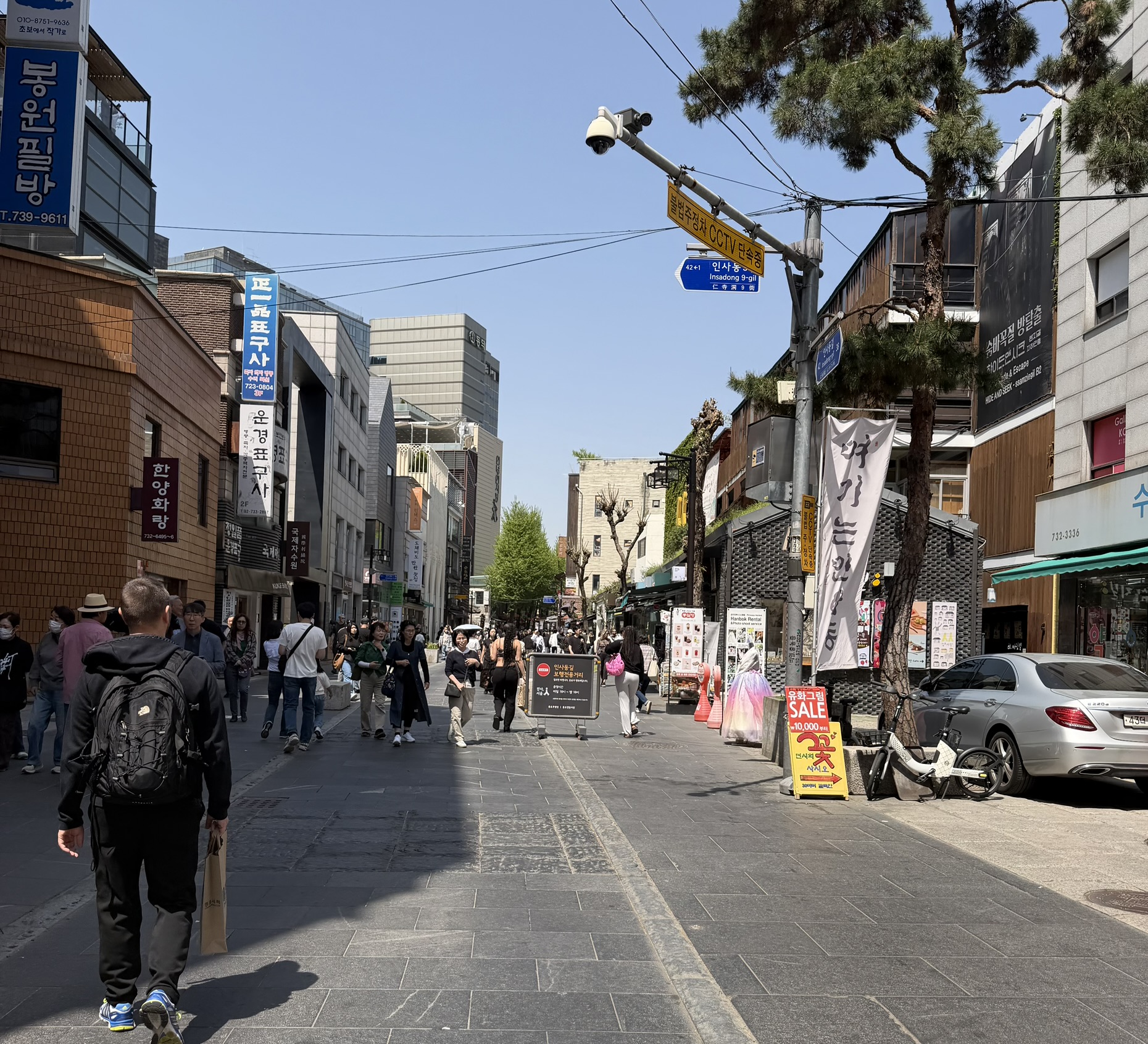
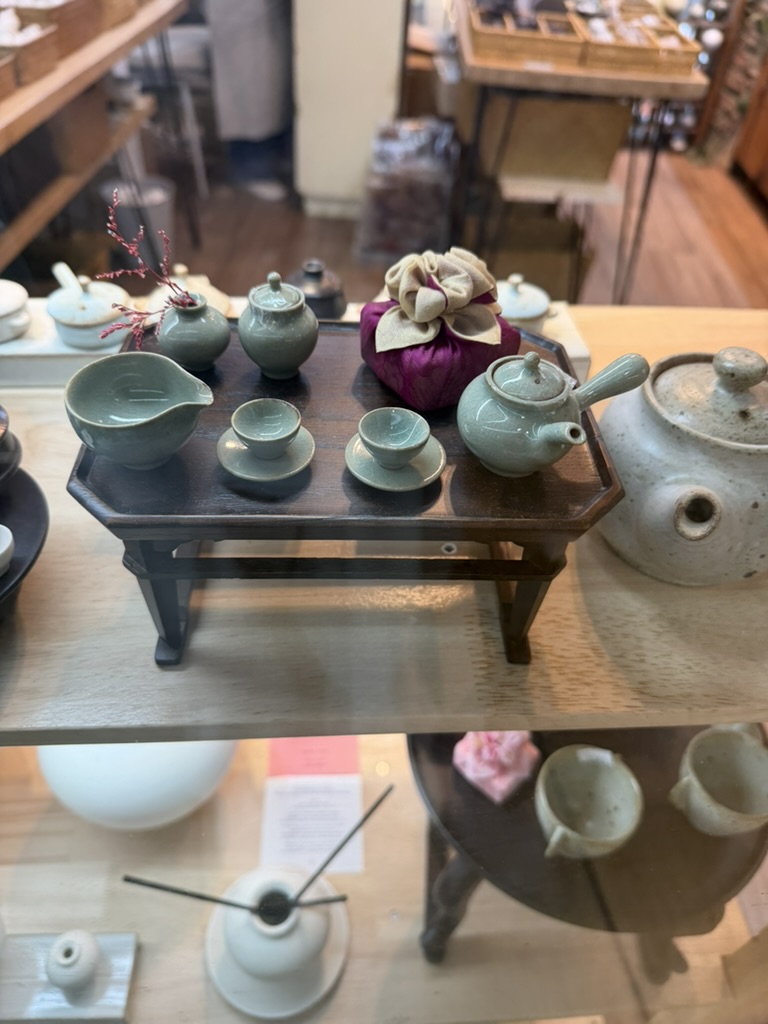
Known for: Seoul's traditional arts and craft district; the best place in the city for Korean souvenirs, handmade goods, and street food on a pedestrian-only street
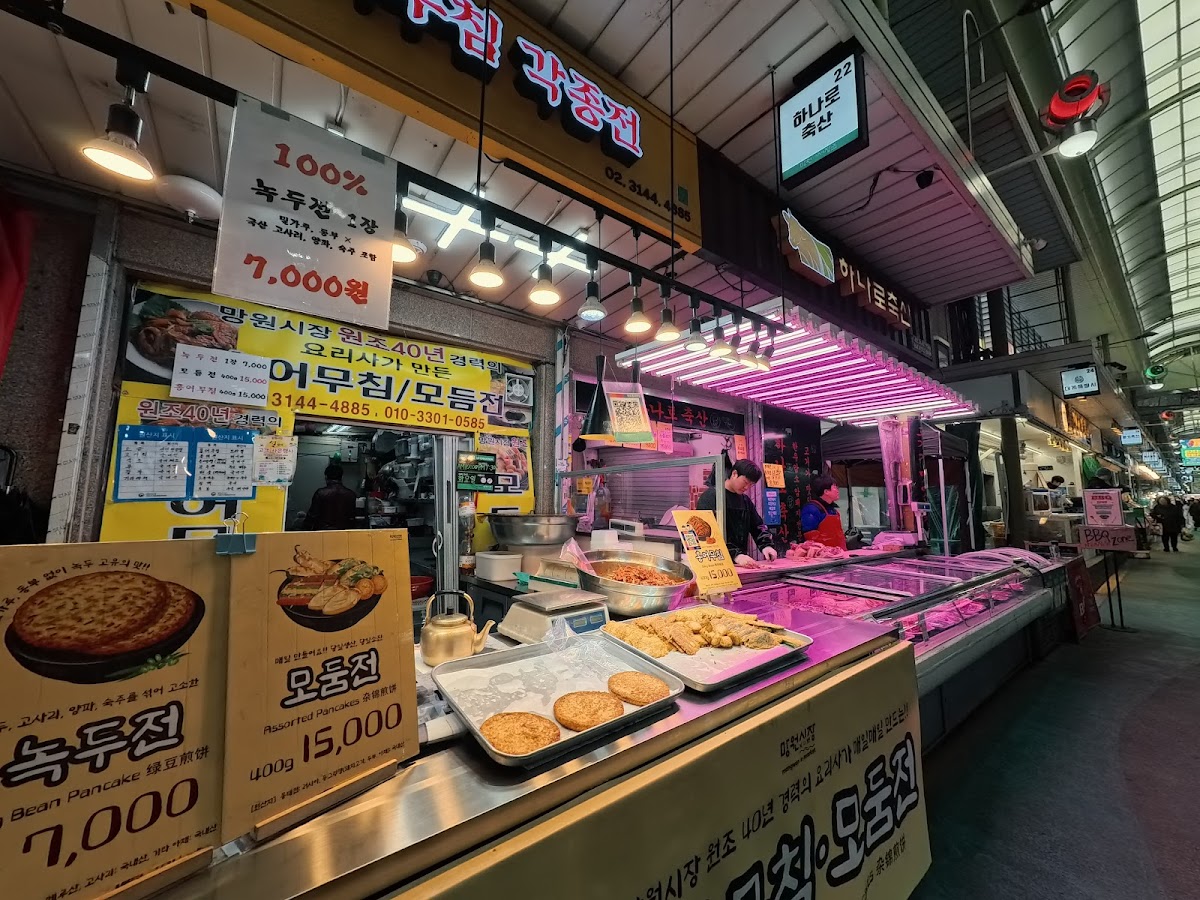
Insadong (Insadong, 인사동) is a 700-metre pedestrian street running south from Anguk toward Jongno, lined with traditional craft shops, hanji paper boutiques, celadon pottery galleries, and tea houses. The most architecturally interesting stop is Ssamziegil (쌈지길), a spiral open-air mall wrapped around a central courtyard where indie designers and artisan sellers rent small stalls. For street food on the main road, look for hotteok stalls (sweet stuffed pancake, ₩2,000) and cloud-shaped gurum tteok (구름떡, rice cake, ₩3,000–5,000) — both are Insadong specialties. Hanji (Korean handmade paper) products and celadon pottery make excellent lightweight souvenirs.
📸 Photo Spot: Ssamziegil courtyard — shoot upward along the spiral ramp with the open sky above. The hanging lanterns in the atrium are best photographed from ground level looking up.
⏱ Suggested Time: 1–1.5 hours
Getting There:
- From Myeongdong: Line 4 → Chungmuro → transfer Line 3 → Anguk (~12 min). Exit 6, walk 3 min to Insadong-gil
- From Gangnam: Line 3 direct → Anguk (~24 min). Exit 6, walk 3 min to Insadong-gil
- From Hongdae: Line 2 → Euljiro 3-ga → transfer Line 3 → Anguk (~25 min). Exit 6, walk 3 min to Insadong-gil
🚶 Next Stop: Walk 2 min south along Insadong-gil → turn into Insadong 10-gil for lunch →
🍽 Lunch — Michelin Bib Gourmand (12:00–13:00)
Lunch is at Gaesong Mandu Gung, a Michelin Bib Gourmand restaurant in the Insadong back alleys — no transit needed from Stop 1. After lunch, walk or take Line 1 one stop to Jongno 3-ga in time for the 14:00 English guided tour at Jongmyo.
📍 Lunch: 개성만두 궁 (Gaesong Mandu Gung) — Michelin Bib Gourmand
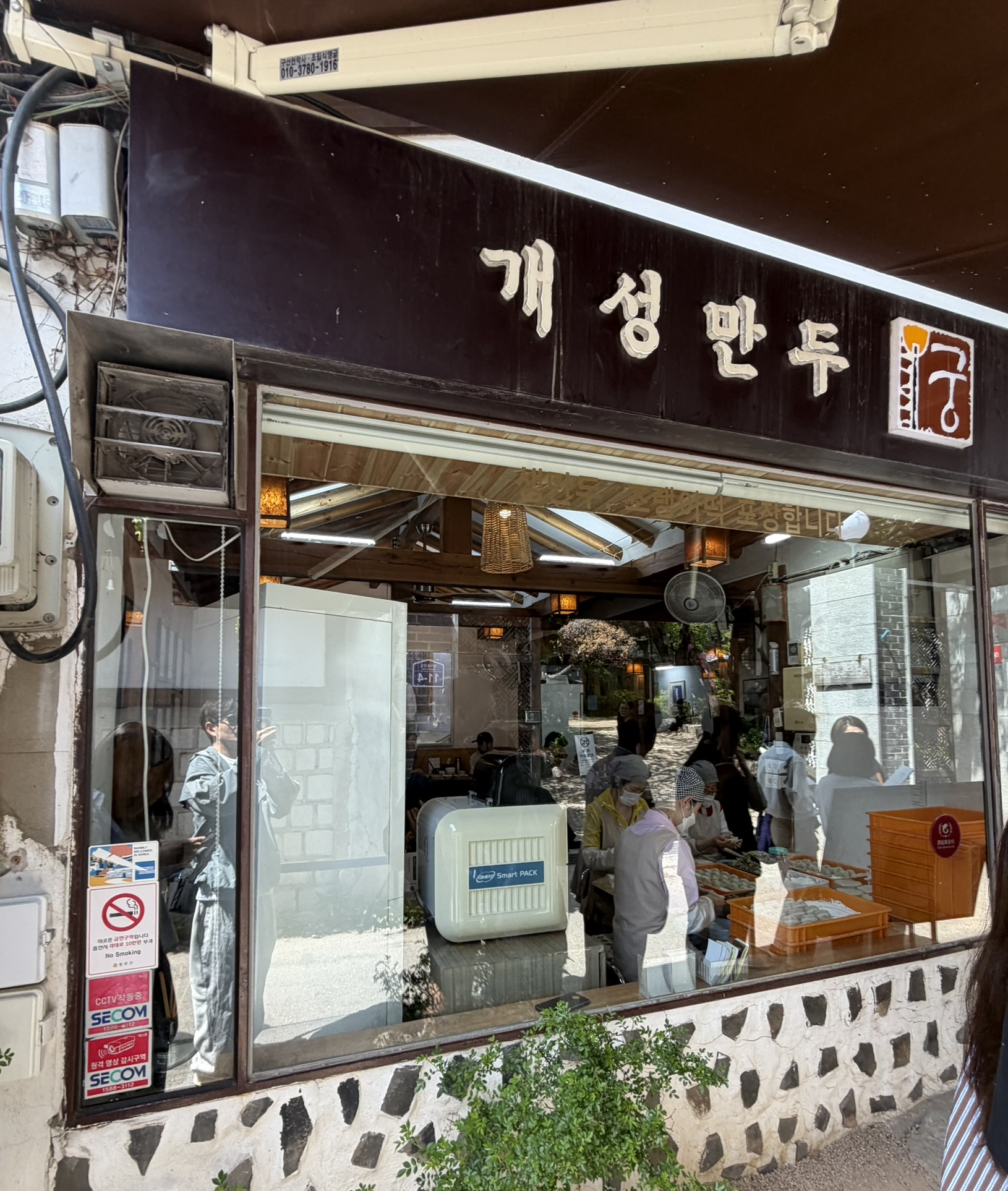
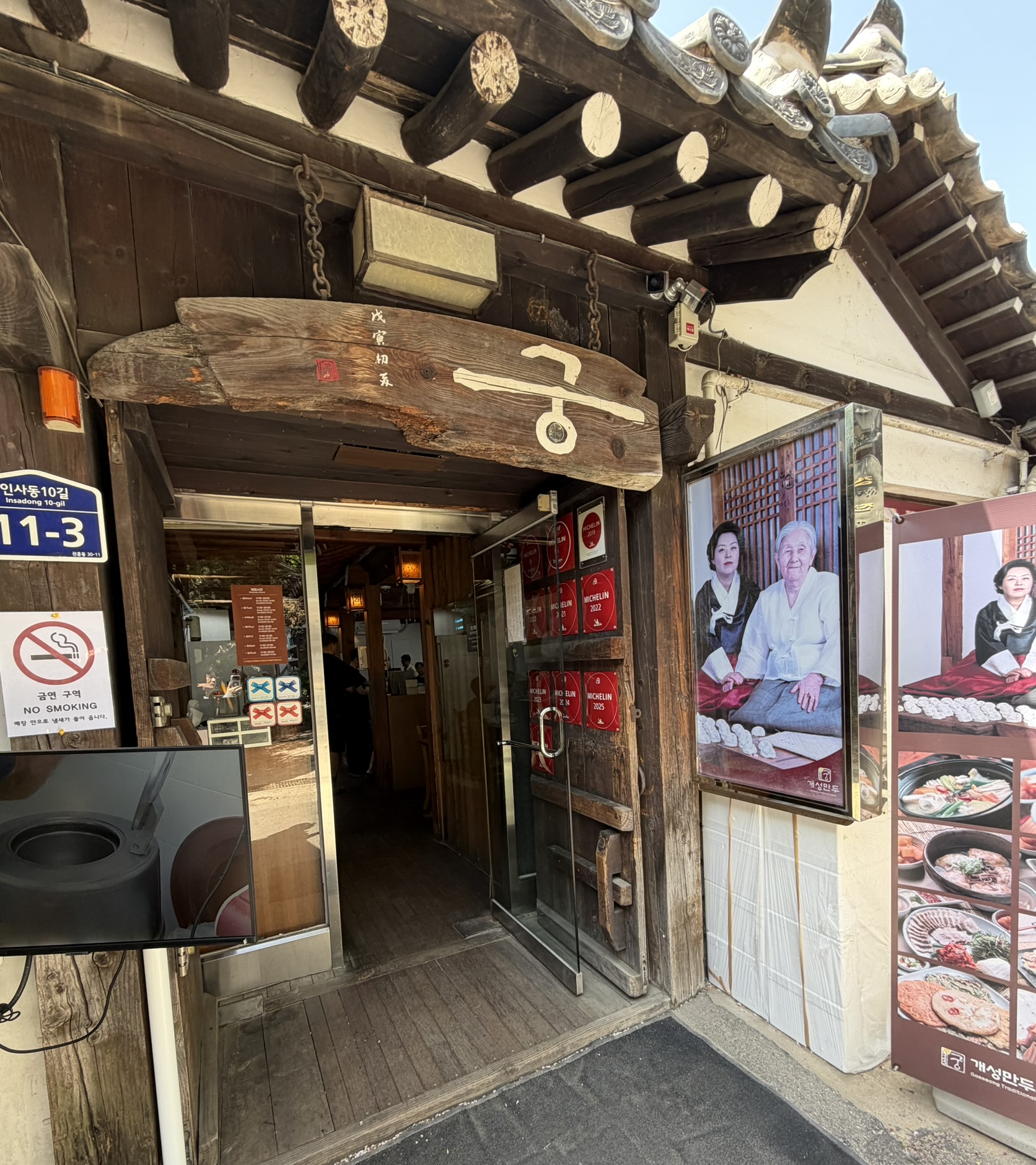
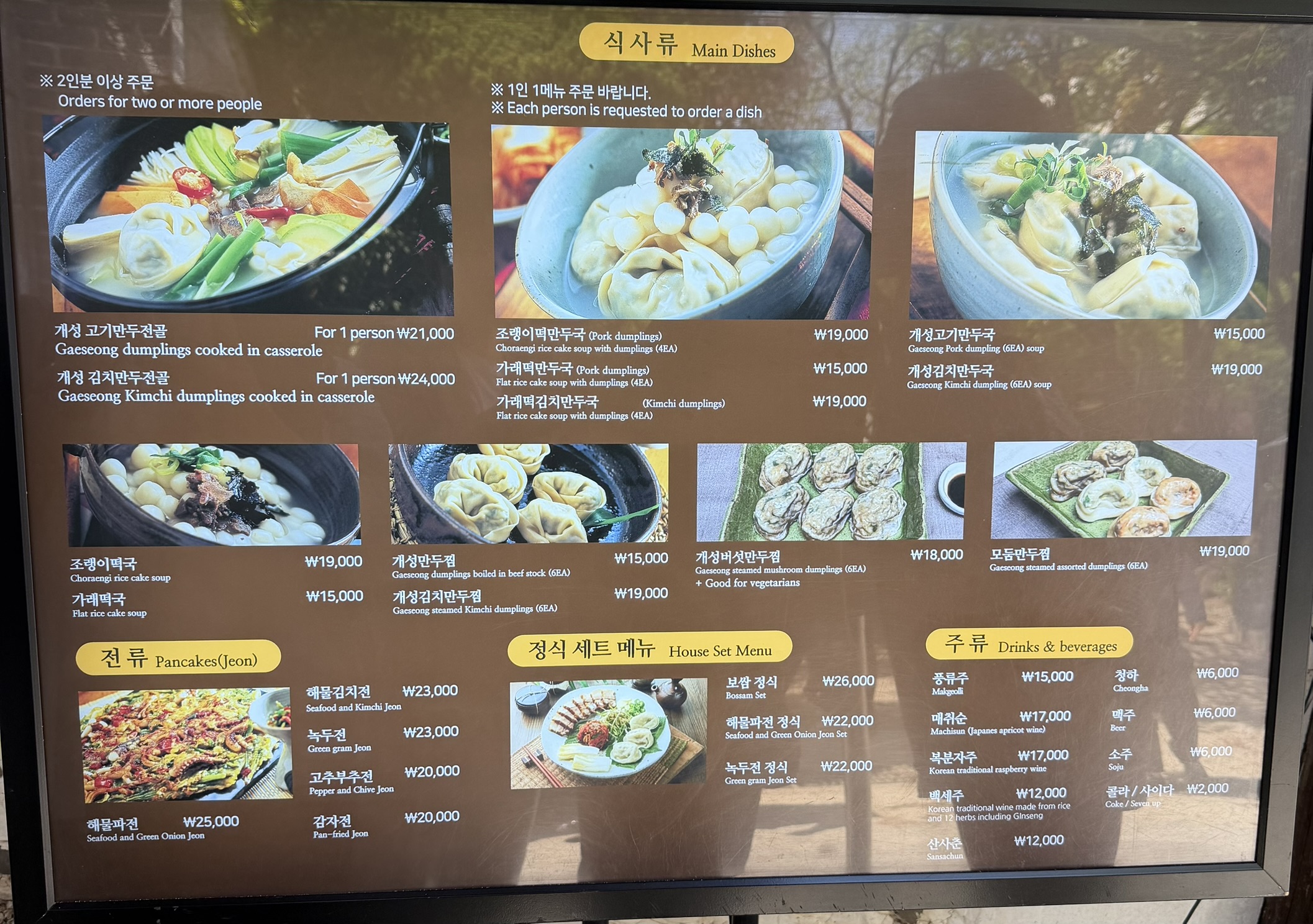
Featured in: Michelin Guide Seoul (Bib Gourmand); recognized for traditional Gaesong-style mandu and Korean home cooking
Gaesong Mandu Gung (개성만두 궁) serves the hand-folded dumplings of Gaesong — a city now in North Korea, historically famous for its mandu tradition. The restaurant has earned a Michelin Bib Gourmand distinction for exceptional value: plump, thin-skinned dumplings in clear broth, alongside bibimbap and doenjang jjigae. Arrive at 12:00 sharp — no reservations taken and it fills quickly. Budget ₩10,000–15,000 per person.
⏱ Suggested Time: 1 hour (including wait)
🚶 Next Stop: Walk south 15 min to Jongmyo, or Line 1 one stop (Jonggak → Jongno 3-ga, ~3 min) then walk 5 min north →
Half-Day Option — End the Tour After Lunch
Insadong, Ssamziegil, and lunch at 개성만두 궁 is a complete and satisfying morning. From Anguk station you can return directly:
- To Myeongdong: Line 3 → Chungmuro → transfer Line 4 → Myeongdong (~12 min)
- To Gangnam: Line 3 direct → Gangnam (~24 min)
- To Hongdae: Line 3 → Euljiro 3-ga → transfer Line 2 → Hongdae Entrance (~25 min)
Course B: Jongmyo & Ikseon-dong — Royal Shrine & Hanok Food Alleys
The afternoon course moves from the most serene space in Jongno to the most lively one. Jongmyo's pine-forested shrine grounds are quiet and meditative; Ikseon-dong's narrow hanok lanes are packed with small restaurants, tteokbokki stalls, and Korean fusion spots that are best experienced mid-afternoon before the dinner crowds arrive. The contrast between the two makes the afternoon feel longer than it is.
📍 Stop 2: Jongmyo Shrine (종묘)
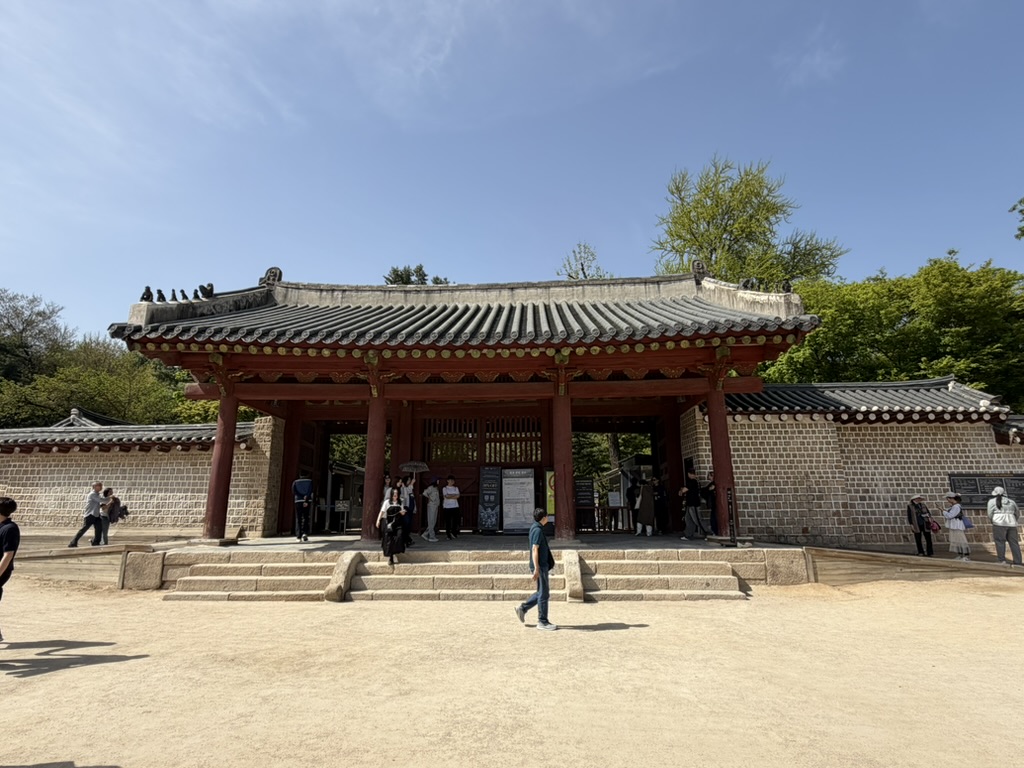
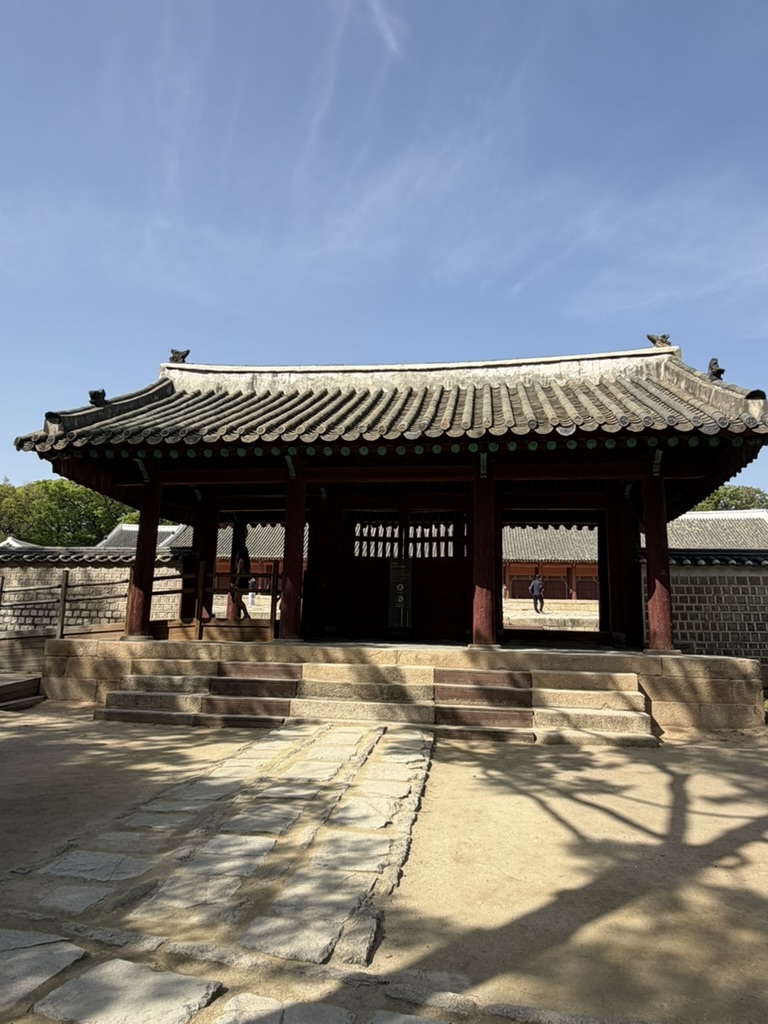
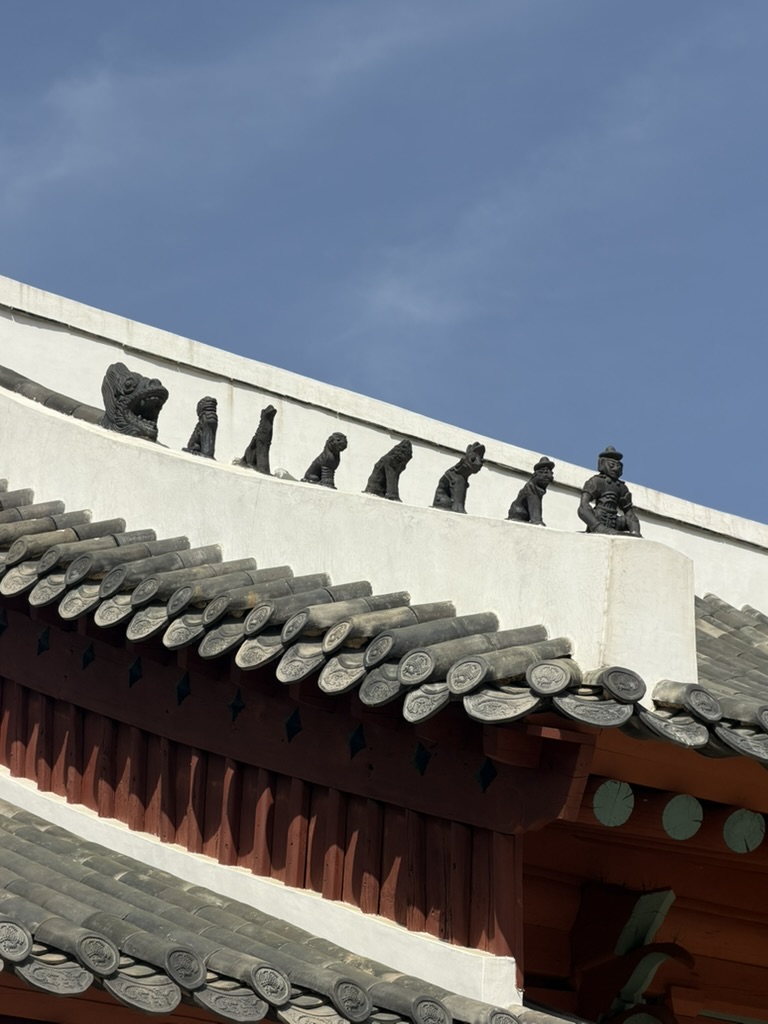
Known for: The royal ancestral shrine of the Joseon Dynasty; UNESCO World Heritage Site since 1995; the Jongmyo Jerye — the world's oldest continuously performed Confucian royal ceremony
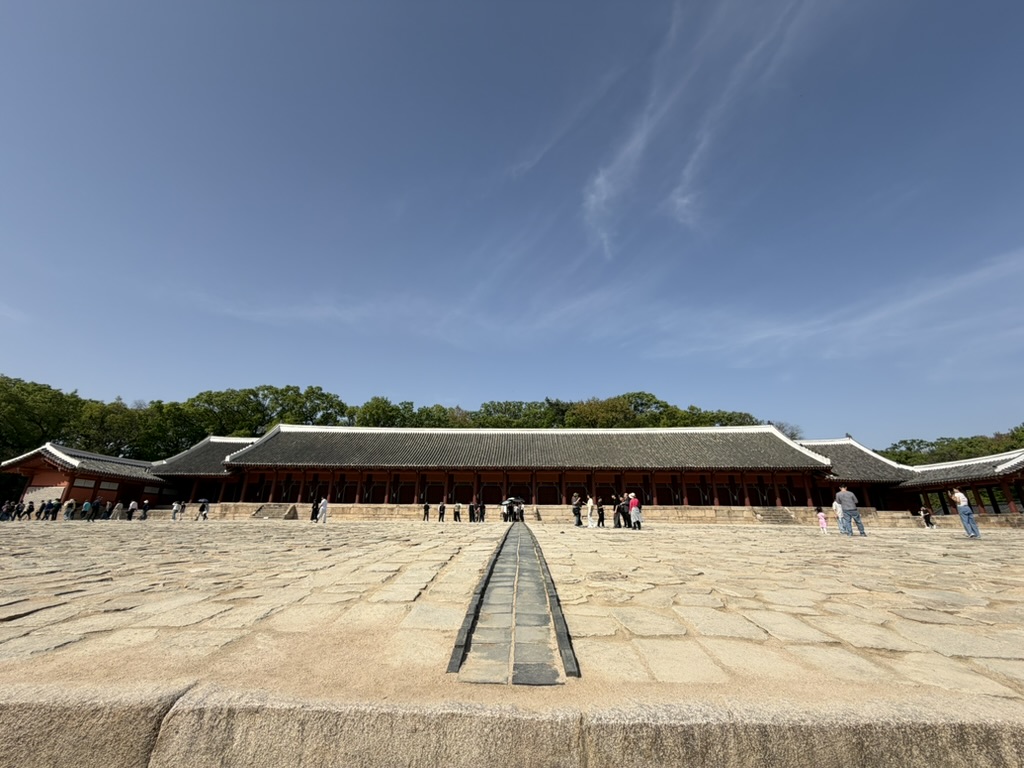
Jongmyo (Jongmyo, 종묘) is the ritual shrine where the spirit tablets of all Joseon Dynasty kings and queens are enshrined and venerated. Built in 1395 alongside Gyeongbokgung, the main hall Jeongjeon is the longest single wooden structure in Korea at 109 metres. The complex is a masterpiece of Confucian minimalism — no ornamentation, no colour, no decorative excess. The surrounding pine forest is one of the most serene spaces in central Seoul. Entry is by guided tour only — you cannot walk the grounds independently. English tours depart at 10:00 and 14:00 (approximately 50 minutes). Arrive 10 minutes early; tours fill up. The Jongmyo Jerye ceremony is held on the first Sunday of May and is open to the public.
📸 Photo Spot: The main approach to Jeongjeon hall along the three-path causeway — the central path (sinodo) was reserved for spirits, the right for the king. Shoot from the south end looking north for the full 109-metre length of the hall.
⏱ Suggested Time: 1 hour (guided tour)
Admission: ₩1,000 adults. Guided tour included. Closed Monday.
Getting There:
- From Myeongdong: Line 4 → Chungmuro → transfer Line 3 → Jongno 3-ga (~12 min). Exit 11, walk 5 min north
- From Gangnam: Line 3 direct → Jongno 3-ga (~20 min). Exit 11, walk 5 min north
- From Hongdae: Line 2 → Euljiro 3-ga → transfer Line 3 → Jongno 3-ga (~20 min). Exit 11, walk 5 min north
🚶 Next Stop: Exit Jongmyo north gate → walk 5 min west to Ikseon-dong →
📍 Stop 3: Ikseon-dong Food Tour (익선동)
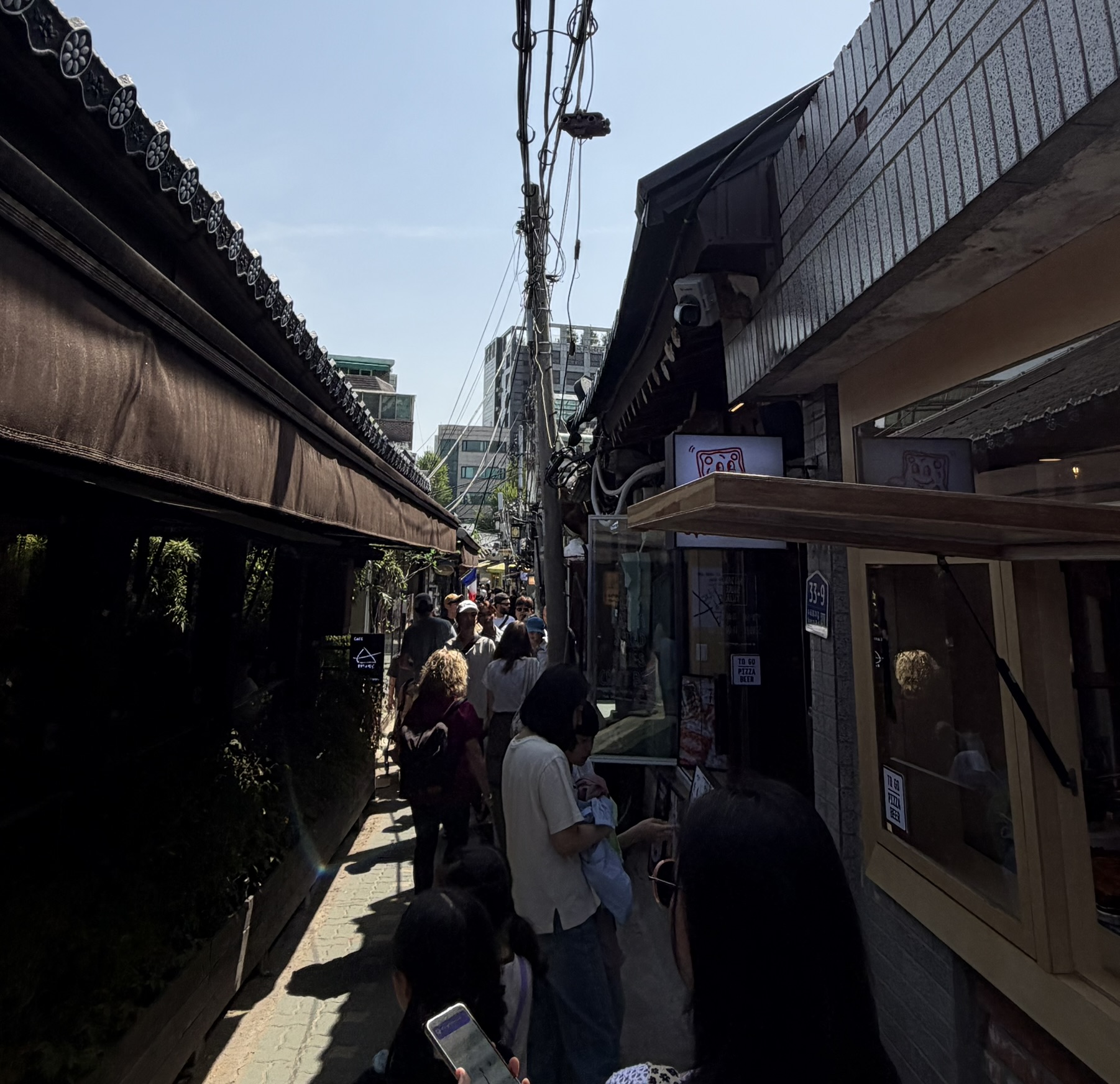
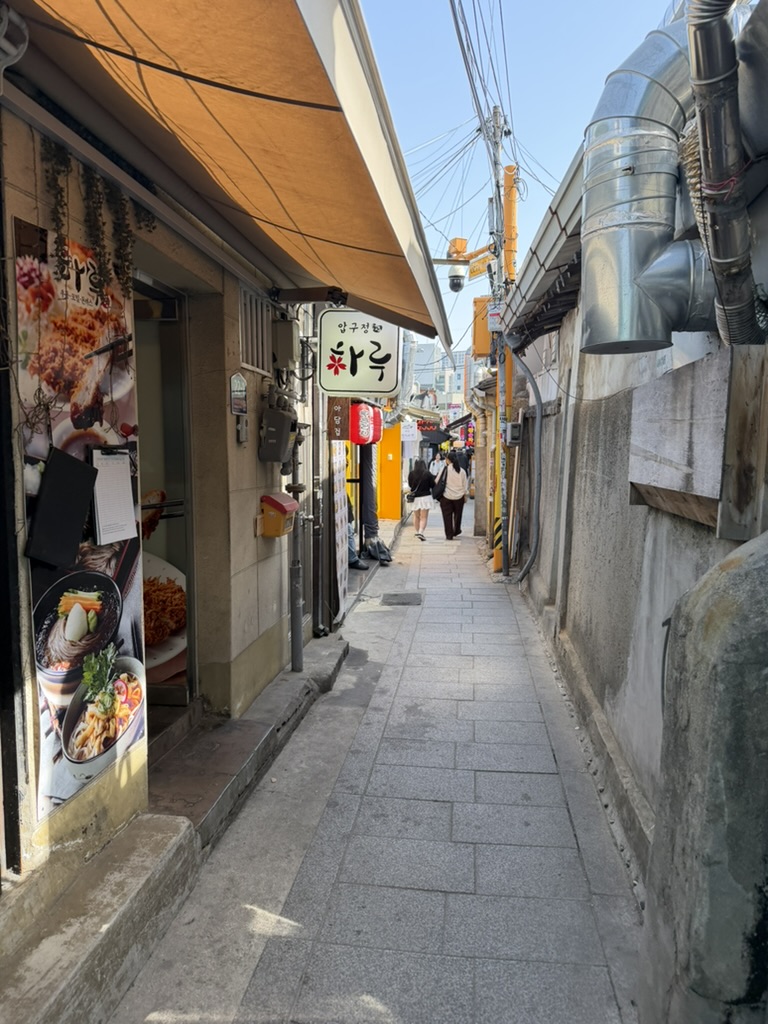
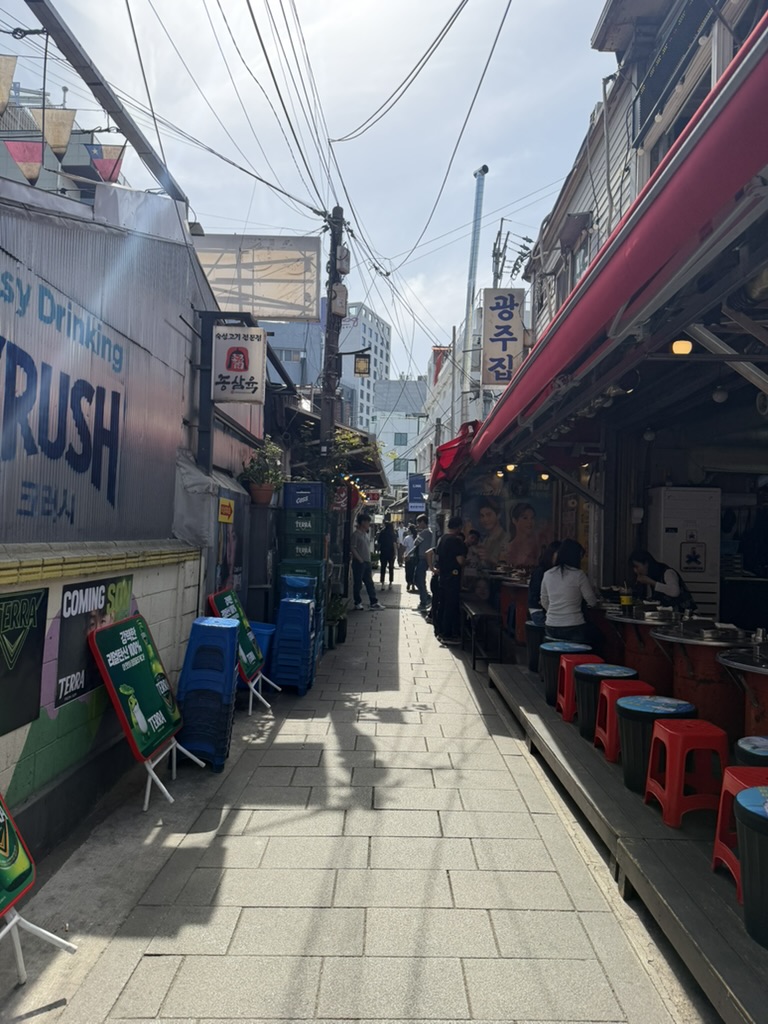
Known for: Jongno's most concentrated hanok dining district; 1920–30s hanok homes converted into small Korean restaurants, tteokbokki stalls, traditional rice wine bars, and Korean fusion spots
Ikseon-dong (익선동) is a compact grid of narrow lanes where century-old hanok buildings house some of the most interesting small restaurants in Jongno. The food scene here is varied and affordable: tteokbokki (spicy rice cakes) and sundae (Korean blood sausage) at street-facing stalls, sit-down Korean fusion with makgeolli (rice wine) pairings inside the hanok rooms, and small dessert cafes for finishing. The afternoon (15:00–17:30) is the best time to visit for food — most restaurants are open, the lanes are walkable without crowds, and you can take your time choosing a spot before the dinner rush after 18:00 fills up the most popular places. Key food alleys: Ikseon-ro 21-gil and the branching lanes around it.
📸 Photo Spot: The central alley intersection at dusk (around 18:30) when both daylight and lantern light overlap. The narrow lane perspective with hanok rooflines and restaurant signage overhead is the defining Ikseon-dong shot.
⏱ Suggested Time: 1.5–2 hours
Getting There:
- From Myeongdong: Line 4 → Chungmuro → transfer Line 3 → Jongno 3-ga (~12 min). Exit 4, walk 3 min
- From Gangnam: Line 3 direct → Jongno 3-ga (~20 min). Exit 4, walk 3 min
- From Hongdae: Line 2 → Euljiro 3-ga → transfer Line 3 → Jongno 3-ga (~20 min). Exit 4, walk 3 min
🚶 End of Tour: Jongno 3-ga station (Lines 1, 3 & 5) connects to Myeongdong (Line 3 → Chungmuro → Line 4, ~12 min), Gangnam (Line 3, ~20 min), and Hongdae (Line 3 → Euljiro 3-ga → Line 2, ~20 min).
Tips for First-Time Visitors
- Jongmyo requires a guided tour — book the 14:00 English slot: You cannot enter Jongmyo independently. English tours depart at 10:00 and 14:00 daily (closed Monday). The 14:00 slot pairs naturally with a morning in Insadong and lunch at 개성만두 궁. Arrive 10 minutes early at Exit 11.
- Jongmyo is closed on Mondays: Replace Stop 2 with Changdeokgung Palace — 15 min walk north, also UNESCO-listed, also guided-tour only (₩3,000), English tours at 10:30 and 14:30.
- 개성만두 궁 fills up fast: Arrive at opening (11:30–12:00) to avoid queuing. No reservations taken. If full, the back alleys of Insadong have several good Korean set-meal alternatives.
- Ikseon-dong food tour is best 15:00–17:30: Most restaurants are open, lanes are walkable, and you can browse without competition for tables. After 18:00 the popular spots queue up quickly on weekends.
- T-money card covers all transit on this route: Lines 1, 3, and 4 are within Seoul Metro's standard fare zone. Each ride costs ₩1,400–1,600. See the full guide: How to Get Around Korea.