Knowaboutkorea
FoodPlacesEssentialsUsefulLocal ReviewsAbout
ENJA
Dobong-guDongdaemun-guDongjak-guEunpyeong-guGangbuk-guGangdong-guGangnam-guGangseo-guGeumcheon-guGuro-guGwanak-guGwangjin-guJongno-guJung-guJungnang-guMapo-guNowon-guSeocho-guSeodaemun-guSeongbuk-guSeongdong-guSongpa-guYangcheon-guYeongdeungpo-guYongsan-gu
MichelinHanwooBBQKoreanJapaneseCafeStreet FoodBuffetSteakHalalChickenSnacksChineseSeafood
🔥 TrendingEating Alone in Korea: The Complete Honbap Guide — Solo BBQ, Minimum Orders & Best SpotsK-Drama Filming Locations Tour: Seoul's Best Spots in One DayBukhansan Hiking Guide: Seoul's Mountain Escape (Trails, Tips & Getting There)HYBE INSIGHT: The Ultimate BTS & K-Pop MuseumMoney in Korea: Currency, Cards & Exchange Tips10 Must-Have Apps for Traveling in Korea
Knowaboutkorea
Essentials·Privacy Policy·Terms of Service·About·Contact
© 2026 Knowaboutkorea
  1. Halal Food in Korea: A Complete Guide for Muslim Visitors
Food Guide

Halal Food in Korea: A Complete Guide for Muslim Visitors

By Knowaboutkorea Team · March 1, 2025

Find halal restaurants in Seoul and across Korea. Itaewon halal street, certified options, and essential tips for Muslim travellers.

Halal Food in Korea: A Complete Guide for Muslim Visitors 1
Halal Food in Korea: A Complete Guide for Muslim Visitors 2
1 / 2
HalalItaewonMuslim FriendlyCertified HalalFirst Time Korea
Quick Facts

What You Need to Know

🌡️
Best Season
Year-round
All seasons
💰
Price Range
₩10,000–25,000
per person
📍
Origin
Seoul
Overview

What Is It?

Seoul has a thriving halal food scene, centred in Itaewon around the Seoul Central Mosque. Certified halal restaurants, Muslim-friendly cafes, and halal-marked convenience store products make visiting Korea comfortable for Muslim travellers.

Itaewon Halal Street

The block near Itaewon Station Exit 3, leading up to the Seoul Central Mosque, is lined with certified halal restaurants.

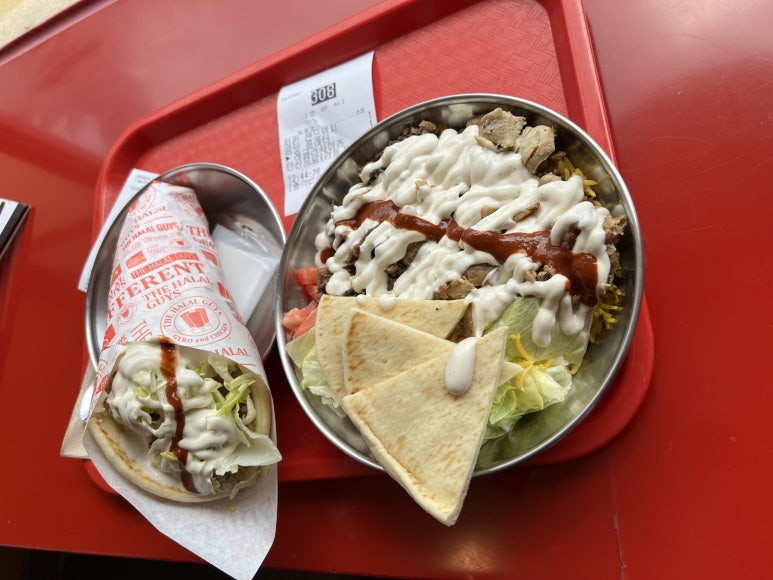
Cuisines range from Turkish kebabs and Pakistani curry to halal Korean BBQ and Middle Eastern shawarma.

Certified Halal Korean Food

  • Halal Galbi — beef short ribs from certified butchers
  • Halal Chimaek — fried chicken cooked in separate oil
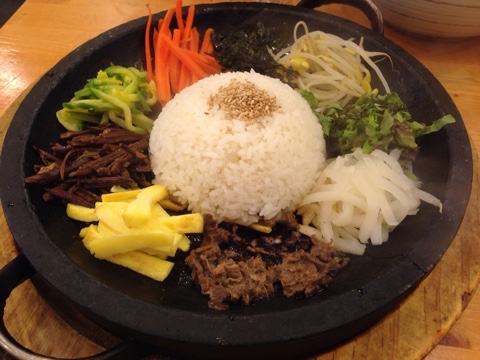
  • Bibimbap & Doenjang Jjigae — often vegetarian-friendly
  • Korean Ramyeon — Ottogi and Paldo make halal-certified instant noodles

Muslim-Friendly Tips

Look for the Korean Halal Association (KHA) sticker on restaurant windows. Apps like HalalTrip and Zabihah list certified spots. Many Korean dishes use pork-based stock — always ask when uncertain.

Prayer Facilities

Seoul Central Mosque in Itaewon is the largest mosque in Korea. Prayer rooms are also available at Incheon Airport and several shopping malls.

Understanding the Halal Spectrum in Korea

Not all halal-safe options in Korea carry the same level of assurance. Understanding the spectrum helps you make informed decisions before you order.

Level 1 — KHA-Certified Halal (할랄 인증)

The Korea Halal Authority (한국할랄인증원) certifies restaurants that have passed a full audit: halal-slaughtered meat sourced from certified suppliers, no alcohol in cooking, no cross-contamination with pork products, and separate cooking utensils. These restaurants display a KHA certificate on the wall, not just a sticker. This is the gold standard for Muslim travellers who require certified slaughter.

Level 2 — Muslim-Friendly (무슬림 프렌들리)

A looser designation, self-applied or applied by tourism bodies. The restaurant avoids pork and alcohol on the menu but may not have certified meat sourcing. Most Itaewon halal restaurants fall into this category. Suitable for Muslims who prioritise pork-free and alcohol-free over certified slaughter — a common approach among travellers following the Maliki school or who apply the rule of necessity when abroad.

Level 3 — Pork-Free (돼지고기 없음)

Many Korean restaurants — particularly those serving seafood, chicken, or vegetarian food — naturally avoid pork without any halal marketing. These are not certified and do not market themselves as Muslim-friendly, but can be suitable depending on your interpretation regarding non-certified chicken and seafood sourcing.

Practical Verification Questions

Save these on your phone in Korean to show staff at non-certified restaurants:

I gogi-ga halal injung-doen gon-gayo?
이 고기가 할랄 인증된 건가요?
Is this meat halal-certified?
Use at any restaurant to verify KHA certification.
Dwaeji-gogi-na ladeu-ga deureo-ga-na-yo?
돼지고기나 라드가 들어가나요?
Does this contain pork or lard?
Essential check at non-certified restaurants.
Alkohol-i jori-e sayong-doe-na-yo?
알코올이 조리에 사용되나요?
Is alcohol used in cooking?
Important for sauces, marinades, and fermented condiments.
Dwaeji-wa gateun girum-e jori-doe-na-yo?
돼지와 같은 기름에 조리되나요?
Is it cooked in the same oil as pork?
Critical for cross-contamination concerns.

Most Korean restaurant staff will make a genuine effort to answer these questions accurately, especially in tourist-heavy areas where halal enquiries are increasingly common.

Beyond Itaewon: Halal Options by Neighbourhood

While Itaewon remains the centre of Seoul's halal dining scene, several other neighbourhoods have developed meaningful halal options worth knowing about.

Hongdae (홍대) and Sinchon (신촌)

The university belt around Hongdae and Sinchon has a growing halal presence driven by Muslim international students — particularly from Malaysia, Indonesia, and Central Asia — enrolled at Yonsei University, Sogang University, and Hongik University. Look for halal fried chicken shops and Malaysian-run rice bowl restaurants on the side streets between Hongdae Station and the university gates.

The area is less concentrated than Itaewon but more locally authentic. Restaurants here cater to a student community with tighter budgets, so portions tend to be generous and prices modest. Search "할랄" on Naver Maps with your location set to Hongdae for current listings — the coverage updates more frequently than printed guides.

Gangnam (강남) and COEX

Gangnam's halal scene is sparse but improving. A handful of halal-certified restaurants have opened near COEX and Sinnonhyeon Station catering to Muslim business travellers and the growing population of halal-observant domestic Koreans. The COEX Mall food court has at least one halal-marked vendor — check the food court directory board at the main entrance on arrival, as tenant rotation happens regularly.

Prayer room note: The prayer room at COEX is on the B2 level near the aquarium entrance, not prominently signposted from the main corridors. Ask any mall information desk staff directly — they are familiar with the request.

Dongdaemun (동대문) — In More Detail

Dongdaemun's halal options cluster near the Dongdaemun History & Culture Park (동대문역사문화공원) station area rather than the DDP building itself. The side streets behind the Doota and Migliore shopping buildings have Turkish and Central Asian restaurants catering to the resident Muslim trading community.

These restaurants are typically open until 4–5am to align with the wholesale fashion market hours, making them a useful option for late-night halal meals after a shopping session. Some are cash-only — carry ₩30,000–50,000 in cash before heading into the back streets.

Myeongdong (명동) — Practical Update

Myeongdong's halal-marked street stalls are inconsistently marked and rotate frequently — what was certified last season may not be this season. The most reliably safe category: tteokbokki (떡볶이) made without meat — the rice cake and fish cake version is naturally pork-free, though the sauce may contain anchovy stock.

Look for stalls displaying Arabic script or the phrase "no pork" in English. The Myeongdong Catholic Cathedral area has a small cluster of halal-friendly restaurants that cater to Southeast Asian pilgrims visiting the cathedral — a less obvious but dependable option when the main street stalls are crowded or unclear.

Convenience Store Halal Navigation

Korean convenience stores — GS25, CU, 7-Eleven, and Emart24 — are open 24 hours and are a critical backup for halal travellers in between meals or late at night. Knowing what to reach for saves time and guesswork.

Safe Without Verification

  • Onigiri (삼각김밥) with plain or seaweed fillings: The rice and seaweed wrapping are halal. Avoid fillings labelled 참치마요 (tuna mayo — alcohol possible in mayo), 불고기 (bulgogi — pork-based marinades sometimes used), or 제육 (spicy pork).
  • Hard-boiled eggs (구운 달걀): Always available at the hot food counter. Typically safe with no additives.
  • Fresh fruit cups: No concerns of any kind.
  • Banana milk (바나나우유): Binggrae's iconic banana-flavoured milk. No animal-derived additives beyond dairy — a beloved Korea experience in a small bottle.

Halal-Certified Instant Noodles

Look for the Arabic halal mark printed on the packaging — it is usually on the back or side panel:

  • Ottogi Jin Ramen Halal (오뚜기 진라면 할랄): Available at select GS25 and CU locations, particularly in Itaewon and tourist-heavy areas. The halal version has a slightly different label from the standard domestic version.
  • Paldo Bibimmyeon Halal (팔도 비빔면 할랄): Cold-mixed noodles eaten without broth. The halal export version is sometimes stocked domestically near university areas.
  • Nongshim Shin Ramyun Halal: The most internationally recognised Korean instant noodle. Ask staff if not visible on the shelf — it may be in a stockroom in stores near mosques or universities.

What to Avoid in Convenience Stores

  • Most gimbap (김밥): Contains processed ham (ham, 햄) or imitation crab (게맛살) made with non-halal binders. Tuna versions are safer but check the mayo.
  • Most sandwiches: Processed meat fillings with unclear sourcing — avoid unless explicitly labelled halal.
  • Hot dog skewers (핫도그) at the hot counter: Typically pork-based. The corn dog versions are similarly unreliable.

Prayer Facilities in Seoul — 2026 Directory

Seoul has more prayer facilities than many visitors expect. The list below covers confirmed locations with floor-level detail to help you navigate without relying on signage, which is often minimal.

Seoul Central Mosque (서울중앙성원)

  • Address: 39 Usadan-ro 10-gil, Yongsan-gu. From Itaewon Station (Line 6), take Exit 3 and walk uphill for 7 minutes.
  • Hours: Open for all five daily prayers. Visiting hours for non-Muslims: 10am–5pm (outside prayer times).
  • Separate entrances and ablution facilities for men and women.
  • Friday Jumu'ah: 1pm. The mosque fills to capacity — arrive at least 30 minutes early, particularly in summer when tourist numbers are highest.

Incheon International Airport

  • Terminal 1: 3rd floor, east wing, near Gate 28. Open 24 hours.
  • Terminal 2: 3rd floor, near Gate 253. Open 24 hours.
  • Qibla direction is marked on the floor. Ablution sinks provided. The rooms are small and can fill up during transit peaks — particularly early morning on Malaysia and Indonesia flight corridors.

COEX Mall (코엑스몰), Gangnam

  • Location: B2 level, near the aquarium entrance. Look for the small sign reading "무슬림 기도실."
  • Hours: Mall operating hours (10am–10pm). Not open 24 hours.

Lotte World Mall (롯데월드몰), Jamsil

  • Location: 5th floor. Not prominently signposted — ask at any information desk and staff will direct you.
  • Hours: Mall operating hours.

Hyundai Department Store (현대백화점), Apgujeong

  • Prayer room on the 8th floor. Available during store hours.

Additional Verified Locations

  • Starfield Hanam (스타필드 하남): Prayer room on the 3rd floor — useful for day trips east of Seoul.
  • Gimpo International Airport: Prayer room in the international terminal — relevant for flights to Japan and China.
  • For an always-current map: the Korea Tourism Organization's Visit Korea website maintains a searchable Muslim-friendly facility map updated regularly.

Visiting Korea During Ramadan

Korea is not a Muslim-majority country, so Ramadan is not publicly observed — restaurants, cafes, and entertainment venues operate on entirely normal schedules. This creates both advantages and challenges for Muslim visitors choosing to travel during this period.

Suhoor (Pre-Dawn Meal)

24-hour convenience stores across the city provide the most accessible suhoor option outside Itaewon. For something more substantial, Noryangjin Fish Market operates overnight and is a genuinely memorable suhoor experience — fresh seafood platters from 3am onwards in a working wholesale market.

Several Itaewon halal restaurants open early (from 6–7am) or stay open until 3–4am specifically in response to Ramadan demand from the local Muslim community. These hours are not always advertised — check the restaurant's Instagram or call ahead the day before.

Iftar

Accurate prayer times for Seoul are available via the Islam Korea website at islamkorea.com or the Muslim Pro app. Seoul sunset times range from approximately 7:30pm (if Ramadan falls in winter months) to 8:15pm (if it falls in summer). Plan your afternoon activities accordingly.

The Itaewon mosque community organises communal iftars during Ramadan, open to all Muslims. Check the Seoul Central Mosque's Instagram (@seoulcentralmosque) for dates, times, and locations each year — this is the most reliable source as arrangements change annually.

Iftar Restaurant Options in Itaewon

  • Turkish restaurants near the mosque typically offer Ramadan iftar sets at ₩25,000–40,000 per person, including dates, lentil soup, bread, and a main course. Reserve by phone the day before — sets sell out.
  • Several Pakistani and Bangladeshi restaurants on Halal Street extend operating hours specifically for iftar and are open until after Tarawih prayer.

App Guide for Halal Travellers in Korea

The apps below vary significantly in their Korea coverage. This is a practical assessment based on the current state of each platform for Seoul and other Korean cities.

App Best Use Korea Coverage Verdict
HalalTrip Restaurant discovery, prayer times, qibla Strong — grown significantly since 2022 Most useful overall
Zabihah Community reviews, cross-reference Good in Itaewon, sparse elsewhere Useful for verification
Muslim Pro Prayer schedule, qibla compass Excellent for times; pulls Zabihah for food Essential for daily prayers
Naver Maps (네이버 지도) Real-time local data, current hours Best for Korea overall — requires Korean search terms Best for accuracy
Kakao Map (카카오맵) Local search Similar to Naver, slightly less halal-tagged Secondary option
Visit Korea (visitkorea.or.kr) Pre-trip planning, official certified list Curated and updated quarterly Best for planning before arrival

Naver Maps search terms to save: 할랄 식당 (halal restaurant), 무슬림 식당 (Muslim restaurant), 할랄 치킨 (halal fried chicken). Combine with a district name — for example 홍대 할랄 — to narrow results geographically.

HalalTrip tip: Filter by "Certified" within the app to see only KHA-verified establishments and exclude self-designated Muslim-friendly listings from your search results.

Hidden Ingredients in Korean Food — A Practical Guide

Korean cuisine looks vegetable-heavy on the surface but uses animal-derived stocks and fermented pastes extensively — often invisibly. This section covers the specific ingredients that most commonly trip up halal travellers eating at non-certified restaurants.

Anchovy Stock (멸치육수, myeolchi yuksu)

Used as the base for most Korean soups, stews, and many banchan (side dishes) including doenjang jjigae, sundubu jjigae, and myeolchi bokkeum. Anchovy is a fish — generally considered halal — but if your interpretation requires fish to be processed in halal conditions, this requires verification. At certified halal restaurants, vegetable or beef stock is substituted.

Salted Fermented Shrimp (새우젓, saeujeot) — The Kimchi Issue

This is the hidden ingredient most commonly missed by halal travellers. Traditional kimchi uses fermented salted shrimp (새우젓) and sometimes oyster sauce in the paste as a flavouring agent. Both are seafood-derived. Additionally, some commercial kimchi producers add alcohol-based preservatives to extend shelf life.

At KHA-certified halal restaurants, kimchi is made without these components and is safe to eat. At general Korean restaurants, kimchi requires explicit verification — or avoidance if you cannot ask. This applies to restaurant kimchi served as banchan, not just kimchi dishes.

Gochujang (고추장)

The fermented red pepper paste used in bibimbap, tteokbokki, and dozens of other dishes. Most commercial brands — Haechandle (해찬들), Chungjungone (청정원) — are pork-free and alcohol-free. However, some artisanal versions produced by traditional makers use makgeolli (Korean rice wine) during fermentation. At traditional Korean restaurants with house-made gochujang, it is worth asking.

Doenjang (된장)

Fermented soybean paste — the base for doenjang jjigae (soybean paste stew). Generally pork-free and alcohol-free. The traditional fermentation process does not require alcohol. This is one of the safer fermented ingredients in Korean cooking for halal purposes.

Soy Sauce (간장, ganjang)

Standard Korean soy sauce is halal. The issue arises at fusion restaurants serving Japanese-style soy sauce (waegangjang), which is sometimes brewed with a wheat alcohol component. If you are dining at a fusion or Japanese-Korean restaurant, it is worth confirming which type of soy sauce is used in marinades and dipping sauces.

Safer All-Vegetable Dishes to Order at Non-Certified Restaurants

When eating outside halal-certified venues and unable to verify stocks and sauces, these dishes present the fewest hidden ingredient risks:

  • Japchae (잡채): Glass noodles stir-fried with vegetables. Specify 채소잡채 (vegetable only) to avoid beef or pork additions. The noodles and sesame oil base are halal.
  • Dubu jorim (두부조림): Spicy braised tofu. Usually safe — confirm no meat stock in the sauce.
  • Kongnamul bap (콩나물밥): Bean sprout rice bowl. Ask for no meat topping. The sprouts and rice are entirely safe.
  • Haemul pajeon (해물파전): Seafood and spring onion pancake. Ask whether the batter uses lard or vegetable oil — most use vegetable oil, but the question is worth asking at traditional restaurants.
  • Sundubu jjigae (순두부찌개) — vegetable version: Soft tofu stew without meat. Confirm anchovy-free stock if required — some halal-friendly restaurants will make this substitution on request.

Navigating Korean food as a halal traveller takes a small amount of preparation, but the range of genuinely available options — from certified Itaewon restaurants to careful ordering at general Korean spots — means that eating well in Korea as a Muslim visitor is entirely achievable. The scene improves every year.

📖 Brief History

Finding halal food in Korea is easier than you think. Seoul's Itaewon neighbourhood has a certified halal strip, and halal options are growing nationwide.

By Neighborhood

Restaurants by District

📍
Dikyu Daehangno Branch
디큐 대학로점
🚇Hyehwa Station · 194m
View →
📍
Elpaso
엘파소
🚇Hyehwa Station · 392m
View →
📍
Goundon
고운돈
🚇Anguk Station · 421m
View →
📍
Ojedoba
오제도바
🚇Tapeogong Park Station · 497m
View →
📍
Ataswikebap Jongro Main Branch
아타쉬케밥 종로본점
🚇Jonggak Station · 381m
View →
📍
Daiseuwokseu
다이스웍스
🚇Tapeogong Park Station · 474m
View →

🍳 Try the Recipe at Home

Government-certified healthy Korean recipes you can make yourself.

Namul (Seasoned Vegetables)
Side Dish

Namul (Seasoned Vegetables)

🔥 235 kcal🧂 Na 151mg💪 Protein 3g

Ingredients: ●돌나물 샐러드 : 돌나물 90g, 미니새송이버섯 60g(7개), 참기름 약간 ●레몬마요네즈 소스 : 마요네즈 10g(2작은술), 레몬즙 20g(1⅓큰술), 청양고추 5g(1/2개), 홍고추 5g(1/2개), 참기름 약간

  1. 1. 청양고추와 홍고추를 다져서 참기름에 살짝 볶은 후 볶은 고추에 마요네즈와 레몬즙을 넣어 소스를 만든다.
  2. 2. 돌나물은 손질하여 찬물에 담구고 새송이버섯은 달군 프라이팬에 참기름을 두르고 노릇 하게 굽는다.
  3. 3. 돌나물은 물기를 빼고 구운 새송이버섯과 레몬마요네즈 소스를 넣고 버무려 접시에 담는다.
Namul (Seasoned Vegetables)
Side DishStir-fried

Namul (Seasoned Vegetables)

🔥 133.8 kcal🧂 Na 139.4mg💪 Protein 3.9g
Watch & Explore

See It in Action

Discover More

Ready to explore Halal restaurants?

Browse our full list of Halal spots across Seoul.

Share

Ingredients: 콩나물(150g), 부추(50g), 양파(30g), 당근(20g), 파(10g), 감자(50g), 소금(0.3g), 식용유(20g)

  1. 1. 감자는 채를 썰어 물에 담궈 전분을 제거하고, 양파와 당근 파는 채를 썬다.
  2. 2. 콩나물은 머리와 꼬리를 손질한다
  3. 3. 물이 끓으면 손질한 콩나물을 넣는다.
  4. 4. 콩나물이 익으면 체에 건져 찬물에 헹군다.
  5. 5. 부추는 약 6cm 길이로 썬다.
Namul (Seasoned Vegetables)
Rice DishBoiled

Namul (Seasoned Vegetables)

🔥 612.1 kcal🧂 Na 435.2mg💪 Protein 3.52g

Ingredients: 재료 감자(20g), 양파(10g), 당근(10g), 피망(5g), 닭가슴살(20g) 밥(200g), 브로콜리(10g), 방울토마토(20g), 플레인 요구르트(15g) 양념 후춧가루(0.1g), 토마토페이스트(20g), 파프리카가루(3g), 카레가루(15g)

  1. 1. 감자, 양파, 당근, 피망은 볶음밥에 넣을 분량은 잘게 다지고, 카레에 넣을 분량은 한입 크기로 썬다.
  2. 2. 닭가슴살도 한입 크기로 잘라 후춧가루로 밑간한다.
  3. 3. 팬에 식용유(15g)를 두른 뒤 잘게 다진 감자, 양파, 당근, 피망을 넣고 볶다가 밥을 넣고 같이 볶는다.
  4. 4. 식용유(15g)를 두른 팬에 닭고기를 먼저 볶다가 한입 크기로 썬 감자, 당근, 양파, 피망, 브로콜리를 넣고 볶은 뒤 마지막에 방울토마토를 넣는다.
  5. 5. 토마토페이스트을 넣고 볶다가 파프리카가루를 넣어 향을 낸다.
Explore All Halal Restaurants →
Home
Food

Related Guides

Dakgalbi: Korea's Spicy Stir-Fried Chicken
Seoul
Bulgogi: Korea's Most Famous Marinated Beef Dish
Seoul
Seoul Cafe Culture: A Guide to Korea's Coffee Obsession
Seoul
Solo Drinking in Korea 2026: Honsul Bars, Pojangmacha & Tips
Seoul

Explore More on Knowaboutkorea

🏯

Places to Visit

K-Drama spots, palaces & hidden gems.

Explore →
🧳

Travel Essentials

SIM cards, T-money, visas & practical tips.

Explore →
🗺️

Useful Places

Pharmacies, ATMs & traveler services in Seoul.

Explore →
✍️

Local Reviews

Honest food picks from people who live in Seoul.

Explore →