Korean drinking culture (sul-mun-hwa, 술문화) is one of the most social, ritualistic, and genuinely fun aspects of life in Korea.
Drinking isn't just about alcohol — it's about building relationships (jeong, 정), showing respect for elders, and letting loose after long work hours.
Whether you're clinking soju shots at a pojangmacha (포장마차) street stall or doing rounds of drinking games at a bar in Hongdae, understanding the unwritten rules will transform your experience from tourist to participant.
This guide covers everything: what to drink, how to pour, what games to play, and how to survive the morning after.
Essential Korean Alcoholic Drinks
Soju (소주)
Soju is Korea's national drink and the world's best-selling spirit by volume. A clear, clean-tasting distilled liquor, it typically ranges from 16–25% ABV — lower than vodka, which makes it dangerously easy to drink.
The two dominant brands are Jinro Chamisul (참이슬) and Jinro (진로), both owned by HiteJinro.
A standard green bottle costs just ₩1,500–2,000 at a convenience store and ₩3,000–6,000 at a restaurant.
Soju is traditionally drunk in small shot glasses (soju-jan, 소주잔) and is rarely sipped — it's knocked back in one go.
Flavoured soju varieties (peach, grape, green grape, grapefruit) have exploded in popularity and are a great entry point if you find the original too sharp.
- Chamisul Fresh (참이슬 후레쉬) — 16.9% ABV, the smoothest and most popular nationwide
- Jinro (진로) — the retro frog-label bottle, slightly stronger at 16.9%, massive nostalgia factor
- Good Day (좋은데이) — Busan brand, 16.9%, slightly sweeter, dominant in the south
- Flavoured soju — peach (복숭아), grape (포도), green grape (청포도), yuzu (유자) — 12–14% ABV, sweeter and great for newcomers
- Premium soju (증류식 소주) — traditional pot-distilled soju, 25–40% ABV, complex flavour similar to Japanese shochu. Hwayo (화요) and Andong Soju (안동소주) are the top names.
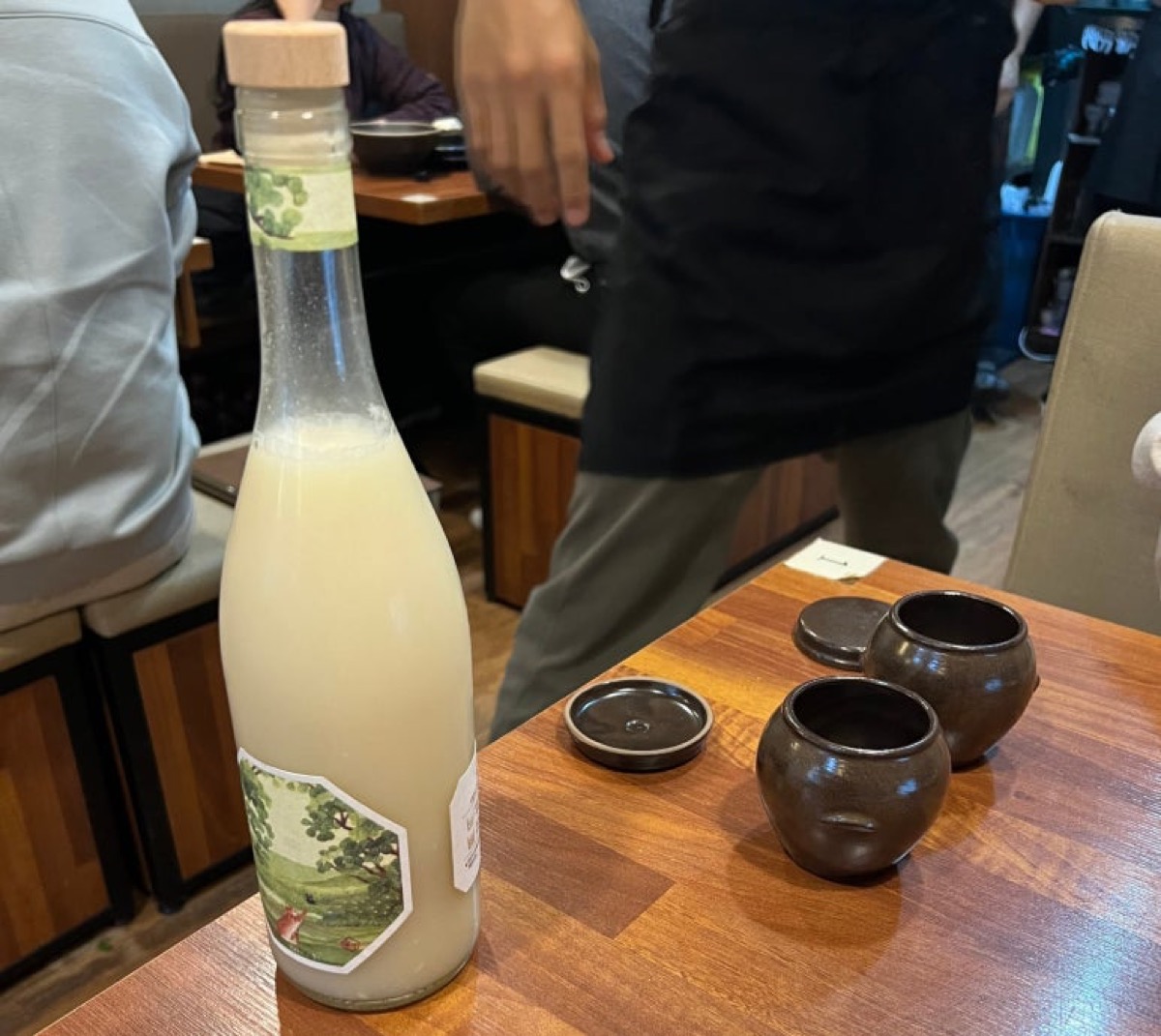
Makgeolli (막걸리)
Makgeolli is Korea's oldest alcoholic drink — a milky, slightly fizzy, lightly sweet rice wine brewed from fermented rice and nuruk (누룩, a fermentation starter).
At 6–8% ABV, it's much lower than soju and has a creamy, tangy flavour that's halfway between a wheat beer and a yogurt drink.
It's served in a large bowl or kettle (dong-i, 동이) and poured into wide shallow cups.
Shake or stir the bottle gently before pouring — the sediment is where all the flavour lives.
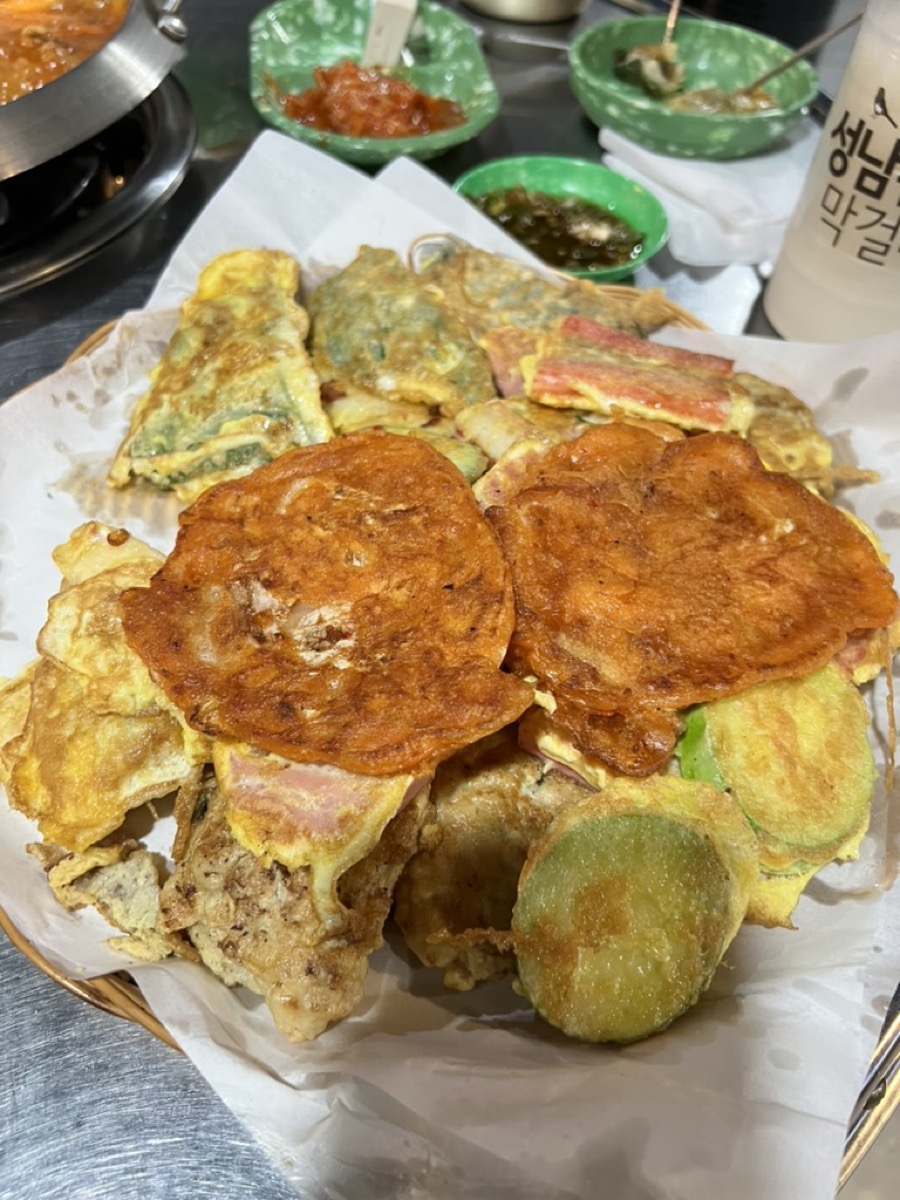
The classic pairing is pajeon (파전) — savoury green onion pancakes — because the saying goes that the sound of rain makes you crave makgeolli and pajeon together.
- Iry Makgeolli (이화 막걸리) — the premium Seoul brand, slightly thicker and more complex
- Jangsu Makgeolli (장수 막걸리) — the everyday bottle, cheap and widely available
- Fruit makgeolli — strawberry, mango, and citrus versions are popular at trendy bars
Korean Beer (맥주)
Korean lager is light, cold, and built for drinking with food. The big three are Cass (카스), Hite (하이트), and the newer Terra (테라) — which uses Australian barley and has clean carbonation that's made it the fastest-growing beer brand in Korea.
All three are mass-market lagers that pair well with fried chicken, BBQ, and nearly every anju dish.
A 500ml can costs ₩2,000–3,000 at a convenience store. The craft beer scene (sugje maekju, 수제맥주) has exploded since 2014 — look for taprooms in Itaewon, Hongdae, and Gyeongnidan-gil for Korean IPAs, stouts, and wheat beers.
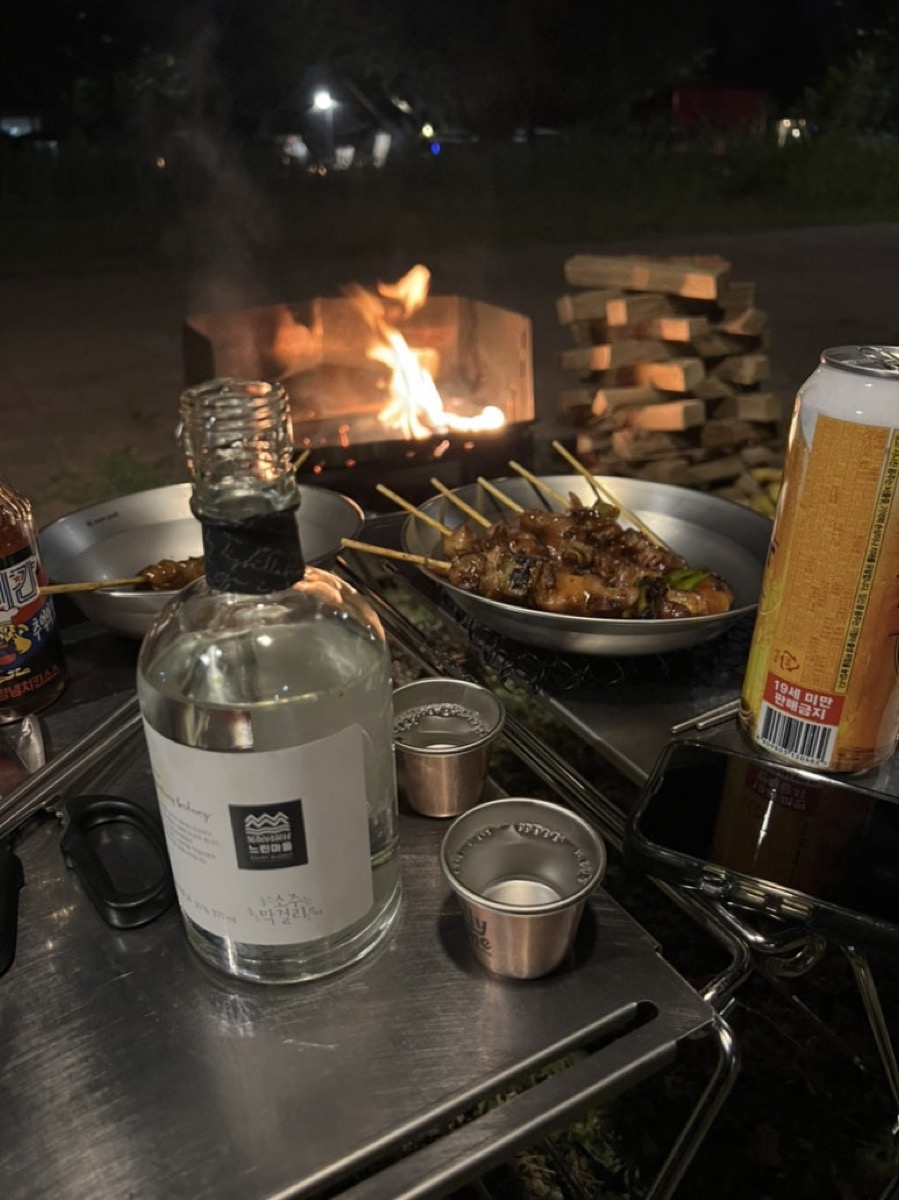
Somaek (소맥) — The Soju-Beer Bomb
Somaek (소맥) is Korea's most popular drinking creation: a blend of soju and beer in a single glass.
The standard ratio is 3 parts beer to 1 part soju, though Koreans debate this endlessly.
Pour beer into a large glass first, then add a shot of soju. The mixing ritual matters: some swirl with a chopstick, others tap the rim of the soju glass to create a miniature wave, or use the "drum" method — tapping the bottom of the somaek glass on the table to naturally blend the two.
Somaek hits harder than either drink alone because beer accelerates alcohol absorption. It's beloved because it's smoother than straight soju but more potent than plain beer.
Traditional Liquors
- Baekseju (백세주) — "100 Year Wine," a herbal rice wine infused with ginseng and 12 medicinal herbs. Smooth and slightly sweet at 13% ABV. Often served at Korean BBQ restaurants.
- Bokbunja (복분자주) — a deep red Korean black raspberry wine, 15–19% ABV. Rich, fruity, and slightly tart. Popular as a table wine at restaurants.
- Cheongju (청주) — clear, refined rice wine similar to Japanese sake but with a more savoury profile. Often used in cooking but also drunk on its own at traditional Korean meals.
- Dongdongju (동동주) — unfiltered rice wine similar to makgeolli but less milky, with rice grains floating on top ("dongdong" means floating). Served in a traditional bowl at folk restaurants.
Korean Drinking Etiquette — Must-Know Rules
Korean drinking etiquette is governed by namsae (남새) — a system of social hierarchy and respect. Break these rules and you'll get puzzled looks; follow them and Koreans will immediately warm to you.
- Pour for others, never for yourself. In Korean culture, you never fill your own glass. Watch others' glasses and refill when they get low. Pouring your own is seen as greedy and antisocial. Someone will always pour for you — just wait.
- Use two hands when pouring for elders. When pouring for someone older or more senior, hold the bottle with your right hand and support your right forearm or wrist with your left hand. This signals respect (gongsam, 공손). For close friends your age, one hand is fine.
- Use two hands when receiving. When someone pours for you, hold your glass with both hands, or support the bottom with your left hand. This applies especially when receiving from someone older.
- Turn away when drinking with elders. When drinking in the presence of someone older or more senior, turn your head slightly to the side and cover your mouth with your free hand as you drink. This gesture of modesty is called goljeongeul (고개 돌리기) and is deeply ingrained in Korean social culture.
- "Geon-bae!" (건배) — the Korean toast, literally meaning "empty cup." Say it before the first drink and whenever toasting mid-session. "One shot!" (wonsyas, 원샷) means everyone drinks their whole glass at once.
- Don't refuse the first drink. Being offered the first drink by a host or elder and refusing it is a significant social slight. If you don't drink alcohol, say so upfront before the pouring begins. Most Koreans are understanding — but refusing mid-session is rude.
- Empty glasses get refilled immediately. An empty glass is an invitation. If your glass is empty for more than 30 seconds, someone will notice and fill it. If you want to slow down, leave a little in your glass.
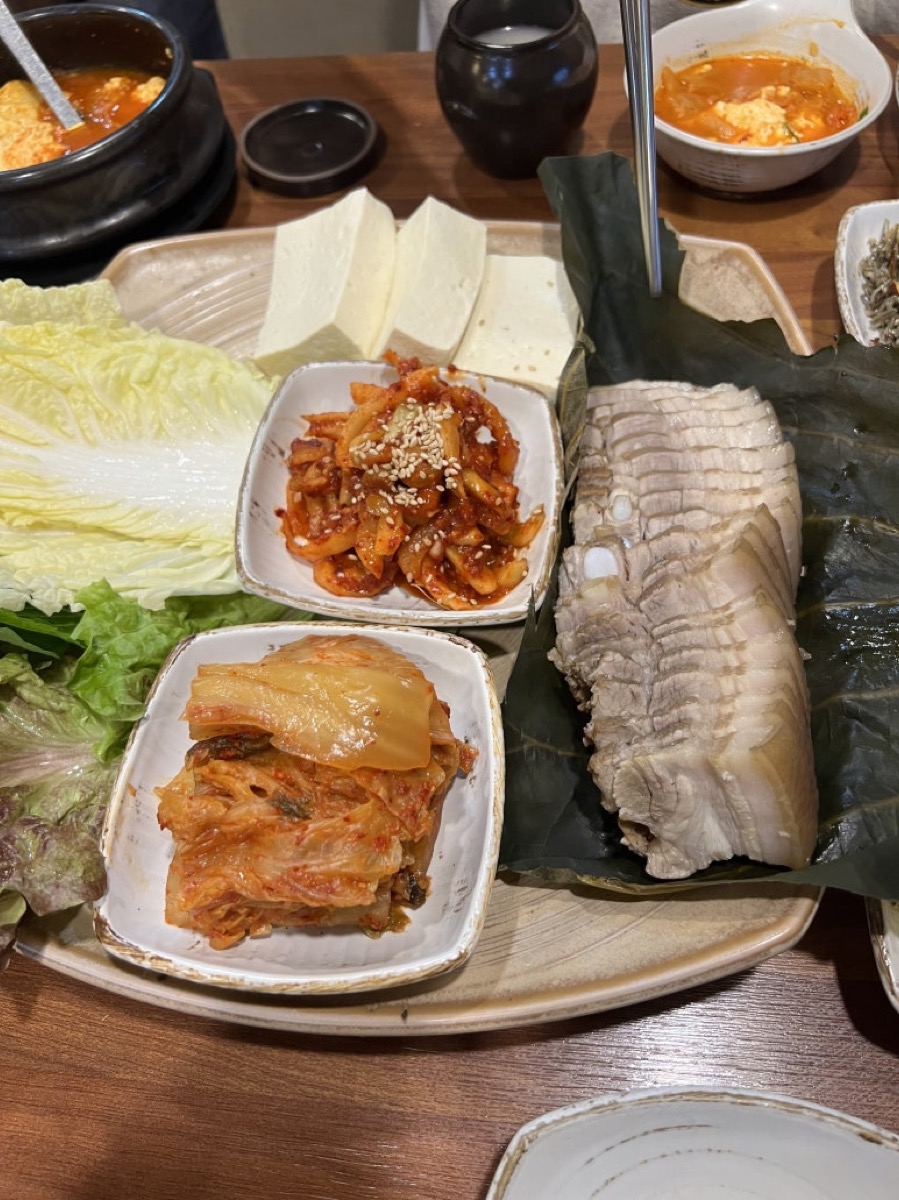
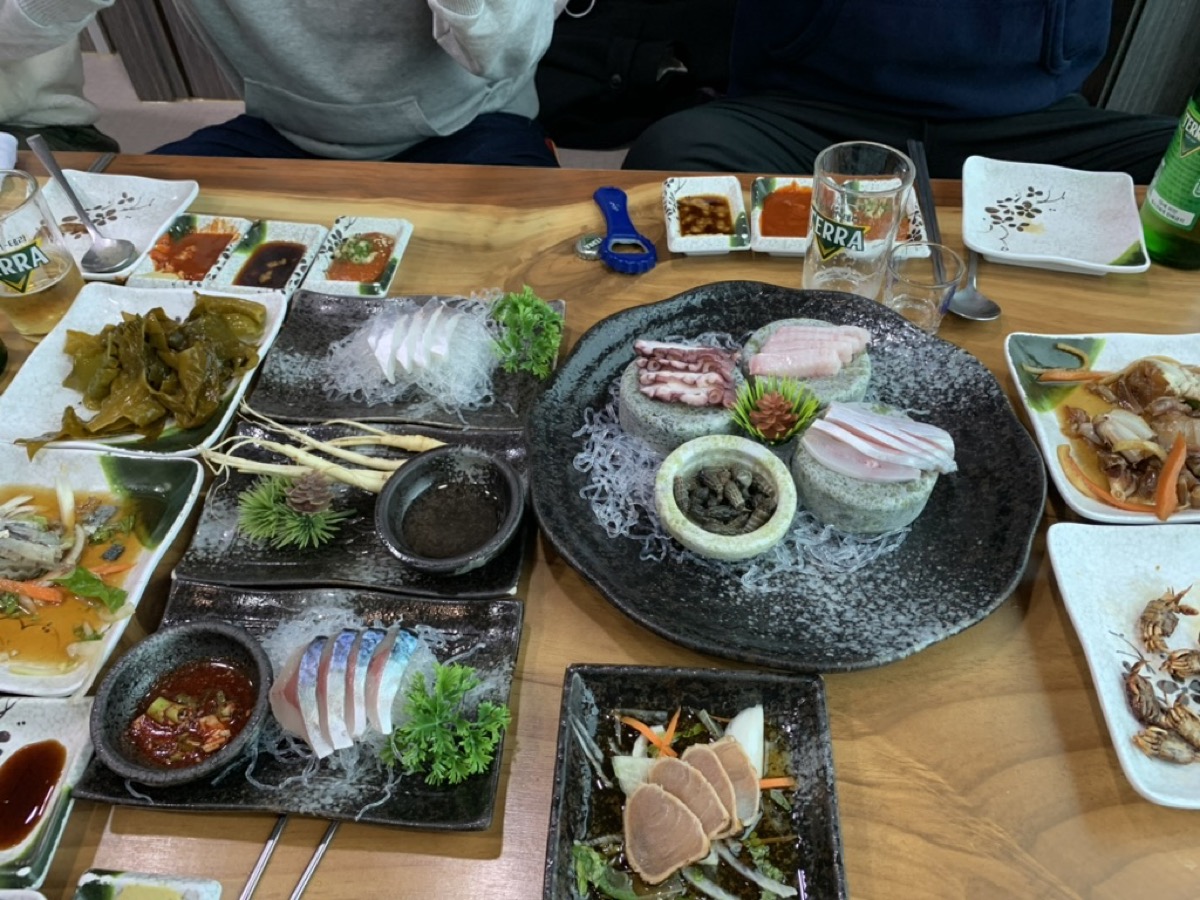
- Anju (안주) is non-negotiable. Koreans almost never drink without food. Anju (안주) is the collective term for drinking snacks and dishes — from fried chicken to dried squid to pajeon. Drinking without anju is considered reckless and is genuinely uncommon. If someone is drinking without eating, others will worry about them.
Popular Korean Drinking Games
Drinking games (eum-ju-ge-im, 음주게임) are central to Korean social drinking. They're fast, loud, and designed to get everyone involved. Here are the ones you'll encounter most:
Flick the Cap (병뚜껑 게임)
After opening a soju bottle, twist the metal cap tab into a tight coil. Pass it around — each person flicks the coil with a finger.
Whoever flicks it off pays the penalty: drink. Simple, satisfying, and always starts the session.
Titanic (타이타닉)
Fill a large beer glass about halfway. Float a small shot glass of soju on the surface.
Take turns carefully pouring soju into the floating shot glass — whoever's pour causes the shot glass to sink and "sink the Titanic" must drink the entire contents.
The game gets increasingly tense as the shot glass sinks lower. A true crowd-pleaser.
Baskin Robbins 31
Players count up from 1 to 31 in sequence around the table. Each person can say one, two, or three consecutive numbers per turn.
Whoever is forced to say the number 31 must drink. It sounds simple but gets surprisingly strategic — you can't say the same number more than three times in a row, and reading your opponents' patterns becomes essential.
The Image Game (이미지 게임)
One person announces a category ("who looks most like they'd get lost on the subway?").
On the count of three, everyone simultaneously points at someone at the table. Whoever gets the most fingers pointed at them must drink.
The categories start innocent and escalate. A great way to learn how your group really sees each other.
Nunchi Game (눈치 게임)
Everyone at the table must count from 1 to the total number of players, but anyone can shout any number at any time — no order, no pattern.
If two people say the same number simultaneously, both drink. If you hesitate too long, you drink. It's pure social instinct and creates genuine chaos.
King Game (왕 게임)
One person is secretly designated "king" by drawing cards or chopsticks. The king issues anonymous commands: "Number 3 and Number 7 must finish their drinks" or "Number 5 must do an impression of a K-pop idol." Numbers are assigned randomly.
The king's identity is secret — until they issue a command that's too absurd to follow.
2차 Culture — The Art of Bar-Hopping
Korean nights out are structured around cha (차) — rounds. The first venue is 1차 (il-cha), usually a Korean restaurant with soju and beer alongside dinner.
When the meal winds down, someone inevitably suggests "2차 가자!" ("Let's go to the second round!"). 2차 is typically a bar, hocha (호프집, a Korean-style beer hall), or a cocktail bar. 3차 is often a noraebang (노래방, private karaoke room) where the night culminates in singing, more drinking, and group bonding.
The 1차→2차→3차 structure exists for a reason: each round has a different energy level and purpose. 1차 is for conversation over food. 2차 is for loosening up with more drinks and games. 3차 is where the real bonding happens — and where everyone's true personality comes out.
Declining to go to the next round is perfectly acceptable ("I need to catch the last subway") but going along at least to 2차 is a social gesture that Koreans appreciate deeply.
Best Places to Drink in Seoul
- Ikseon-dong (익선동) — a beautifully preserved hanok village in Jongno, packed with traditional bars serving makgeolli, dongdongju, and traditional Korean spirits in century-old wooden buildings. The atmosphere is unmatched — dim lighting, courtyard seating, vintage Korea aesthetic.
- Euljiro (을지로) — Seoul's hipster retro district, where old printing workshops and wholesale stores have been colonised by atmospheric bars. Tin ceilings, exposed pipes, cheap beer, and a genuinely local crowd. Euljiro 3-ga and 4-ga subway exits are the entry points.
- Hongdae (홍대) — the university district with the highest concentration of bars, clubs, and pubs in Seoul. Loud, young, and chaotic in the best way. Great for first-timers — staff usually speak some English and the venues are tourist-friendly.
- Itaewon (이태원) — Seoul's international neighbourhood with the most English-friendly bar scene. Craft beer bars, rooftop cocktail bars, and international food pairings. Gyeongnidan-gil has the most interesting independent venues.
- Jongno Pojangmacha (종로 포장마차) — the street stall culture of Jongno at night. Orange tent stalls with plastic stools, steaming odeng (fish cake skewers), and cheap soju under the night sky. The most authentic Korean drinking experience you can have as a visitor.
Hangover Cures (해장)
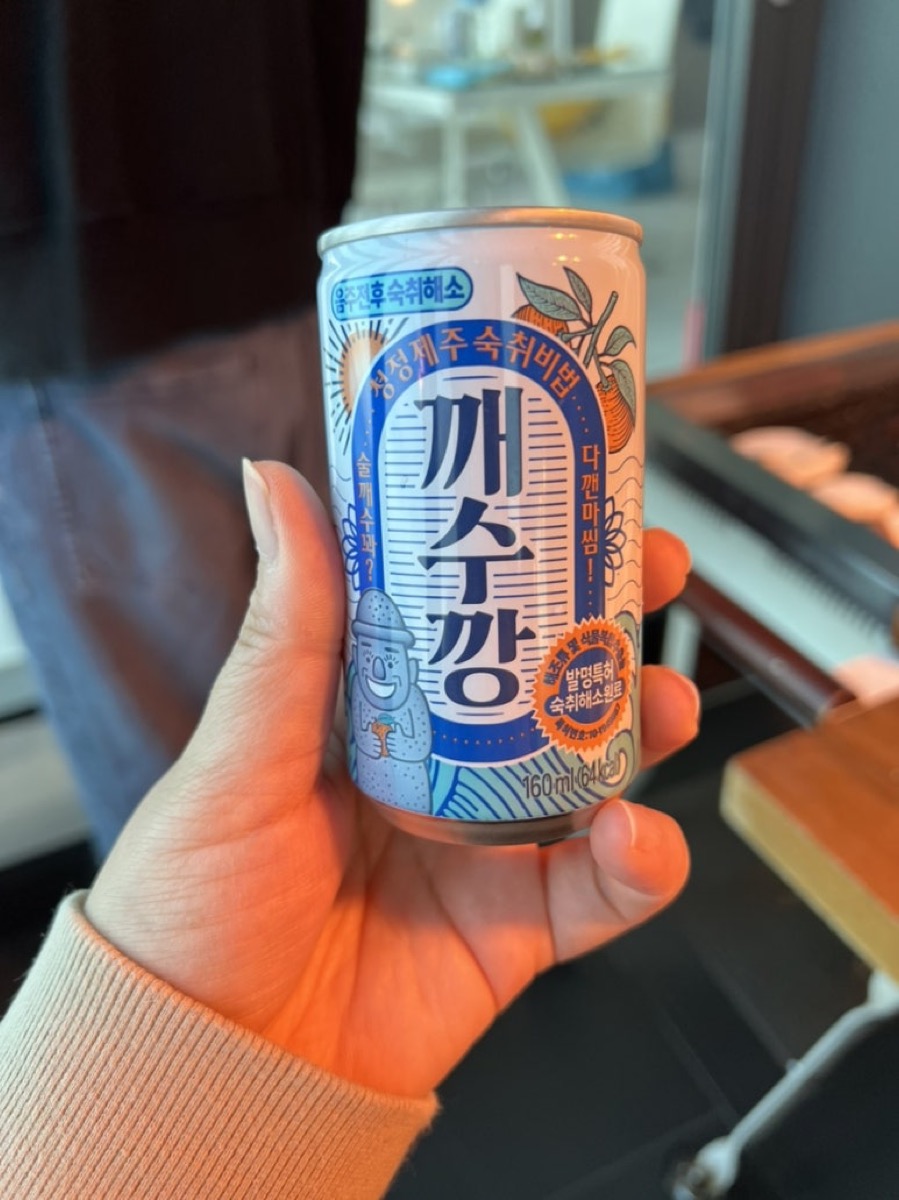
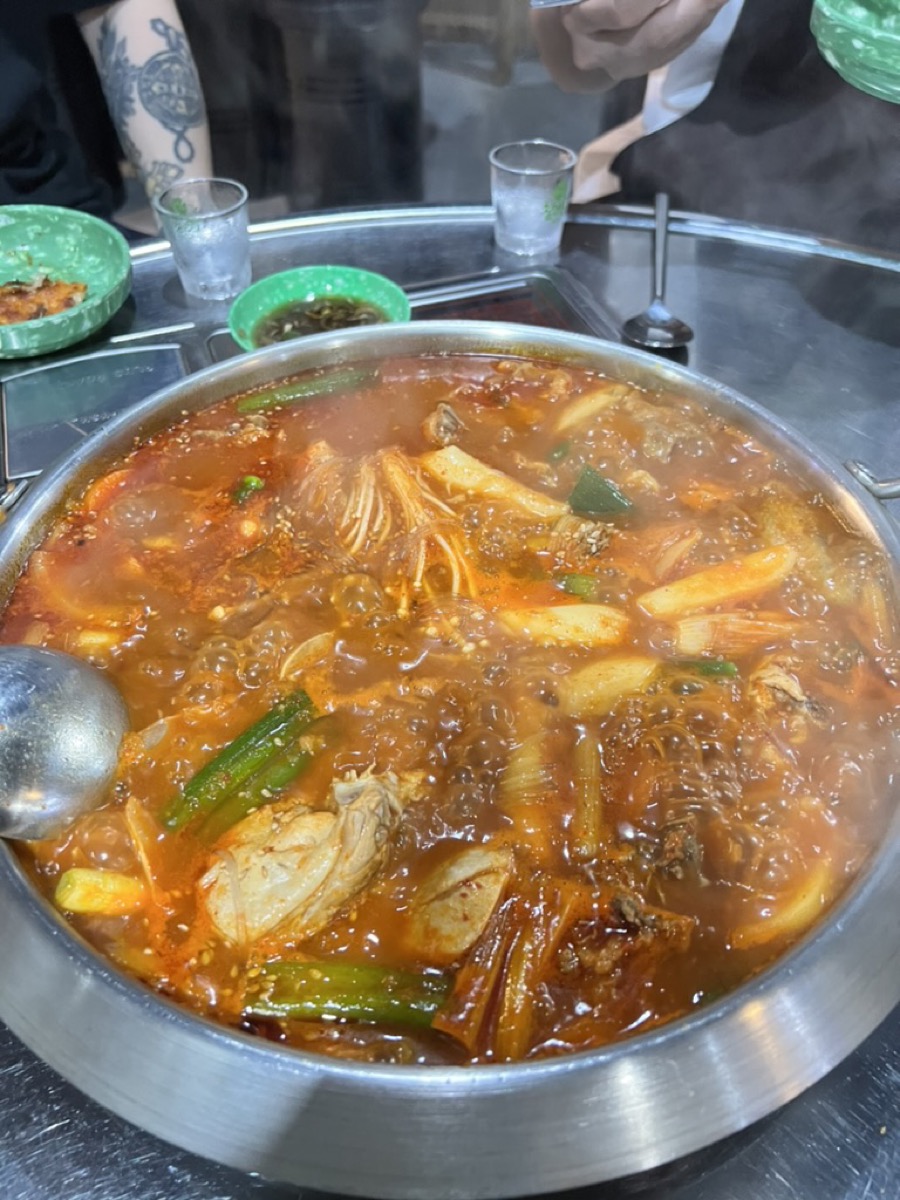
Koreans take the morning after as seriously as the night before. Haejangs (해장) — hangover cures — are a serious food category, with dedicated restaurants open at 6am specifically for post-drinking recovery.
- Haejangguk (해장국) — "Hangover soup." The definitive cure. A deep, dark broth made from dried cabbage, congealed ox blood, and various offal, simmered overnight. It's intensely savoury and restorative. Seonjikguk (선지국, blood soup) and hwangtae-haejangguk (황태해장국, dried pollack soup) are lighter variations that are easier on newcomers.
- Kongnamul-guk (콩나물국) — simple soybean sprout soup with garlic and chilli. Light, clean, and incredibly effective at rehydrating. Often eaten at home the morning after.
- Convenience store remedies — Korean convenience stores (GS25, CU, 7-Eleven) stock dedicated hangover drinks: Morning Care (모닝케어), Condition (컨디션), and Hut-gae Condition (헛개컨디션). These are small shot-bottles of herbal extract typically taken before or during drinking. They genuinely help. Buy one at the convenience store at the start of your night for ₩3,000–4,000.
- Samgyetang (삼계탕) — whole ginseng chicken soup, slow-cooked in a stone pot. Not specifically a hangover cure, but the ginseng and rich broth restore energy fast. Available all day.
- Coke and banana milk — the unofficial civilian hangover cure. Cold Coke restores blood sugar, banana milk (bananameilkeu, 바나나맛우유) is gentle on a sore stomach. Both available at every convenience store for under ₩2,000.
Practical Tips for Foreign Visitors
- Legal drinking age is 19 (Korean age). Korea uses a different age system — your Korean age is usually 1–2 years older than your international age. In practice, IDs are rarely checked at convenience stores but will be requested at bars and clubs. Bring your passport.
- Where to buy alcohol. Convenience stores (편의점) sell full-strength beer, soju, and makgeolli 24 hours a day with no closing time restrictions. Supermarkets and traditional markets also carry a wide selection. Alcohol is not available in vending machines (unlike Japan).
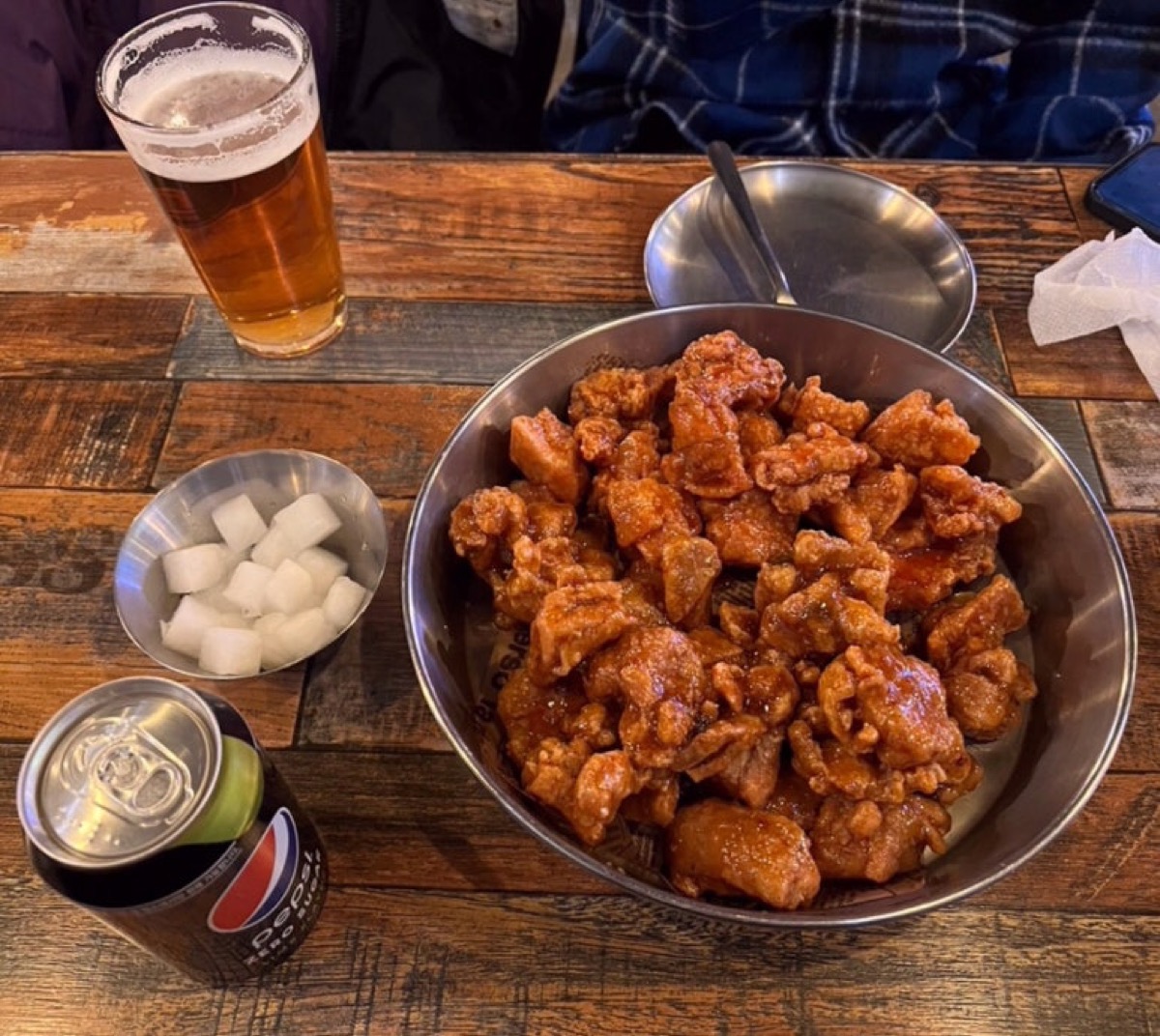
- Drinking in public is legal. Unlike many countries, drinking in public spaces in Korea is perfectly legal. Eating fried chicken and drinking beer in a park is a beloved summer ritual (chimaek, 치맥 — chicken + beer). Han River parks are especially popular for this.
- Costs. A bottle of soju: ₩1,500–2,000 at convenience stores, ₩3,000–6,000 at restaurants. A bottle of beer: ₩2,000–3,000 at convenience stores, ₩5,000–8,000 at bars. Makgeolli (700ml): ₩2,000–4,000. A round at a hocha bar with anju typically costs ₩15,000–30,000 per person.
- Kakao T for taxis. Download Kakao T before your trip — the taxi-hailing app works in English and is essential for getting home safely after a night out. Designated driver services (daeri-unjeon, 대리운전) are also available through Kakao if you rented a car.
- Pacing yourself. Soju goes down deceptively easily. The Korean social pressure to drink fast and match pace is real — it's completely acceptable to say "cheon-cheon-hi" (천천히, "slowly") or "I'm taking it slow tonight." Koreans will respect honesty far more than you forcing yourself to keep up and getting sick.
- Last subway times. Seoul subway stops around midnight on most lines (last trains vary by line and direction from 11:30pm–12:30am). Plan your return or budget for a taxi. Kakao T shows live taxi availability and estimated fares.