Places to Visit
Located in Jung-gu, Incheon, the Daebul Hotel Exhibition Hall introduces the history of the Daebul Hotel, Korea's first Western-style hotel. After the port opened, the Daebul Hotel was a Western-style hotel where foreigners entering Incheon Port stayed before heading to Seoul. However, after the opening of the Gyeongin Line and the Russo-Japanese War, as Westerners visited less frequently, it gradually declined due to financial difficulties and eventually closed. Later, a Chinese person took over the building and operated it as a Chinese restaurant called 'Zhonghua Lu', but after it was demolished, it reopened as an exhibition hall in 2018. The first hall, the Daebul Hotel Exhibition Hall, introduces the exterior of Korea's first hotel, the Daebul Hotel, its former prosperity, and its historical background from its decline. The exhibition is based on artifacts found at the Daebul Hotel site and materials about hotels and inns that existed around the open port during the Japanese colonial period. The second hall, the Jung-gu Life History Exhibition Hall, covers the origins of Jung-gu in Incheon (1968) and showcases the changes and daily life history of Jung-gu during the 1960s~70s through various content. (Source: Incheon Jung-gu Cultural Foundation website)
Most travellers treat a layover at Incheon International Airport (ICN) as dead time — four, six, sometimes ten hours to be survived under fluorescent lights, one overpriced coffee at a time. It doesn't have to be that way. Incheon isn't just Korea's front door; it's a real city with wide beaches, a century-old Chinatown, a neon casino resort and a skyline built from scratch on reclaimed land — much of it a short taxi ride from the terminal, not a two-hour trek into Seoul. The trick is to match your plan to your clock. This guide is built around exactly one question: how many hours do you actually have? Find your window below, and turn that awkward gap between flights into the most memorable part of your trip.
First Things First: Can You Actually Leave the Airport?
Before you start dreaming about beaches, let's put three worries to rest — the same three every transit traveller has. Sort these out and the rest of your layover is pure upside.
Can I leave? Visa and entry basics
If you're only transiting and never clear immigration, you stay airside and this guide isn't really for you. To go into the city you have to formally enter Korea, which means clearing passport control like any arriving passenger. Whether you can do that depends on your nationality: many visitors enter visa-free or with an approved K-ETA (Korea Electronic Travel Authorization), while others need a visa arranged in advance. Rules change, so confirm your own status with an official source before you count on stepping outside. If you qualify, immigration is usually straightforward — but leave margin for a queue.
The golden rule: build in a buffer
Here is the single number that keeps a layover from turning into a missed flight: plan to be back inside the terminal at least two to three hours before departure for an international flight. Work backwards from that, not from your take-off time. Remember you'll clear immigration on the way out, pass security again, and possibly ride a shuttle between Terminal 1 and Terminal 2, which sit several minutes apart. When in doubt, round up. A white-knuckle taxi back is never worth the stress.
Where to stash your bags — and free help
You don't want to drag a carry-on down a beach. Incheon has staffed left-luggage counters and lockers in both terminals; rates and exact locations vary, so ask at an information desk when you land rather than trusting an old blog figure. While you're there, ask whether the airport's free transit tour is running and what today's routes are — the program has paused and restarted over the years, and the desk always has the current version. For the nuts and bolts of getting into Seoul proper, see our Incheon Airport arrival guide.
2–4 Hours: Stay on the Airport Island
Round-trip maths: with two to four hours in hand, don't leave Yeongjong Island. Everything here is a 5–15 minute taxi from the terminals, which keeps your return buffer comfortably intact.
The easiest win is Paradise City, a glossy integrated resort barely 3 km from the terminals — close enough that it runs its own airport shuttle (check the pickup point and times when you arrive). It packs an art-filled lobby, a casino, cafés and, attached to it, Wonderbox, a compact indoor-outdoor theme park lit up like a carnival. You can wander the public areas, grab a proper meal and be back at check-in before your gate opens. Treat any posted opening hours as approximate and confirm on the day. Even if you never place a bet, the sheer scale of the place — sculptures, light installations and all — makes for an easy, air-conditioned way to spend a couple of hours steps from your gate.
If you'd rather breathe than gamble, Sky Garden sits about 3–4 km away and is at its best in autumn, when pink muhly grass and cosmos turn the fields soft and photogenic — a genuinely lovely place to reset after a long-haul flight.
Hungry? Point the taxi about ten minutes toward the Masian (마시안) shoreline, where a cluster of seaside restaurants grills the day's shellfish over open flames. Mashian Grilled Fish Set Meal does exactly what its name promises, Massian Fisherman's House leans into fresh clams and generous seafood spreads, and if you want something warming and quick, Miaone Kalguksu ladles out handmade knife-cut noodle soup. It's the fastest way to eat something distinctly Korean and still make your flight. Carry a little cash, too — some of these family-run spots are happier with it than with cards.
4–6 Hours: Beaches and Sunset on Yeongjong's West Coast
Round-trip maths: four to six hours is enough to reach the island's west-facing coast — roughly 15–25 minutes by taxi each way — and still fold in a meal, as long as you keep half an eye on the clock.
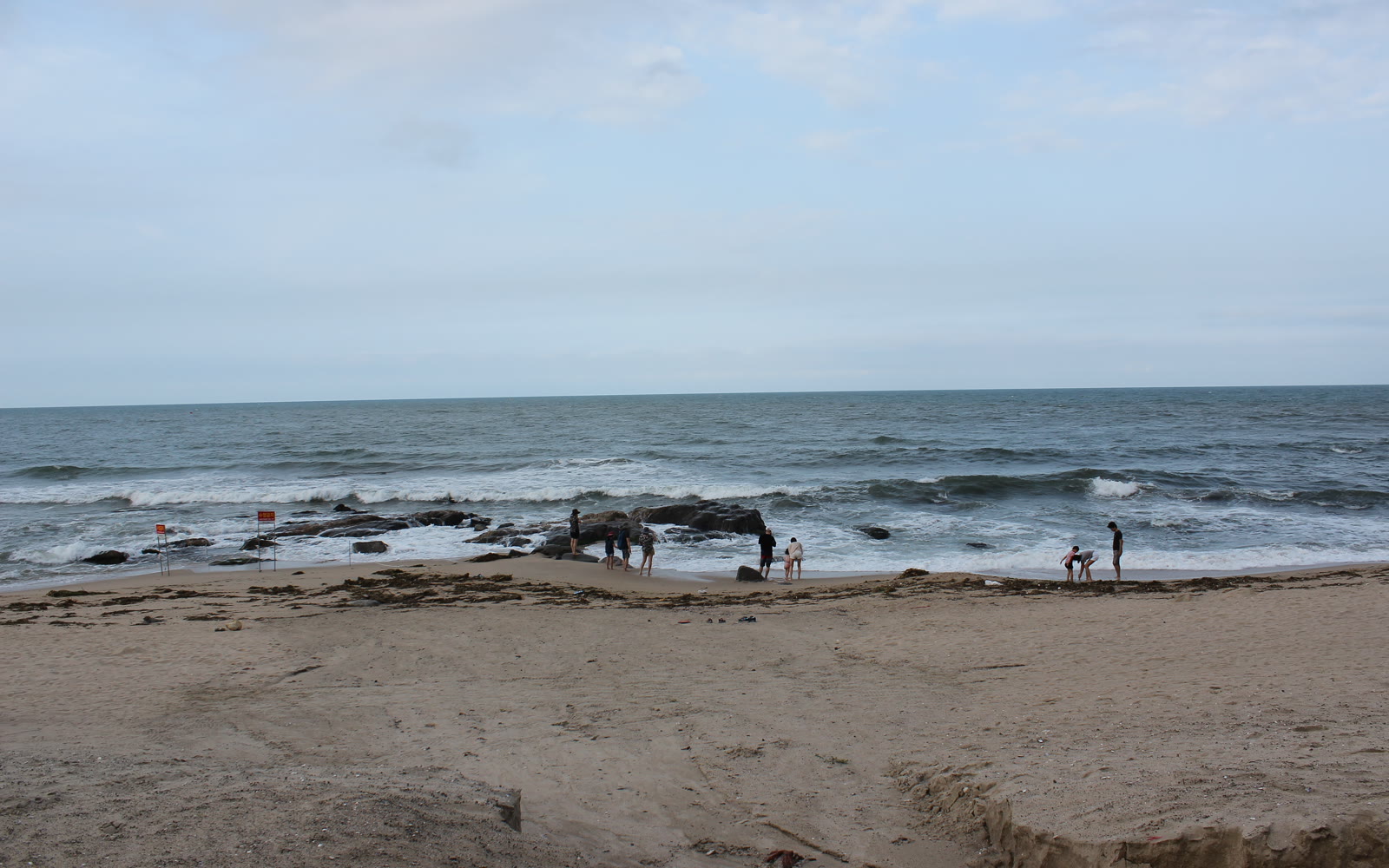
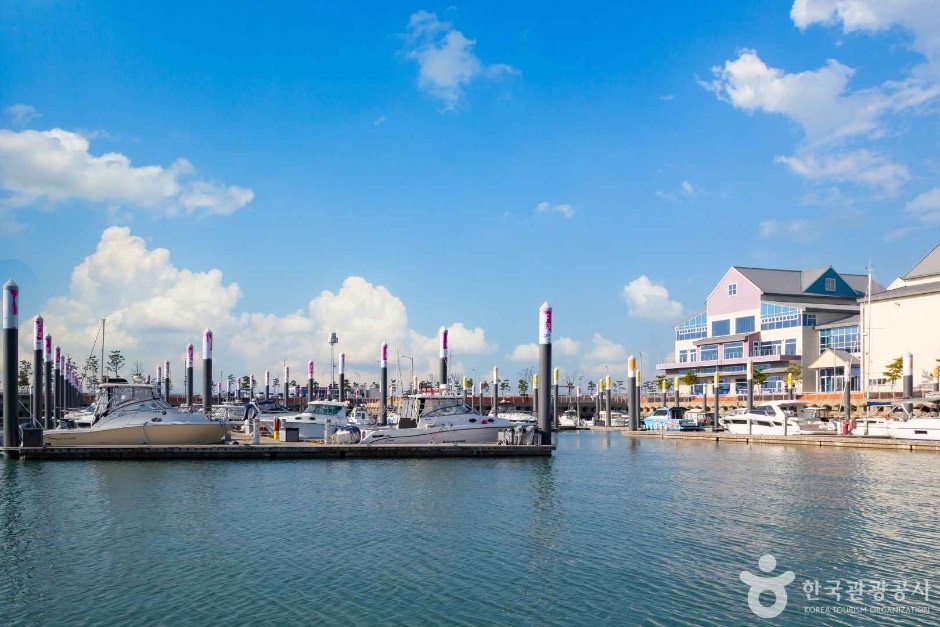
This coast is where Yeongjong earns its reputation. Eurwangni Beach and the neighbouring Masian flats draw locals for one thing above all: the sunset, which drops straight into the Yellow Sea and, at low tide, turns the exposed mudflats gold. Time your visit for the golden hour and you'll understand why couples drive out here on weekends just to watch the sky change. The beaches themselves aren't ticketed sights, but the marina that anchors the area is worth a stop — Wangsan Marina, about 7 km from the airport, is a photogenic place to walk the docks and watch the light change. Line up dinner at Haesangung or the boldly named 300°C Seafood Galbi, both known for grilled shellfish and seafood you cook right at the table.
Craving nature over sand? Cross the bridge to Muui Island (무의도), reachable by car in well under half an hour. Silmi Beach, about 7 km out, is a quiet crescent that famously reveals a walkable sandbar to a tiny islet at low tide — check the tide chart before you commit. The Muuibada Nuri Trail threads along the coast for wide sea views if you'd rather stretch your legs than sit on the sand. It's the kind of half-hour walk that makes you forget you're between flights.
6–9 Hours: Wolmido and the Open Port District
Round-trip maths: with six to nine hours you can cross to the mainland old town — count on roughly 30–40 minutes each way by taxi (city buses run there too; check the current route and number at the information desk) — and still have a solid two to three hours on the ground.
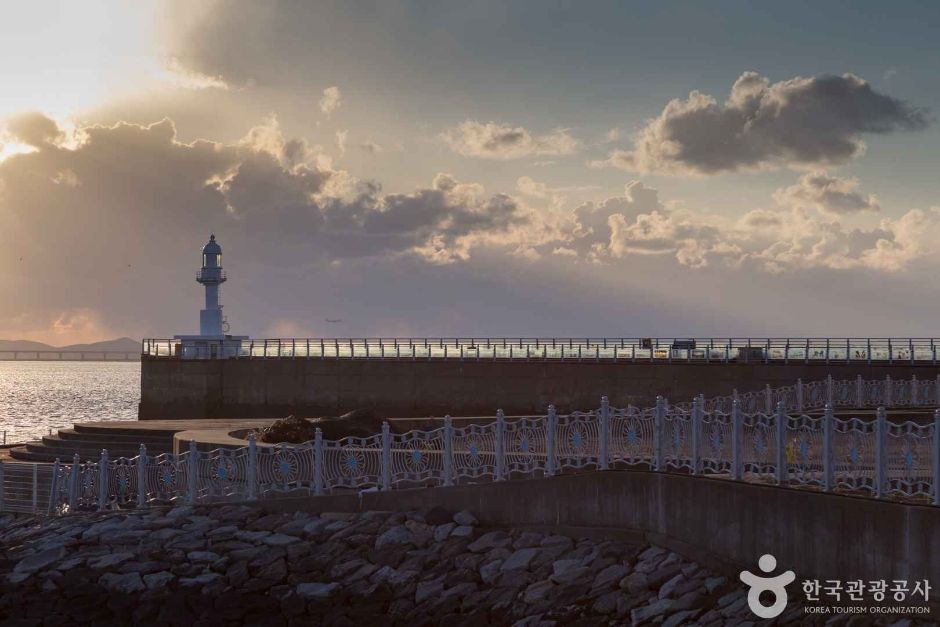
Start at Wolmido (월미도), a breezy seaside promenade about 14 km from the airport. The Wolmi Tourism Special Zone strings together a boardwalk, street food and retro fairground rides; MyLand is the small amusement park whose Ferris wheel serves up the classic harbour view; and Wolmi Park climbs the hill behind it, where the Wolmisan Glass Observatory hands you a panorama over the water and the passing container ships. Follow the Wolmiddo Lighthouse Road for the prettiest stretch of the coast walk — an easy, flat stroll where the sea breeze alone is worth the taxi fare after hours of recycled cabin air.
A short hop inland is the Open Port District, Korea's window to the world in the 1880s and now its most atmospheric collection of red-brick history. The Daebul Hotel Exhibition Hall recreates the country's first Western-style hotel; the Incheon Art Platform turns restored warehouses into studios and galleries; and up in the storybook-painted alleys, Trick Art Story is a playful stop for photos.
The birthplace of jjajangmyeon
You can't come here and skip the food. Incheon's Chinatown is where Korean-Chinese jjajangmyeon (짜장면) — noodles in a glossy black-bean sauce — was born, and the old houses still serve it. Gong Hwa-chun is the name almost every account points to as the dish's birthplace; nearby, Gonghwachun Incheon, Mandabok, Taehwawon and Shinseung Banjeom keep the tradition — and the sweeter, richer sauces — alive. A bowl is cheap and arrives fast; order it with a side of tangsuyuk (sweet-and-sour pork) if two of you are sharing, and don't be surprised by the lunchtime queue — these places are pilgrimage sites for Korean food lovers, not just passing tourists. For the deeper history of these streets, see our Things to Do in Incheon guide.
9–12 Hours: Songdo's Futuristic Skyline
Round-trip maths: nine to twelve hours finally buys you the far side of Incheon Bridge. Songdo sits about 19 km from the airport — roughly 30–40 minutes by taxi — so this is a commitment, but a rewarding one, and still far more realistic than a round trip into central Seoul.
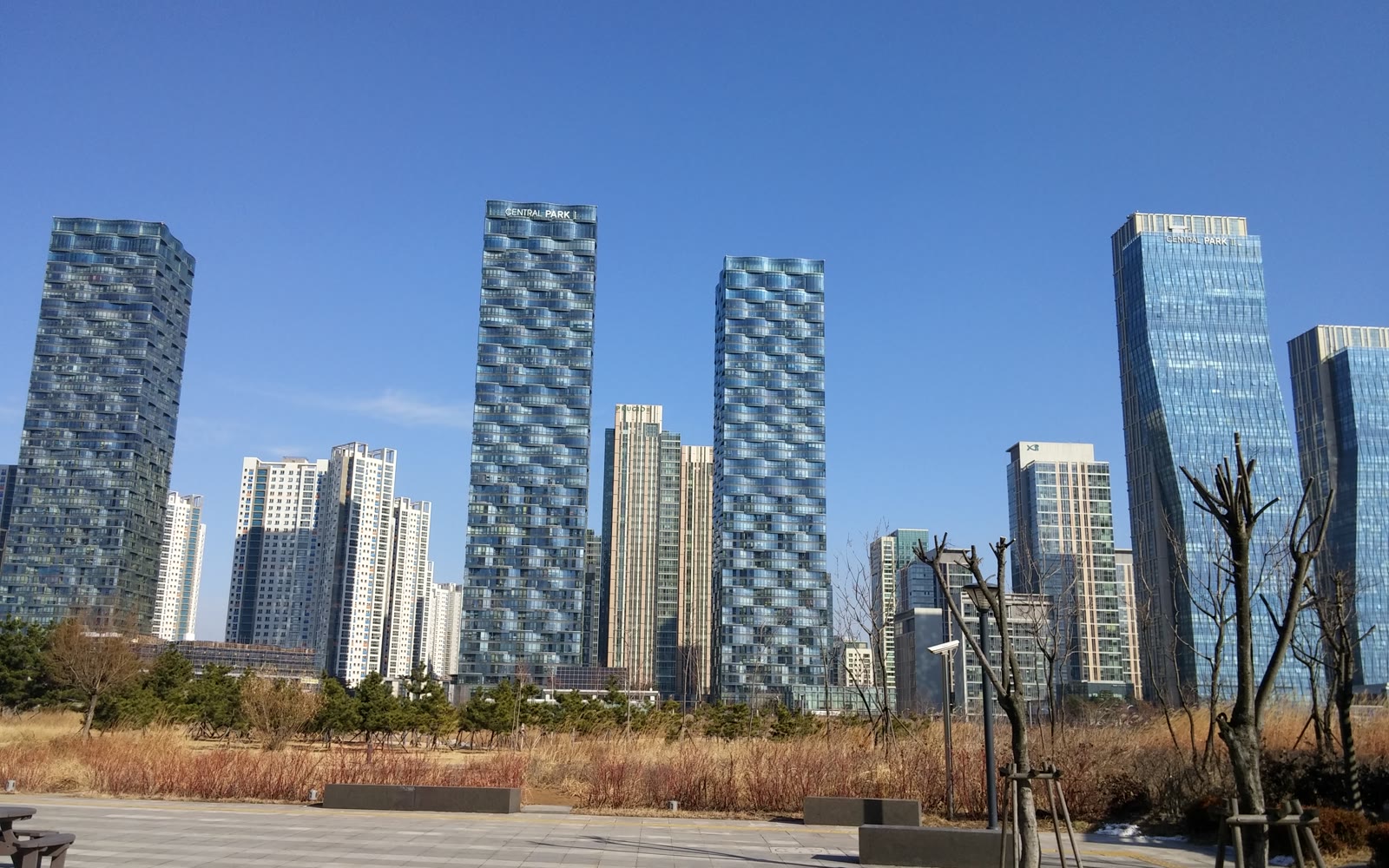
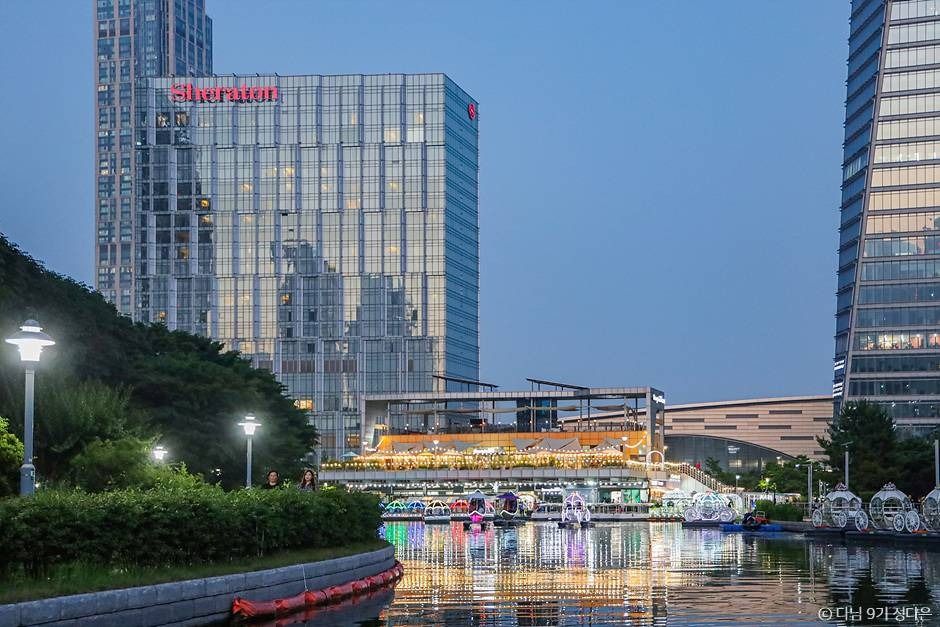
Getting there is half the fun: the taxi glides across the Incheon Bridge, a cable-stayed span more than 20 km long that arcs low over the open sea — an attraction you experience simply by crossing it. On the other side, Songdo is a whole city grown from reclaimed tidal flats in barely two decades, all glass towers and wide boulevards. Songdo Central Park is its green heart: a saltwater canal you can drift along by boat, ringed by skyscrapers that look airlifted from a sci-fi film. For the big picture, the free observation deck at G Tower lifts you high above the district for a sweeping look at the master-planned grid — a fitting, only-in-Korea finale before you head back to catch your flight. If the weather is kind, drift along the canal by boat or simply sit with a coffee and watch a city that didn't exist a generation ago go quietly about its day.
Layover Logistics Cheat Sheet
Everything above, boiled down to a glance. Match the hours on your boarding pass to a row and go.
| Time you have | Go here | Rough round trip |
|---|---|---|
| 2–4 hours | Paradise City, Sky Garden, Masian seafood | Taxi 5–15 min each way |
| 4–6 hours | Eurwangni / Muui Island beaches, sunset | Taxi 15–25 min each way |
| 6–9 hours | Wolmido + Open Port District + Chinatown | Taxi 30–40 min each way |
| 9–12 hours | Songdo Central Park + Incheon Bridge | Taxi 30–40 min each way |
Getting around
Taxis are the simplest option for a layover — no timetable to decode, and fares to the island spots are modest, climbing higher for Songdo. Airport limousine and city buses reach Wolmido, Chinatown and Songdo too, but routes and numbers change from time to time, so confirm the current one at the information desk rather than a dated blog. The full transport breakdown lives in our arrival guide.
What not to attempt
Be honest about your clock. A dash into central Seoul only makes sense with a very long layover — the AREX train alone is about an hour each way before you've seen a single thing, so under eight hours it's a gamble with your flight. Likewise, skip the far-flung islands like Ganghwa or Baengnyeong; they're hours away and built for overnight trips, not gaps between planes. Stay on the Incheon side, keep your buffer sacred, and you'll board relaxed instead of sprinting — with a real story to tell instead of another airport lounge.