Find It on the Map
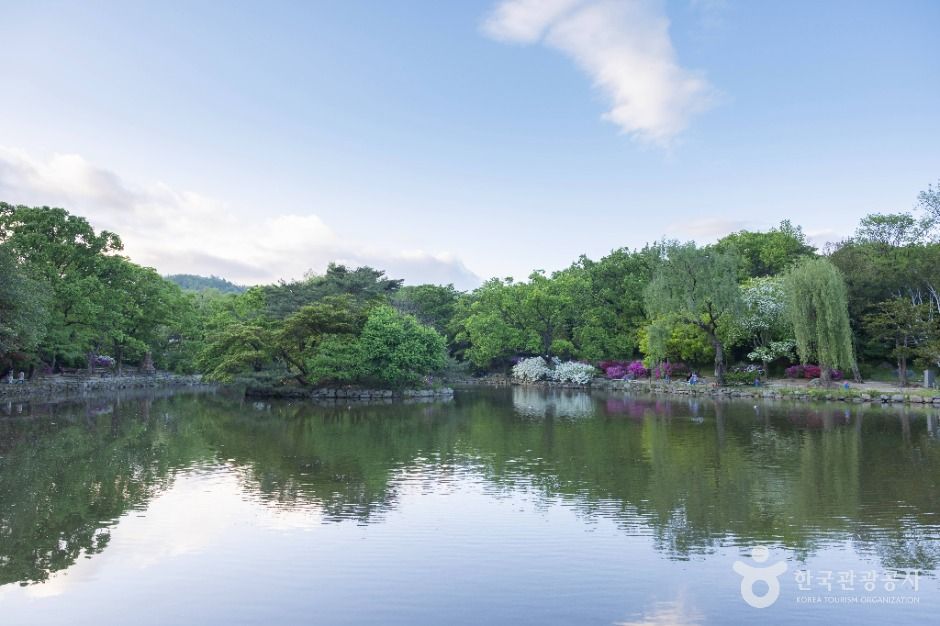
Bomunjeong boasts such beautiful scenery that it was once featured on CNN as a 'Korea's Scenic Spot.' Around the octagonal pavilion and two ponds, cherry and maple trees are planted, making it a place where you must enjoy the scenery in every season. In spring, the area around Bomunjeong is adorned with pure white cherry blossoms, offering a stunning view. In particular, it is popular because you can see weeping cherry blossoms with drooping branches like weeping willows. In summer, water lilies bloom abundantly in the pond in front of Bomunjeong, adding to the breathtaking scenery. Autumn, when the leaves turn colorful, is dazzling, and if you're lucky enough to encounter snowy scenery, you must also capture the winter Bomunjeong Temple. Thanks to its beauty in any season, this place is also considered a favorite among photographers.
Most cities put their oldest monuments to bed once the sun goes down. Gyeongju does the opposite -- wait for dark, and Korea's ancient Silla capital turns its lights back on. A palace pond doubles its pavilions in perfectly still black water. A wooden bridge glows with lantern light over a quiet stream. A stone tower that has stood since the seventh century holds its own soft floodlight against the sky, and a park full of royal tombs disappears into pure, deliberate darkness. This isn't a modern light show built for photographs, even if the photographs are extraordinary -- it's simply some of the oldest ground in Korea, lit just enough to be seen the way it might have looked a thousand years ago. If you want the daytime version of the story -- the UNESCO temples, the stone Buddhas scattered across Namsan, the sea tomb out at Gampo -- our Gyeongju guide covers all of it in full. This one is only about what happens after the sun sets.
The good news is that Gyeongju barely asks anything of you for this. Wolji Pond, Woljeonggyo Bridge, Cheomseongdae, the tomb mounds of Daereungwon and the cafe lane of Hwangridan-gil all sit within an easy, flat walk of one another in the compact historic core -- the same handful of blocks you'd cover in daylight, just after the sun goes down. Give yourself one unhurried evening, start around sunset, and you can drift between all five without hailing a single taxi. Bomun Lake, a quieter alternative a short taxi ride from downtown, is the one exception, and it's worth treating as a separate night rather than squeezing it in. Bring a light layer even in summer -- Gyeongju's inland basin cools fast once the light goes, and this is a walk that rewards patience far more than a checklist mentality.
Wolji Pond: The Reflection That Made Gyeongju Famous
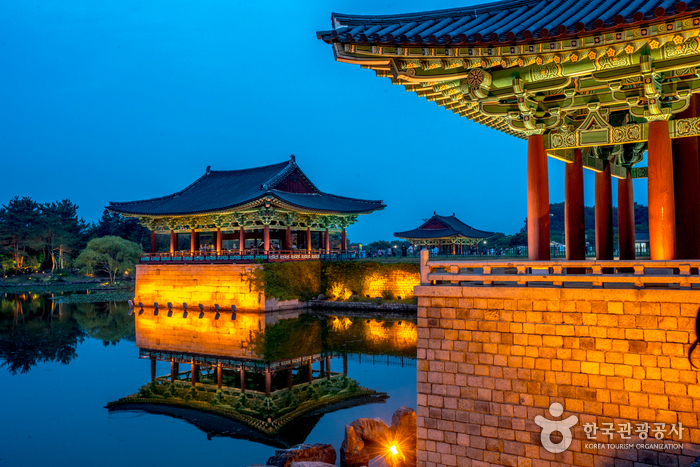
Nothing else in the city looks quite like this after dark. By daylight, Donggung Palace and Wolji Pond (동궁과 월지) is a pleasant, slightly sleepy garden of reconstructed pavilions, willow branches and lily pads. Then the sun goes down, the lights inside the pavilions come up, and the entire scene doubles itself on the water -- gold structures floating on black glass, so precise it takes a moment to tell where the real building ends and the reflection begins. Ask a local for the one photo you shouldn't miss in Gyeongju, and this is almost always the answer.
Timing the Reflection
Arrive as blue hour is just beginning -- the sky still holding a last trace of color rather than fully black -- and you get the best of both moments: enough ambient light to make out the far shoreline, and just enough darkness for the pavilion lights to already be glowing on the water. Walk the far side of the pond rather than lingering near the entrance gate; that's where the classic head-on reflection lines up, and the crowd along the near path thins out fast the further around you go. Stay long enough for full darkness to settle in too -- the reflection only gets sharper as the sky goes black behind it.
Before You Go
A small admission fee applies here, same as during the day, and the evening opening hours can shift with the season -- check current hours before you set out rather than assuming a summer schedule will hold through winter, or vice versa. If this guide only convinces you to see one thing after dark in Gyeongju, make it this one.
Woljeonggyo: A Lantern-Lit Bridge Over Dark Water
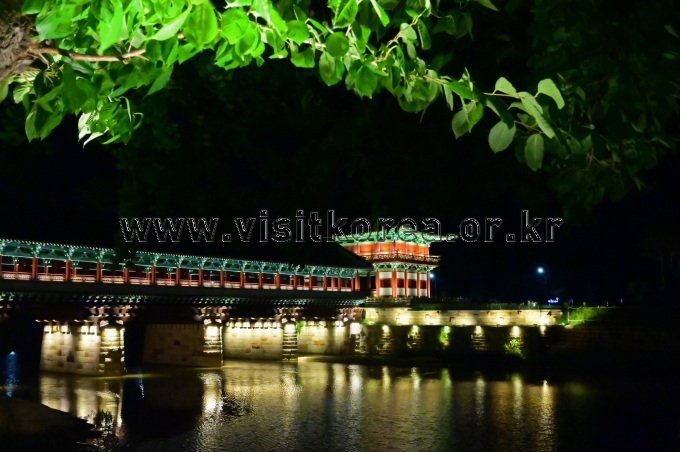
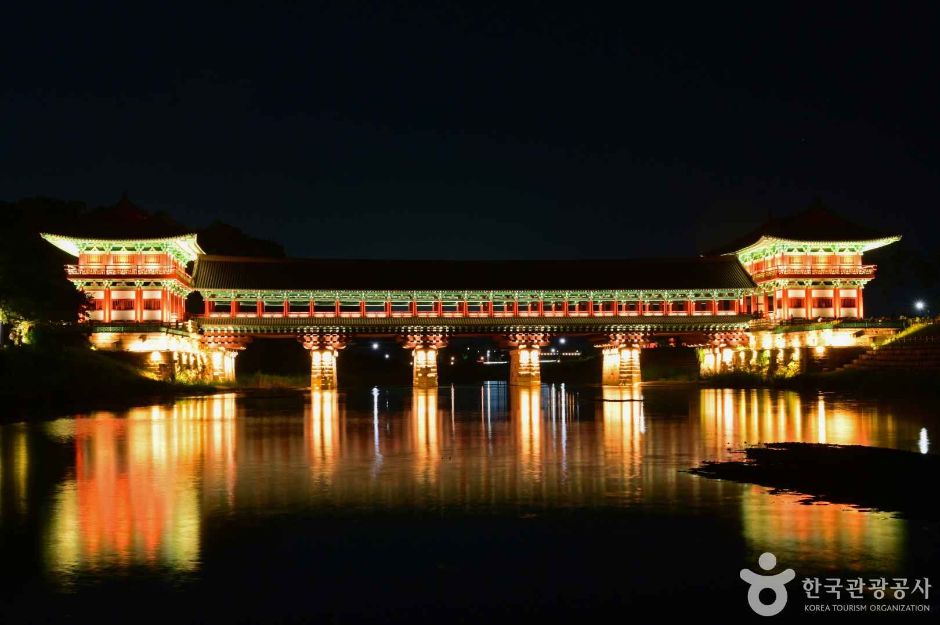
A ten-to-fifteen-minute walk across the historic core brings you to Woljeonggyo (월정교), a broad, covered wooden bridge rebuilt over the gently moving Namcheon stream, and it lights up in almost exactly the same spirit -- warm lantern light strung along the covered walkway, an arched silhouette trembling in reflection on the water below. Unlike Wolji, there's no ticket and no gate here at all; it's simply a public footbridge, open to cross at any hour, which makes it a natural add-on to the Wolji visit rather than a separate errand.
The View From Below
Don't stop on the bridge deck itself -- the better photograph is from the stepping stones in the streambed just beside it. From water level, the entire underside of the bridge and its string of lantern light reflect in one long, unbroken line, with the stream's gentle current moving through the foreground. The bridge standing here today is a careful modern reconstruction, completed in 2018 after decades of archaeological research into the original Silla-era foundations -- a fact worth knowing, though at night it hardly matters; lit up over dark water, it simply looks like exactly what it was built to be.
One Thing to Know
The bridge's lanterns typically switch off later in the evening rather than staying lit until sunrise, and the exact timing isn't fixed or well-publicized -- if your visit runs late, it's worth checking rather than assuming the lights will still be on when you arrive.
Cheomseongdae and the Eastern Historic Zone at Night

A short walk northeast, Cheomseongdae (첨성대) -- long described as one of the oldest surviving astronomical observatories in East Asia, dated to the 7th century -- gets its own soft floodlighting after dark, standing almost alone in an open field with nothing nearby to compete for attention. That emptiness is the whole point. By day it's one stop on a crowded sightseeing loop, jostled by tour groups and selfie sticks; at night, lit and solitary against the sky, it finally gets to look its age.
A Wider Walk
The open ground around the tower rolls on into the Eastern Historic Zone (동부 사적지대), a stretch of grass and low earthen mounds that makes for a quiet, unhurried walk of its own -- especially in seasons when wildflowers or seeded grasses fill the fields, turning into soft dark silhouettes against whatever light spills over from the tower and the surrounding streetlamps. There's no set route to follow here; just wander until the small crowd gathered near Cheomseongdae's main viewing spot thins out, and let the open air and quiet take over. The night sounds carry further than you'd expect across the flat ground -- insects in summer, mostly stillness in winter.
Occasional seasonal lighting displays or events sometimes appear around this area, so don't be surprised if the exact scene looks slightly different depending on when you visit -- the tower itself, lit and steady, is the one constant worth planning around.
Daereungwon: Tomb Mounds Against the Night Sky
Every other stop on this walk gets brighter after dark. Daereungwon (대릉원) -- the royal tomb park that holds Cheonmachong (천마총) and dozens of other grass-covered burial mounds -- does the opposite, and that's exactly what makes it worth the detour. Instead of light, you get shape: the tombs' huge, rounded silhouettes rising black against a paler night sky, unlike anything else on this list and unlike most night views anywhere in Korea. There's something almost startling about how large they look once you can no longer see their grassy detail, only their outline.
The Stone Wall Lane
The tomb park's interior hours vary by season and aren't something to lock into your plan -- but the low stone wall lane tracing the park's outer edge is always open to walk, day or night, and it might honestly be the better experience anyway. Follow it slowly after dark: the tomb mounds loom on one side, warm cafe light spills over from Hwangridan-gil on the other, and the contrast between the two -- ancient silhouette and modern glow, a few meters apart -- says more about present-day Gyeongju than either could alone.
It's also, for what it's worth, one of the quietest stretches of the whole evening. Most visitors head straight from Cheomseongdae toward Hwangridan-gil's restaurants and skip the wall lane entirely once the sun is down. Don't make that mistake -- even five slow minutes here changes how the rest of the night reads.
Hwangridan-gil After Sunset
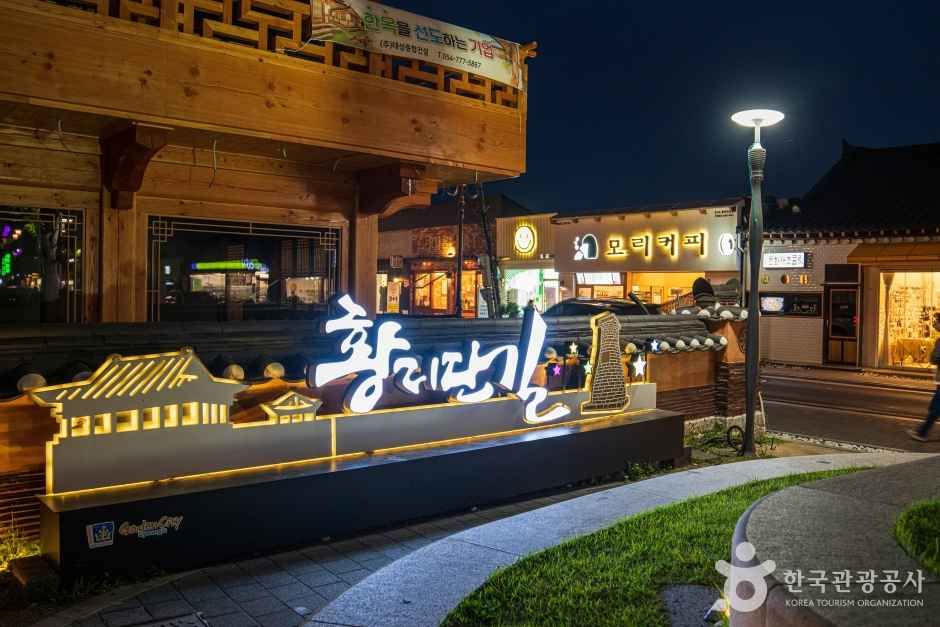
By day, Hwangridan-gil (황리단길) is a cafe-hopping, souvenir-browsing crowd scene, all hanok-roofed storefronts and iced coffee. After dark it turns into something a little more atmospheric: strings of warm light along the tiled rooflines, dessert-shop windows glowing out onto the lane, and -- if you look past the buildings on the eastern side -- the dark, rounded shapes of Daereungwon's tombs rising up behind it all. It's a genuinely odd, memorable pairing: modern night-market energy in the foreground, thousand-year-old royal graves in the background, both visible in the same glance.
Dinner First
This is the natural place to eat before tackling the rest of the walk -- you'll want the energy for what's ahead, and there's no shortage of options along the lane and just off it. Our Gyeongju food guide has fuller recommendations if you want to plan the meal itself properly; for the sake of the night walk, the only rule is not to try to do all five stops on an empty stomach.
Once you've eaten, the lane rewards a slow, aimless walk more than a destination-driven one. Duck down any side alley and the crowd noise fades within a block or two, replaced by quieter courtyards and smaller, family-run shopfronts that don't make it into most photos.
Bomun Lake: The Quiet Night Away From the Crowds
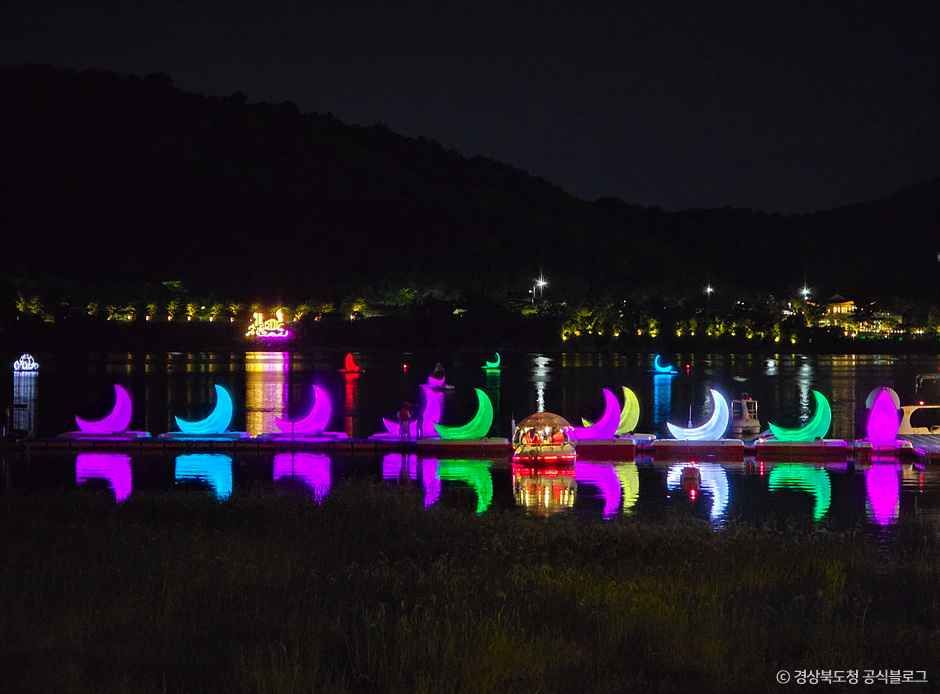
Everything above sits within easy walking distance of everything else, which is exactly why Bomun Lake feels like a different trip entirely. A short taxi ride from downtown, the lakeside around Bomunjeong pavilion (보문정) trades Gyeongju's tomb-and-lantern atmosphere for something closer to a resort-town evening stroll -- wide paved paths, water on one side, hotel and restaurant lights on the other, and none of the historic core's foot traffic.
Whether the pavilion itself is lit after dark isn't something we can promise one way or the other -- treat it as a pleasant bonus if it is, rather than the reason you came. The real draw is the walk itself: an easy loop around the lake after dinner, well away from the downtown crowds, with the water doing a quieter, calmer version of what Wolji does a few kilometers away.
If your one evening in Gyeongju is already built entirely around the downtown walk below, you can skip Bomun without missing anything essential -- think of it as a genuine option for a second night in town, not a required stop on the first.
The Perfect Evening Route
If you only have one evening, here's the order that makes the most sense -- geographically, and in terms of how the light and mood build toward the end.
- Hwangridan-gil, early evening. Eat first, then browse the lane slowly as daylight fades and the cafe string-lights start to switch on.
- Daereungwon's stone wall lane. Walk it on your way north -- the tomb silhouettes are at their best right as full darkness settles in.
- Cheomseongdae and the Eastern Historic Zone. Give yourself time to wander the open ground beyond the tower rather than just photographing it and moving on.
- Woljeonggyo. Drop down to the stepping stones for the reflection shot before crossing over.
- Wolji Pond, last. Save it for the finale. It's the most photographed view in the city for a reason, and it rewards being patient enough to see it after everything else, not first.
Bomun Lake sits far enough outside this loop that it's best treated as its own evening -- a short taxi ride away, better suited to a second night in Gyeongju than an add-on to this one.
Tips for a Night Walk That Actually Works
- Chase blue hour, then stay for full dark. The best light happens twice -- once as blue hour fades and the pavilion and bridge lights first become visible against a still-colored sky, and again once it's fully dark and the reflections sharpen further. If you have the patience, linger through both instead of leaving after your first round of photos.
- Don't assume closing times. Lighting, gate hours and ticket windows at Wolji and elsewhere shift with the season and aren't something to build a rigid schedule around -- check current hours before you go, especially outside peak summer season.
- Watch the last bus. Downtown Gyeongju's public buses tend to thin out earlier in the evening than you'd expect for a city this size -- if you're not staying within walking distance of the historic core, plan on a taxi back rather than counting on a late-running bus.
- Let the season set your start time. Sunset -- and with it, the start of the good light -- arrives much earlier in winter than in summer. Plan your dinner and departure time around the season you're visiting in, rather than a fixed clock time that worked for someone else's trip.
- Bring a small flashlight. Beyond the illuminated monuments themselves, the wall lane around Daereungwon and the open ground near Cheomseongdae have very few streetlights -- a phone flashlight is enough to navigate comfortably and watch your footing on uneven stone.
- Bulguksa's night openings are the exception, not the rule. The temple has, in certain years, held special night-opening events, but this isn't a standing, year-round arrangement -- if a lit-up Bulguksa is on your list, confirm current dates and hours before building an evening around it.
Seoul's night view is a skyline. Busan's is a coastline. Gyeongju's is something else entirely -- a thousand-year-old capital quietly switching its lights back on, one pond, one bridge and one tomb mound at a time. Walk it slowly, and you'll understand why so many locals think of Gyeongju's evenings as the city's real second act.