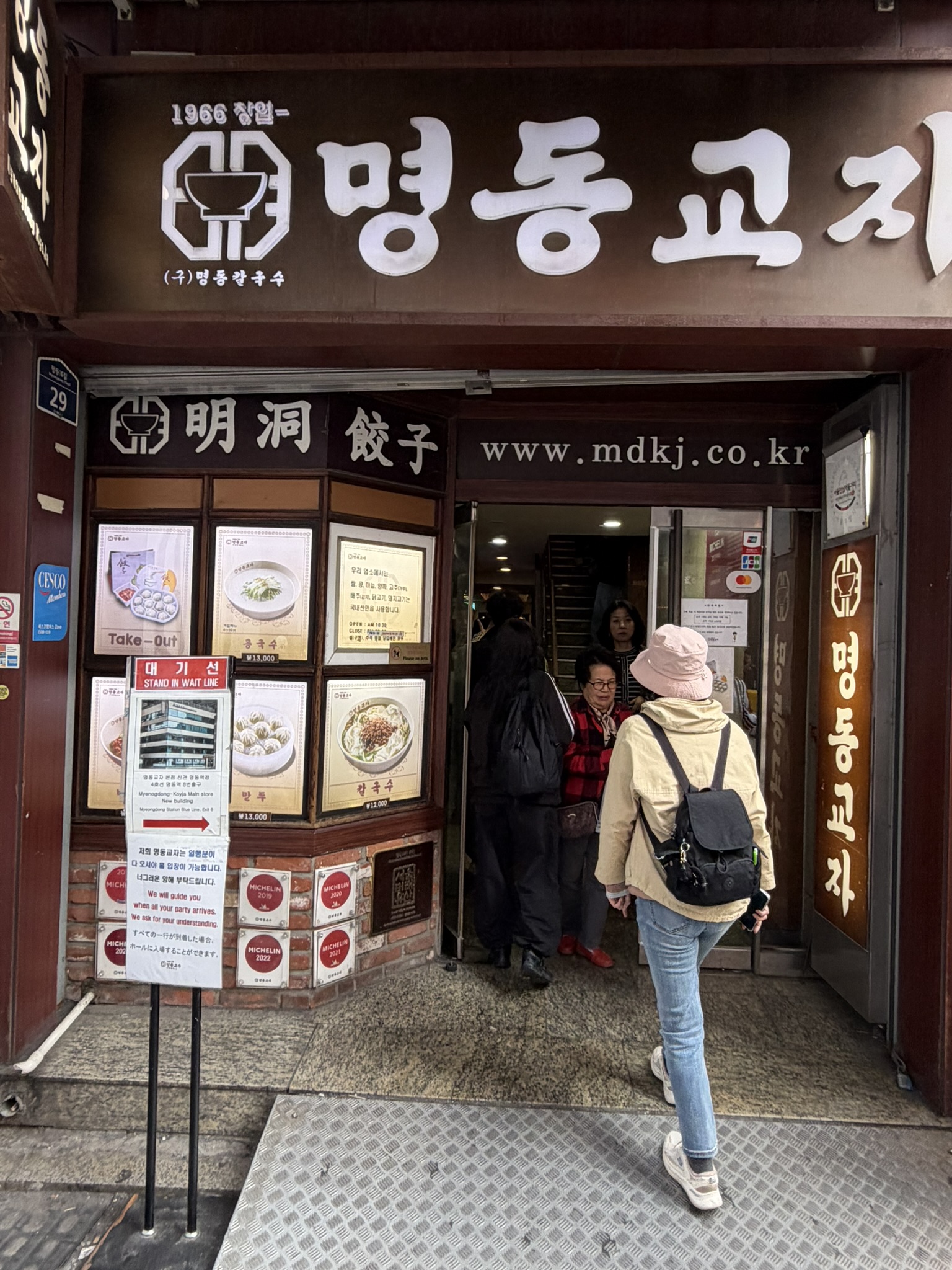
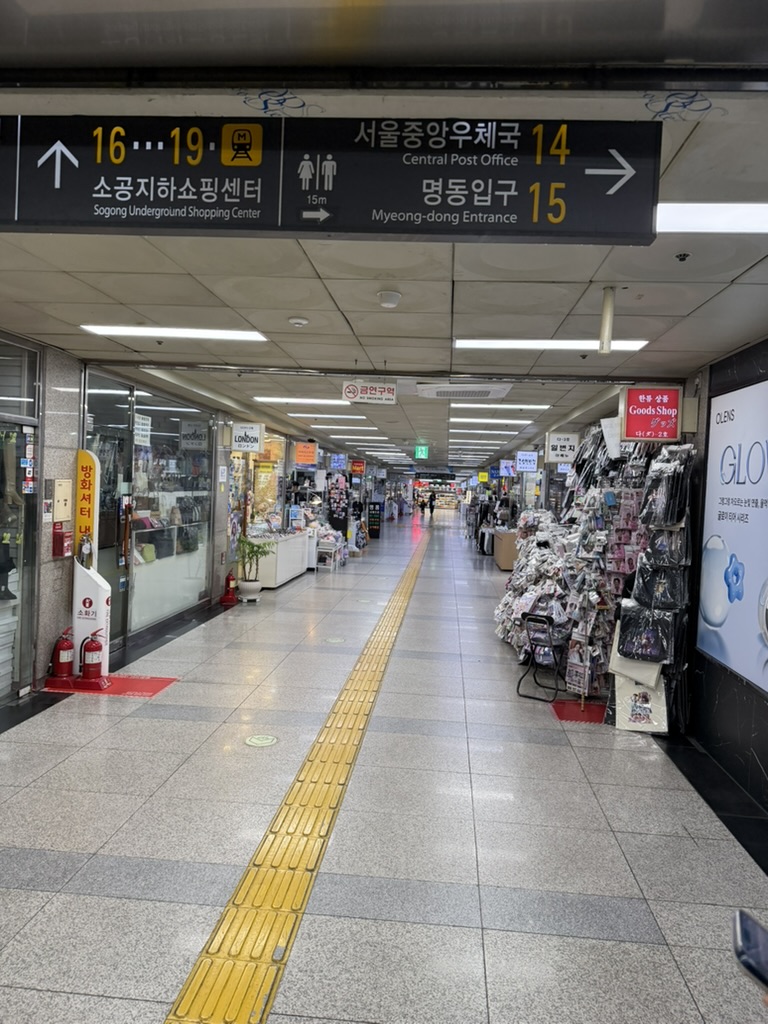
Department Stores
- Lotte Department Store (Main) — Luxury and mid-range brands, duty-free floor, food basement.
- Shinsegae Department Store — Premium brands, connected to Myeongdong Station underground.
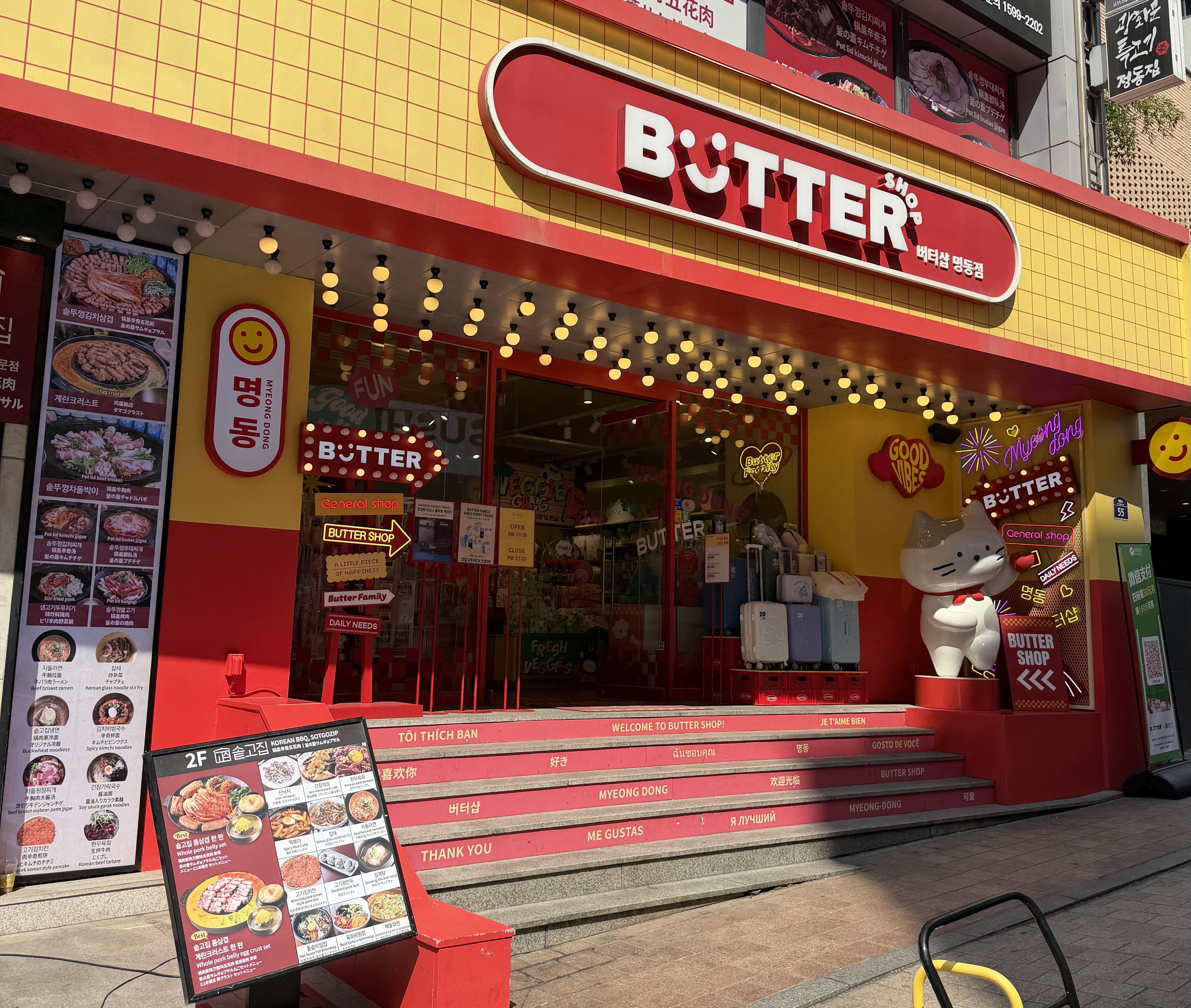
- Daiso Myeongdong — 12-floor mega store. Everything from ₩1,000–₩5,000. Great for quirky souvenirs, stationery, and travel essentials.
- ABC Mart — Korean sneaker culture. Nike, Adidas, New Balance at good prices.
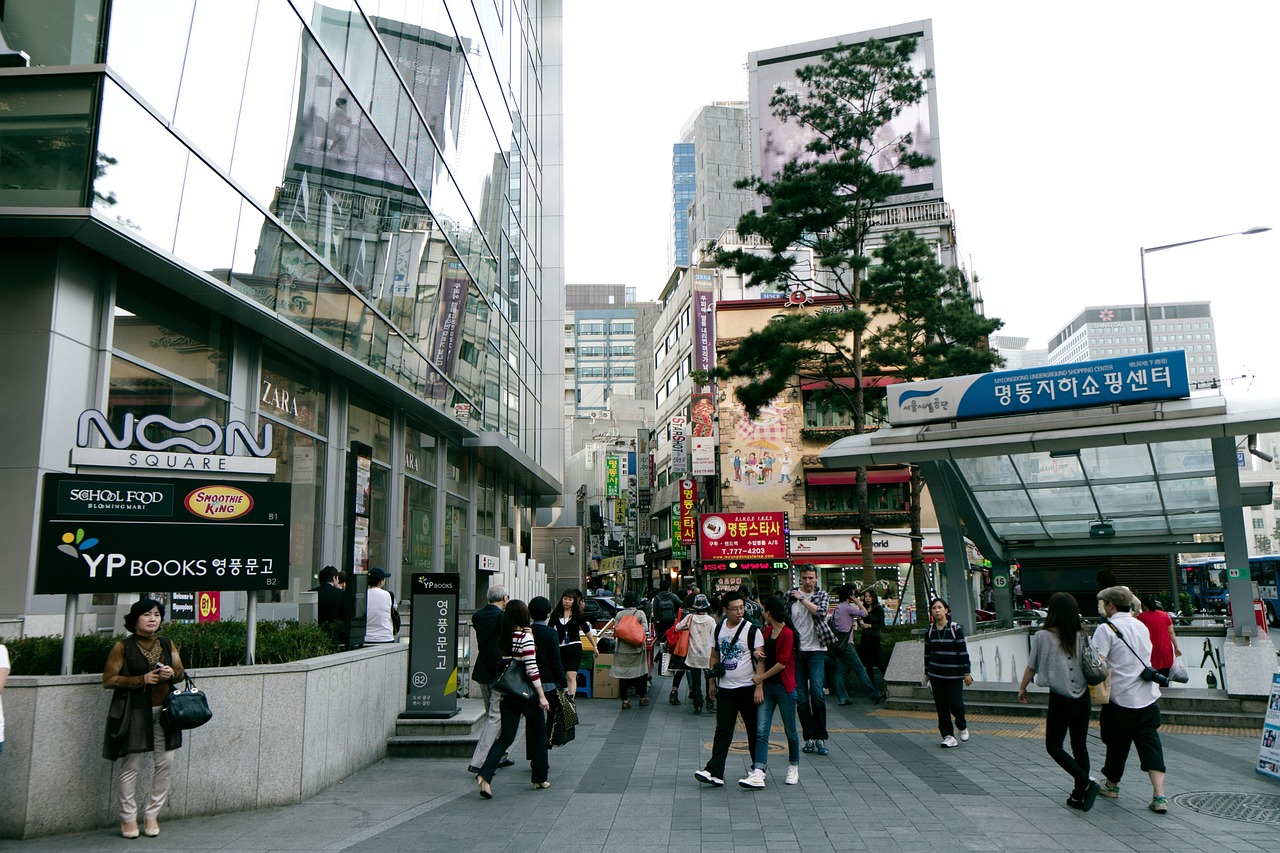
- Myeongdong Underground Shopping Center — Beneath Myeongdong Station with over 100 small shops selling accessories, phone cases, and K-pop merchandise.
Myeongdong Cathedral
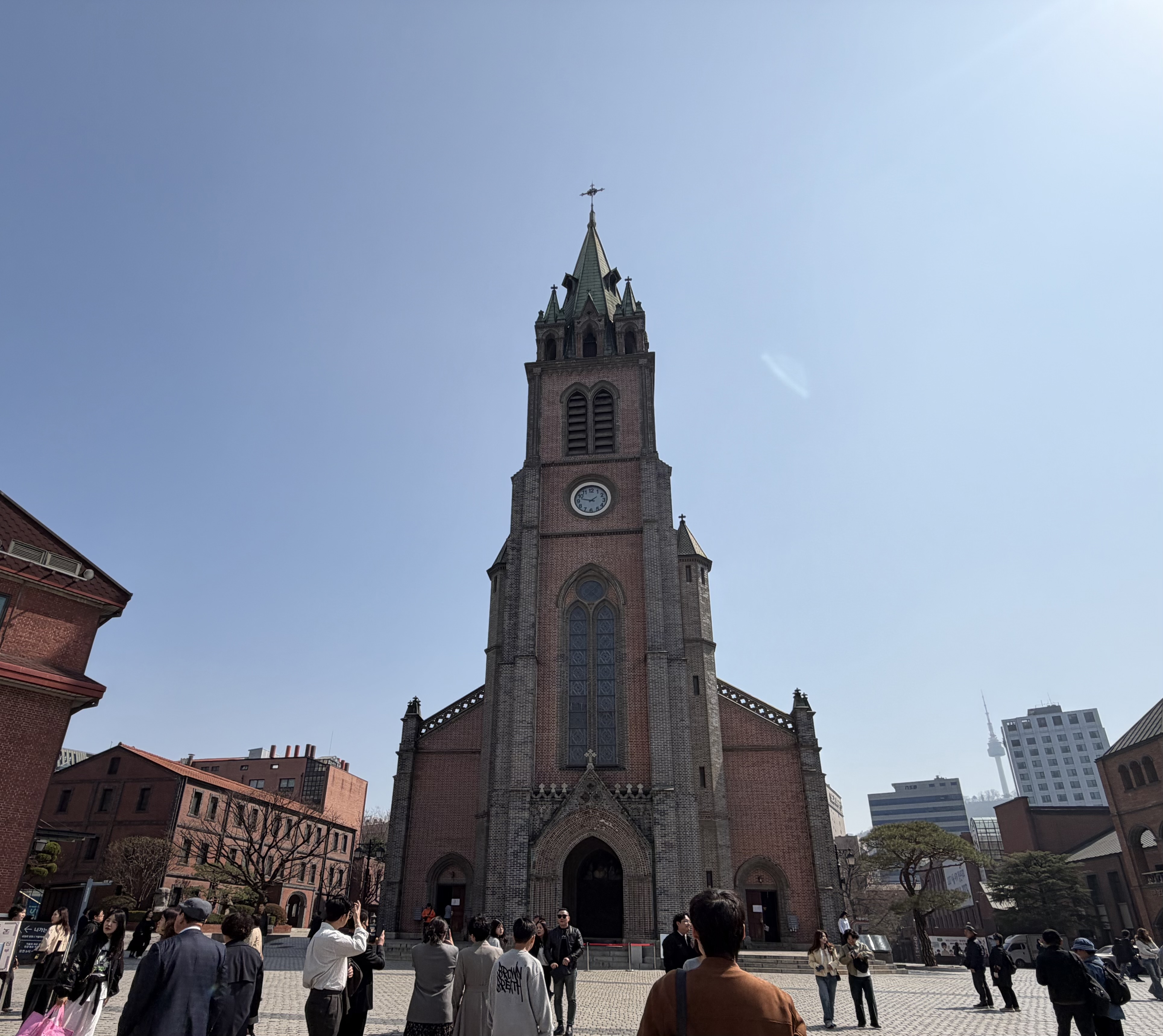
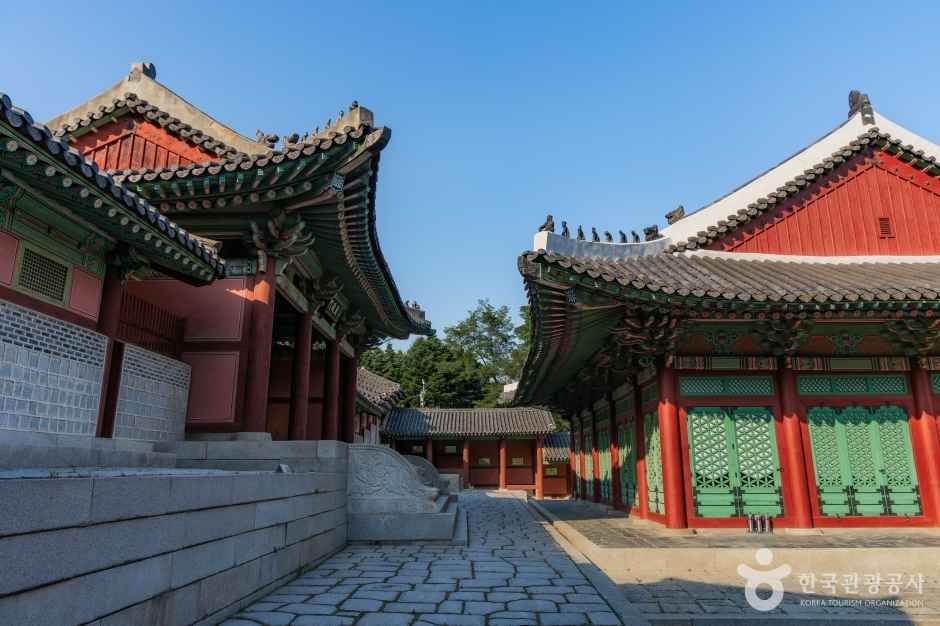
Myeongdong Cathedral (명동대성당) is Korea's first brick Gothic cathedral, completed in 1898. Rising above the shopping frenzy, it offers a peaceful escape with beautiful stained glass and serene gardens.
It played a key role in Korea's democracy movement in the 1980s. Free entry, open daily. A 5-minute walk uphill from the main shopping street.
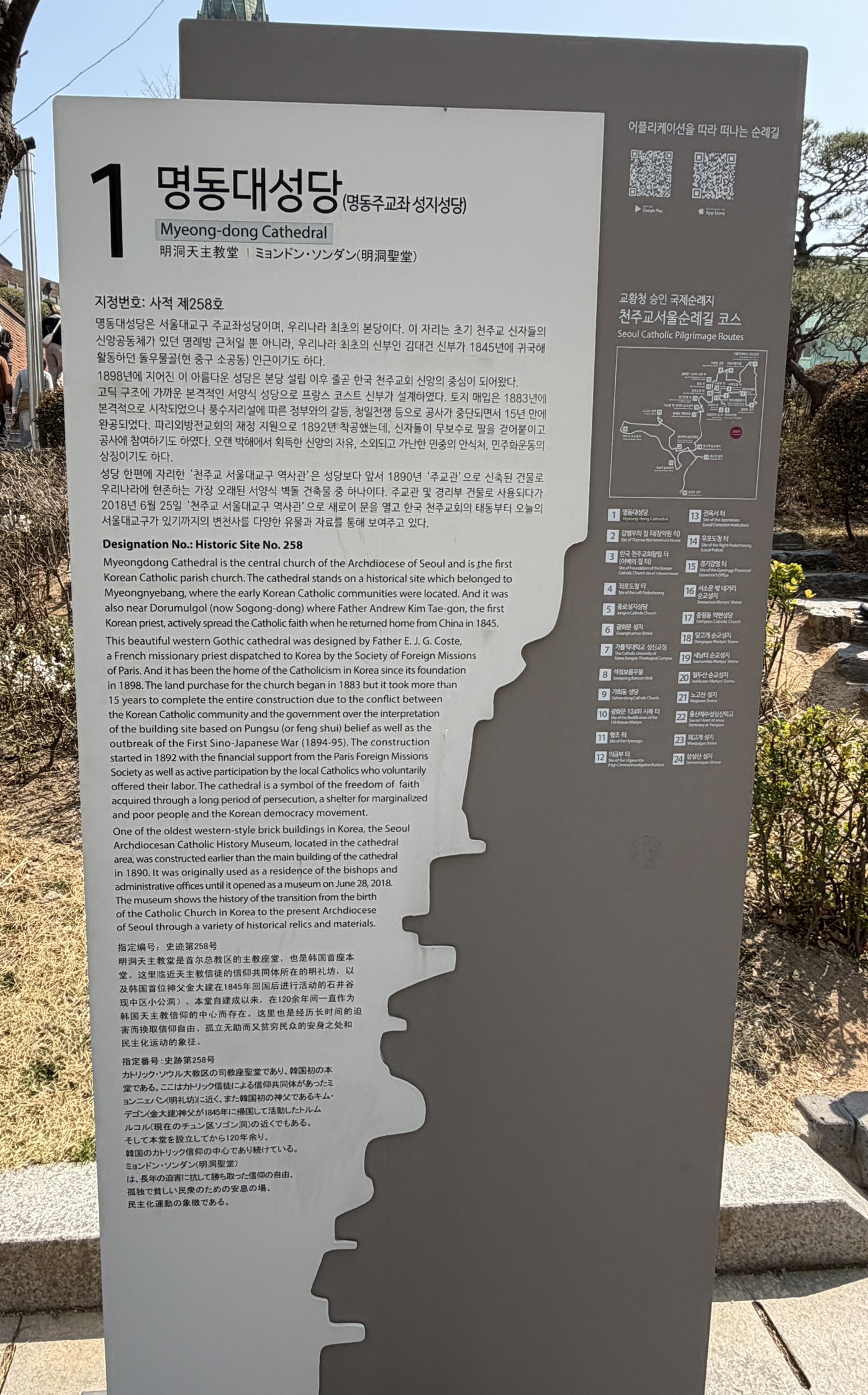
Traveler Tips
Myeongdong is one of Seoul's most tourist-friendly areas — here's what you need to know before you go.
Luggage & Locker Storage
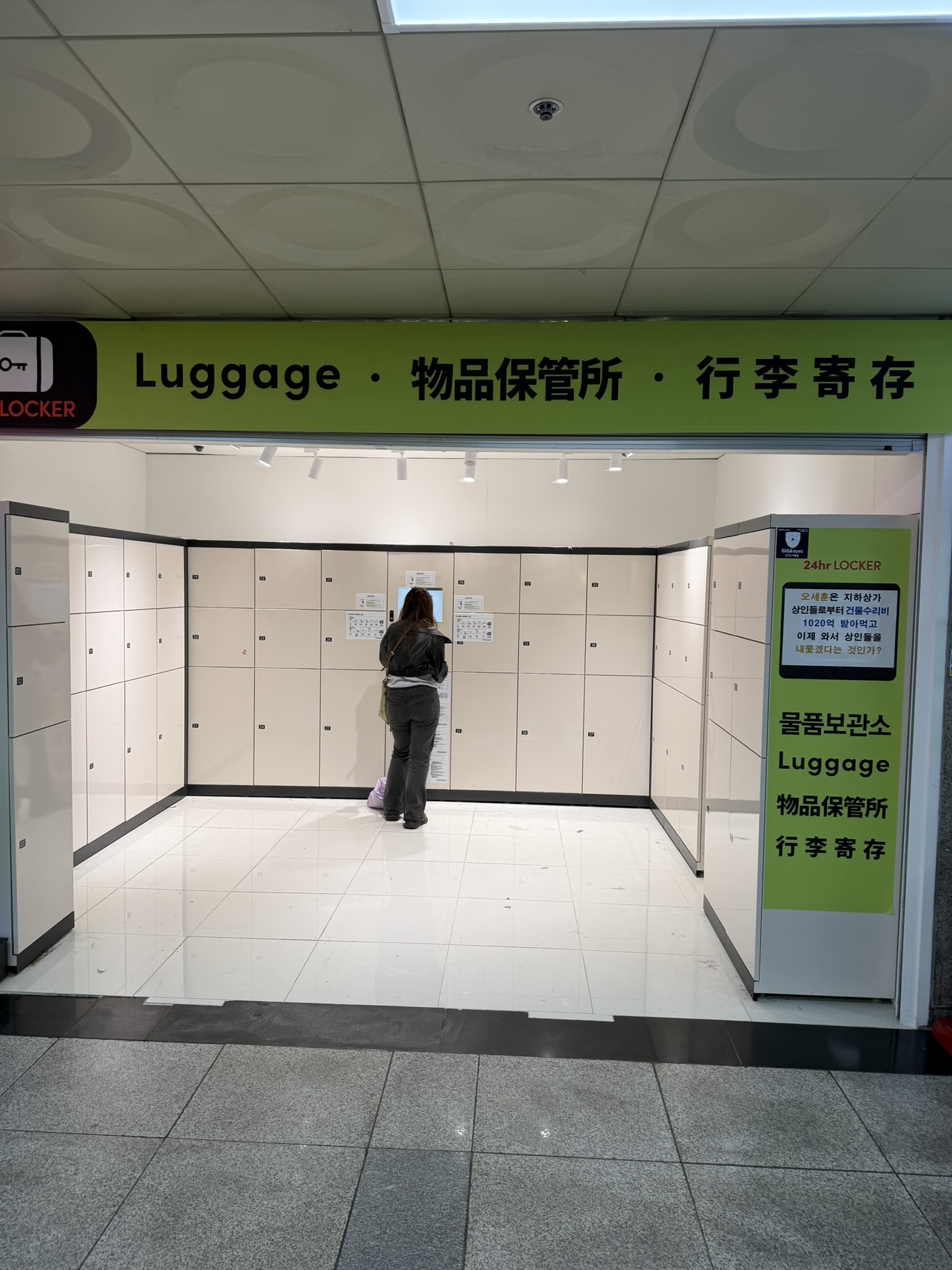
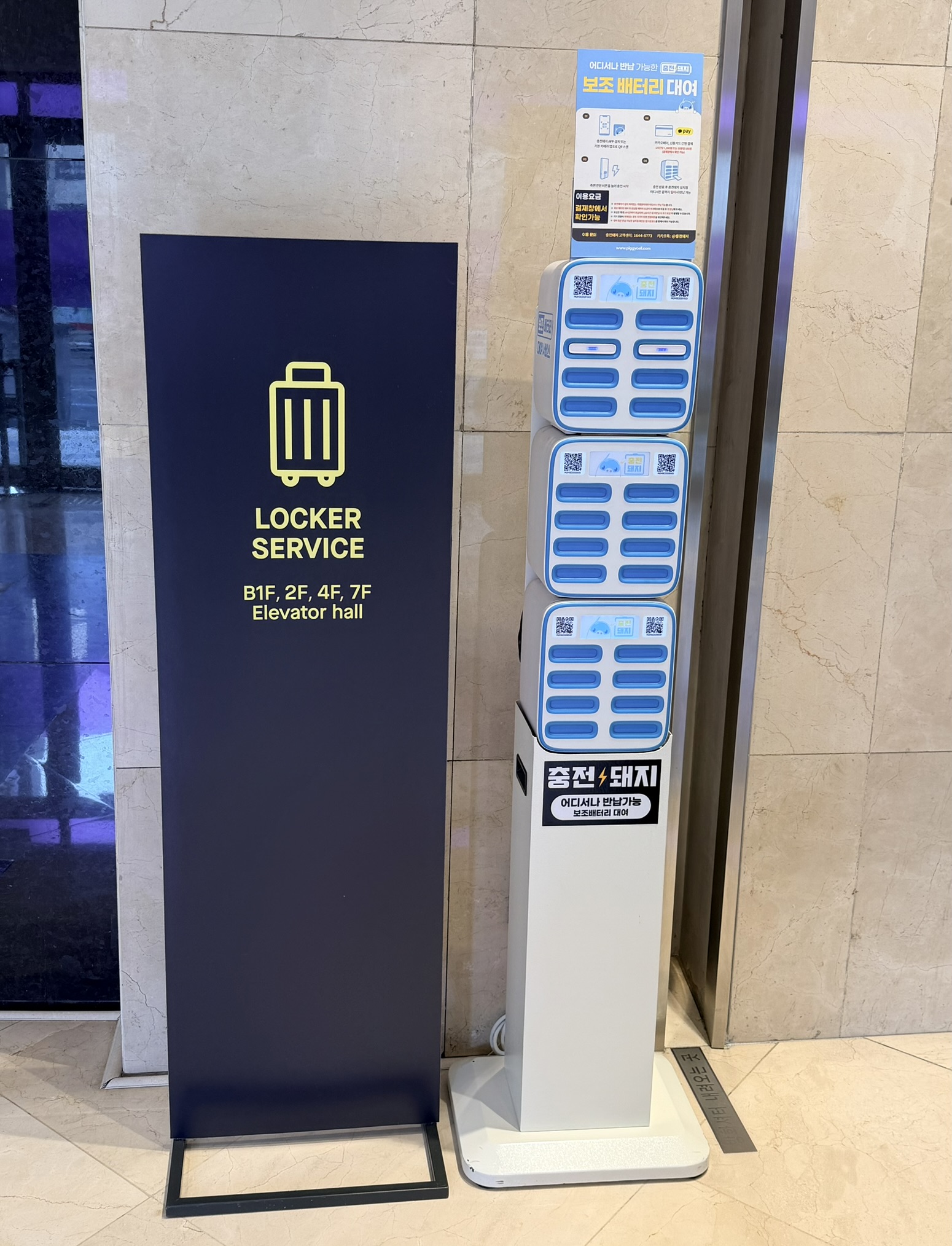
Several buildings in Myeongdong offer luggage storage (짐 보관). The locker service in the main shopping complex covers B1F, 2F, 4F, and 7F near the elevator hall — ideal if you're doing a full day of shopping.
Money Exchange
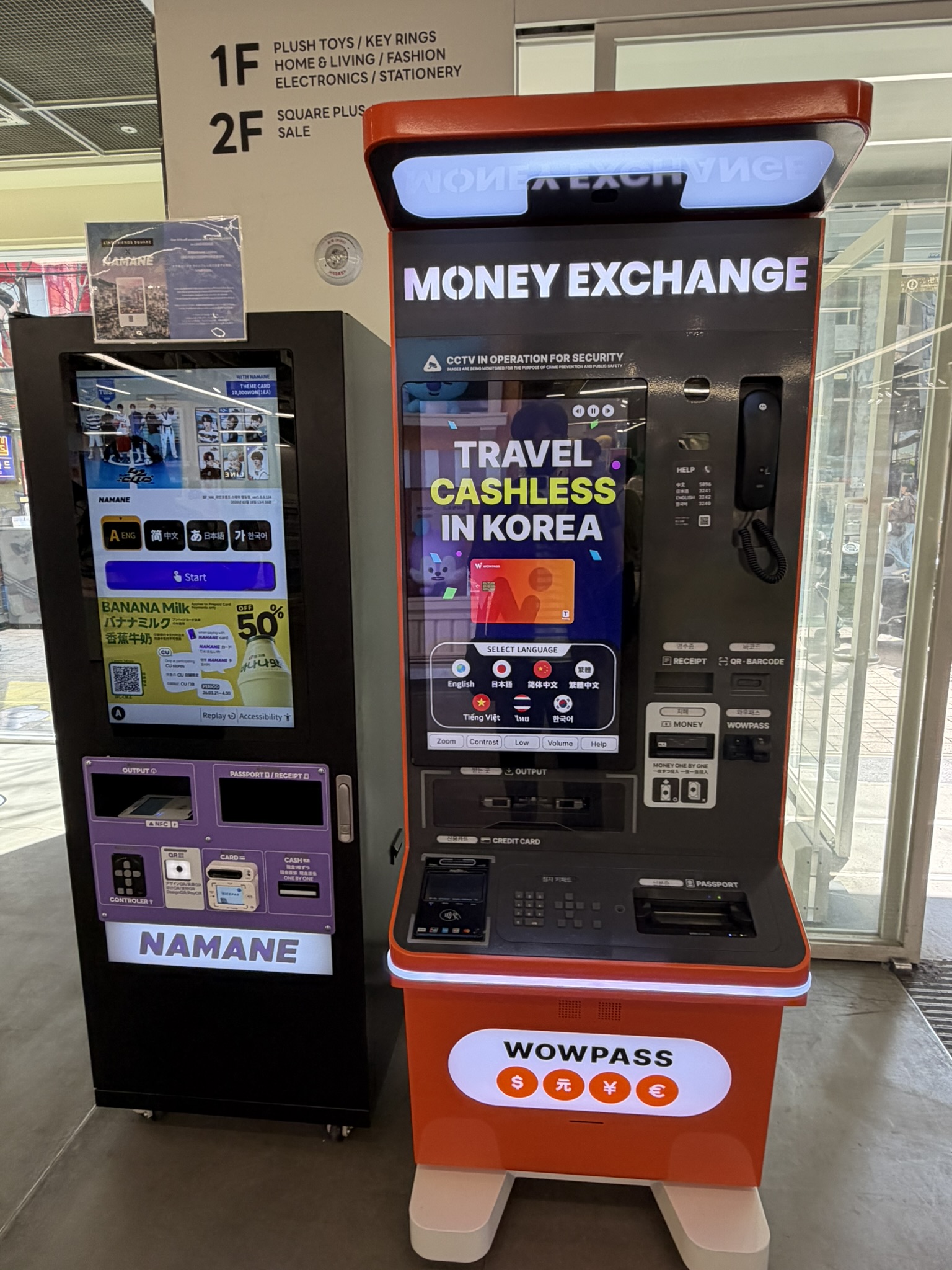
Myeongdong has some of Seoul's best exchange rates. Look for private exchange booths along the main street — they consistently beat bank rates. For quick cash, WowPass kiosks accept foreign cards and dispense Korean won instantly.
💡 Phone Charging & T-Money
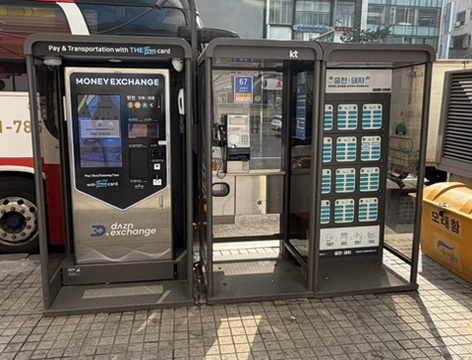
Outdoor kiosks near bus stops offer both money exchange and phone charging. You can also load T-Money (transit card) here. Useful if you're heading to Namsan right after shopping.
From Myeongdong to Namsan Cable Car
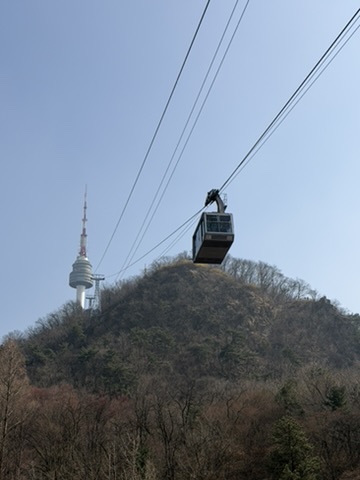
After Myeongdong, Namsan Mountain and N Seoul Tower are just a 10-minute walk away — making this a natural next stop, especially at sunset.
Getting to the Cable Car
- From Myeongdong main street, walk south toward Myeongdong Cathedral.
- Pass the cathedral and continue uphill on Toegyero.
- Follow signs for Namsan Cable Car (남산케이블카).
- Total walk: about 10 minutes from the main shopping street.
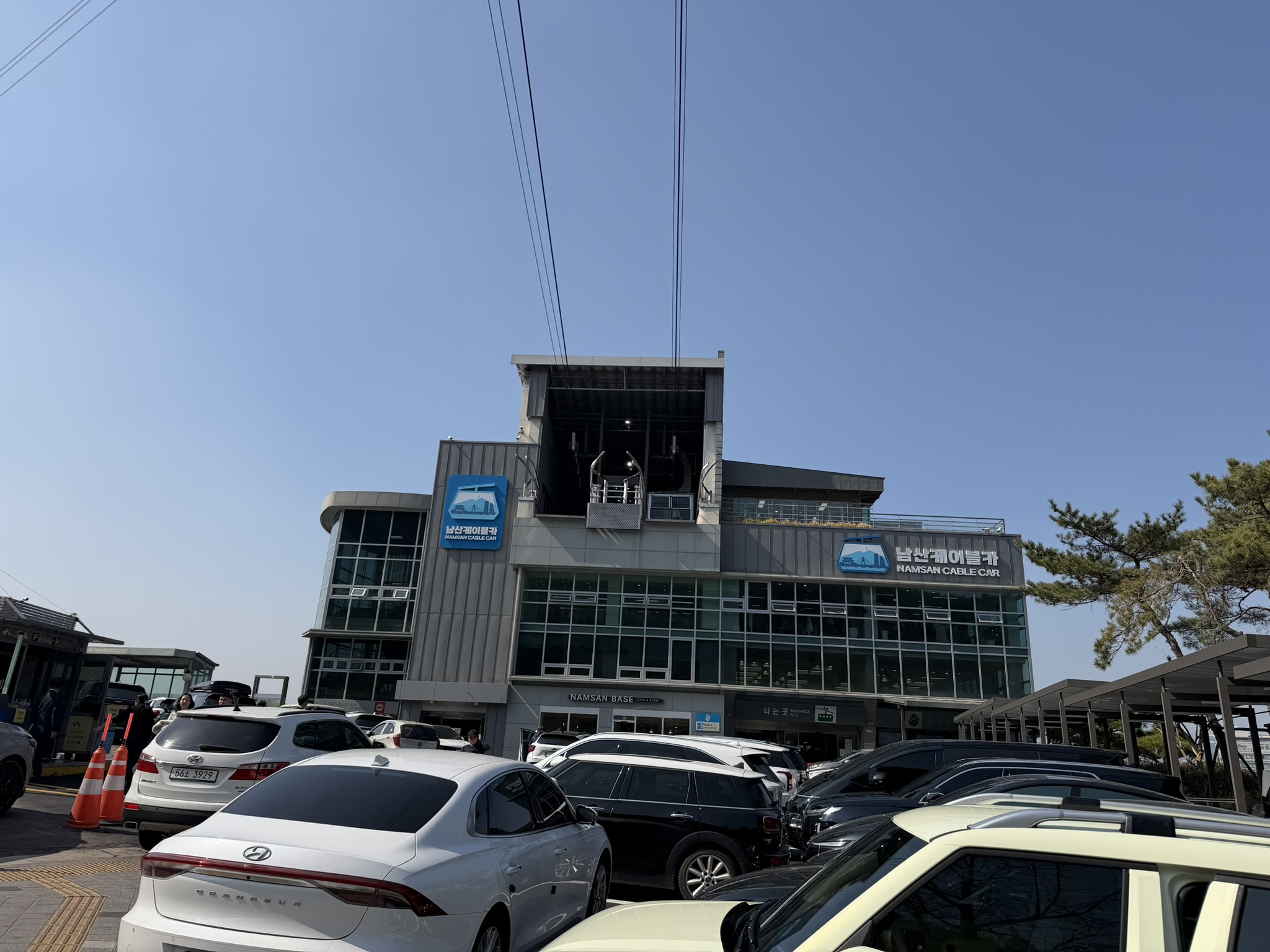
Cable Car Info
| Item | Details |
|---|
| Round trip fare | ₩15,000 (adult) |
| One way fare | ₩10,000 (adult) |
| Operating hours | 10:00 AM – 11:00 PM (last ride up 10:30 PM) |
| Ride duration | About 3 minutes each way |
| Alternative | Hike up in 40 minutes via Namsan Trail |
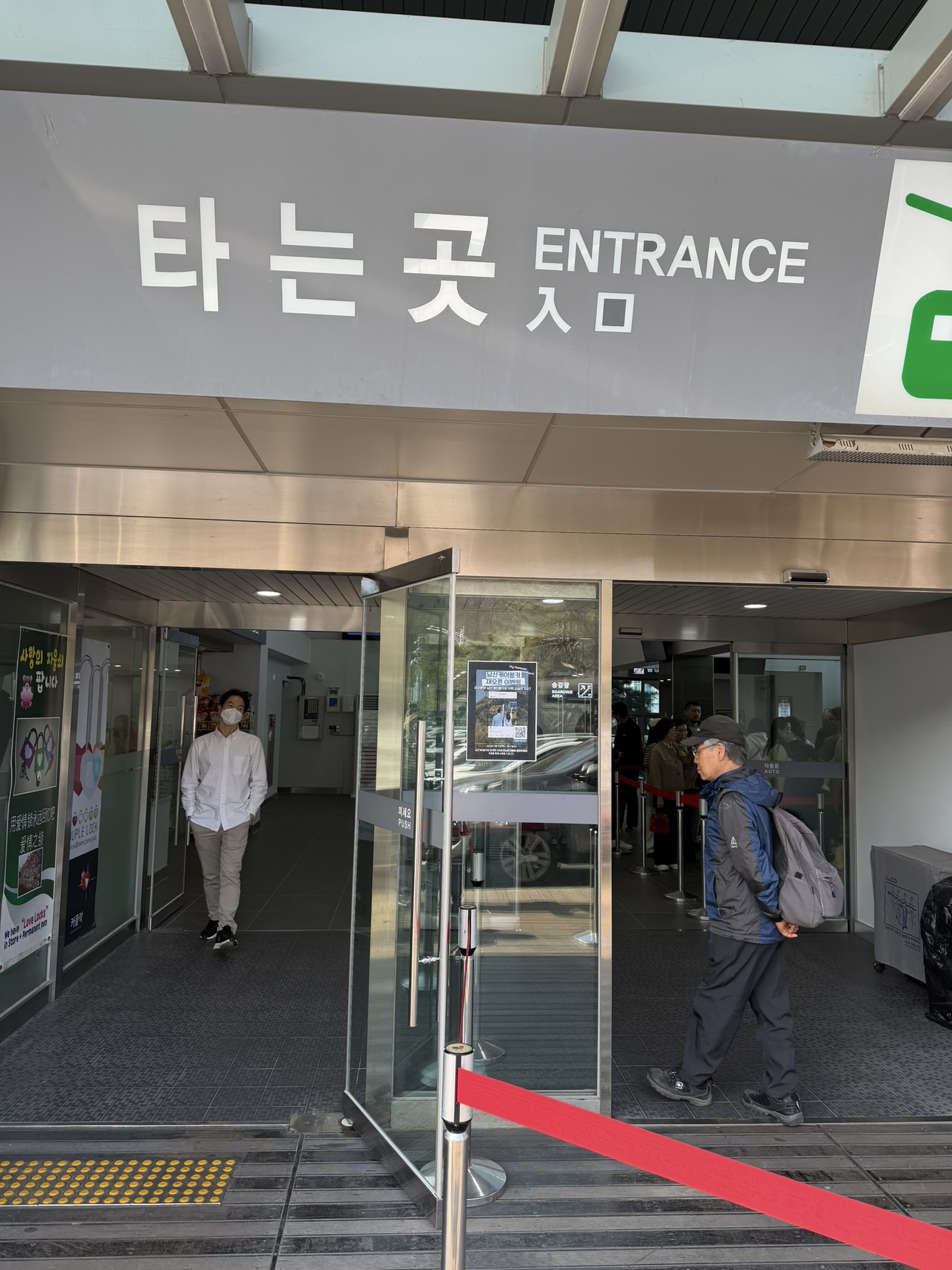
ℹ️ Best Time for the Cable Car
Aim for 30 minutes before sunset for the best views. The tower observation deck stays open until midnight. On weekends, expect queues of 20–40 minutes at the cable car — arrive early or hike up instead.
Best Strategy for Your Visit
- Start at 2 PM — Shops are all open, crowds are still manageable.
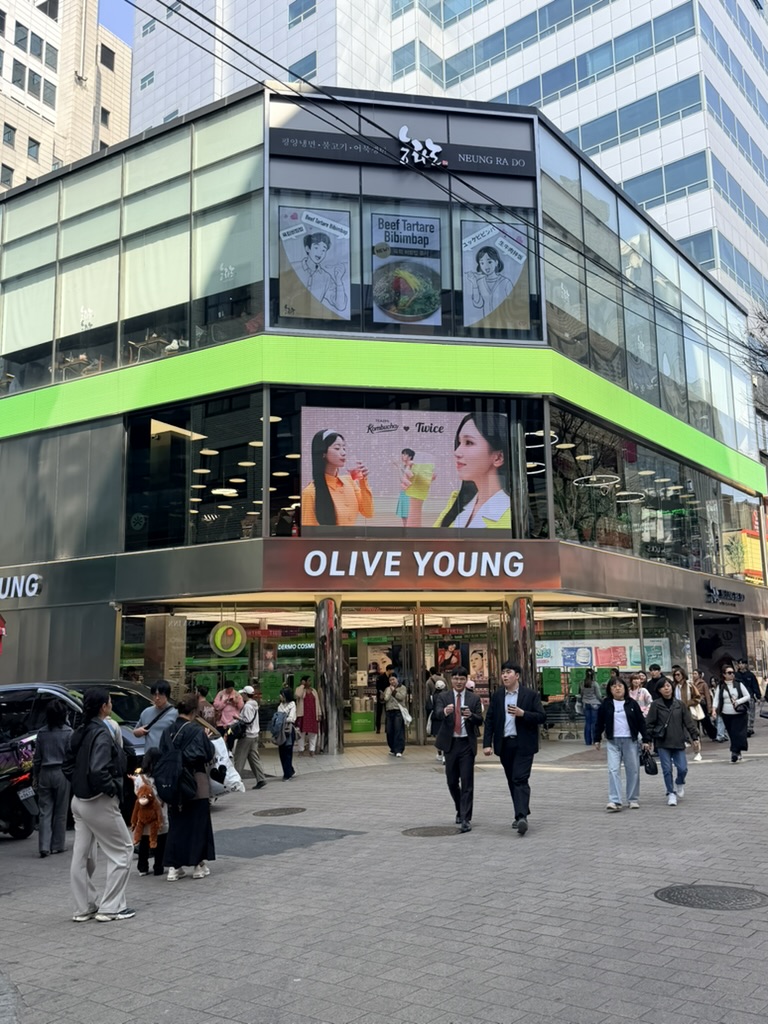
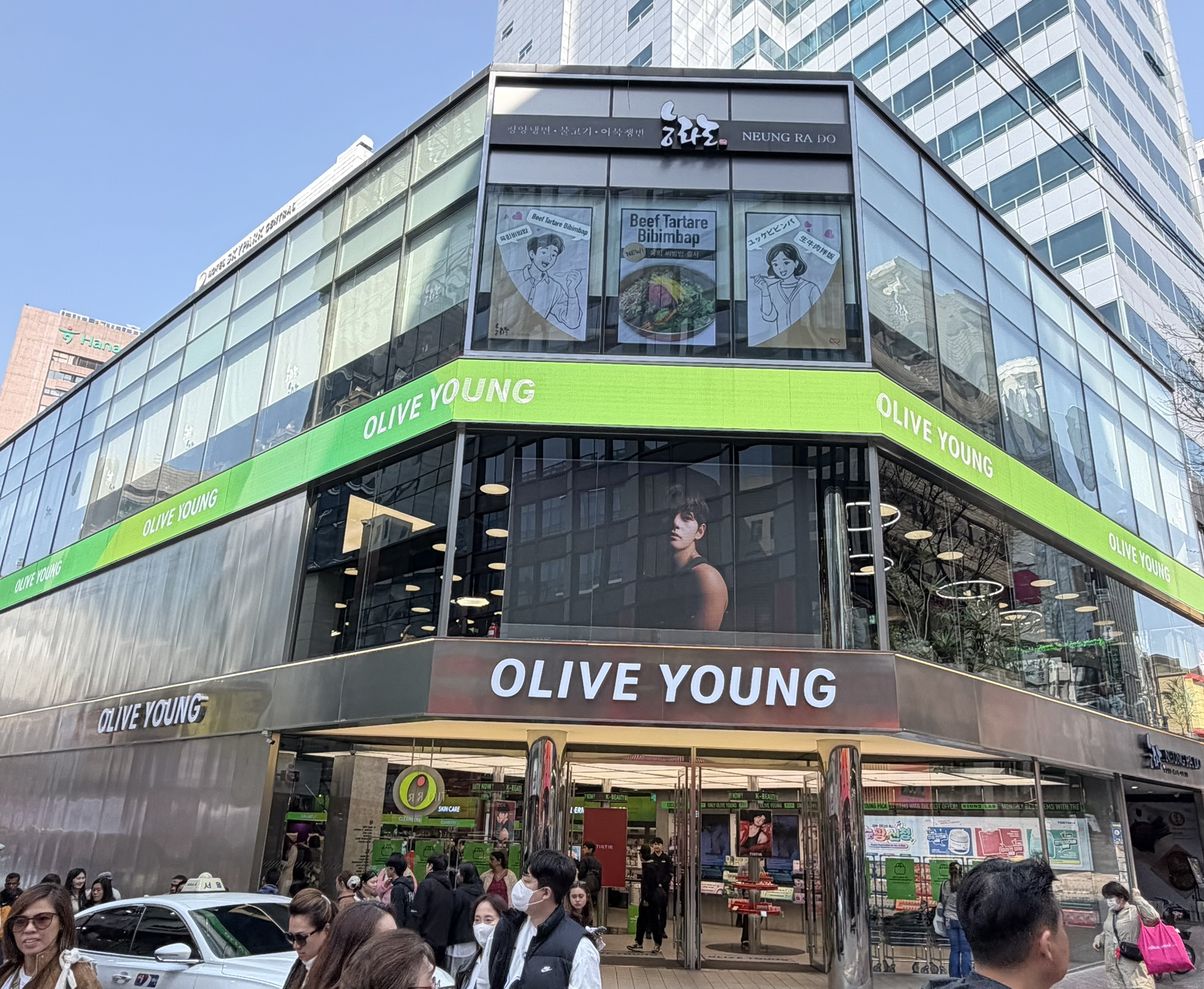
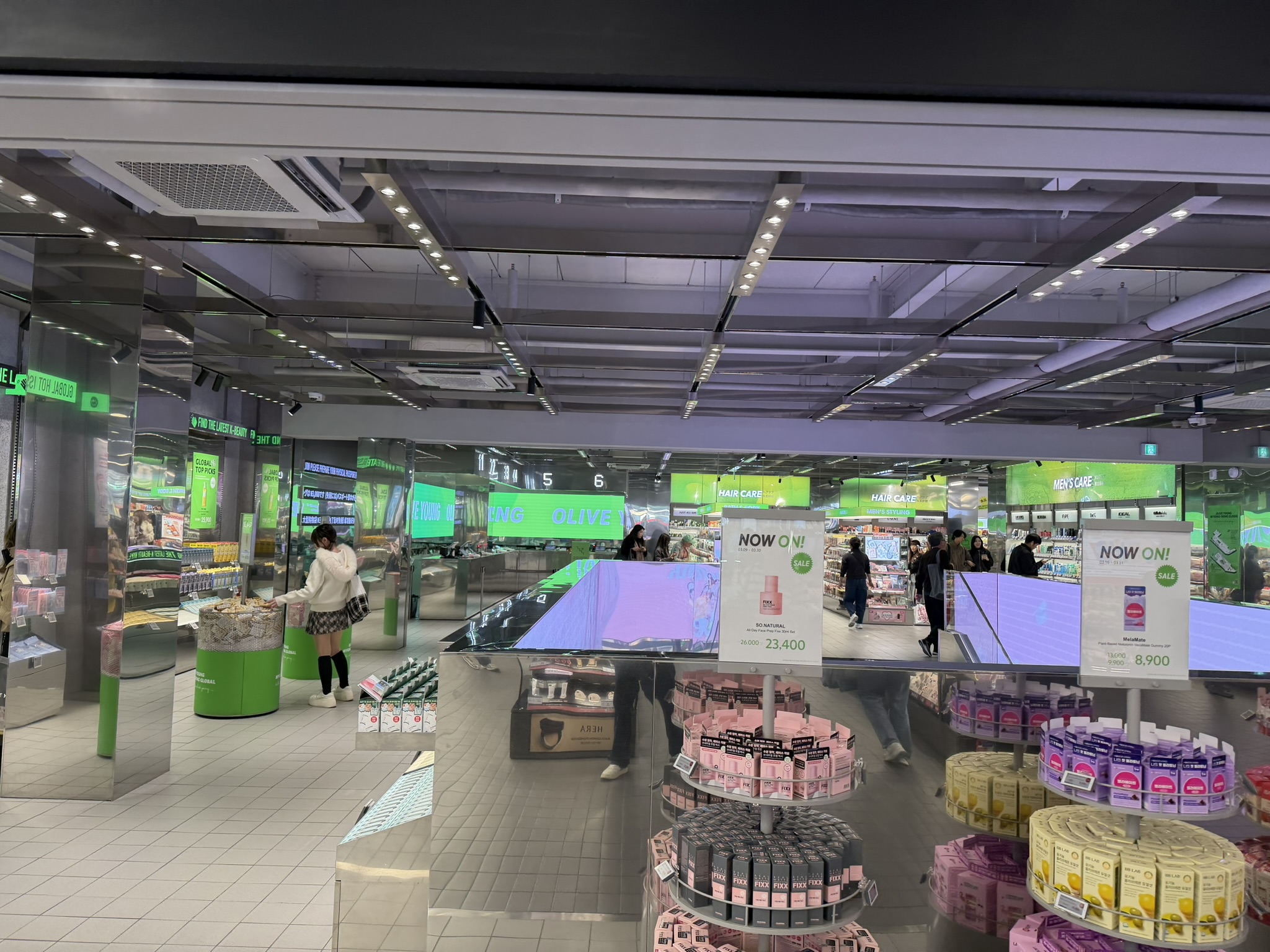
- Hit K-beauty stores first — Compare prices across multiple Olive Young locations.
- Drop luggage — Use the locker service if you plan to buy a lot.
- Street food break at 4 PM — Vendors are set up, lines are still short.
- Explore side streets — The best cafes and boutiques are off the main drag.
- Head to Namsan at sunset — Walk to the cable car (10 min) for evening tower views.
- Return for dinner at 7 PM — Many restaurants have dinner specials.
Getting Here
- Subway: Myeongdong Station (Line 4), Exit 5 or 6 — straight into the shopping district.
- Bus: Multiple buses stop on Toegyero (대로) along the south edge of Myeongdong.
- From Hongdae: 20 minutes via Line 2 → Line 4 transfer at Euljiro 3-ga.
Best Sit-Down Restaurants in Myeongdong
Street food is Myeongdong's headline act, but the neighbourhood has a solid bench of sit-down restaurants that most visitors walk past while chasing the next skewer. These are the places worth slowing down for — restaurants where you can rest your bags, order properly, and eat the way Koreans actually eat when they come here for a meal rather than a snack on the move.
Korean BBQ and Grilled Pork
서문돌판생삼겹살 (Seomun Dolpan Saengsamgyeopsal) (서문돌판생삼겹살) near Myeongdong Station is one of the most accessible BBQ restaurants in the area for first-time visitors. Stone-plate cooking — the pork belly sears on a heated stone slab rather than a wire grill — keeps the fat from dripping and produces a crispier exterior. English menus are available, the staff are used to international guests, and a full meal with side dishes typically runs ₩15,000–20,000 per person before drinks. It fills up on weekend evenings, so arriving before 6:30pm makes things easier.
💡 First-Timer Order Strategy
Order one portion of samgyeopsal (삼겹살) and one of moksal (목살, pork neck) for a table of two. Moksal stays juicier and forgives slightly imprecise cooking — a useful safety net while you get your bearings. Side dishes (banchan) are free and refillable; just flag down the staff.
Naengmyeon (Cold Noodles)
Myeongdong has a handful of dedicated naengmyeon (냉면) restaurants that draw regulars from across Seoul, not just tourists. Cold buckwheat noodles in an icy beef broth — or in a spicy gochujang dressing, the bibim version — is the kind of dish that seems baffling on first encounter and then becomes the thing you crave for weeks afterward. It is particularly good after a few hours of shopping; the cold broth resets the palate completely. A bowl typically costs ₩12,000–16,000. Look for restaurants displaying the word 냉면 prominently on their signage and a queue of Korean office workers at lunch — that combination is a reliable quality signal.
Kalguksu and Mandu (Knife Noodles and Dumplings)
Several small restaurants tucked into Myeongdong's side streets specialise in kalguksu (칼국수) — hand-cut wheat noodles in a clear anchovy broth — paired with pan-fried or steamed mandu (만두, dumplings). This is comfort food at its most straightforward: a single bowl, a plate of dumplings, and no decisions to make. Prices are low (₩8,000–12,000 for a full meal), portions are generous, and the format is easy to navigate without Korean language skills. These restaurants tend to be small, family-run, and decorated with nothing more than a handwritten menu on the wall — walk in, point at what the next table has ordered, and you will be fine.
ℹ️ English Menu Availability
Most sit-down restaurants in Myeongdong now carry English menus or have photo menus — the neighbourhood's international footfall has made this a practical necessity. If you do not see one, ask: "English menu, please?" usually works. Prices at tourist-facing restaurants are somewhat higher than comparable spots in nearby Euljiro or Insadong, but the accessibility and convenience largely justify the difference for a first visit.
K-Pop & K-Drama Connections
Myeongdong has a long-standing relationship with Korean pop culture that goes deeper than the official merchandise stores on the main drag. Whether you are here for the albums, the photocards, or to stand on a street corner you recognise from a drama, the neighbourhood delivers on multiple levels.
K-Pop Goods Shops
The stretch of Myeongdong running between the main boulevard and the Lotte Department Store is dense with K-pop goods shops — unofficial and official — selling albums, photocards, lightsticks, and branded merchandise from every major agency. Shops like Hottracks (핫트랙스) inside Lotte carry official releases, while the smaller independent shops on the side streets specialise in photocards, rare editions, and group-specific merchandise that standard retailers do not stock.
If you are a BLACKPINK fan, the YG-affiliated merchandise is most reliably found at official channels inside Lotte Young Plaza. BTS and HYBE artists are represented at the Weverse Shop popup locations that rotate through the district, and at general K-pop shops carrying Weverse Albums. It is worth checking the Weverse app for any active popup events in Myeongdong before you arrive — HYBE has used the area for limited-run installations tied to album releases.
SM Entertainment Store
SM Store Myeongdong (SM타운 COEX는 강남이지만 명동 팝업 잦음) — SM Entertainment runs periodic popup installations in Myeongdong tied to EXO, aespa, NCT, and SHINee releases. These are separate from the main SMTown Coex complex in Gangnam. Check SM's official social channels before your visit for current popup locations; they tend to appear in the Lotte Young Plaza basement or in street-level retail units on the main boulevard.
K-Drama Filming Locations
Myeongdong Cathedral (명동성당) is the most recognisable filming location in the area, appearing in dramas across multiple decades including scenes in My Love from the Star (별에서 온 그대). The cathedral steps and the wide stone forecourt have been used for both romantic and dramatic confrontation scenes — if you have watched enough Korean television, you will feel the flicker of recognition when you walk up.
The main Myeongdong shopping street itself appears in too many dramas and films to count, most often as background for chase scenes, spontaneous street performances, or the kind of crowd scene that signals "this is Seoul at its most alive." Hotel del Luna (호텔 델루나) used Myeongdong Cathedral's surroundings extensively. If you want to track specific scenes, the Visit Seoul app has a drama location map that covers the area.
💡 Photocard Trading
Photocard trading happens informally at several spots in Myeongdong — near the Olive Young on the main street is a common meeting point. If you have duplicates you are willing to trade, bring them in a small binder. The community is welcoming to international fans and trading is conducted largely through held-up cards and hand gestures, no shared language required.
Seasonal Guide to Myeongdong
Myeongdong operates differently across the four seasons, and knowing what each time of year offers — and what it costs in terms of crowds — helps set realistic expectations.
Spring: Cherry Blossoms and Namsan
Late March to mid-April brings cherry blossoms to the slopes of Namsan, which sits directly above Myeongdong and is reachable on foot in about 25 minutes from the main shopping street. The combination of a full morning on Namsan's blossom-lined paths followed by an afternoon in Myeongdong makes for one of Seoul's most satisfying spring days. The crowds in Myeongdong itself are manageable in spring compared to summer; the weather — cool, occasionally rainy — keeps visitor numbers slightly lower than the July and August peaks.
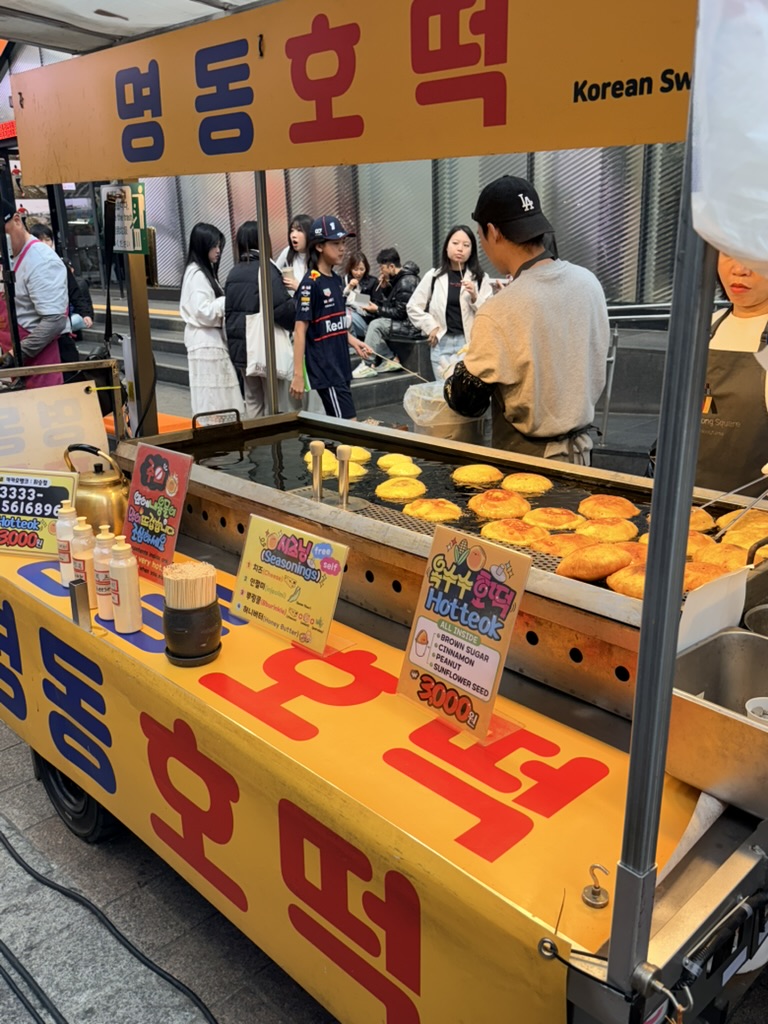
Spring is also when the street food stalls operate at full capacity. Vendors who close or reduce hours in winter reopen in March, and the full lineup of hotteok (호떡), tornado potato, and grilled skewers is back in force.
Summer in Seoul (June through August) is hot and humid. The practical response, shared by locals and tourists alike, is to avoid the peak afternoon heat and do most of Myeongdong in the evening. From around 5pm onward the temperature becomes manageable, the street food stalls extend their hours, and the pedestrianised sections of Myeongdong take on a genuinely festive atmosphere after dark. Many of the K-beauty stores stay open until 10pm or later during summer.
The trade-off is crowds. July and August bring the heaviest tourist footfall of the year. If you visit during this window, treat navigating the Saturday main street as part of the experience rather than a problem to solve.
Autumn: The Best Weather Window
October and November offer the most comfortable conditions for a Myeongdong visit. Temperatures drop to a pleasant 10–18°C, the summer crowds thin, and the Namsan slopes turn amber and red in mid-to-late November. Autumn is the season that photographs best — the light is clear, the air is dry, and the street food tastes better in the slight chill. If you have any flexibility in your Seoul travel timing, autumn is the answer.
Winter: Christmas Lights and Colder Budgets
Myeongdong in December is one of Seoul's better Christmas experiences. The main shopping street is decorated with overhead lights from late November through early January, and the department stores stage elaborate window displays. The street food stalls pivot to cold-weather items: hotteok filled with brown sugar and cinnamon syrup becomes the dominant smell on the street, and vendors selling roasted chestnuts and warm fish-shaped pastries (붕어빵, bungeo-ppang) appear at every corner.
The practical caveat: Myeongdong in January and February is genuinely cold (often -5°C or below), and some street food vendors reduce hours or close entirely on the coldest days. Dress in proper layers.
ℹ️ Chuseok and Lunar New Year Hours
During Chuseok (추석) and Lunar New Year (설날), many independently-run restaurants and smaller shops in Myeongdong close for two to four days around the holiday. The major department stores (Lotte, Shinsegae) typically remain open and often run holiday sales. Street food stalls are a mixed picture — some vendors take the holidays off, others see them as a high-traffic opportunity. If you are visiting during a major Korean holiday, check individual restaurant hours in advance and have a backup plan.
One of Myeongdong's most underused advantages is that it runs late. While much of Seoul's retail shuts down by 9pm, Myeongdong operates on a later clock — a function of its tourist demographic and the cultural habit of shopping after dinner rather than before it.
Late-Night Stores
The flagship K-beauty stores — Olive Young, Innisfree, and TONYMOLY on the main boulevard — typically close between 10pm and 11pm on weekdays, and some extend to midnight on Friday and Saturday. This makes a post-dinner K-beauty run entirely viable; in fact, the stores are noticeably calmer after 9pm than they are during the 3–7pm rush. If you want to actually browse rather than navigate around other shoppers, the late evening is the window to use.
Lotte Department Store closes earlier (around 8pm on most days), but Lotte Young Plaza — the younger, trendier section of the complex aimed at the 20s demographic — often runs slightly later on weekends. Check the current hours on the Lotte website before planning around a specific store.
Street Food After Dark
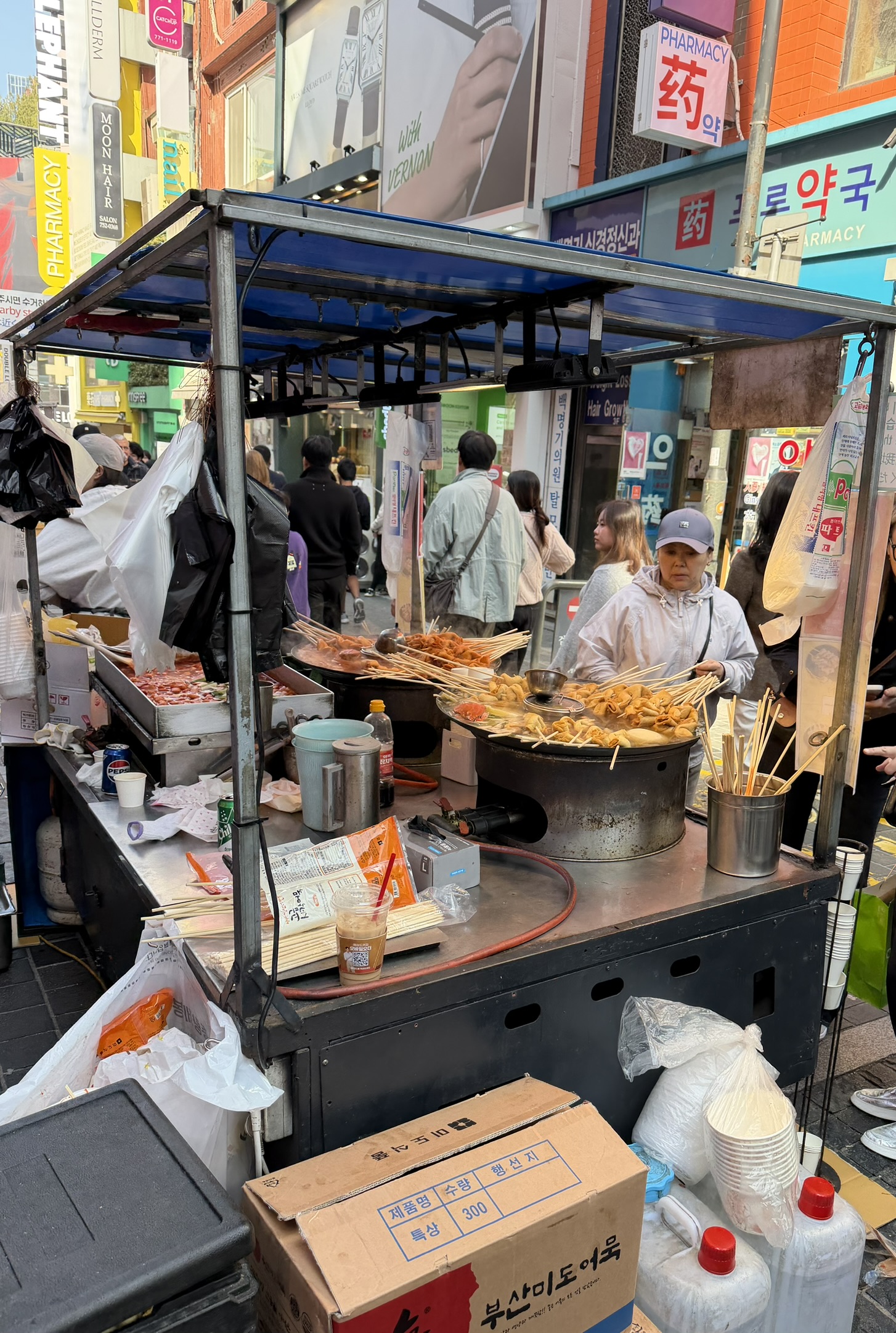
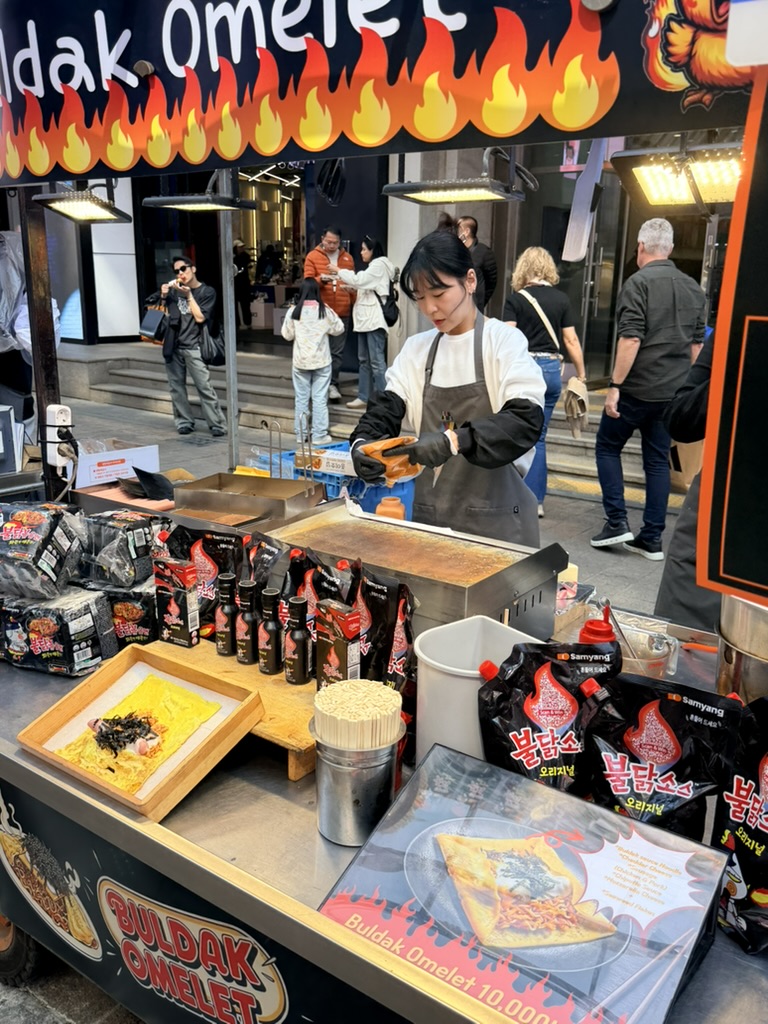
The street food stalls in Myeongdong hit their peak atmosphere between 7pm and 10pm. The crowds thin just enough to make queuing manageable, the lighting from the stalls creates a warm glow over the pedestrianised street, and vendors who have been trading since the afternoon are operating at full pace. This is the time for the food that benefits from the theatre of watching it being made: lobster-on-a-stick being flambéed, tornado potatoes being cut in real time, and the hotteok vendor pressing the dough on the griddle in front of you.
Most street food stalls begin to close between 10pm and 11pm, with a few running to midnight on busy nights. By midnight the street is noticeably quieter, which is also when it is most pleasant to simply walk — no agenda, no queue, just the neighbourhood at rest.
Late-Night Eating Options
For a proper late-night meal, the area around Myeongdong has a reliable supply of 24-hour options within walking distance. The convenience stores — CU, GS25, and 7-Eleven — are all present and offer the full Korean convenience store meal experience: ramen cooked in-store, triangle kimbap (삼각김밥), pre-made tteokbokki, and a decent selection of Korean fried chicken snacks. For something more substantial after 10pm, the streets running east toward Euljiro have a higher density of late-closing pojangmacha-style eateries.
💡 Night Photography
Myeongdong at night is considerably more photogenic than during the day. The neon signs, the overhead lights, and the warm light from the street food stalls combine to create the visual that most people associate with "Seoul at night." The best angle on the main street is from the Lotte Department Store end looking south, especially in winter when the overhead Christmas lights are up. A phone camera handles this well — the bright artificial light means you do not need specialised equipment.
Budget Planning for Your Myeongdong Visit
Myeongdong has a reputation as an expensive tourist district, which is partially accurate and partially a function of not knowing where to spend and where to hold back. The range between a ₩30,000 visit and a ₩200,000+ visit is genuinely wide, and the higher budget does not automatically translate to a better experience.
The ₩30,000-or-Less Visit
A tight budget forces good choices. The street food is already among the best value-per-experience in Seoul — a full circuit of the main stalls covering hotteok, skewers, tornado potato, and a cup of something to drink comes to ₩10,000–15,000 if you are selective. Add a sit-down lunch at a kalguksu or mandu restaurant (₩8,000–12,000) and you have a complete Myeongdong food experience for under ₩30,000.
K-beauty shopping on this budget means samples and one or two targeted purchases rather than a haul. Olive Young's own-brand products are well-reviewed and significantly cheaper than the brand names; a moisturiser and a sunscreen from the Olive Young range will cost ₩12,000–18,000 combined. Sheet masks at ₩1,000–3,000 each are the canonical budget K-beauty purchase — buy a selection, use them on the flight home.
- Street food circuit: ₩10,000–15,000
- Sit-down lunch (kalguksu or mandu): ₩8,000–12,000
- Olive Young own-brand skincare (2 items): ₩12,000–18,000
- Sheet mask selection (5 masks): ₩5,000–15,000
- Total: ₩35,000–60,000 for food + targeted K-beauty
The ₩100,000 Full-Experience Visit
A mid-range Myeongdong day covers the main experiences without significant compromise. A sit-down Korean BBQ dinner for two (₩40,000–50,000 including drinks), a proper browse through the K-beauty stores with one or two brand-name purchases (₩30,000–50,000 depending on what you are after), and a street food session covering the full lineup (₩15,000–20,000 for two people) fits within ₩100,000 per person with room to spare.
- Korean BBQ dinner (per person share): ₩20,000–25,000
- K-beauty mid-range purchase (Laneige, COSRX, etc.): ₩30,000–50,000
- Street food (two people, shared): ₩8,000–12,000 per person
- Coffee or boba drink: ₩5,000–7,000
- Total: ₩65,000–95,000 per person
The Unlimited Day (₩200,000+)
At the higher end, Myeongdong becomes a different place. Department store K-beauty — Sulwhasoo, History of Whoo, La Mer Korea exclusives — is where the spend accelerates quickly. A single Sulwhasoo First Care Activating Serum runs ₩85,000–120,000; a History of Whoo Bichup set starts at ₩150,000 and climbs steeply. The department store concessions are where Korean luxury skincare is purchased by people who know exactly what they want and have researched the tax refund process in advance.
At this budget level, dinner at a dedicated galbi restaurant within reach of Myeongdong (Seocho or Jung-gu) adds ₩35,000–50,000+ per person. A round of the dessert cafes — bingsu (빙수) at a proper patbingsu specialist, a craftsmen-level coffee — adds another ₩20,000–30,000 without effort.
💡 Tax Refund for Non-Korean Residents
Purchases of ₩15,000 or more per receipt at participating stores qualify for a VAT refund (10% of the purchase price) for visitors on a tourist visa. Look for the "Tax Free" logo at the store entrance. Keep your receipts and passport; refunds can be processed at the tax refund counters at Incheon Airport before departure, or at the Myeongdong tax refund kiosk near the main street. On a significant K-beauty shop, this saving is worth the three minutes of paperwork.
ℹ️ Where to Save and Where to Spend
Save on: street food (comparable quality to sit-down, at a quarter of the price), sheet masks (quality is consistent across the price range), and anything available in Daiso (stationery, small accessories, basic cosmetic tools). Spend on: skincare actives and serums where ingredient quality differs meaningfully by brand, K-pop official merchandise (the unofficial versions are visibly lower quality on closer inspection), and a single proper sit-down meal rather than multiple mid-range snacks that add up to the same cost.
Best Sit-Down Restaurants in Myeongdong
Street food is Myeongdong's headline act, but the neighbourhood has a solid bench of sit-down restaurants that most visitors walk past while chasing the next skewer. These are the places worth slowing down for — restaurants where you can rest your bags, order properly, and eat the way Koreans actually eat when they come here for a meal rather than a snack on the move.
Korean BBQ and Grilled Pork
서문돌판생삼겹살 (Seomun Dolpan Saengsamgyeopsal) (서문돌판생삼겹살) near Myeongdong Station is one of the most accessible BBQ restaurants in the area for first-time visitors. Stone-plate cooking — the pork belly sears on a heated stone slab rather than a wire grill — keeps the fat from dripping and produces a crispier exterior. English menus are available, the staff are used to international guests, and a full meal with side dishes typically runs ₩15,000–20,000 per person before drinks. It fills up on weekend evenings, so arriving before 6:30pm makes things easier.
💡 First-Timer Order Strategy
Order one portion of samgyeopsal (삼겹살) and one of moksal (목살, pork neck) for a table of two. Moksal stays juicier and forgives slightly imprecise cooking — a useful safety net while you get your bearings. Side dishes (banchan) are free and refillable; just flag down the staff.
Naengmyeon (Cold Noodles)
Myeongdong has a handful of dedicated naengmyeon (냉면) restaurants that draw regulars from across Seoul, not just tourists. Cold buckwheat noodles in an icy beef broth — or in a spicy gochujang dressing, the bibim version — is the kind of dish that seems baffling on first encounter and then becomes the thing you crave for weeks afterward. It is particularly good after a few hours of shopping; the cold broth resets the palate completely. A bowl typically costs ₩12,000–16,000. Look for restaurants displaying the word 냉면 prominently on their signage and a queue of Korean office workers at lunch — that combination is a reliable quality signal.
Kalguksu and Mandu (Knife Noodles and Dumplings)
Several small restaurants tucked into Myeongdong's side streets specialise in kalguksu (칼국수) — hand-cut wheat noodles in a clear anchovy broth — paired with pan-fried or steamed mandu (만두, dumplings). This is comfort food at its most straightforward: a single bowl, a plate of dumplings, and no decisions to make. Prices are low (₩8,000–12,000 for a full meal), portions are generous, and the format is easy to navigate without Korean language skills. These restaurants tend to be small, family-run, and decorated with nothing more than a handwritten menu on the wall — walk in, point at what the next table has ordered, and you will be fine.
ℹ️ English Menu Availability
Most sit-down restaurants in Myeongdong now carry English menus or have photo menus — the neighbourhood's international footfall has made this a practical necessity. If you do not see one, ask: "English menu, please?" usually works. Prices at tourist-facing restaurants are somewhat higher than comparable spots in nearby Euljiro or Insadong, but the accessibility and convenience largely justify the difference for a first visit.
K-Pop & K-Drama Connections
Myeongdong has a long-standing relationship with Korean pop culture that goes deeper than the official merchandise stores on the main drag. Whether you are here for the albums, the photocards, or to stand on a street corner you recognise from a drama, the neighbourhood delivers on multiple levels.
K-Pop Goods Shops
The stretch of Myeongdong running between the main boulevard and the Lotte Department Store is dense with K-pop goods shops — unofficial and official — selling albums, photocards, lightsticks, and branded merchandise from every major agency. Shops like Hottracks (핫트랙스) inside Lotte carry official releases, while the smaller independent shops on the side streets specialise in photocards, rare editions, and group-specific merchandise that standard retailers do not stock.
If you are a BLACKPINK fan, the YG-affiliated merchandise is most reliably found at official channels inside Lotte Young Plaza. BTS and HYBE artists are represented at the Weverse Shop popup locations that rotate through the district, and at general K-pop shops carrying Weverse Albums. It is worth checking the Weverse app for any active popup events in Myeongdong before you arrive — HYBE has used the area for limited-run installations tied to album releases.
SM Entertainment Store
SM Store Myeongdong (SM타운 COEX는 강남이지만 명동 팝업 잦음) — SM Entertainment runs periodic popup installations in Myeongdong tied to EXO, aespa, NCT, and SHINee releases. These are separate from the main SMTown Coex complex in Gangnam. Check SM's official social channels before your visit for current popup locations; they tend to appear in the Lotte Young Plaza basement or in street-level retail units on the main boulevard.
K-Drama Filming Locations
Myeongdong Cathedral (명동성당) is the most recognisable filming location in the area, appearing in dramas across multiple decades including scenes in My Love from the Star (별에서 온 그대). The cathedral steps and the wide stone forecourt have been used for both romantic and dramatic confrontation scenes — if you have watched enough Korean television, you will feel the flicker of recognition when you walk up.
The main Myeongdong shopping street itself appears in too many dramas and films to count, most often as background for chase scenes, spontaneous street performances, or the kind of crowd scene that signals "this is Seoul at its most alive." Hotel del Luna (호텔 델루나) used Myeongdong Cathedral's surroundings extensively. If you want to track specific scenes, the Visit Seoul app has a drama location map that covers the area.
💡 Photocard Trading
Photocard trading happens informally at several spots in Myeongdong — near the Olive Young on the main street is a common meeting point. If you have duplicates you are willing to trade, bring them in a small binder. The community is welcoming to international fans and trading is conducted largely through held-up cards and hand gestures, no shared language required.
Seasonal Guide to Myeongdong
Myeongdong operates differently across the four seasons, and knowing what each time of year offers — and what it costs in terms of crowds — helps set realistic expectations.
Spring: Cherry Blossoms and Namsan
Late March to mid-April brings cherry blossoms to the slopes of Namsan, which sits directly above Myeongdong and is reachable on foot in about 25 minutes from the main shopping street. The combination of a full morning on Namsan's blossom-lined paths followed by an afternoon in Myeongdong makes for one of Seoul's most satisfying spring days. The crowds in Myeongdong itself are manageable in spring compared to summer; the weather — cool, occasionally rainy — keeps visitor numbers slightly lower than the July and August peaks.
Spring is also when the street food stalls operate at full capacity. Vendors who close or reduce hours in winter reopen in March, and the full lineup of hotteok (호떡), tornado potato, and grilled skewers is back in force.
Summer in Seoul (June through August) is hot and humid. The practical response, shared by locals and tourists alike, is to avoid the peak afternoon heat and do most of Myeongdong in the evening. From around 5pm onward the temperature becomes manageable, the street food stalls extend their hours, and the pedestrianised sections of Myeongdong take on a genuinely festive atmosphere after dark. Many of the K-beauty stores stay open until 10pm or later during summer.
The trade-off is crowds. July and August bring the heaviest tourist footfall of the year. If you visit during this window, treat navigating the Saturday main street as part of the experience rather than a problem to solve.
Autumn: The Best Weather Window
October and November offer the most comfortable conditions for a Myeongdong visit. Temperatures drop to a pleasant 10–18°C, the summer crowds thin, and the Namsan slopes turn amber and red in mid-to-late November. Autumn is the season that photographs best — the light is clear, the air is dry, and the street food tastes better in the slight chill. If you have any flexibility in your Seoul travel timing, autumn is the answer.
Winter: Christmas Lights and Colder Budgets
Myeongdong in December is one of Seoul's better Christmas experiences. The main shopping street is decorated with overhead lights from late November through early January, and the department stores stage elaborate window displays. The street food stalls pivot to cold-weather items: hotteok filled with brown sugar and cinnamon syrup becomes the dominant smell on the street, and vendors selling roasted chestnuts and warm fish-shaped pastries (붕어빵, bungeo-ppang) appear at every corner.
The practical caveat: Myeongdong in January and February is genuinely cold (often -5°C or below), and some street food vendors reduce hours or close entirely on the coldest days. Dress in proper layers.
ℹ️ Chuseok and Lunar New Year Hours
During Chuseok (추석) and Lunar New Year (설날), many independently-run restaurants and smaller shops in Myeongdong close for two to four days around the holiday. The major department stores (Lotte, Shinsegae) typically remain open and often run holiday sales. Street food stalls are a mixed picture — some vendors take the holidays off, others see them as a high-traffic opportunity. If you are visiting during a major Korean holiday, check individual restaurant hours in advance and have a backup plan.
One of Myeongdong's most underused advantages is that it runs late. While much of Seoul's retail shuts down by 9pm, Myeongdong operates on a later clock — a function of its tourist demographic and the cultural habit of shopping after dinner rather than before it.
Late-Night Stores
The flagship K-beauty stores — Olive Young, Innisfree, and TONYMOLY on the main boulevard — typically close between 10pm and 11pm on weekdays, and some extend to midnight on Friday and Saturday. This makes a post-dinner K-beauty run entirely viable; in fact, the stores are noticeably calmer after 9pm than they are during the 3–7pm rush. If you want to actually browse rather than navigate around other shoppers, the late evening is the window to use.
Lotte Department Store closes earlier (around 8pm on most days), but Lotte Young Plaza — the younger, trendier section of the complex aimed at the 20s demographic — often runs slightly later on weekends. Check the current hours on the Lotte website before planning around a specific store.
Street Food After Dark
The street food stalls in Myeongdong hit their peak atmosphere between 7pm and 10pm. The crowds thin just enough to make queuing manageable, the lighting from the stalls creates a warm glow over the pedestrianised street, and vendors who have been trading since the afternoon are operating at full pace. This is the time for the food that benefits from the theatre of watching it being made: lobster-on-a-stick being flambéed, tornado potatoes being cut in real time, and the hotteok vendor pressing the dough on the griddle in front of you.
Most street food stalls begin to close between 10pm and 11pm, with a few running to midnight on busy nights. By midnight the street is noticeably quieter, which is also when it is most pleasant to simply walk — no agenda, no queue, just the neighbourhood at rest.
Late-Night Eating Options
For a proper late-night meal, the area around Myeongdong has a reliable supply of 24-hour options within walking distance. The convenience stores — CU, GS25, and 7-Eleven — are all present and offer the full Korean convenience store meal experience: ramen cooked in-store, triangle kimbap (삼각김밥), pre-made tteokbokki, and a decent selection of Korean fried chicken snacks. For something more substantial after 10pm, the streets running east toward Euljiro have a higher density of late-closing pojangmacha-style eateries.
💡 Night Photography
Myeongdong at night is considerably more photogenic than during the day. The neon signs, the overhead lights, and the warm light from the street food stalls combine to create the visual that most people associate with "Seoul at night." The best angle on the main street is from the Lotte Department Store end looking south, especially in winter when the overhead Christmas lights are up. A phone camera handles this well — the bright artificial light means you do not need specialised equipment.
Budget Planning for Your Myeongdong Visit
Myeongdong has a reputation as an expensive tourist district, which is partially accurate and partially a function of not knowing where to spend and where to hold back. The range between a ₩30,000 visit and a ₩200,000+ visit is genuinely wide, and the higher budget does not automatically translate to a better experience.
The ₩30,000-or-Less Visit
A tight budget forces good choices. The street food is already among the best value-per-experience in Seoul — a full circuit of the main stalls covering hotteok, skewers, tornado potato, and a cup of something to drink comes to ₩10,000–15,000 if you are selective. Add a sit-down lunch at a kalguksu or mandu restaurant (₩8,000–12,000) and you have a complete Myeongdong food experience for under ₩30,000.
K-beauty shopping on this budget means samples and one or two targeted purchases rather than a haul. Olive Young's own-brand products are well-reviewed and significantly cheaper than the brand names; a moisturiser and a sunscreen from the Olive Young range will cost ₩12,000–18,000 combined. Sheet masks at ₩1,000–3,000 each are the canonical budget K-beauty purchase — buy a selection, use them on the flight home.
- Street food circuit: ₩10,000–15,000
- Sit-down lunch (kalguksu or mandu): ₩8,000–12,000
- Olive Young own-brand skincare (2 items): ₩12,000–18,000
- Sheet mask selection (5 masks): ₩5,000–15,000
- Total: ₩35,000–60,000 for food + targeted K-beauty
The ₩100,000 Full-Experience Visit
A mid-range Myeongdong day covers the main experiences without significant compromise. A sit-down Korean BBQ dinner for two (₩40,000–50,000 including drinks), a proper browse through the K-beauty stores with one or two brand-name purchases (₩30,000–50,000 depending on what you are after), and a street food session covering the full lineup (₩15,000–20,000 for two people) fits within ₩100,000 per person with room to spare.
- Korean BBQ dinner (per person share): ₩20,000–25,000
- K-beauty mid-range purchase (Laneige, COSRX, etc.): ₩30,000–50,000
- Street food (two people, shared): ₩8,000–12,000 per person
- Coffee or boba drink: ₩5,000–7,000
- Total: ₩65,000–95,000 per person
The Unlimited Day (₩200,000+)
At the higher end, Myeongdong becomes a different place. Department store K-beauty — Sulwhasoo, History of Whoo, La Mer Korea exclusives — is where the spend accelerates quickly. A single Sulwhasoo First Care Activating Serum runs ₩85,000–120,000; a History of Whoo Bichup set starts at ₩150,000 and climbs steeply. The department store concessions are where Korean luxury skincare is purchased by people who know exactly what they want and have researched the tax refund process in advance.
At this budget level, dinner at a dedicated galbi restaurant within reach of Myeongdong (Seocho or Jung-gu) adds ₩35,000–50,000+ per person. A round of the dessert cafes — bingsu (빙수) at a proper patbingsu specialist, a craftsmen-level coffee — adds another ₩20,000–30,000 without effort.
💡 Tax Refund for Non-Korean Residents
Purchases of ₩15,000 or more per receipt at participating stores qualify for a VAT refund (10% of the purchase price) for visitors on a tourist visa. Look for the "Tax Free" logo at the store entrance. Keep your receipts and passport; refunds can be processed at the tax refund counters at Incheon Airport before departure, or at the Myeongdong tax refund kiosk near the main street. On a significant K-beauty shop, this saving is worth the three minutes of paperwork.
ℹ️ Where to Save and Where to Spend
Save on: street food (comparable quality to sit-down, at a quarter of the price), sheet masks (quality is consistent across the price range), and anything available in Daiso (stationery, small accessories, basic cosmetic tools). Spend on: skincare actives and serums where ingredient quality differs meaningfully by brand, K-pop official merchandise (the unofficial versions are visibly lower quality on closer inspection), and a single proper sit-down meal rather than multiple mid-range snacks that add up to the same cost.