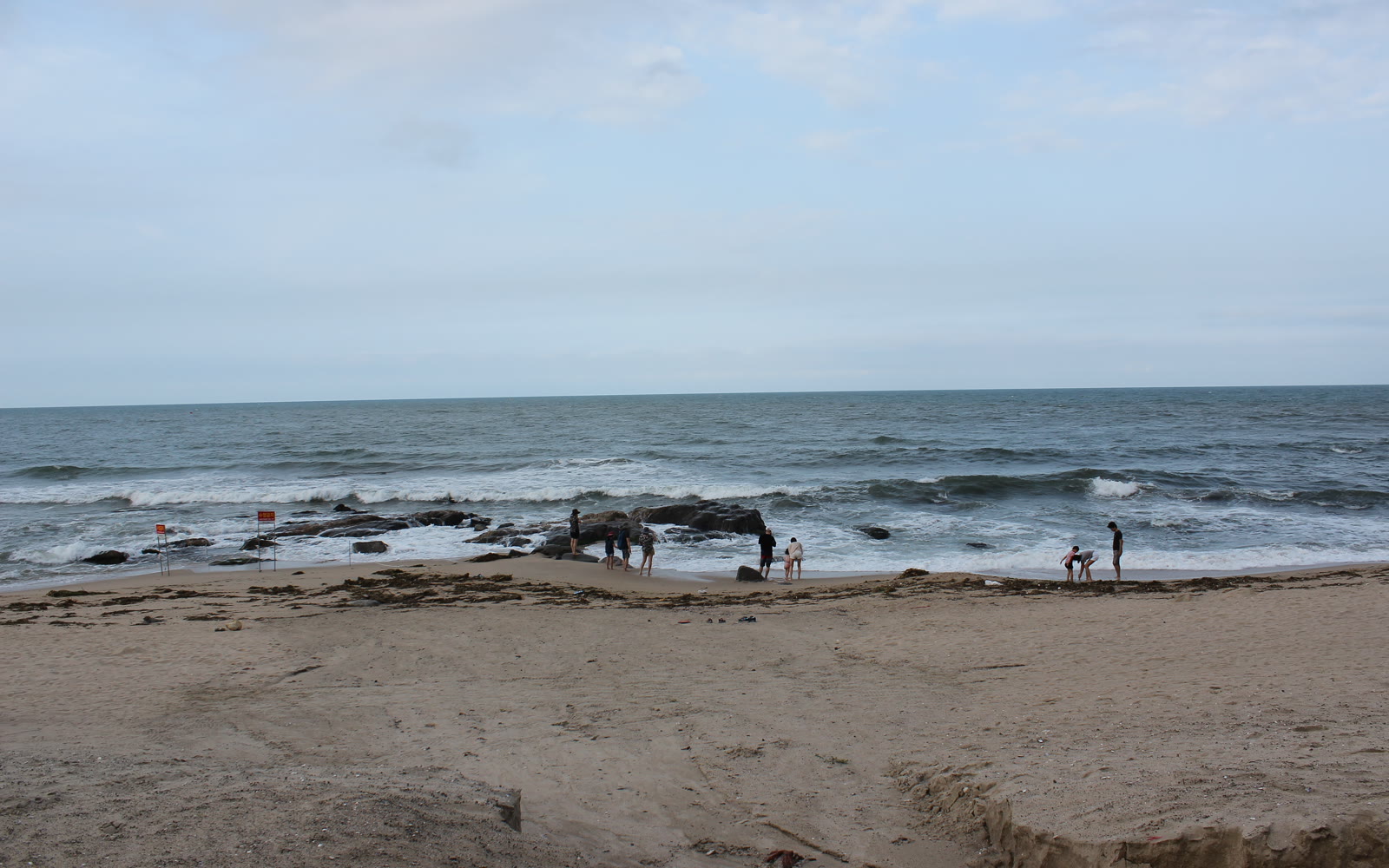
Places to Visit
Arte Museum Gangneung is the third immersive media art permanent exhibition hall that District will introduce near Gyeongpo Lake in Gangneung in December 2021. Twelve diverse media art exhibitions, themed 'VALLEY' in Gangneung, the premier of the Eight Scenic Spots of Kwandong, will be held in a 1,500-pyeong space featuring 12 diverse media art exhibitions reflecting the regional characteristics of Gangwon Province, the backbone of the Baekdudaegan. Works created around the theme of ETERNAL NATURE offer a perfect immersive experience with visual intensity, sensory sound, and refined fragrance.
Why Gangneung? Korea's Coffee Capital by the Sea
For a lot of fans, Gangneung (Gangneung, 강릉) starts with a single photograph: a plain seaside bus stop where BTS once posed for an album shoot, now a pilgrimage spot with a small queue of travellers waiting their turn on the bench. You come for that one frame — and then the city quietly rearranges your plans. Because Gangneung, it turns out, is where Koreans go for coffee. Not a chain latte on the way to work, but proper, obsessive, roast-it-yourself coffee, brewed within sight of the East Sea.
This is a compact city on the Gangwon coast where three things overlap in a way you won't find anywhere else in Korea: a genuine specialty-coffee culture, a long ribbon of pale-sand beaches, and a scattering of screen-famous spots that K-drama and K-pop fans already half-recognise. The best part is how easy it is to reach. A KTX train from Seoul gets you here in about two hours, close enough for a spontaneous weekend, far enough that the pace visibly slows the moment you step off. This guide follows the trip most first-timers actually take — coffee, then the sea, then a little fan pilgrimage, then a bowl of Gangneung's famous soft tofu before the ride home.
Anmok Coffee Street & Gangneung's Coffee Culture
Ask a Korean where the country's coffee craze began and a surprising number will point east, to Gangneung. The city leaned into it: there's an annual coffee festival, a cluster of roasteries you could spend a whole day between, and a beachfront lined with cafes instead of the usual souvenir stalls. If you only understand one thing about Gangneung, make it this — here, a cup of coffee is a destination, not a pit stop.
The cafe strip on Anmok Beach
The heart of it is Anmok Beach, where a single seafront lane has filled up with independent cafes over the past two decades — locals just call it the coffee street. There's no ticket and no single 'must' address; the ritual is to walk the row with the sea on one side, read the roast boards, and pick the window seat that speaks to you. Bossa Nova Coffee Roasters is a reliable roaster's roaster, all careful pour-overs and single origins. AM Bread & Coffee pairs its cups with fresh-baked bread for an easy breakfast. Kikurus Coffee and Logi Coffee round out the strip with their own regulars and their own view of the same blue horizon. Come mid-morning on a weekday if you can — weekends and summer afternoons fill every seat.
Terarosa — the roaster that raised the bar
No name looms larger over Gangneung coffee than Terarosa. The original Terarosa Coffee Factory sits inland in the Gujeong-myeon countryside, a cavernous warehouse-turned-cafe where the smell of roasting beans hangs in the air and the flat whites come with serious pedigree — this is where a lot of Korea's specialty-coffee habit was quietly built. If you'd rather stay near the water, the Terarosa Gyeongpo Lake Branch brings the same beans to a calmer lakeside setting, an easy pairing with a walk around Gyeongpo. Either way, order simply and let the roast do the talking.
Where Korea's specialty coffee grew up
For the deep history, seek out Bohemian Coffee, the roastery tied to Park Yi-chu, one of the first-generation masters credited with shaping hand-drip culture in Korea. The Bohemian Coffee Main Branch is the pilgrimage stop for coffee nerds, while Bohemian Park Ichou Coffee pours the same lineage closer to the coast. Order a hand-drip, sit still, and you'll understand why Gangneung locals talk about coffee the way other cities talk about wine. While you're café-hopping, look out for coffee-kong-ppang — little coffee-bean-shaped pastries sold around town as an edible souvenir.
East Sea Beaches: Gyeongpo, Jeongdongjin & Quiet Coves
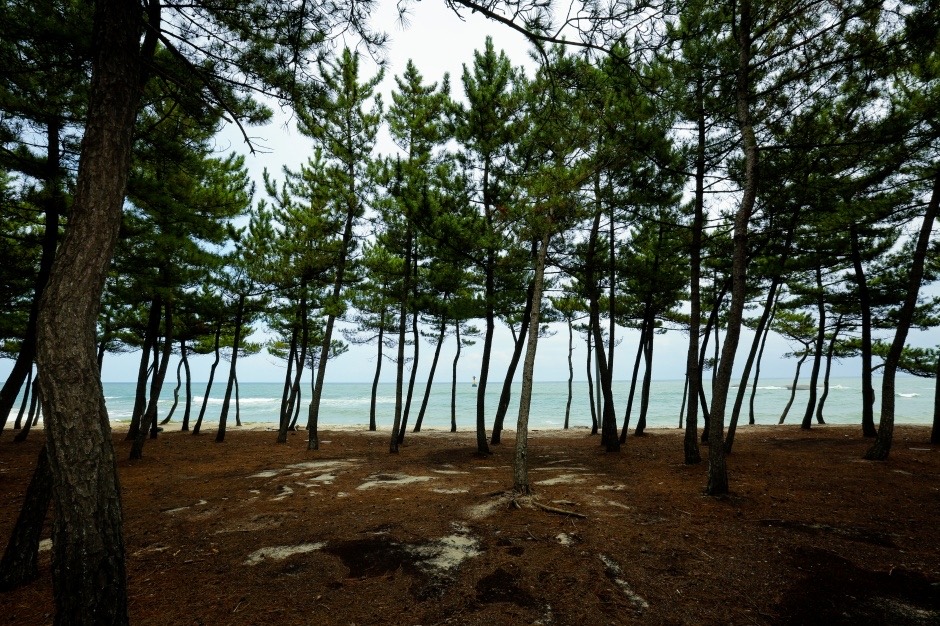
Gangneung's coastline is its other headline. The water here is clean and cold, the sand pale and wide, and the mood shifts entirely by season — packed and joyful in July, hushed and cinematic in winter. You don't need a plan so much as a direction: pick a stretch of coast and let the day unspool.
Gyeongpo Beach & Lake
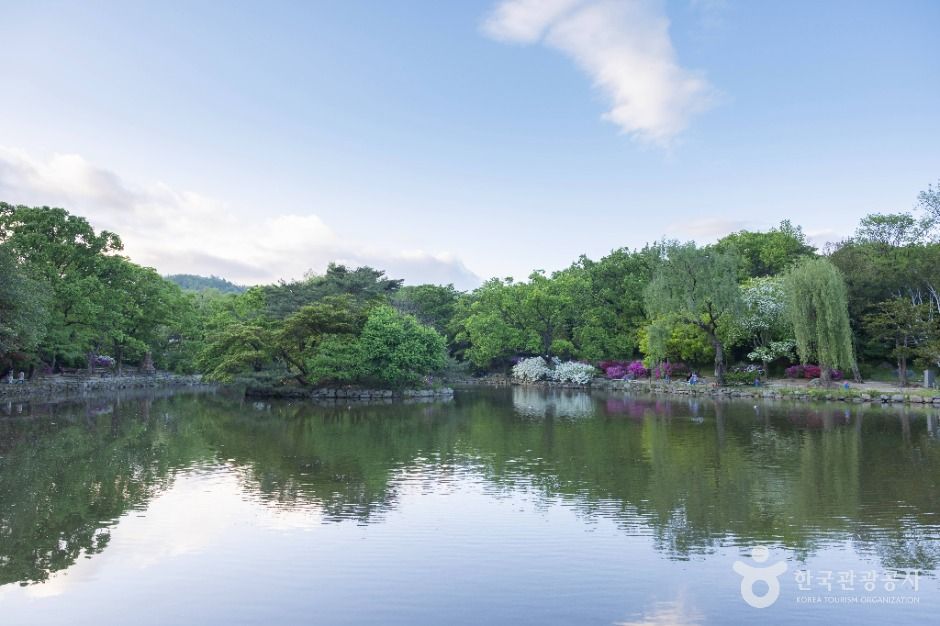
Gyeongpo is the classic Gangneung beach day — a long arc of sand backed by pine trees, with a calm lagoon, Gyeongpo Lake, just behind it. The lake loop is flat and easy on foot or by rental bike, and the Gyeongpo Lake Plaza makes a natural pause point with open space and water views. If the weather turns — and on the East Sea it can — duck into Arte Museum Gangneung, an immersive digital-art space of room-sized projections that's become a favourite rainy-day and photo stop. It's the rare indoor plan that fans actively want to visit, not just a fallback.
Jeongdongjin sunrise
South of the city, Jeong Dong-jin is famous for having a train platform about as close to the sea as a platform can get, which long ago made it Korea's go-to sunrise spot — couples and New Year crowds come to watch the first light break over the water. Just above the shore, Jeongdongjin Sculpture Park spreads out across a grassy headland with sea-facing artworks and some of the best coastal views around. Come at dawn if you can; even a cloudy sunrise here has a quiet drama to it.
Quieter beaches locals love
If the big-name beaches feel too busy, Gangneung is generous with smaller ones. Sodol Beach up near Jumunjin is a rocky, low-key cove that rarely draws a crowd, and Sunpo Beach is the kind of overlooked strand where you might have the sand to yourself on a weekday. For a slow coastal moment, the Sageunjin Haejungwon Park Observatory gives you a raised look out over the water — a good spot to just sit and let the horizon do the work. These are the corners locals slip away to when the main beaches fill up.
BTS & K-Drama Pilgrimage Spots
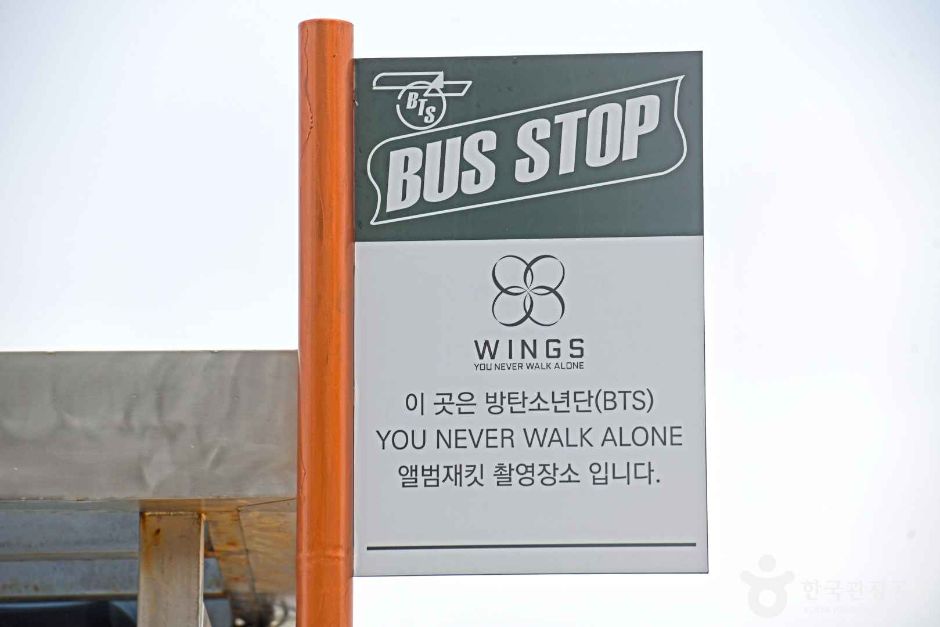
This is the part many fans plan the whole trip around, and Gangneung delivers — as long as you know what's real and what's the stuff of legend. The city wears its screen fame lightly, so the joy here is in the hunt rather than in flashy monuments.
The BTS bus stop at Hyangho Beach
The single most-searched spot is the Jumunjin-eup BTS Album Photo Shoot Location (Bus Stop) out by Hyangho Beach, near Jumunjin. This unassuming seaside bus stop was the backdrop for a BTS album photo shoot from the Spring Day era, and it was recreated as a photo spot after fans began arriving in a steady stream. Today you'll find people lining up to sit on the bench and frame the same sea-and-sky shot. Two friendly tips: it's a genuine roadside stop, so be mindful of actual buses and other visitors, and the light is softest in the morning before the day-trip crowds build. It's a small, sincere piece of fandom, and that's exactly why it's worth the trip out.
The Goblin breakwater near Jumunjin
Drama fans will already be thinking of Goblin (도깨비, 2016) and its swoony breakwater scene. It's widely known to have been filmed at a breakwater near Jumunjin, along the coast by Yeongjin Beach — the long stone jetty reaching into the sea that launched a thousand recreated bouquets-and-scarves photos. There's no ticket booth or plaque, so treat it as a coastal wander rather than a fixed address. The nearby Jumunjin Tourist Information Center is a handy first stop to orient yourself and ask for current directions, and the surrounding Jumunri Village gives you the salty, working-harbour texture that made the area so photogenic on screen in the first place.
Making a half-day K-culture loop
Because the BTS bus stop, the Goblin breakwater and Jumunjin's harbour all cluster around the northern end of the coast, you can string them into one relaxed half-day. Base yourself around Jumunjin, do the fan spots by late morning, then reward yourself with lunch straight off the boats at the fish market — more on that below. Local buses and the odd taxi connect the dots; distances are short, so it never feels like a slog.
What to Eat: Chodang Tofu Village & Jumunjin Seafood
Gangneung eats as well as it drinks. Two flavours define a visit: the delicate, seawater-set tofu of Chodang village, and whatever came off the boats that morning at Jumunjin. Between them you could plan a whole day of meals — and you should.
Chodang sundubu — tofu set with seawater
Chodang (초당) is a village on the edge of Gangneung famous for one thing: soft tofu (sundubu, 순두부) curdled with clean East Sea seawater instead of the usual coagulant, which gives it a faintly briny sweetness you won't taste elsewhere. A classic order is a bubbling pot of sundubu jjigae with a spread of banchan, or a plain warm bowl of the freshest tofu with a light soy dressing. Jung Eun-sook Chodang Soft Tofu and Old-fashioned Chodang Soft Tofu are long-running village favourites, while Chodang Millstone Soft Tofu leans into the traditional stone-ground style. Go at lunch, expect a queue on weekends, and don't skip the tofu served plain — that's where the seawater sweetness really shows.
Jjamppong sundubu & tofu gelato
Chodang has also invented some gloriously local mash-ups. The signature crossover is jjamppong sundubu — soft tofu in a spicy seafood-noodle broth — and the village does it proud at Gangneung Jjamppong Sundubu Donghwa Garden Main Branch and Kim Woo-jeong Chodang Jjamppong Soft Tofu, two names locals will argue over happily. Then, for dessert, Chodang turns its tofu into ice cream: Sundubu Gelato Store No.1 and Chodang Millstone Gelato churn the fresh curd into a subtly savoury-sweet scoop that tastes far better than it sounds. It's the most Gangneung thing you can eat — coffee town, tofu town, gelato and all.
Jumunjin fish market finds
Up the coast, Jumunjin's port and market are where you eat the sea at its freshest. Depending on the season you'll see snow crab, squid, flatfish and more hauled straight in; the move is to pick your catch and have it prepared then and there. Kingdom of Snow Crabs is a go-to for a crab feast when they're in season, and Dagyeong Raw Fish Restaurant serves sliced raw fish (hoe, 회) about as fresh as it comes. Prices track the daily market rate rather than a fixed menu, so a little pointing and a smile go a long way — and the payoff is seafood that was swimming an hour before it reached your table.
Getting There & Practical Tips
The logistics are refreshingly simple, which is half of why Gangneung makes such a good escape from Seoul. Here's what you actually need to know before you go.
Seoul to Gangneung by KTX
The easy way in is the KTX high-speed train, which runs from Seoul Station (and Cheongnyangni) to Gangneung Station in about two hours. It's the reason a Gangneung weekend feels so painless — board in the city, and you're at the coast before lunch. Book ahead through the Korail app or website on summer weekends and around holidays, when trains sell out; midweek you can usually be more spontaneous. Gangneung Station itself makes a natural base, with buses and taxis fanning out to the beaches, Chodang and Jumunjin.
Getting around
Gangneung is spread out along its coast, so you'll lean on local buses and the occasional taxi rather than a subway — there isn't one. City buses connect the station with Gyeongpo, Chodang, Jeongdongjin and the Jumunjin area, and a tap-and-go transit card makes hopping on painless. Taxis are affordable for the longer coastal legs, especially if you're splitting the fare, and they save real time when you're chasing a sunrise or a specific fan spot. If you're comfortable driving, a rental car unlocks the quieter beaches, but it's far from essential.
When to go
Gangneung rewards every season differently. Summer is beach high season — warm water, festival energy and full cafes, but also the biggest crowds and priciest stays. Autumn brings crisp light and clear coastal views, arguably the sweet spot. Winter is the quiet secret: snow against the sea, near-empty beaches and coffee streets that feel like they're yours, plus the New Year sunrise crowds who make the pilgrimage to Jeongdongjin. If you want the immersive-art fallback for a grey day, Arte Museum Gangneung and the Gangneung Olympic Museum — a nod to the city's 2018 Winter Olympics role — are both easy indoor plans, and the highland terraces of Anbandegi in the mountains above the city are a spectacular detour if you have a car and a clear sky.
Pair it with the wider region
This guide zooms in on Gangneung's coffee, coast and fan spots. If you want the fuller picture of the city — its markets, temples and mountain trails — read our broader Things to Do in Gangneung guide, and browse everything in the region from the Gangwon places hub. Neighbouring Sokcho and Yangyang are an easy add-on up the coast if you have a third day, but Gangneung alone is more than enough for a first, unhurried trip.