Find It on the Map
A street in Gangnam lined with GangnamDol (K-pop bear statues) representing famous idol groups. Located near major entertainment company offices.
From Your Hotel Area
→ K-Star RoadK스타로드
What Is K-Star Road?
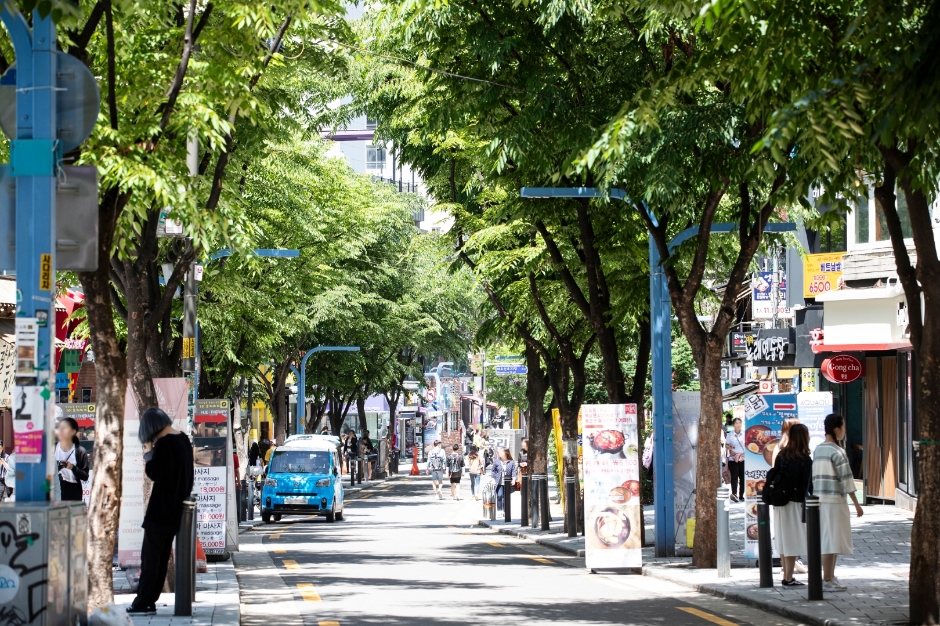
Picture this: you're walking down a tree-lined boulevard in Gangnam, and every 50 meters there's a giant bear statue dressed in the style of a different K-pop group. That's K-Star Road (케이스타로드) — a 680-meter stretch of Apgujeong Rodeo Street that Seoul turned into an open-air K-pop monument in 2014.
It's free, it's outdoors, and it's one of the few places in Seoul where K-pop fandom is literally built into the street furniture. For anyone who has ever streamed a music video and thought "I want to go there" — this road is a good starting point for understanding where Korean pop culture actually lives.
The GangnamDol Bear Statues: What They Mean
The bears are called GangnamDol (강남돌) — a portmanteau of Gangnam and idol. Each one is a 1.4-meter tall bear figure customized with the colors, logos, and visual identity of a specific K-pop act.
When K-Star Road first opened, the lineup included SM Entertainment's biggest acts. Over the years, new bears have been added as groups rose to prominence. Walking the full stretch is a timeline of Korean pop: you can trace how the aesthetic of K-pop evolved from the polished pop of earlier SM groups to the bolder visual language of fourth-generation acts.
Groups represented along the road have included EXO, Girls' Generation, SHINee, f(x), Red Velvet, aespa, TVXQ, and others from the SM family. Bears for BTS, BLACKPINK, TWICE, and other major acts from different agencies have also appeared as the attraction has expanded.
The bears are best photographed in the morning (before 10 AM) when the street is quieter and the light is soft. Late afternoon creates harsh shadows between the statues. Each bear has a small name plaque — check it before you shoot so you know which group you're posing with.
SM Entertainment: The Landmark You're Already Standing Near
SM Entertainment's headquarters sits in Cheongdam-dong, a short walk from K-Star Road. The building itself is architecturally striking — a glass-and-concrete structure that has become a background in countless fan selfies over the years.
You won't get inside without an appointment, but the exterior is completely accessible. Fans regularly gather near the entrance on the chance of spotting an artist arriving or leaving. The surrounding streets around the SM building have their own cluster of fan-culture shops: photo card stores, lightstick retailers, and small cafes plastered with idol merchandise.
SM's presence explains why the Cheongdam-Apgujeong area feels so saturated with K-pop energy. When the company moved its headquarters here, the surrounding businesses followed the artists and the fans who came to see them.
JYP Entertainment: Cheongdam-dong's Other Power Player
JYP Entertainment — home to TWICE, Stray Kids, ITZY, and aespa's label-mates — is also in the Cheongdam-dong neighbourhood. The two agency buildings are close enough that dedicated fans sometimes plan a loop: SM in the morning, JYP in the afternoon, K-Star Road in between for photos.
JYP's building is less architecturally dramatic than SM's but carries equal cultural weight. The sidewalk outside has seen its share of fan gatherings, especially around comeback seasons when artists are coming and going for schedule preparation.
YG Entertainment: A Short Taxi Ride to Mapo-gu
YG Entertainment — BLACKPINK, BIGBANG, WINNER, iKON — is headquartered in Hapjeong, Mapo-gu, which puts it across the Han River from the Gangnam cluster. It's not walkable from K-Star Road, but a 15-minute taxi ride makes it a viable addition to a full-day K-pop itinerary.
The YG building is distinctive: a black glass structure that looks exactly like you'd expect the home of BLACKPINK's label to look. The neighbourhood around it has far fewer tourist-facing shops than Cheongdam-dong, which gives it a more grounded, less staged feel.
None of the Big 4 entertainment buildings allow public tours or casual entry. What you get is the exterior experience: the architecture, the neighbourhood, and the ambient possibility that you might see someone famous. That's the honest picture. For many fans, that's still worth the trip.
HYBE Insight: Where You Can Actually Go Inside
If SM, JYP, and YG are fan pilgrimages from the outside, HYBE Insight is the one K-pop attraction where you go in. Located in Yongsan-gu (HYBE's headquarters building), HYBE Insight is a permanent exhibition space dedicated to BTS, TOMORROW X TOGETHER, ENHYPEN, and the full HYBE roster.
The exhibition covers the creative process behind HYBE's artists: costume displays, set recreations, interactive installations, and archive materials. It's the closest thing to an official K-pop museum that currently exists in Seoul. Tickets sell out fast — book online at least a week in advance, more during peak tourist season.
- Location: Hannam-daero 42-gil, Yongsan-gu (Hangangjin Station, Line 6, Exit 3)
- Hours: Tuesday–Sunday, 10 AM – 6 PM (last entry 5 PM)
- Tickets: Book via Weverse Shop — sell out quickly, especially weekends
- Time needed: 1.5–2 hours for a thorough visit
Nearby K-Pop Hotspots
The Apgujeong-Cheongdam-Gangnam triangle is dense with K-pop-adjacent destinations. These are the ones that consistently deliver:
Dosan Park Area
The streets around Dosan Park (도산공원) host some of Seoul's most photogenic cafes and brand flagship stores. Several K-pop artists have opened personal business ventures here — restaurants, clothing lines, and beauty labs. The park itself is a green oasis where locals jog in the morning and couples sit in the afternoon. It's worth a 30-minute walk even if you have no specific destination.
Apgujeong Rodeo Street
Apgujeong Rodeo (압구정로데오) is the original K-fashion street — the place where Korean streetwear and beauty culture developed before it went global. The shops are more independent and experimental than the mainstream Myeongdong chains. If you want to understand where the aesthetic that K-pop artists wear in casual airport photos comes from, spend an hour walking Rodeo Street.
Photo Card & Merch Shops (Cheongdam-dong)
The blocks between SM and JYP are lined with small shops selling K-pop photo cards, posters, official albums, and fan-made goods. Prices for official merchandise are fixed, but photo card trading between fans happens informally outside these shops — a whole subculture in itself. If you want a specific photo card of a specific member in a specific era, these streets are where you look.
Fan Culture Tips: How to Navigate This World Respectfully
K-pop fan culture has its own etiquette. Following it makes the experience better for everyone — including the artists who live and work in this neighbourhood.
- Don't block agency entrances. Waiting outside is tolerated; crowding the entrance and preventing staff and artists from moving freely is not. Keep a respectful distance.
- No unauthorized filming inside agencies. Even in the lobby, cameras are not welcome unless explicitly invited. This applies to phones too.
- Photo card trading has its own language. "WTT" means want to trade, "WTS" means want to sell. If you're new, just watch first. The community is welcoming to newcomers who show respect for the process.
- Fan cafes and projects are organized, not spontaneous. The flower arrangements, birthday advertisements, and support trucks you sometimes see outside agency buildings are organized months in advance by fan unions. If you see one happening, it's OK to photograph the display — it's meant to be seen.
- Respect locals. Cheongdam-dong is a residential and business neighbourhood first. Residents navigate K-pop tourism every day. Don't block sidewalks, don't shout, and treat the area the way you'd want tourists to treat your own neighbourhood.
Getting There
- K-Star Road / Apgujeong Rodeo: Apgujeong Rodeo Station (압구정로데오역), Bundang Line (Line 수인분당선), Exit 2. The road begins immediately outside the exit.
- SM & JYP area (Cheongdam-dong): Apgujeong Rodeo Station Exit 5, or a 10-minute walk from K-Star Road along Dosan-daero.
- By taxi: Tell the driver "케이스타로드" (K-Star Road) or "압구정로데오" (Apgujeong Rodeo). Both are instantly recognizable.
- Combine with: Gangnam Station shopping area (15 min by subway), Sinsa-dong Garosu-gil (10 min taxi), or COEX Mall (20 min taxi).
Practical Information
- K-Star Road hours: Open 24/7 — it's an outdoor public street
- Admission: Free
- Best time: Morning for photos; evening for atmosphere (the area gets lively after 7 PM)
- Time needed: 1 hour for K-Star Road alone; half a day if you include Cheongdam-dong and Dosan Park
- Language: Most shops in this area have some English signage. Google Translate's camera function handles the rest.