Find It on the Map
Korea's oldest running market (est. 1905), famous for bindaetteok, mayak gimbap, and a vibrant vintage clothing section.
From Your Hotel Area
→ Gwangjang Market광장시장
Why Visit Gwangjang Market?
Gwangjang Market (광장시장) is not just a market — it is a living piece of Korean history.
Established in 1905, it is the oldest continuously operating traditional market in Korea. Located steps from Jongno 5-ga Station, this bustling marketplace attracts over 65,000 visitors daily with its legendary street food, traditional textiles, and one of Seoul's best vintage clothing districts.
If you only visit one traditional market in Seoul, make it this one. It is where K-drama food scenes come to life, where grandmothers still flip bindaetteok by hand, and where the energy of old Seoul meets modern foodie culture.
The Must-Eat Street Foods
Gwangjang Market's food alley is the undisputed star. Here are the dishes you absolutely cannot miss:
Bindaetteok (Mung Bean Pancake)
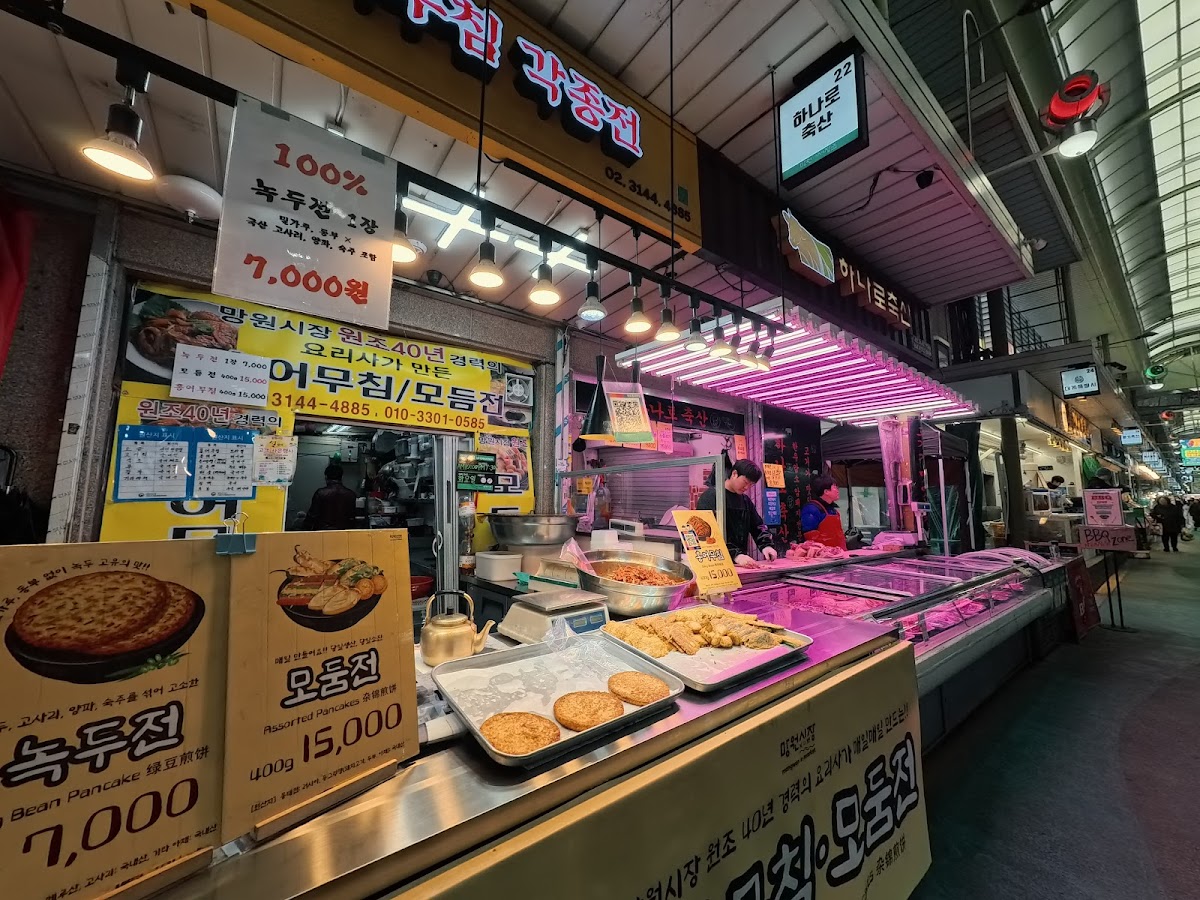
Bindaetteok (빈대떡) is the market's signature dish. Ground mung beans mixed with vegetables and meat, fried to a golden crisp on giant iron griddles.
The best stalls have lines — follow the crowds. Expect to pay around ₩5,000–6,000 per pancake.
Order your bindaetteok with a bowl of makgeolli (Korean rice wine, ₩5,000). This is the classic Gwangjang Market pairing that locals swear by.
Mayak Gimbap (Addictive Mini Rice Rolls)
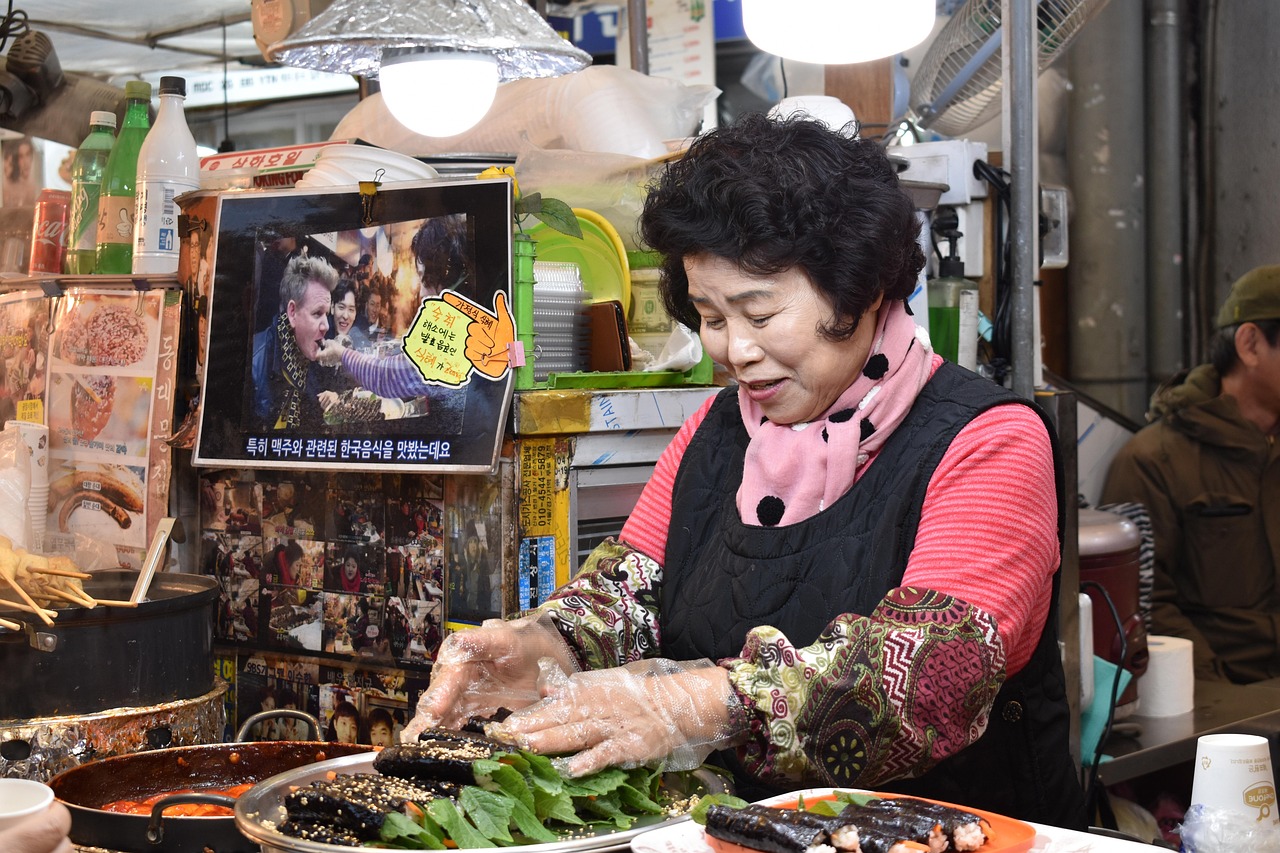
Mayak Gimbap (마약김밥) literally means "drug kimbap" because they are so addictive you can't stop eating them.
These tiny sesame-oil-coated rice rolls are dipped in a spicy mustard-soy sauce. A plate of 10 pieces costs just ₩3,500.
Yukhoe (Korean Beef Tartare)
Yukhoe (육회) is raw beef tartare seasoned with sesame oil, garlic, and topped with a raw egg yolk.
Gwangjang Market is the most famous place in Korea to try this dish. A serving costs ₩15,000–20,000.
More Must-Try Foods
- Tteokbokki (떡볶이) — Spicy rice cakes, ₩4,000
- Sundae (순대) — Korean blood sausage, ₩5,000
- Jeon (전) — Assorted Korean pancakes, ₩5,000–8,000
- Kalguksu (칼국수) — Knife-cut noodle soup, ₩7,000
- Hotteok (호떡) — Sweet filled pancakes, ₩1,500
Price Guide
| Food | Price (KRW) | Price (USD) |
|---|---|---|
| Bindaetteok | ₩5,000–6,000 | ~$3.70–4.40 |
| Mayak Gimbap (10 pcs) | ₩3,500 | ~$2.60 |
| Yukhoe | ₩15,000–20,000 | ~$11–15 |
| Tteokbokki | ₩4,000 | ~$3.00 |
| Sundae | ₩5,000 | ~$3.70 |
| Makgeolli (bottle) | ₩5,000 | ~$3.70 |
Beyond Food: Vintage & Textile Shopping
Vintage Clothing (2nd Floor)
The market's second floor is a hidden gem for vintage and secondhand clothing. Hundreds of tiny stalls sell everything from retro Korean fashion to imported vintage denim, leather jackets, and accessories.
Prices start from just ₩5,000 — serious bargain hunters can spend hours here.
Traditional Textiles (1st Floor East)
The eastern section of the market is famous for hanbok fabrics and Korean silk.
Even if you're not buying, walking through the colorful fabric stalls is a feast for the eyes. Custom hanbok orders are available from select vendors.
How to Navigate the Market
Gwangjang Market can feel overwhelming at first. Here's a simple route:
- Enter from Gate 2 (closest to Jongno 5-ga Station Exit 8) — this drops you right into the food alley
- Walk the main food corridor — grab bindaetteok and mayak gimbap first
- Head to the east wing for yukhoe and sit-down restaurants
- Go upstairs (2F) for vintage clothing shopping
- Exit via Gate 1 or 6 to explore Dongdaemun area nearby
Most food stalls are cash-only. Bring at least ₩30,000–50,000 in cash. Some newer stalls accept card but don't count on it. There are ATMs near Gate 1.
Best Time to Visit
The best time to visit is weekday lunch (11:30 AM – 1:30 PM) when everything is freshly made and the crowds are manageable.
Weekend afternoons can be extremely packed. Avoid Monday evenings when many food stalls close early.
Traditional Markets of Seoul: How Does Gwangjang Compare?
Seoul has dozens of traditional markets, each with its own personality. Knowing the differences helps you plan which ones are worth your time — and Gwangjang holds its own against all of them.
| Market | Best For | Vibe | Getting There |
|---|---|---|---|
| Gwangjang (광장시장) | Street food, yukhoe, vintage clothes | Historic, lively, authentic | Jongno 5-ga Station (Line 1) |
| Mangwon (망원시장) | Local neighbourhood market, tteokbokki, young crowd | Hip, neighbourhood feel | Mangwon Station (Line 6) |
| Tongin (통인시장) | Coin dosirak lunch boxes, Korean home cooking | Quiet, charming, old-school | Gyeongbok Palace area, Bus 1020 |
| Namdaemun (남대문시장) | Wholesale shopping, imported goods, gajami sikhae | Huge, commercial, fast-paced | Hoehyeon Station (Line 4) |
The short version: Gwangjang is for eating; Mangwon is for wandering; Tongin is for the dosirak experience; Namdaemun is for shopping in bulk. If you have time for only one, the food alone makes Gwangjang the clear winner.
Must-Eat Checklist
Use this as your personal Gwangjang hit list. Check them off as you go — most visitors manage four or five in a single visit.
- Mayak Gimbap (마약김밥) — Start here. Ten tiny rolls for ₩3,500. The mustard-soy dipping sauce is the secret.
- Bindaetteok (빈대떡) — Watch it fry fresh on the griddle. Order with makgeolli for the full experience.
- Yukhoe (육회) — Korea's finest beef tartare. The egg yolk on top is non-negotiable.
- Sundae (순대) — Don't let the "blood sausage" label scare you. It's mild, hearty, and deeply Korean.
- Tteokbokki (떡볶이) — The spicy version here has a richer sauce than the convenience-store kind. Night-and-day difference.
- Makgeolli (막걸리) — The cloudy rice wine that locals drink between bites. Cold, slightly fizzy, and perfect with bindaetteok.
Tips for First-Timers
Think of this as advice from a friend who has already made all the rookie mistakes so you don't have to.
- Bring cash, bring more cash. ₩50,000 feels like a lot until you've had three rounds of bindaetteok and a bottle of makgeolli.
- Eat standing up. The best stalls don't always have seats. Grab your food, find a corner, and eat like a local.
- Point and nod. Most stall owners speak little English but are incredibly welcoming. Pointing at what the person next to you ordered always works.
- Go weekday morning. The market opens around 8–9 AM. Arrive before noon on a weekday and you'll have the food alley almost to yourself.
- Wear comfortable shoes. The floor in the food section can be slippery from cooking oil. Sneakers, not sandals.
- Don't fill up too fast. The temptation is to eat everything at the first stall. Walk the whole alley before committing — you'll spot the ones with the longest queues, which are almost always the best.
- Sundays close early. Many vendors start packing up by 4–5 PM on Sundays. Plan accordingly.
Ask for the "haemul" (seafood) version of bindaetteok if you see it on the menu. It's not always advertised in English but the addition of baby clams and squid takes the pancake to another level entirely.
Nearby Markets Worth a Look
Gwangjang sits in a dense cluster of markets. If you have extra time, these are all within a short walk or taxi ride:
- Dongdaemun Market (동대문시장) — Five minutes on foot. Seoul's largest wholesale fashion district. The night market opens at midnight and runs until 5 AM — a surreal experience.
- Sewing Town (Cheonggyecheon Fabric Alley) — Running along the Cheonggyecheon Stream just south of Gwangjang, this strip of fabric and craft supply shops is where Korean fashion designers come to source materials. Even as a visitor, it's fascinating to walk.
- Bangsan Market (방산시장) — The place where Seoul's bakeries and cafes buy their packaging, cake decorations, and baking supplies. Wholesale only, but the sheer variety of products on display is worth a detour.
Getting There
- Subway: Line 1 to Jongno 5-ga Station (종로5가역), Exit 8 — walk straight ahead, Gate 2 is 60 seconds away.
- Also accessible from: Dongdaemun History & Culture Park Station (Lines 2/4/5), 10-minute walk.
- Hours: Most food stalls open 8 AM – 6 PM daily. Closed major holidays.
- Parking: Not recommended. Public transit is far easier.
K-Drama & Film: Gwangjang Market on Screen
Long before food tourism became a genre, Gwangjang Market (광장시장) was already appearing on Korean screens. The market's combination of century-old architecture, steam-filled alleys, and the kind of chaotic warmth that is impossible to stage makes it a natural filming location — and a shortcut for directors who want to communicate "real Seoul" without saying a word.
Jewel in the Palace (대장금, 2003)
The landmark historical drama that introduced Korean food culture to audiences across Asia used Gwangjang Market and the surrounding Jongno district as a reference point for its market scenes. The fabric stalls in the eastern section of the market — still operating today — closely resemble the textile markets depicted in the show. Walking through them now, it is easy to understand why the location appealed to the production team: the sightlines, the layered fabrics, and the density of the stalls create exactly the visual texture the period needed.
Street Food (Netflix, 2019)
The David Chang-produced documentary series dedicated an episode to a Gwangjang Market bindaetteok vendor, bringing the market to a global audience in a way no travel guide had managed. The episode follows an elderly grandmother who has been frying mung bean pancakes at the same spot for decades. Her stall still operates. The queue is longer now, but the pancakes are the same.
Other Appearances
The market's food alley has appeared in background shots across dozens of Korean dramas set in contemporary Seoul — including My Love from the Star (별에서 온 그대) and Signal (시그널). The distinctive iron griddles and the close-packed seating arrangements are recognisable in almost any scene that needs to place a character at a traditional Korean market. The vintage clothing floor on the second level has also been used as a filming location for scenes requiring a retro Seoul aesthetic.
The bindaetteok alley runs roughly east to west through the centre of the market. The stalls with the most visible iron griddles and the longest lines are the ones most likely to appear in any food-focused shooting. If you want the most photogenic angle, visit on a weekday morning before the crowds build — the steam from the griddles in cooler air makes for much better photographs than midday light.
Seasonal Guide: When to Come and What Changes
Gwangjang Market operates year-round, but each season changes the experience in ways that are worth knowing before you plan. The food stays largely consistent, but the crowds, the atmosphere, and even what you want to eat shift considerably across the four seasons.
Spring (March – May)
Spring is when Gwangjang Market starts drawing serious crowds again after winter. Cherry blossom season — typically the last two weeks of March and the first week of April — brings a surge of domestic tourists into Seoul, and the market absorbs many of them. Expect weekend queues at the bindaetteok and yukhoe stalls to be noticeably longer than usual. The upside: spring produce starts appearing in the vegetable stalls, and the indoor food alley is a comfortable temperature for the first time since autumn. Weekday morning visits in April and May are among the best experiences the market offers — not yet too hot, lighter crowds, and the light through the skylights in the eastern hall is genuinely beautiful.
Summer (June – August)
Summer in Seoul is hot and humid, and the food alley at Gwangjang Market — with its griddles running at full power and the market's limited ventilation — amplifies both. This is not a reason to avoid it, but it is a reason to plan carefully. The earlier you arrive, the more tolerable the temperature. Many experienced visitors go at opening time (around 8 AM), eat quickly, and leave before 10 AM. By early afternoon in July and August, the market can feel genuinely uncomfortable for anyone not accustomed to Seoul summers.
The food, however, has a seasonal advantage: cold kongguksu (콩국수, chilled soy milk noodles) appears at several stalls during summer, and the cold buckwheat noodles served alongside yukhoe become even more appealing when the temperature outside is above 30°C.
The vintage clothing floor on the second level is less crowded in summer and better ventilated than the food alley. If you need a break from the heat, head upstairs — the browsing is good and the temperature is slightly more bearable.
Autumn (September – November)
Autumn is widely considered the best time to visit Gwangjang Market. The temperature is comfortable, the light is better than in any other season, and the crowds — while still present on weekends — are more manageable than in spring. The yukhoe (육회) vendors tend to have the freshest supply of quality beef during this period, and the bindaetteok tastes best when you can actually sit and eat it without sweating through your shirt. October is the sweet spot: school groups and domestic tourists are back in circulation, which keeps the market energetic without pushing it past comfortable capacity.
Winter (December – February)
Winter transforms the experience entirely. The food alley, always enclosed, becomes one of the warmer places you can be in central Seoul — the collective heat from dozens of griddles running simultaneously turns the covered market into an unlikely refuge from the cold outside. This is the season when kalguksu (칼국수, knife-cut noodle soup) makes the most sense, and the makgeolli (막걸리) served alongside bindaetteok tastes different — slightly richer, more warming — than it does in summer. The vintage clothing floor thins out considerably in winter, which makes it a genuinely good time to browse without the weekend crush. The market is typically quieter on weekday afternoons in January and February than at almost any other point in the year.
Your Budget Breakdown: Two Ways to Do Gwangjang
Gwangjang Market can be done cheaply or done well — and "well" does not mean expensively. The difference between a ₩15,000 visit and a ₩60,000 visit is mostly a matter of what you prioritise, how many people you are with, and whether you add yukhoe to the itinerary. Below are two realistic budget scenarios for a solo visitor.
| Item | Budget Route | Full Experience Route |
|---|---|---|
| Mayak Gimbap (10 pcs) | ₩3,500 | ₩3,500 |
| Bindaetteok (1 piece) | ₩5,000 | ₩6,000 |
| Tteokbokki (1 serving) | ₩4,000 | — |
| Sundae (1 serving) | — | ₩5,000 |
| Yukhoe (1 serving) | — | ₩18,000 |
| Makgeolli (1 bottle) | — | ₩5,000 |
| Kalguksu (1 bowl) | — | ₩7,000 |
| Hotteok (2 pieces) | ₩3,000 | ₩3,000 |
| Total (approx.) | ₩15,500 | ₩47,500 |
A few notes on where the money actually goes. Yukhoe is the single biggest cost driver — it is also the dish most worth spending on if you can only choose one premium item. Makgeolli is not expensive but adds meaningfully to the experience of eating bindaetteok. The budget route covers all the essentials; the full experience route covers everything worth eating in a single visit without ordering doubles.
Gwangjang Market becomes better value the more people you are with. A serving of yukhoe or a large bindaetteok can be split across two or three people, which means a group of four can cover more dishes for less per person than a solo visitor. If you are travelling with others, order broadly and share — that is how most locals eat here anyway.
Common Mistakes to Avoid
Most of these are easy to avoid once someone points them out. The problem is that guidebooks rarely do.
Arriving Too Early or Too Late
The market technically opens around 8 AM, but many food stalls — particularly the bindaetteok and yukhoe vendors — are not fully operational until 9 or 10 AM. Arriving at 8 AM on the assumption that you will beat the crowd is reasonable; arriving at 8 AM expecting everything to be open is likely to disappoint. On the other end, arriving after 5 PM on a weekday means many stalls have already sold through their best stock. The sweet spot for a first visit is between 10 AM and 2 PM on a weekday.
Bringing Only a Card
The majority of food stalls in Gwangjang Market remain cash-only. Some of the newer textile vendors accept cards, and there are ATMs near Gate 1, but the food alley — which is almost certainly why you came — runs primarily on cash. Arriving with only a credit or debit card and no Korean won is the single most common mistake visitors make, and it is entirely avoidable. Bring at least ₩50,000 in cash per person; ₩80,000 if you plan to eat the full range and add makgeolli.
Eating at the First Stall You See
The entrance near Gate 2 drops visitors directly into the food alley, where the first stalls are immediately visible and often have the most aggressive signage. These are not necessarily the best stalls — they are simply the ones positioned closest to the entrance. The standard local approach is to walk the entire length of the alley before sitting down. The stalls worth going to are the ones with the longest queues of Korean customers, not the ones with the most English signage. Take five minutes to scout before you commit.
Skipping the Second Floor
Most visitors who enter via Gate 2 eat their way through the food alley and leave without ever going upstairs. The second floor vintage clothing section is genuinely one of the better secondhand shopping experiences in Seoul — hundreds of stalls, prices starting at ₩5,000, and a density of stock that rewards browsing. It is also significantly quieter than the food level, which makes it a useful mid-visit break. If you have even thirty minutes to spare after eating, go upstairs.
Ordering Yukhoe Without Asking About Freshness
Yukhoe (육회) is raw beef. The quality and safety of the dish depends entirely on how fresh the beef is and how the vendor handles it. At Gwangjang Market, the dedicated yukhoe stalls in the eastern hall — which have been serving this dish for decades and depend on their reputation to survive — are a reliable choice. Buying yukhoe from a stall that primarily sells other dishes and lists yukhoe as a side option is a different matter. Stick to the vendors for whom yukhoe is the main event.
Ignoring the Fabric Stalls
The hanbok fabric section in the eastern part of the market is not just for people planning to commission traditional clothing. The bolts of Korean silk, brocade, and printed cotton are visually striking enough to be worth walking through even as a non-buyer. Several vendors sell smaller cuts suitable for gifts or craft projects at reasonable prices. This section of the market is also significantly less crowded than the food alley, which makes it an easy place to slow down mid-visit.
Gwangjang After Dark: Evening and Night at the Market
Gwangjang Market has a different character in the evening. The frantic energy of the lunch hours softens into something more relaxed — slower-moving crowds, more locals than tourists, and the smell of griddles running on lower heat. Most food stalls are still operational until around 6 PM, and a handful stay open significantly later. If you are in the area after 5 PM, the market is still worth entering.
The Makgeolli Culture After 4 PM
The classic Gwangjang Market drink pairing — makgeolli (막걸리) with bindaetteok — is available throughout the day, but it takes on a different quality in the late afternoon. From around 4 PM onward, the stalls with indoor seating fill primarily with older Korean regulars: office workers stopping in before heading home, retired men who come daily, small groups sharing a bottle and a plate of pancakes in a way that has nothing to do with food tourism. Sitting among them with a bowl of makgeolli and a plate of bindaetteok is as close as a visitor can get to what this market has always been — a place for ordinary people to eat well and cheaply at the end of an ordinary day.
Makgeolli is served by the bottle (한 병, han byeong) or by the bowl (한 사발, han sabal) at most bindaetteok stalls. The bowl presentation — a large, shallow ceramic vessel — is the traditional format and the one to order if it is available. It is slightly warmer than the bottled version and has a coarser texture, which pairs better with the oiliness of the pancake.
Pojangmacha and Street Drinking Culture
The alleys immediately outside the market's gates — particularly along the Cheonggyecheon-ro side — have a scatter of pojangmacha (포장마차, covered street stalls) that operate into the late evening. These are small, tented street bars serving soju, beer, and simple anju (안주, drinking food). The experience is rougher than the market interior — plastic chairs, folding tables, fluorescent lighting — but it is also genuinely local in a way that indoor restaurants rarely are. Ordering a bottle of soju and a plate of odeng (오뎅, fish cake skewers) at a pojangmacha after dark costs around ₩10,000–15,000 total and is one of the more honest Seoul experiences available to a visitor.
Practical Notes for Evening Visits
- Hours: The food alley begins winding down from 5–6 PM. By 7 PM, most stalls have closed or are packing up. The fabric and textile sections close earlier, typically by 5 PM.
- What stays open: The bindaetteok stalls with indoor seating tend to stay open the latest. Follow the light and the sound of sizzling — if a griddle is running, the stall is still serving.
- Lighting: The market's overhead lighting in the evening is warm but not especially bright. If you are planning to photograph food, the earlier hours produce better results.
- Safety: Gwangjang Market and the surrounding Jongno area are safe at night. The neighbourhood is well-lit and has a consistent police presence near the market entrances.
A Gwangjang evening done well looks something like this: bindaetteok and makgeolli inside the market at around 5 PM, then a short walk south to the Cheonggyecheon Stream for a fifteen-minute walk along the water, then a pojangmacha near the market exit for soju and odeng before heading back to the subway. Total cost for two people: around ₩40,000–50,000. Total time: two to three hours. It is a very good evening.
K-Drama & Film: Gwangjang Market on Screen
Long before food tourism became a genre, Gwangjang Market (광장시장) was already appearing on Korean screens. The market's combination of century-old architecture, steam-filled alleys, and the kind of chaotic warmth that is impossible to stage makes it a natural filming location — and a shortcut for directors who want to communicate "real Seoul" without saying a word.
Jewel in the Palace (대장금, 2003)
The landmark historical drama that introduced Korean food culture to audiences across Asia used Gwangjang Market and the surrounding Jongno district as a reference point for its market scenes. The fabric stalls in the eastern section of the market — still operating today — closely resemble the textile markets depicted in the show. Walking through them now, it is easy to understand why the location appealed to the production team: the sightlines, the layered fabrics, and the density of the stalls create exactly the visual texture the period needed.
Street Food (Netflix, 2019)
The David Chang-produced documentary series dedicated an episode to a Gwangjang Market bindaetteok vendor, bringing the market to a global audience in a way no travel guide had managed. The episode follows an elderly grandmother who has been frying mung bean pancakes at the same spot for decades. Her stall still operates. The queue is longer now, but the pancakes are the same.
Other Appearances
The market's food alley has appeared in background shots across dozens of Korean dramas set in contemporary Seoul — including My Love from the Star (별에서 온 그대) and Signal (시그널). The distinctive iron griddles and the close-packed seating arrangements are recognisable in almost any scene that needs to place a character at a traditional Korean market. The vintage clothing floor on the second level has also been used as a filming location for scenes requiring a retro Seoul aesthetic.
The bindaetteok alley runs roughly east to west through the centre of the market. The stalls with the most visible iron griddles and the longest lines are the ones most likely to appear in any food-focused shooting. If you want the most photogenic angle, visit on a weekday morning before the crowds build — the steam from the griddles in cooler air makes for much better photographs than midday light.
Seasonal Guide: When to Come and What Changes
Gwangjang Market operates year-round, but each season changes the experience in ways that are worth knowing before you plan. The food stays largely consistent, but the crowds, the atmosphere, and even what you want to eat shift considerably across the four seasons.
Spring (March – May)
Spring is when Gwangjang Market starts drawing serious crowds again after winter. Cherry blossom season — typically the last two weeks of March and the first week of April — brings a surge of domestic tourists into Seoul, and the market absorbs many of them. Expect weekend queues at the bindaetteok and yukhoe stalls to be noticeably longer than usual. The upside: spring produce starts appearing in the vegetable stalls, and the indoor food alley is a comfortable temperature for the first time since autumn. Weekday morning visits in April and May are among the best experiences the market offers — not yet too hot, lighter crowds, and the light through the skylights in the eastern hall is genuinely beautiful.
Summer (June – August)
Summer in Seoul is hot and humid, and the food alley at Gwangjang Market — with its griddles running at full power and the market's limited ventilation — amplifies both. This is not a reason to avoid it, but it is a reason to plan carefully. The earlier you arrive, the more tolerable the temperature. Many experienced visitors go at opening time (around 8 AM), eat quickly, and leave before 10 AM. By early afternoon in July and August, the market can feel genuinely uncomfortable for anyone not accustomed to Seoul summers.
The food, however, has a seasonal advantage: cold kongguksu (콩국수, chilled soy milk noodles) appears at several stalls during summer, and the cold buckwheat noodles served alongside yukhoe become even more appealing when the temperature outside is above 30°C.
The vintage clothing floor on the second level is less crowded in summer and better ventilated than the food alley. If you need a break from the heat, head upstairs — the browsing is good and the temperature is slightly more bearable.
Autumn (September – November)
Autumn is widely considered the best time to visit Gwangjang Market. The temperature is comfortable, the light is better than in any other season, and the crowds — while still present on weekends — are more manageable than in spring. The yukhoe (육회) vendors tend to have the freshest supply of quality beef during this period, and the bindaetteok tastes best when you can actually sit and eat it without sweating through your shirt. October is the sweet spot: school groups and domestic tourists are back in circulation, which keeps the market energetic without pushing it past comfortable capacity.
Winter (December – February)
Winter transforms the experience entirely. The food alley, always enclosed, becomes one of the warmer places you can be in central Seoul — the collective heat from dozens of griddles running simultaneously turns the covered market into an unlikely refuge from the cold outside. This is the season when kalguksu (칼국수, knife-cut noodle soup) makes the most sense, and the makgeolli (막걸리) served alongside bindaetteok tastes different — slightly richer, more warming — than it does in summer. The vintage clothing floor thins out considerably in winter, which makes it a genuinely good time to browse without the weekend crush. The market is typically quieter on weekday afternoons in January and February than at almost any other point in the year.
Your Budget Breakdown: Two Ways to Do Gwangjang
Gwangjang Market can be done cheaply or done well — and "well" does not mean expensively. The difference between a ₩15,000 visit and a ₩60,000 visit is mostly a matter of what you prioritise, how many people you are with, and whether you add yukhoe to the itinerary. Below are two realistic budget scenarios for a solo visitor.
| Item | Budget Route | Full Experience Route |
|---|---|---|
| Mayak Gimbap (10 pcs) | ₩3,500 | ₩3,500 |
| Bindaetteok (1 piece) | ₩5,000 | ₩6,000 |
| Tteokbokki (1 serving) | ₩4,000 | — |
| Sundae (1 serving) | — | ₩5,000 |
| Yukhoe (1 serving) | — | ₩18,000 |
| Makgeolli (1 bottle) | — | ₩5,000 |
| Kalguksu (1 bowl) | — | ₩7,000 |
| Hotteok (2 pieces) | ₩3,000 | ₩3,000 |
| Total (approx.) | ₩15,500 | ₩47,500 |
A few notes on where the money actually goes. Yukhoe is the single biggest cost driver — it is also the dish most worth spending on if you can only choose one premium item. Makgeolli is not expensive but adds meaningfully to the experience of eating bindaetteok. The budget route covers all the essentials; the full experience route covers everything worth eating in a single visit without ordering doubles.
Gwangjang Market becomes better value the more people you are with. A serving of yukhoe or a large bindaetteok can be split across two or three people, which means a group of four can cover more dishes for less per person than a solo visitor. If you are travelling with others, order broadly and share — that is how most locals eat here anyway.
Common Mistakes to Avoid
Most of these are easy to avoid once someone points them out. The problem is that guidebooks rarely do.
Arriving Too Early or Too Late
The market technically opens around 8 AM, but many food stalls — particularly the bindaetteok and yukhoe vendors — are not fully operational until 9 or 10 AM. Arriving at 8 AM on the assumption that you will beat the crowd is reasonable; arriving at 8 AM expecting everything to be open is likely to disappoint. On the other end, arriving after 5 PM on a weekday means many stalls have already sold through their best stock. The sweet spot for a first visit is between 10 AM and 2 PM on a weekday.
Bringing Only a Card
The majority of food stalls in Gwangjang Market remain cash-only. Some of the newer textile vendors accept cards, and there are ATMs near Gate 1, but the food alley — which is almost certainly why you came — runs primarily on cash. Arriving with only a credit or debit card and no Korean won is the single most common mistake visitors make, and it is entirely avoidable. Bring at least ₩50,000 in cash per person; ₩80,000 if you plan to eat the full range and add makgeolli.
Eating at the First Stall You See
The entrance near Gate 2 drops visitors directly into the food alley, where the first stalls are immediately visible and often have the most aggressive signage. These are not necessarily the best stalls — they are simply the ones positioned closest to the entrance. The standard local approach is to walk the entire length of the alley before sitting down. The stalls worth going to are the ones with the longest queues of Korean customers, not the ones with the most English signage. Take five minutes to scout before you commit.
Skipping the Second Floor
Most visitors who enter via Gate 2 eat their way through the food alley and leave without ever going upstairs. The second floor vintage clothing section is genuinely one of the better secondhand shopping experiences in Seoul — hundreds of stalls, prices starting at ₩5,000, and a density of stock that rewards browsing. It is also significantly quieter than the food level, which makes it a useful mid-visit break. If you have even thirty minutes to spare after eating, go upstairs.
Ordering Yukhoe Without Asking About Freshness
Yukhoe (육회) is raw beef. The quality and safety of the dish depends entirely on how fresh the beef is and how the vendor handles it. At Gwangjang Market, the dedicated yukhoe stalls in the eastern hall — which have been serving this dish for decades and depend on their reputation to survive — are a reliable choice. Buying yukhoe from a stall that primarily sells other dishes and lists yukhoe as a side option is a different matter. Stick to the vendors for whom yukhoe is the main event.
Ignoring the Fabric Stalls
The hanbok fabric section in the eastern part of the market is not just for people planning to commission traditional clothing. The bolts of Korean silk, brocade, and printed cotton are visually striking enough to be worth walking through even as a non-buyer. Several vendors sell smaller cuts suitable for gifts or craft projects at reasonable prices. This section of the market is also significantly less crowded than the food alley, which makes it an easy place to slow down mid-visit.
Gwangjang After Dark: Evening and Night at the Market
Gwangjang Market has a different character in the evening. The frantic energy of the lunch hours softens into something more relaxed — slower-moving crowds, more locals than tourists, and the smell of griddles running on lower heat. Most food stalls are still operational until around 6 PM, and a handful stay open significantly later. If you are in the area after 5 PM, the market is still worth entering.
The Makgeolli Culture After 4 PM
The classic Gwangjang Market drink pairing — makgeolli (막걸리) with bindaetteok — is available throughout the day, but it takes on a different quality in the late afternoon. From around 4 PM onward, the stalls with indoor seating fill primarily with older Korean regulars: office workers stopping in before heading home, retired men who come daily, small groups sharing a bottle and a plate of pancakes in a way that has nothing to do with food tourism. Sitting among them with a bowl of makgeolli and a plate of bindaetteok is as close as a visitor can get to what this market has always been — a place for ordinary people to eat well and cheaply at the end of an ordinary day.
Makgeolli is served by the bottle (한 병, han byeong) or by the bowl (한 사발, han sabal) at most bindaetteok stalls. The bowl presentation — a large, shallow ceramic vessel — is the traditional format and the one to order if it is available. It is slightly warmer than the bottled version and has a coarser texture, which pairs better with the oiliness of the pancake.
Pojangmacha and Street Drinking Culture
The alleys immediately outside the market's gates — particularly along the Cheonggyecheon-ro side — have a scatter of pojangmacha (포장마차, covered street stalls) that operate into the late evening. These are small, tented street bars serving soju, beer, and simple anju (안주, drinking food). The experience is rougher than the market interior — plastic chairs, folding tables, fluorescent lighting — but it is also genuinely local in a way that indoor restaurants rarely are. Ordering a bottle of soju and a plate of odeng (오뎅, fish cake skewers) at a pojangmacha after dark costs around ₩10,000–15,000 total and is one of the more honest Seoul experiences available to a visitor.
Practical Notes for Evening Visits
- Hours: The food alley begins winding down from 5–6 PM. By 7 PM, most stalls have closed or are packing up. The fabric and textile sections close earlier, typically by 5 PM.
- What stays open: The bindaetteok stalls with indoor seating tend to stay open the latest. Follow the light and the sound of sizzling — if a griddle is running, the stall is still serving.
- Lighting: The market's overhead lighting in the evening is warm but not especially bright. If you are planning to photograph food, the earlier hours produce better results.
- Safety: Gwangjang Market and the surrounding Jongno area are safe at night. The neighbourhood is well-lit and has a consistent police presence near the market entrances.
A Gwangjang evening done well looks something like this: bindaetteok and makgeolli inside the market at around 5 PM, then a short walk south to the Cheonggyecheon Stream for a fifteen-minute walk along the water, then a pojangmacha near the market exit for soju and odeng before heading back to the subway. Total cost for two people: around ₩40,000–50,000. Total time: two to three hours. It is a very good evening.