Korean
Korean cuisine (hansik) is built around balance — fermented sides (banchan), a steaming bowl of rice, and a main dish that changes with the season. Meals are served all at once rather than in courses, and sharing dishes at the table is the norm. The depth of flavor comes from slow-fermented pastes like doenjang (soybean) and gochujang (chili), which form the backbone of soups, stews, and marinades across the country.
Jung-gu
Jung-gu sits at the geographic and commercial center of Seoul, encompassing Myeongdong (K-beauty and street food), Namdaemun Market, and the financial district. The food here spans the full range — from tourist-facing street stalls in Myeongdong to understated lunch joints serving office workers, and traditional Korean restaurants that have operated for decades without needing to advertise.
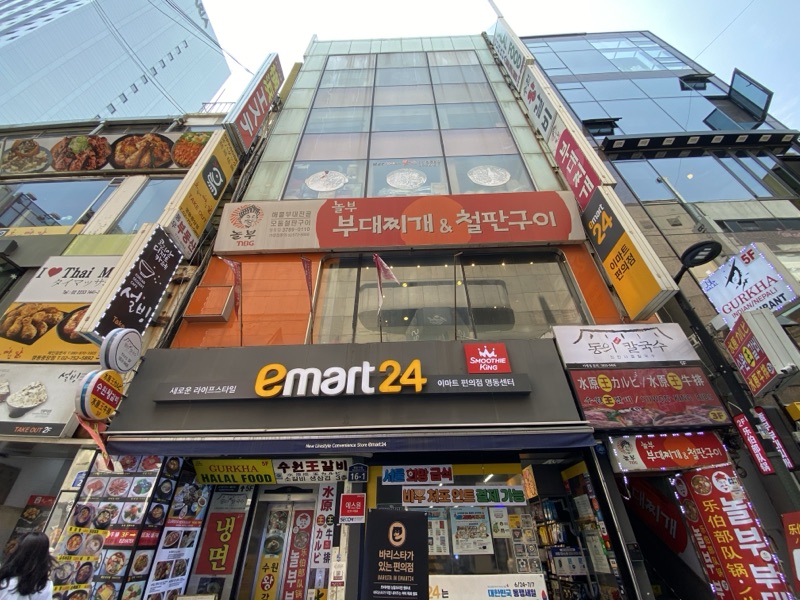
Nolboo, a franchise. Standardised. Safe. Regulated. That’s what I thought.. until I visited myeongdong. The place was empty, at lunchtime during the Christmas holidays.. that was my first red flag, but “what the heck” I thought. I was in the mood for good ol’ budaejigae! However, It was as cold as a crypt in there… “Maybe the place had opened late?” I told myself. So I ate in my coat, but had to take my gloves off to use the chopsticks. The ajuma was friendly and polite, but the ajushi that you see mentioned in other reviews was unfriendly like, I get it.. if your English isn’t good just speak friendly korean. I used korean but when the ajushi came by he grunted “let’s go” as my cue to start eating. Two Koreans came creeping up the stairs, took one look at the empty restaurant with the shivering foreigner, and carefully retreated back down to the safety of the street. Halfway through my meal I could smell cigarette smoke.. and yep.. ol’ ajushi was having a sneaky one behind the counter and in the kitchen. The fans soon cleared the smoke away but I mean, come on.. this guy is clearly from another decade, but the king of his castle, nonetheless. That was the last straw, and when I started to check out the reviews of this place. Yikes.. I concur, the broth does taste watered down, my budaejigae was the no frills version pretty tasteless compared to others I’ve had (no tofu, beans, or greens except spring onion) but it was only 11,500. So at least I didn’t get totally ripped off, but yeah… I won’t be going back. To be fair, the best part was when I paid and the ajushi and his ajuma thanked me kindly, to my surprise… and I left.
Korean blogger posts. Links open original posts on Naver.