Overview
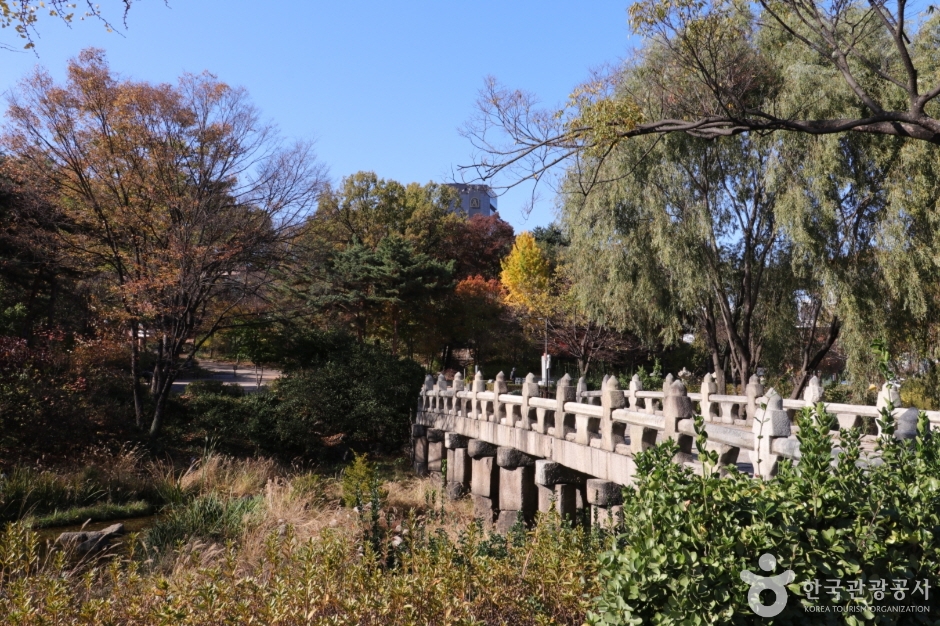
Jangchungdan Park is a national park imbued with patriotic sentiment related to the anti-Japanese movement. Located on the northeastern foot of Namsan, this park was the site of Nam So-yeong, who defended the southern part of the capital during the reign of King Yeongjo of Joseon. On August 20, 1895, Empress Myeongseong was assassinated at Gyeongbokgung Palace by Japanese assassins. At that time, many soldiers, including Minister of the Imperial Household Lee Gyeong-jik and Commander Hong Gye-hoon, died while repelling the Japanese. To comfort their spirits, Emperor Gojong built a shrine called Jangchungdan in November 1900 and held annual rites every spring and autumn until 1908. Originally, Jangchungdan was located on the site of the current Shilla Hotel State Guesthouse. However, the shrine was destroyed during the Korean War, and only the stele originally built in Jangchungdan remained, which was moved to its current site in 1969. In 1919, the Japanese built a temple called Pakmunsa to eradicate the national spirit and created a park on the site of Jangchungdan, but all were demolished after liberation. On September 22, 1984, Jangchungdan Park became a neighborhood park and was absorbed and merged into the natural park Namsan Park. The remaining areas are still called Jangchungdan Park, as they were formerly named. The Jangchungdan Park area features cultural assets such as the Jangchungdan Stele, Supyo Bridge, Seungjeongjeon Hall, Gwanseongmyo, and Waryongmyo, as well as the March 1st Movement monument, the Paris Memorial for the Korean Confucian Independence Movement, the Manhae Han Yong-un poetry monument, and statues of Yu Gwan-sun, Lee Jun, and Kim Yong-hwan.
 Restaurant