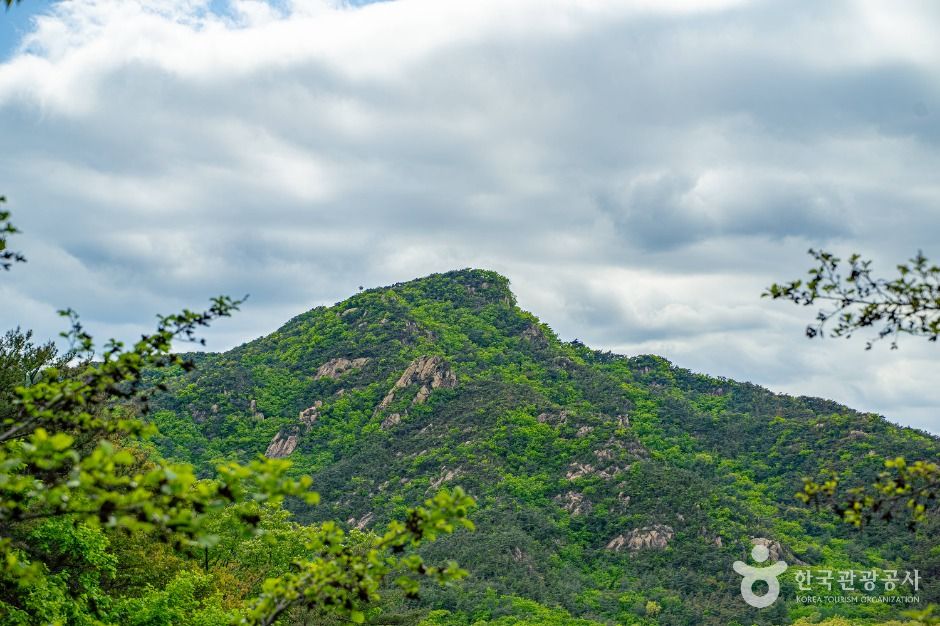
Overview
Gwanaksan (632.2m), which rises south of the Han River in Seoul, is named Gwanaksan because the rocks at the summit resemble those wearing traditional hats. In 1973, when Gwanak-gu was separated from Yeongdeungpo-gu, the mountain's name became the district's name. Designated as an urban natural park in 1968, today it has become a popular retreat for countless Seoul residents and a famous spot in the city. Gwanaksan, with its rugged terrain formed by exposed rocky peaks blending with deep valleys, is close to the city center, allowing anyone to climb the mountain in a single day. In spring, cherry blossoms bloom near the mountain entrance, and during the blooming azalea festival, a rhododendron festival is held. In summer, the deep greenery and the majestic sounds of Dong and Seo Waterfalls deep within the valley are majestic, while in autumn, the autumn foliage and the snowy scenery in winter showcase the essence of the famous Gwanak mountain. At the summit of Gwanaksan, it is said that when King Taejo of Joseon named Seoul as the capital, Yi Seong-gye built two temples, Yeonjusa Temple and Wongaksa Temple, to accommodate the wreaths. There are temples and hermitages of various sizes, including Wongaksa Temple and Yeonjuam at the summit. Perched atop a precarious cliff, the concert hall is where all the hiking trails of Gwanaksan converge. Gwanaksan has accessible forest trails and hiking trails, with several trails. A representative hiking trail starts at the entrance of Seoul National University in Sillim-dong, Gwanak-gu, and another path ascends behind Gwacheon Middle School in Jungang-dong, Gwacheon-si, Gyeonggi-do.