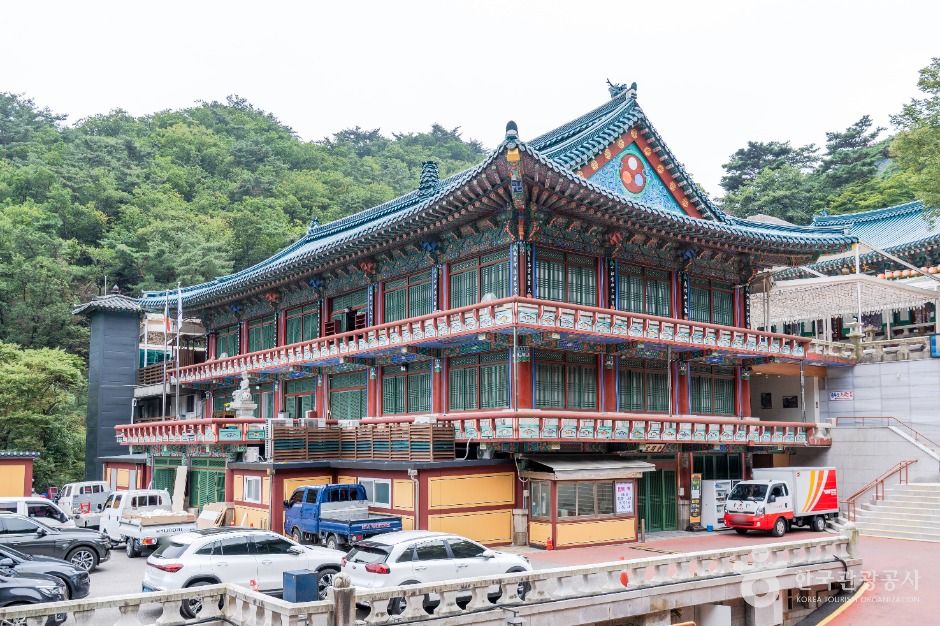
Overview
From the west side of Uidong, if you follow the valley about 1 km toward Baegundae, the highest peak of Bukhansan, you will reach the mountain gate inscribed on the Iljuseok (Three days of cultivating the mind for a thousand years treasure), a hundred years of greed, one morning dust. According to the historical records, Doseonsa was founded in 862 (the 2nd year of King Gyeongmun) by Doseon Guksa (the 2nd year of King Gyeongmun). It is said that Doseon Guksa predicted that the mountain's terrain here would revive Buddhism in the Age of the Late Dharma 1,000 years from now, and after founding the temple, he divided a large rock into a large rock to create a carved statue of Avalokitesvara Bodhisattva. There are no records of reconstruction or reconstruction up to the late Joseon period, but records show that monk soldiers served as guards at this temple during the construction of Bukhansanseong. In 1863 (the 14th year of King Cheoljong's reign), the pavilion was restored under the patronage of Kim Jwa-geun and the Chilseonggak was newly built. In 1887 (the 24th year of King Gojong), Im Jun built a five-story pagoda and enshrined the true relics of Shakyamuni within the pagoda. Existing halls include the Daeungjeon, Patriotic Chamwonjeon, Myeongbujeon, Samseonggak, Jeokmukdang, Cheonwangmun, Beomjonggak, Jongmuso, and the monks' quarters. Inside the main hall, the Amitabha Triad Buddhas are enshrined, and on the interior walls of the main hall are portraits of Bodhidharma, Huineng, and Cheongdam, as well as paintings of the Later Buddha Pagoda, Palsangdo (Eight Aspects), and Paradise Nine Grades Painting. Currently, Doseonsa Temple houses numerous tangible cultural heritage properties of Seoul, including rock-carved standing Buddha statues (No. 34), wooden Amitabha Buddha and Maesaji Bodhisattva statues (No. 191), stone statues of poison (No. 192), bronze bells, and set relics (No. 259), as well as sacred cultural assets such as the Ksitigarbha Four Kings, Gwae Buddha, Myobapharma Lotus Sutra, and Mahavatron Buddha Avatamsaka Sutra created at the end of the 19th century.