Overview
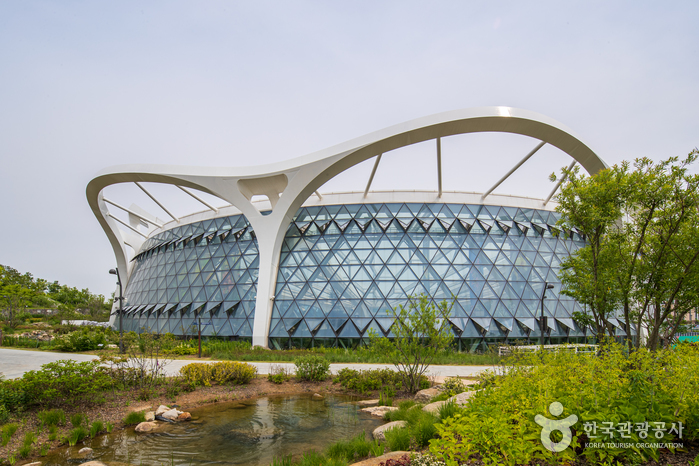
The Seoul Botanic Garden was established in Magok, the last remaining development site in Seoul, to introduce the plants and plant cultures of 12 cities worldwide and to enhance the city's ecological sensitivity. It is a so-called 'Botanic Park' that combines a botanical garden and a park, covering an area equivalent to 70 soccer fields. It not only serves the core role of a plant research and conservation institution by expanding habitats for endangered wild plants, researching the propagation of species that are difficult to breed, and developing varieties, but also serves as a bridgehead for spreading urban garden culture and as a lifelong education institution. Additionally, in connection with 'Garden City, Seoul,' which centers on the concepts of emptiness, connection, ecology, and sensibility, it offers a special experience and relaxation as a place for plant culture exchange, establishing itself as an attractive green attraction. The Seoul Botanic Garden is divided into four main zones: Open Forest, Lake Garden, Wetland Garden, and Theme Garden. Each zone has its own unique characteristics, allowing visitors to experience four different colors even within the garden. Notably, the exhibition greenhouse within the theme park is the world's only concave dish-shaped greenhouse, displaying native plants from 12 cities located in the tropics and Mediterranean, allowing visitors to experience the unique plants and plant cultures of each climate zone.
