Things to Do in Gangneung
Korea's coffee-and-coastline city on the East Sea, where you watch the sun rise over the water, drink some of the country's best coffee by lunch, and eat seawater tofu for dinner — plus K-drama and K-pop pilgrimage spots up the shore.

Most people meet Gangneung from a train window. You ride east out of Seoul, the country folds up into mountains, and then — suddenly, almost rudely — the East Sea fills the glass, flat and silver to the horizon. That first look is the whole pitch. This is the coast Koreans drive two hours over the Taebaek range to reach: a city where you watch the sun climb out of the ocean at dawn, drink some of the best coffee in the country by lunch, and eat tofu made with seawater for dinner.
It's also quietly a K-culture pilgrimage town. A breakwater here is where Goblin shot its most-screenshotted scene; a humble bus stop up the coast is where BTS posed for an album cover, and fans still line up to recreate the frame. Add an Olympic legacy from 2018, a famous coffee street, and mountain valleys an hour inland, and Gangneung stops being a beach day and becomes a proper trip. Below is how we'd actually spend it — sorted by the kind of mood you're in, with a half-day-to-full-day flow at the bottom so you don't have to plan a thing.
Sunrise & the sea
Gangneung is where Koreans come to watch the year turn — sunrise here is a genuine ritual, not a photo op. The coast runs from the famous dawn-train station in the south up to a string of quieter beaches in the north. Pick by how social you want the moment to be: Jeongdongjin for the crowd and the spectacle, the smaller beaches when you'd rather have the sand mostly to yourself.
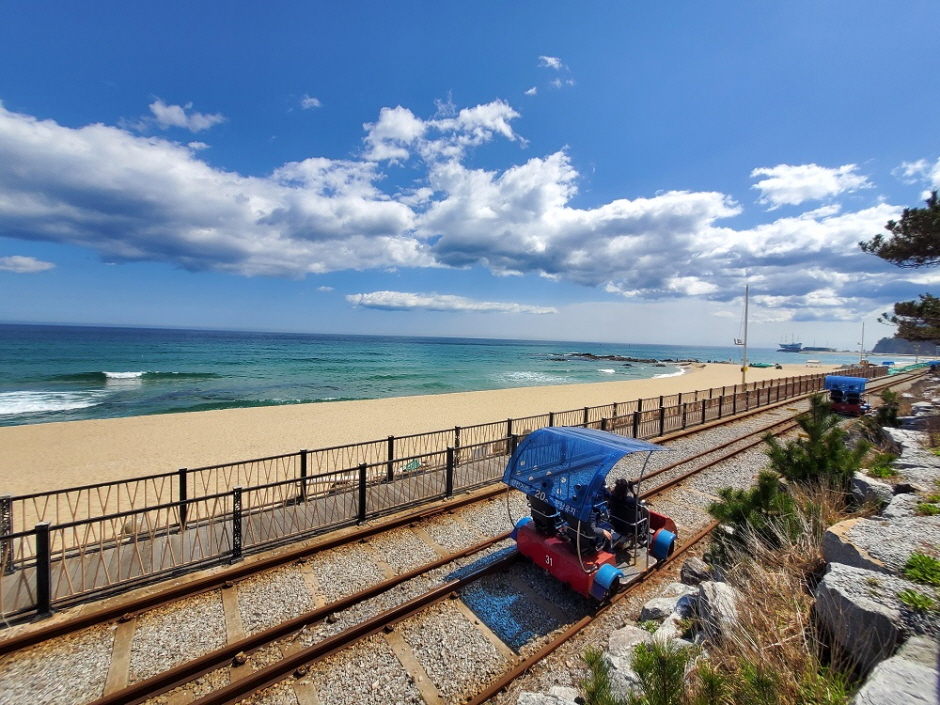 Jeongdongjin sunrise & the sea train
Why go: The country's most famous sunrise spot — a station so close to the water the platform practically touches the waves. Come for first light, stay for the slow coastal rail ride.
 Jeongdongjin Sculpture Park overlook
Why go: A breezy headland of open-air sculpture set against the water — a calmer companion to the station crowds, and a great place to walk off breakfast.
 Gyeongpo Lake & the plaza
Why go: A flat lakeside loop that opens straight onto Gyeongpo's long beach — bike it, walk it, and time it for spring when the cherry trees go off.
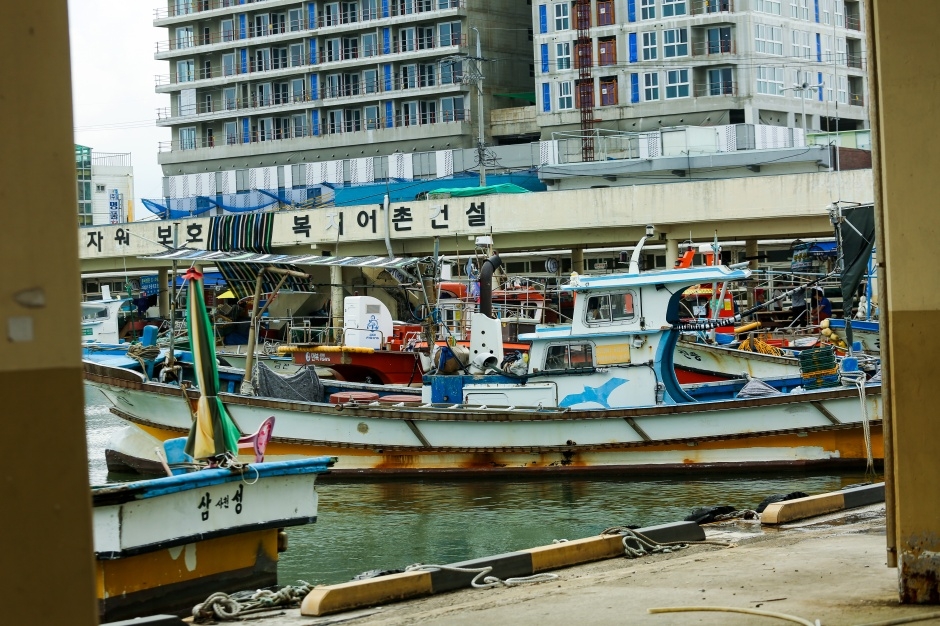 Sacheonjin Port jetty
Why go: A small working harbor that's quietly become a café-and-sunset hangout — sea-facing windows, breakwater walks, and far fewer tour buses.
North of the city the beaches keep coming, and they get emptier the further you go. Sodol (소돌해수욕장), Sunpo (순포해변) and Dojik (도직해변) are the kind of small, low-key strands where you can park, walk straight onto sand, and not share it with much of anyone outside peak August. If your ideal beach day is more "quiet flask of coffee on the rocks" than "boardwalk crowds," head this way.
Coffee city
Here's the thing outsiders rarely know: Gangneung, not Seoul, is widely considered the birthplace of Korea's specialty-coffee culture. The obsession started here decades ago and never let up. You don't need a list of "best cafés" — you need to know where to wander, and then follow your nose.
The heart of it is Anmok Coffee Street (안목 커피거리), a seafront stretch where roasteries and cafés line up shoulder to shoulder against the beach. Some are slick multi-floor flagships with rooftop sea views; others are cramped single-counter rooms run by people who clearly think about extraction the way sommeliers think about wine. The move isn't to hunt down one famous spot — it's to grab a hand-drip, walk it down to the sand, and watch the waves while it cools. Order a hand-drip if you want the full nerd treatment, a sweet cream latte if you don't; both are local rites.
If you're here in autumn, the Gangneung Coffee Festival turns the whole city into one long tasting — pop-ups, cuppings, and roasters from across the country. Even outside festival season, the coffee runs deep enough that a "café day" is a completely legitimate way to spend an afternoon in this town.
What to eat
Gangneung eats like a coast town that also happens to have a signature dish all its own. You'll do well just walking into the right neighborhood hungry — no rankings required.
The one thing you can't leave without trying is chodang sundubu (초당순두부), Gangneung's famous soft tofu. What makes it local is the method: the tofu is curdled with clean seawater instead of the usual coagulant, which gives it a faintly briny, silken character you won't find elsewhere. The place to eat it is Chodang Tofu Village (초당두부마을), a cluster of long-running, family-run shops in the Chodang neighborhood where some kitchens have been at it for generations. Order it plain and warm to taste the tofu itself, or in a bubbling spicy stew — both are the real thing. We're not going to rank the shops for you; half the fun is picking the one with the line of locals and the steamed-up windows.
Beyond tofu, lean into the obvious: this is the East Sea, so the fishing ports up the coast — Sacheonjin and the markets around Jumunjin — are where you eat the catch closest to the boat. Think raw fish, grilled fish, and whatever's in season that morning. Pair any of it with a Gangneung coffee afterward and you've basically done the city right.
K-culture pilgrimage
If you came up on K-dramas and K-pop, Gangneung has two of the genre's most quietly famous backdrops — both up the coast in the Jumunjin area, and both surprisingly easy to fit into a single morning. (Note: Jumunjin is a fishing town up north; don't confuse it with Jeongdongjin, the sunrise station to the south.)
 Jumunjin BTS bus stop
Why go: The seaside bus stop where BTS shot the cover concept for You Never Walk Alone — recreated by ARMY from around the world, frame for frame, with the sea behind it.
 Heo Gyun & Heo Nanseolheon Memorial Park
Why go: A serene pine-shaded park honoring the Joseon-era sibling writers born here — quieter "old Korea" energy that pairs well with the pop-culture stops.
The other can't-miss is the Jumunjin breakwater — the red-lighthouse jetty where the drama Goblin filmed its iconic first meeting between the leads. Standing at the end of that pier, sea on three sides, you'll recognize the shot instantly. It's a working breakwater, so go for the scene and the salt air rather than any built-up "set"; the magic is that it looks exactly like it did on screen.
For one more layer of old Gangneung, Ojukheon (오죽헌) is the historic home where the revered scholar-painter Shin Saimdang and her son, the philosopher Yi I, were born — the very people on Korea's 50,000- and 5,000-won notes. Pull a bill out of your wallet, look at the faces, then go stand in the house they came from. It's the kind of small thrill that makes a trip stick.
Mountains, art & legacy
When the coast has had you for long enough, Gangneung turns inland fast — green valleys, a high cabbage-field plateau famous for its stars, plus a couple of indoor escapes for a rainy afternoon or a tired pair of legs.
 Odaesan Sogeumgang Valley
Why go: A jewel-clear mountain valley nicknamed the "Little Geumgang" for its rock-and-river scenery — cool air, swimming-hole water, and proper trails.
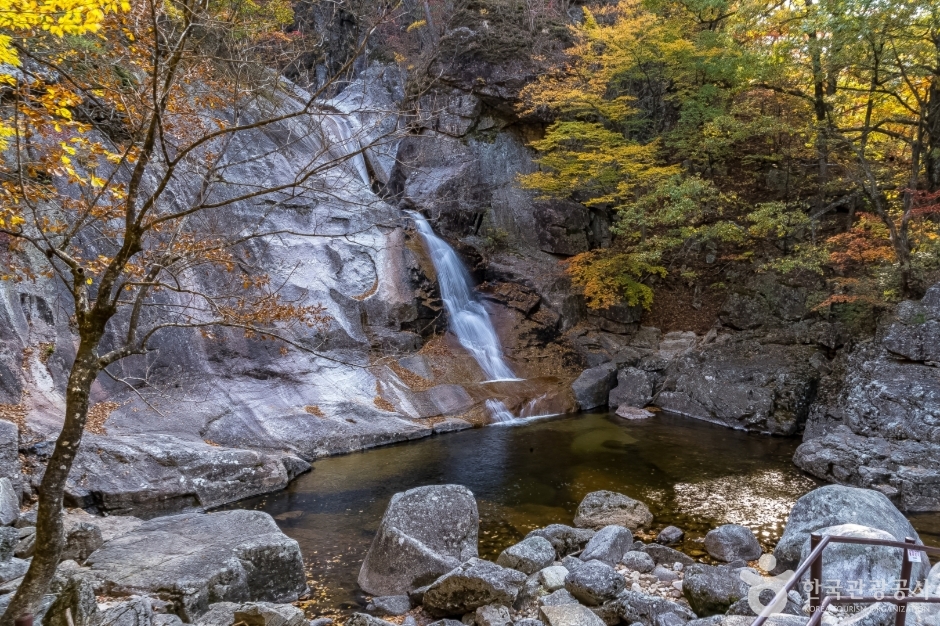 Guryong Waterfall, Sogeumgang
Why go: The headline cascade along the Sogeumgang trail — a tiered falls that rewards the walk in. Wear real shoes and follow the river up.
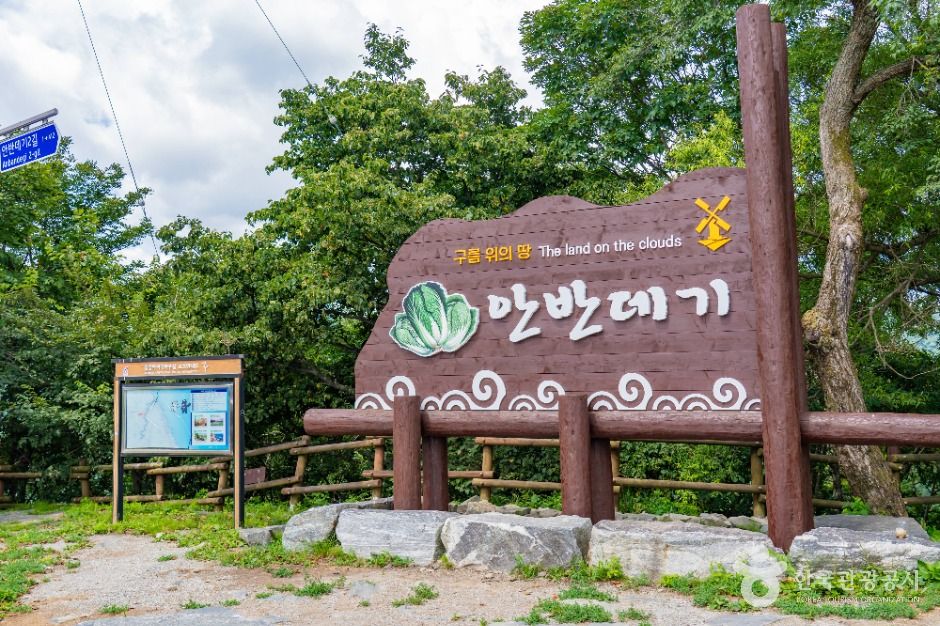 Anbandegi highland fields
Why go: A high-altitude patchwork of cabbage fields that's become a cult spot for stargazers and sunrise chasers — the night sky up here is something else. It's remote, so check access before you go.
Closer to town, three very different stops make easy fillers between coast and coffee:
 Arte Museum Gangneung, immersive media art
Why go: Room-sized, walk-through digital art that's all light, sound, and scale — the easiest crowd-pleaser in town when the weather turns or you need to sit a kid down in the dark and let it blow their mind.
 Gangneung Olympic Museum
Why go: Gangneung hosted the ice events of the 2018 PyeongChang Winter Games, and this is where that legacy lives — hands-on, surprisingly fun, and a nice break from the outdoors.
 Whale Bookstore independent bookshop
Why go: A beloved independent bookshop with the kind of curated, slow-browse charm that fits Gangneung perfectly — pair it with a coffee and let an hour disappear.
Half-day & full-day flows
Two ways to do it: a tight half-day if Gangneung is a side trip, or a relaxed full day if you've given it the time it deserves. Both are built around the coast, with coffee threaded through.
Half daySunrise, coffee & tofu
- Dawn — Sunrise at Jeongdongjin, right where the platform meets the sea.
- Morning — Drive up to Anmok Coffee Street; hand-drip on the sand.
- Midday — Late breakfast or lunch of chodang sundubu in Chodang Tofu Village.
- Early afternoon — A loop around Gyeongpo Lake before you head out.
Full dayCoast, K-culture & mountains
- Morning — Sunrise at Jeongdongjin, then north to the Jumunjin breakwater (the Goblin jetty) and the BTS bus stop.
- Midday — Seafood near Jumunjin or Sacheonjin Port, then coffee at Anmok.
- Afternoon — Inland to Odaesan's Sogeumgang Valley and Guryong Waterfall, or stay coastal with Arte Museum and the Olympic Museum.
- Evening — Back to Gyeongpo for a beach sunset; dinner of chodang sundubu in Chodang.
Quick questions
Photo credit: Gangneung Olympic Museum — Christophe95, CC BY-SA 4.0, via Wikimedia Commons. All other photos © Korea Tourism Organization.
More from Gangwon-do
Book Gangwon-do tours & passes
Skip-the-line tours, day trips & transit passes — booked in English.
Affiliate placeholder · We may earn a commission, at no extra cost to you.